
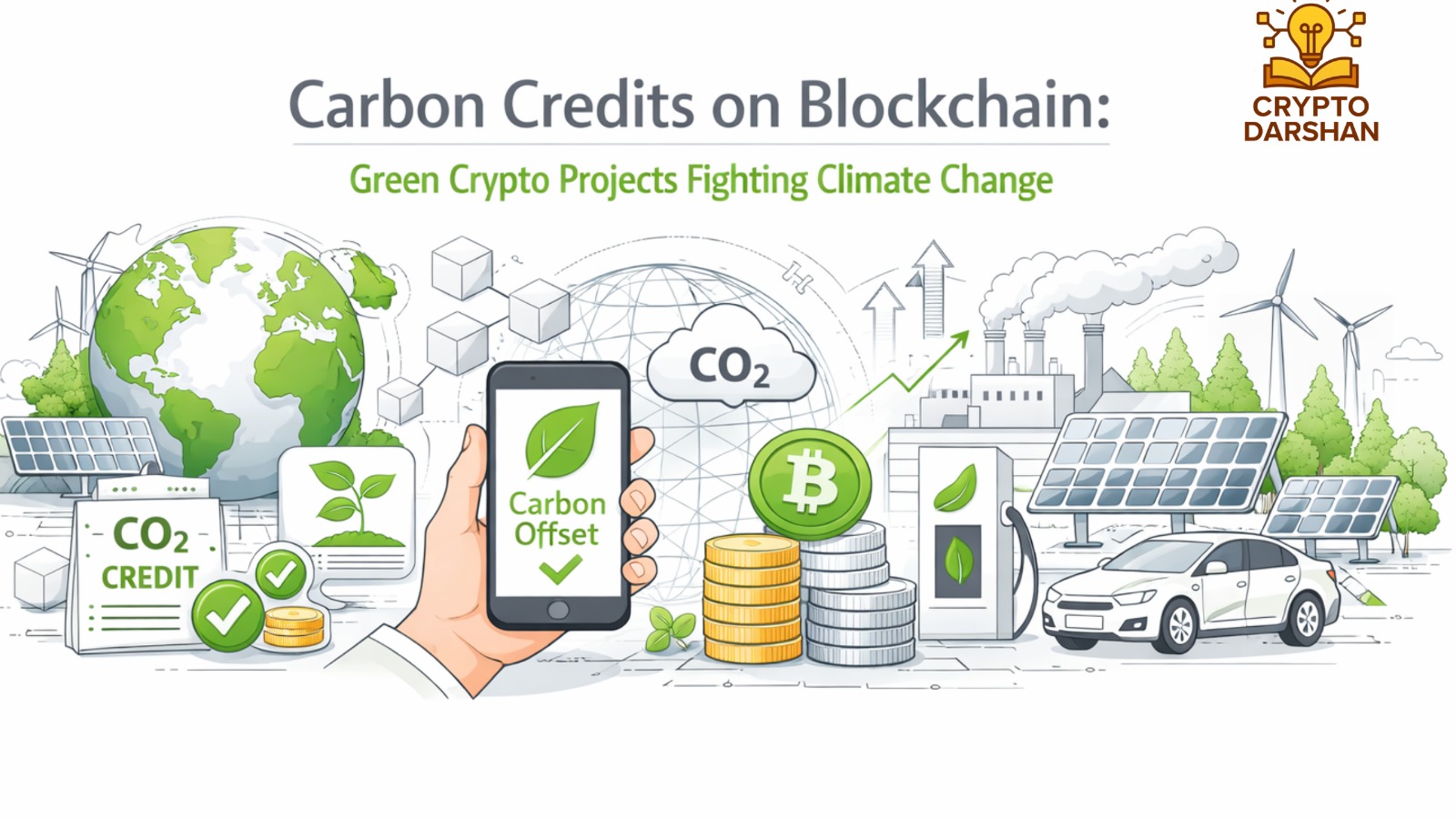
The global climate crisis has become one of the most pressing challenges of the 21st century. Rising temperatures, melting ice caps, and extreme weather events have pushed governments, corporations, and individuals to seek innovative solutions to reduce carbon emissions. Among these solutions, Carbon Credits have emerged as a powerful tool to offset greenhouse gas emissions and promote sustainability. At the same time, blockchain technology has revolutionized how data, assets, and transactions are managed, offering transparency, security, and decentralization. The intersection of these two innovations is creating a new wave of green crypto projects that aim to fight climate change through technology-driven sustainability.
This article explores how Carbon Credits work, how blockchain enhances their transparency and efficiency, and how green crypto projects are leveraging this synergy to create a more sustainable future. It also examines the challenges, opportunities, and future trends shaping the carbon credit market in the blockchain era.
Understanding Carbon Credits

What Are Carbon Credits?
Carbon Credits are tradable certificates that represent the right to emit one metric ton of carbon dioxide (CO₂) or an equivalent amount of another greenhouse gas. Carbon credits are permits that allow the owner of the credit to emit a certain amount of carbon dioxide or other greenhouse gases (GHGs). One credit allows the emission of one ton of carbon dioxide or the equivalent of other greenhouse gases.The concept is simple: companies, governments, or individuals that emit greenhouse gases can offset their emissions by funding projects that reduce or remove carbon from the atmosphere.
For example, a company that emits 10,000 tons of CO₂ annually can buy 10,000 Carbon Credits from a reforestation project that absorbs an equivalent amount of carbon. This system creates a financial incentive for organizations to invest in sustainable practices and technologies.
The Purpose of Carbon Credits
The main goal of Carbon Credits is to create a market-based mechanism that encourages emission reductions. By assigning a monetary value to carbon emissions, Carbon Credits make pollution more expensive and sustainability more profitable. This approach aligns economic growth with environmental responsibility.Many carbon credit ecosystems are built on DeFi principles. Explore the top platforms in Top Emerging DeFi Projects in 2026.
Types of Carbon Credits
There are two main types of Carbon Credits:
- Compliance Carbon Credits: These are regulated by government or international bodies under mandatory emission reduction schemes, such as the European Union Emissions Trading System (EU ETS).
- Voluntary Carbon Credits: These are purchased by companies or individuals voluntarily to offset their emissions outside of regulatory requirements.
Both types play a crucial role in driving global decarbonization efforts.
The Problems with Traditional Carbon Credit Systems

Despite their potential, traditional Carbon Credit systems face several challenges that limit their effectiveness.
Lack of Transparency
One of the biggest issues is the lack of transparency in how Carbon Credits are created, verified, and traded. Many carbon offset projects operate in opaque markets, making it difficult to track the origin and authenticity of credits.
Double Counting and Fraud
Double counting occurs when the same Carbon Credit is sold or claimed by multiple parties. This undermines the integrity of the system and reduces its environmental impact. Fraudulent activities, such as selling fake credits, have also plagued the market.
High Transaction Costs
The process of verifying, certifying, and trading Carbon Credits involves multiple intermediaries, including auditors, brokers, and registries. This increases costs and slows down transactions.
Limited Accessibility
Small businesses and individuals often find it difficult to participate in the Carbon Credit market due to complex procedures and high entry barriers.
These challenges have created a demand for a more transparent, efficient, and accessible system—one that blockchain technology is uniquely positioned to provide.
Understanding Blockchain

What Is Blockchain?
Blockchain is a decentralized digital ledger that records transactions across multiple computers securely and transparently. Each transaction is stored in a block, and once added to the chain, it cannot be altered. This immutability and transparency make blockchain ideal for tracking and verifying assets like Carbon Credits.
Benefits of Using Blockchain for Carbon Credits
- Transparency and Traceability
Blockchain allows every Carbon Credit to be tracked from creation to retirement. Each credit can be assigned a unique digital token, ensuring that its origin, ownership, and usage are fully transparent. - Prevention of Double Counting
Since blockchain records are immutable, once a Carbon Credit is used or retired, it cannot be reused or resold. This eliminates double counting and fraud. - Lower Transaction Costs
By removing intermediaries, blockchain reduces administrative costs and speeds up transactions. Smart contracts automate verification and trading processes, making the system more efficient. - Global Accessibility
Blockchain platforms are borderless, allowing anyone with internet access to participate in the Carbon Credit market. This democratizes access and encourages broader participation in climate action. - Integration with IoT and AI
Blockchain can integrate with Internet of Things (IoT) devices and artificial intelligence (AI) to monitor carbon emissions in real time. This ensures accurate data collection and verification for Carbon Credits.
How Blockchain Transforms Carbon Credits
Blockchain technology is revolutionizing the way Carbon Credits are created, verified, and traded. Traditional carbon markets often suffer from inefficiency, lack of transparency, and fraud. Blockchain solves these problems by introducing a decentralized, secure, and transparent system that ensures credits are authentic and traceable. To fully understand how carbon tokens gain value, check out The Hidden Economics Behind Token Launches
1. Transparency and Traceability
Every transaction on a blockchain is recorded in a public ledger that cannot be altered. This means each Carbon Credit can be tracked from its creation to its retirement. Buyers can verify the origin of the credit, the project it supports, and whether it has already been used. This transparency builds trust and eliminates the risk of double-counting or fraudulent claims.
2. Prevention of Double Counting
In traditional systems, the same Carbon Credit can sometimes be sold or claimed by multiple parties. Blockchain prevents this by assigning each credit a unique digital identity. Once a credit is retired on the blockchain, it is permanently marked as used and cannot be resold or reused. This ensures that every offset represents a real and verifiable reduction in emissions.
3. Lower Transaction Costs
The traditional Carbon Credit market involves multiple intermediaries—brokers, auditors, and registries—that increase costs and slow down transactions. Blockchain removes these middlemen by using smart contracts, which automatically execute transactions when certain conditions are met. This automation reduces administrative costs and speeds up the trading process.
4. Global Accessibility
Blockchain operates on a decentralized network that anyone can access. This opens the Carbon Credit market to individuals, small businesses, and organizations worldwide. Participants no longer need to rely on centralized institutions to buy or sell credits. This democratization of access encourages more people to take part in carbon offsetting and climate action.
5. Integration with Smart Contracts

Smart contracts are self-executing agreements coded on the blockchain. They automatically enforce the terms of a transaction without human intervention. In the Carbon Credit market, smart contracts can:
- Verify emission reductions automatically.
- Issue new, once verification is complete.
- Retire credits once they are used.
- Distribute funds to verified carbon offset projects.
This automation ensures accuracy, reduces fraud, and increases efficiency.
6. Real-Time Verification with IoT and AI
Blockchain can integrate with Internet of Things (IoT) devices and artificial intelligence (AI) to monitor carbon emissions in real time. For example, sensors in renewable energy plants or reforestation projects can record data directly onto the blockchain. This ensures that Carbon Credits are based on accurate, real-world data rather than manual reporting.
7. Tokenization of Carbon Credits
Blockchain enables the tokenization of Carbon Credits, turning them into digital assets that can be easily traded. Each token represents a specific amount of carbon offset, usually one ton of CO₂. Tokenized credits can be bought, sold, or retired on decentralized exchanges, increasing liquidity and accessibility in the carbon market.
Tokenization of Carbon Credits

What Is Tokenization?
Tokenization is the process of converting real-world assets into digital tokens on a blockchain. In the context of Carbon Credits, tokenization means representing each credit as a digital asset that can be easily traded, tracked, and verified.
How Tokenized Carbon Credits Work
- A verified carbon offset project generates Carbon Credits.
- Each credit is converted into a digital token on a blockchain platform.
- These tokens can be bought, sold, or retired through decentralized marketplaces.
- Once a token is retired, it is permanently removed from circulation, ensuring that the offset is accounted for.
Advantages of Tokenized Carbon Credits
- Transparency: Every transaction is recorded on the blockchain.
- Liquidity: Tokenized Carbon Credits can be traded globally, increasing market liquidity.
- Efficiency: Smart contracts automate verification and settlement.
- Accessibility: Individuals and small businesses can easily participate in the carbon market.
Leading Blockchain Projects in Carbon Credits

Several blockchain-based projects are pioneering the integration of Carbon Credits into the crypto ecosystem. These projects are creating transparent, efficient, and scalable solutions for carbon offsetting.
1. Toucan Protocol
Toucan Protocol bridges traditional Carbon Credits with blockchain technology. It allows verified carbon offsets to be tokenized and traded as digital assets. The project’s Base Carbon Tonne (BCT) token represents one ton of carbon offset, enabling users to easily buy, sell, or retire credits on decentralized exchanges.
2. KlimaDAO
KlimaDAO is a decentralized autonomous organization (DAO) that uses blockchain to drive demand for Carbon Credits. It incentivizes users to lock carbon tokens in its treasury, effectively removing them from circulation and increasing the price of carbon. This mechanism encourages more investment in carbon reduction projects.
3. Moss.Earth
Moss.Earth is a Brazilian company that tokenizes Carbon Credits from verified rainforest conservation projects. Its MCO2 token represents one ton of carbon offset and can be traded on major crypto exchanges. The project supports Amazon rainforest preservation and promotes transparency in carbon offsetting.
4. Flowcarbon
Flowcarbon connects corporate buyers with verified carbon offset projects through blockchain. It issues tokenized Carbon Credits that can be traded on decentralized platforms, making the carbon market more efficient and accessible.
5. Nori
Nori focuses on carbon removal rather than offsetting. It uses blockchain to verify and tokenize Carbon Credits generated from regenerative agriculture and other carbon removal projects. Each Nori token represents one ton of CO₂ removed from the atmosphere.
The Role of Smart Contracts in Carbon Credits

Smart contracts are self-executing agreements coded on the blockchain. They automatically enforce the terms of a contract when predefined conditions are met. In the Carbon Credit market, smart contracts can:
- Automate verification and issuance of Carbon Credits.
- Ensure that credits are retired once used.
- Facilitate peer-to-peer trading without intermediaries.
- Distribute funds to carbon offset projects transparently.
By using smart contracts, blockchain platforms can eliminate human error, reduce fraud, and streamline the entire lifecycle of Carbon Credits.
Environmental Impact of Blockchain-Based Carbon Credits

Promoting Real Emission Reductions
Blockchain ensures that every Carbon Credit corresponds to a verified emission reduction. This transparency builds trust and encourages more organizations to invest in genuine sustainability projects.
Encouraging Global Participation
By lowering barriers to entry, blockchain enables individuals, small businesses, and developing nations to participate in the Carbon Credit market. This inclusivity accelerates global climate action.
Supporting Renewable Energy and Reforestation
Many blockchain-based Carbon Credit projects fund renewable energy, reforestation, and conservation initiatives. These projects not only offset emissions but also create jobs and protect biodiversity.
Challenges of Carbon Credits on Blockchain

While blockchain offers many advantages, integrating Carbon Credits into decentralized systems also presents challenges.
Regulatory Uncertainty
The regulatory landscape for both blockchain and Carbon Credits is still evolving. Governments are developing frameworks to ensure compliance, prevent fraud, and protect investors.
Verification and Standardization
Ensuring that tokenized Carbon Credits meet international standards requires collaboration between blockchain developers, environmental organizations, and regulators.
Energy Consumption
Some blockchain networks consume significant energy, raising concerns about their environmental impact. However, newer proof-of-stake (PoS) systems are much more energy-efficient and align better with sustainability goals.
Market Volatility
The value of tokenized Carbon Credits can fluctuate due to market speculation, affecting the stability of carbon offset prices.
The Future of Carbon Credits on Blockchain

Integration with Global Carbon Markets
As blockchain technology matures, it is likely to integrate with existing carbon trading systems, creating a unified global marketplace for Carbon Credits. This will enhance liquidity, transparency, and efficiency.
Growth of Decentralized Carbon Exchanges
Decentralized exchanges (DEXs) for Carbon Credits will allow seamless peer-to-peer trading, reducing reliance on centralized intermediaries.
Expansion of Green Crypto Projects
More blockchain startups are expected to focus on sustainability, developing innovative ways to tokenize and trade Carbon Credits. These projects will attract investors who prioritize environmental, social, and governance (ESG) goals.
Real-Time Carbon Tracking
The combination of blockchain, IoT, and AI will enable real-time tracking of carbon emissions and offsets. This will make Carbon Credits more accurate and verifiable.
Corporate Adoption
Large corporations are increasingly adopting blockchain-based Carbon Credits to meet their net-zero targets. This trend will accelerate as companies seek transparent and efficient ways to offset their emissions.
Economic and Social Benefits

Job Creation
Blockchain-based Carbon Credit projects create new opportunities in technology, environmental science, and renewable energy sectors.
Financial Inclusion
By democratizing access to the carbon market, blockchain empowers individuals and small enterprises to participate in climate action.
Sustainable Investment Opportunities
Investors can diversify their portfolios with tokenized Carbon Credits, supporting projects that generate both financial returns and environmental benefits.
Case Studies

Case Study 1: Toucan Protocol and KlimaDAO Partnership
Toucan Protocol and KlimaDAO have collaborated to create a decentralized carbon economy. By tokenizing Carbon Credits and locking them in KlimaDAO’s treasury, they have removed millions of tons of carbon from circulation, driving up the value of carbon and incentivizing further emission reductions.
Case Study 2: Moss.Earth and Amazon Conservation
Moss. Earth has successfully tokenized millions of Carbon Credits from Amazon rainforest conservation projects. The transparency of blockchain ensures that every token corresponds to a verified carbon offset, attracting global investors and supporting biodiversity.
Case Study 3: Nori’s Regenerative Agriculture Program
Nori’s blockchain platform rewards farmers for adopting regenerative practices that remove carbon from the atmosphere. Each verified ton of CO₂ removed is issued as a Carbon Credit, creating a sustainable income stream for farmers.
How Individuals Can Participate
- Buy Tokenized Carbon Credits: Individuals can purchase tokenized Carbon Credits on blockchain platforms to offset their personal carbon footprint.
- Support Green Crypto Projects: Investing in blockchain projects that focus on sustainability helps drive innovation in the carbon market.
- Use Carbon-Neutral Cryptocurrencies: Some cryptocurrencies offset their emissions through Carbon Credits, allowing users to transact sustainably.
- Stake or Hold Carbon Tokens: Participating in DAOs like KlimaDAO allows individuals to contribute to carbon reduction efforts while earning rewards.
Frequently Asked Question

1. What are carbon credits in blockchain?
Carbon credits on blockchain are digital tokens that represent a verified reduction of one metric ton of CO₂ emissions. By using blockchain, these credits become transparent, traceable, and less prone to fraud.
2. How does blockchain improve carbon credit systems?
Blockchain enhances carbon markets by ensuring transparency, preventing double counting, and enabling real-time tracking of carbon credit ownership and transactions.
3. What are green crypto projects?
Green crypto projects are blockchain-based initiatives designed to reduce environmental impact, promote sustainability, or support climate action through innovations like carbon offsetting and energy-efficient consensus mechanisms.
4. Which blockchain projects focus on carbon credits?
Popular projects include platforms like Toucan Protocol, KlimaDAO, and Moss Earth, which tokenize carbon credits and make them accessible to individuals and organizations.
5. Are carbon credits on blockchain trustworthy?
They can be more reliable than traditional systems due to transparency and immutability, but their credibility still depends on the quality of the underlying carbon offset projects and verification standards.
6. Can individuals buy blockchain-based carbon credits?
Yes, individuals can purchase tokenized carbon credits through supported platforms or exchanges to offset their personal carbon footprint.
Conclusion
The fusion of Carbon Credits and blockchain technology represents a transformative step toward a sustainable future. By combining transparency, efficiency, and accessibility, blockchain is solving many of the challenges that have long plagued the traditional carbon market. Tokenized Carbon Credits are making it easier for individuals, corporations, and governments to participate in climate action, ensuring that every ton of carbon offset is verifiable and impactful.
As green crypto projects continue to evolve, they are not only redefining the carbon economy but also proving that technology can be a powerful ally in the fight against climate change.