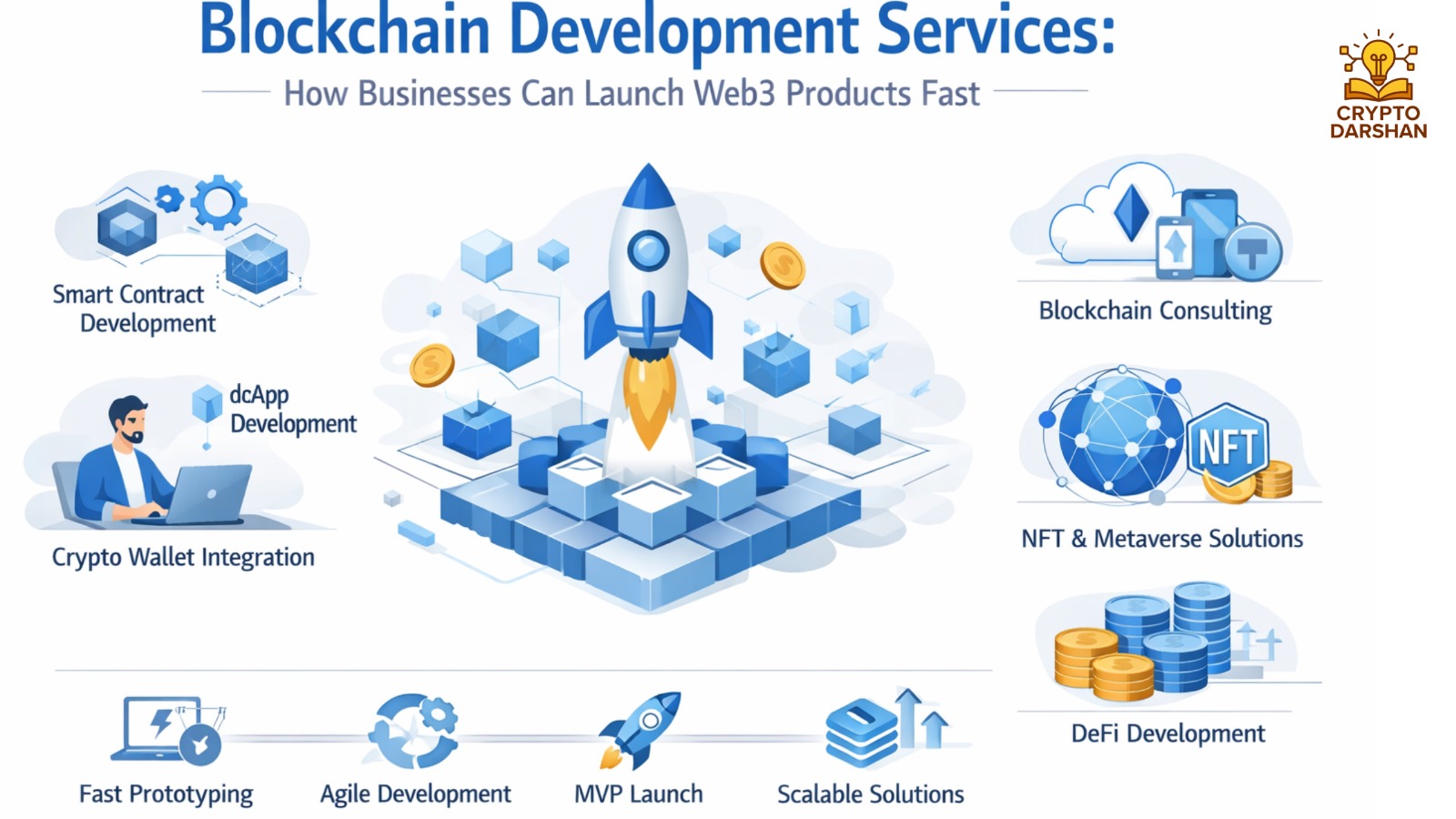
Blockchain development has become one of the most transformative forces in the digital economy. As businesses move toward decentralized technologies, blockchain development services are enabling faster, more secure, and transparent systems. From finance to healthcare, supply chain to entertainment, blockchain development is reshaping how organizations operate and deliver value.
The rise of Web3, the next generation of the internet, is built on blockchain technology. It empowers users with ownership, transparency, and decentralization. Businesses that adopt blockchain development early can gain a competitive advantage by launching Web3 products faster and more efficiently.
This guide explores how blockchain development services help businesses build, deploy, and scale Web3 products quickly. It covers the fundamentals of blockchain development, its benefits, use cases, and strategies for rapid implementation.
Understanding Blockchain Development

What Is Blockchain Development?
Blockchain development involves designing decentralized applications (dApps), smart contracts, and ledger architectures that ensure data integrity. No one can change the information once it is registered in the blockchain. It involves creating systems that record transactions securely across distributed ledgers. Unlike traditional databases, blockchain ensures immutability, transparency, and trust without relying on intermediaries.
Blockchain development services include:
- Smart contract development
- Decentralized application (dApp) creation
- Custom blockchain network design
- Tokenization and NFT development
- Integration with existing systems
- Blockchain consulting and auditing
Why Blockchain Development Matters
Blockchain development is not just a trend — it’s a technological revolution. It enables businesses to:
- Eliminate intermediaries and reduce costs
- Increase transparency and trust
- Enhance data security and integrity
- Enable peer-to-peer transactions
- Automate processes through smart contracts
By leveraging blockchain development, companies can create decentralized ecosystems that empower users and streamline operations.
The Role of Blockchain Development Services
Blockchain development services provide the technical expertise and infrastructure needed to build Web3 products. These services help businesses navigate the complexities of blockchain technology, from choosing the right platform to deploying scalable solutions.
Key Components of Blockchain Development Services

Consulting and Strategy
Blockchain development services begin with strategic consulting. Experts assess business goals, identify opportunities for decentralization, and design a roadmap for implementation.
Architecture Design
Developers design the blockchain architecture, including consensus mechanisms, node structures, and data models. This ensures scalability, security, and performance.
Smart Contract Development
Smart contracts are self-executing agreements coded on the blockchain. Blockchain development services include writing, testing, and deploying these contracts to automate transactions.
dApp Development
Decentralized applications (dApps) run on blockchain networks. Blockchain development teams build user-friendly interfaces and integrate them with smart contracts.
Token Development
Tokens represent digital assets or utilities within a blockchain ecosystem. Blockchain development services help businesses create and manage tokens for fundraising, governance, or rewards.
Integration and Deployment
Blockchain solutions must integrate with existing systems. Development teams ensure seamless deployment and interoperability with other technologies.
Maintenance and Support
Continuous monitoring, updates, and optimization are essential for long-term success. Blockchain development services provide ongoing support to ensure system reliability.
Benefits of Blockchain Development for Businesses

1. Enhanced Security
Blockchain development ensures data integrity through cryptographic encryption and decentralized storage. Each transaction is verified by multiple nodes, making it nearly impossible to alter or hack.
2. Transparency and Trust
Every transaction on a blockchain is recorded on a public ledger. This transparency builds trust among users, partners, and customers.
3. Cost Efficiency
By removing intermediaries, blockchain development reduces transaction fees and administrative costs. Smart contracts automate processes, saving time and resources.
4. Faster Transactions
Traditional systems often involve delays due to third-party verification. Blockchain development enables near-instantaneous transactions across borders.
5. Decentralization
Blockchain development eliminates single points of failure. Data is distributed across multiple nodes, ensuring resilience and uptime.
6. Improved Traceability
Blockchain’s immutable ledger allows businesses to track assets and verify authenticity. This is especially valuable in supply chain management and logistics.
7. Innovation and Competitive Advantage
Adopting blockchain development early positions businesses as innovators. It opens new revenue streams through tokenization, NFTs, and decentralized finance (DeFi).
How Businesses Can Launch Web3 Products Fast

Launching Web3 products fast requires a clear strategy, the right technology stack, and expert blockchain development support. Web3 products are built on decentralized networks, meaning they rely on blockchain technology, smart contracts, and token-based ecosystems. To move quickly from idea to launch, businesses must streamline their development process while maintaining security and scalability.
1. Define a Clear Vision and Use Case
Before starting development, businesses need to identify the purpose of their Web3 product. Whether it’s a decentralized finance (DeFi) app, NFT marketplace, or supply chain solution, having a clear goal helps guide technical decisions. A well-defined use case ensures that the blockchain development process stays focused and efficient.
2. Choose the Right Blockchain Platform
Selecting the right blockchain platform is crucial for speed and performance. Popular options include Ethereum, Polygon, Solana, and Binance Smart Chain. Each platform offers different transaction speeds, costs, and developer tools. Choosing one that aligns with your product’s needs can significantly reduce development time.
3. Use Pre-Built Blockchain Development Frameworks
Instead of building everything from scratch, businesses can use existing frameworks and SDKs (Software Development Kits). These tools provide ready-made modules for wallet integration, token creation, and smart contract deployment. This approach accelerates blockchain development and reduces coding errors.
4. Develop and Test Smart Contracts Early
Smart contracts are the backbone of any Web3 product. They automate transactions and enforce rules without intermediaries. Writing and testing these contracts early ensures that the core logic of the product is secure and functional. Using automated testing tools and third-party audits helps prevent costly bugs later.
5. Build a Minimum Viable Product (MVP)
Launching an MVP allows businesses to test their Web3 product with real users before a full-scale release. The MVP should include essential features like wallet connectivity, token transactions, and basic user interfaces. Feedback from early users helps refine the product quickly.
6. Integrate APIs and Third-Party Tools
APIs and third-party services can speed up blockchain development by handling complex tasks like authentication, analytics, and payment processing. Integrating these tools allows developers to focus on core blockchain features instead of rebuilding common functionalities.
How Blockchain Development Accelerates Web3 Product Launches

Launching a Web3 product requires speed, scalability, and security. Blockchain development services streamline this process through specialized tools and frameworks. Blockchain is also tackling climate issues, check out carbon credits on blockchain
1. Ready-Made Frameworks
Blockchain development companies use pre-built frameworks like Ethereum, Polygon, Solana, and Binance Smart Chain. These platforms reduce development time and cost.
2. Modular Architecture
Modular blockchain development allows businesses to customize components without building from scratch. This flexibility accelerates deployment.
3. Smart Contract Templates
Reusable smart contract templates simplify coding and testing. Developers can quickly adapt them for different use cases.
4. API Integrations
Blockchain development services provide APIs for seamless integration with existing systems, wallets, and exchanges.
5. Cloud-Based Deployment
Using cloud infrastructure, blockchain development teams can deploy nodes and networks rapidly, ensuring scalability and reliability.
6. Continuous Testing and Auditing
Automated testing tools ensure that smart contracts and dApps are secure before launch. Blockchain development services include auditing to prevent vulnerabilities.
Key Industries Leveraging Blockchain Development

1. Finance and Banking
Blockchain development is revolutionizing financial services through decentralized finance (DeFi), cross-border payments, and digital identity verification.
2. Supply Chain Management
Blockchain enables real-time tracking of goods, ensuring transparency and authenticity. Businesses can verify product origins and prevent counterfeiting.
3. Healthcare
Blockchain development secures patient data, enables interoperability, and ensures compliance with privacy regulations.
4. Real Estate
Smart contracts automate property transactions, reducing paperwork and fraud.
5. Gaming and Entertainment
Blockchain development powers play-to-earn games, NFTs, and digital collectibles, creating new monetization models.
6. Energy and Sustainability
Blockchain supports peer-to-peer energy trading and carbon credit tracking, promoting sustainability.
7. Government and Public Sector
Governments use blockchain for identity management, voting systems, and transparent record-keeping.
Steps to Launch a Web3 Product Using Blockchain Development Services

Launching a Web3 product using Blockchain Development Services involves a structured process that combines strategic planning, technical execution, and continuous optimization. Each step ensures that the product is secure, scalable, and ready for real-world use. Below is a detailed explanation of each step.
Step 1: Define the Vision and Objectives
Every successful Web3 product starts with a clear vision. Businesses must identify the problem they want to solve and how blockchain technology can provide a better solution.
For example, a company might want to create a decentralized marketplace, a play-to-earn game, or a supply chain tracking system. Defining the purpose helps determine the right blockchain platform, token model, and user experience.
Key actions:
- Identify the target audience and their needs.
- Define the product’s core features and value proposition.
- Set measurable goals such as transaction speed, user adoption, or revenue targets.
Step 2: Choose the Right Blockchain Platform
The choice of blockchain platform directly affects performance, cost, and scalability. Different blockchains offer unique advantages:
- Ethereum – Ideal for smart contracts and DeFi applications.
- Polygon – Offers faster transactions and lower fees.
- Solana – Known for high throughput and scalability.
- Binance Smart Chain (BSC) – Great for cost-effective deployments.
Blockchain development services help businesses evaluate these options based on their technical and business requirements.
Key actions:
- Compare transaction fees, speed, and ecosystem support.
- Assess developer tools and community resources.
- Choose between public, private, or hybrid blockchain networks.
Step 3: Design the Architecture
Once the platform is selected, the next step is to design the system architecture. This includes defining how users, smart contracts, and data interact within the blockchain ecosystem.
Key components:
- Smart contracts: Automate transactions and enforce rules.
- Consensus mechanism: Determines how transactions are validated (e.g., Proof of Stake, Proof of Work).
- Data storage: Decide what data stays on-chain and what remains off-chain.
- User interface (UI): Design a simple and intuitive front-end for users.
Blockchain development services create detailed architecture blueprints to ensure scalability, security, and efficiency.
Step 4: Develop Smart Contracts
Smart contracts are the backbone of any Web3 product. They define how transactions occur and how users interact with the system.
Key actions:
- Write smart contracts using languages like Solidity or Rust.
- Test them thoroughly to prevent bugs or vulnerabilities.
- Use automated testing tools and manual code reviews.
- Conduct third-party audits for added security.
Blockchain development services specialize in writing secure, efficient, and gas-optimized smart contracts that ensure smooth operations.
Step 5: Build the Frontend and Backend

The frontend is what users see and interact with, while the backend connects the application to the blockchain network. You can also explore flash loans and how they work without collateral for advanced financial use cases
Frontend development:
- Create a user-friendly interface using frameworks like React or Vue.js.
- Integrate wallet connections (e.g., MetaMask, WalletConnect).
Backend development:
- Set up APIs to communicate with blockchain nodes.
- Manage off-chain data and user authentication.
Blockchain development services ensure seamless integration between the frontend, backend, and blockchain layers.
Step 6: Test and Audit the System
Testing is one of the most critical steps in blockchain development. It ensures that the Web3 product functions correctly and securely before launch.
Types of testing:
- Unit testing: Checks individual components.
- Integration testing: Ensures all parts work together.
- Security testing: Identifies vulnerabilities in smart contracts.
- Performance testing: Measures speed and scalability.
Professional blockchain development services also conduct smart contract audits to verify code integrity and prevent exploits.
Step 7: Deploy on Testnet
Before launching on the main blockchain network (mainnet), the product should be deployed on a testnet. A testnet is a sandbox environment that mimics real-world conditions without using real assets.
Benefits of testnet deployment:
- Detect and fix bugs safely.
- Test user interactions and transaction flows.
- Validate smart contract performance.
Blockchain development services handle testnet deployment to ensure the product is stable and ready for public use.
Step 8: Mainnet Deployment
Once testing is complete and the product performs well, it’s time to launch on the mainnet — the live blockchain network.
Key actions:
- Deploy smart contracts to the mainnet.
- Configure nodes and servers for live operations.
- Monitor transactions and network performance.
Blockchain development services manage the deployment process to ensure a smooth transition from testnet to mainnet.
Choosing the Right Blockchain Development Partner

Selecting the right blockchain development company is crucial for success. Consider the following factors:
Experience and Expertise
Choose a team with proven experience in blockchain development across multiple industries.
Technical Proficiency
Ensure the developers are skilled in languages like Solidity, Rust, and Go.
Security Practices
The company should follow best practices for smart contract auditing and data protection.
Scalability Solutions
Look for blockchain development services that offer Layer 2 solutions and cross-chain compatibility.
Client Portfolio
Review past projects to assess quality and innovation.
Support and Maintenance
Post-launch support is essential for long-term success.
Common Challenges in Blockchain Development

1. Scalability Issues
As transaction volumes increase, some blockchains face congestion. Layer 2 solutions and sharding can mitigate this.
2. Regulatory Uncertainty
Blockchain development operates in evolving legal frameworks. Compliance with local regulations is essential.
3. Integration Complexity
Integrating blockchain with legacy systems can be challenging. Expert blockchain development services simplify this process.
4. Security Risks
Smart contract vulnerabilities can lead to financial losses. Regular audits and testing are critical.
5. User Adoption
Educating users about blockchain technology is key to driving adoption.
Future Trends in Blockchain Development

1. Interoperability
Cross-chain communication will enable seamless data exchange between different blockchains.
2. Green Blockchain Solutions
Energy-efficient consensus mechanisms like Proof of Stake (PoS) are becoming standard.
3. AI and Blockchain Integration
Combining AI with blockchain development enhances automation and data analysis.
4. Decentralized Identity (DID)
Blockchain-based identity systems will give users control over personal data.
5. Tokenization of Real-World Assets
Real estate, art, and commodities will be tokenized for fractional ownership.
6. Web3 and Metaverse Expansion
Blockchain development will power immersive digital experiences and decentralized economies.
Case Studies: Successful Blockchain Development Projects

Case Study 1: DeFi Lending Platform
A fintech startup used blockchain development services to build a decentralized lending platform. Smart contracts automated loan approvals, reducing processing time by 80%.
Case Study 2: Supply Chain Transparency
A logistics company implemented blockchain development to track shipments. The system improved traceability and reduced fraud by 60%.
Case Study 3: NFT Marketplace
An entertainment brand launched an NFT marketplace using blockchain development. The platform generated millions in digital asset sales within months.
How to Get Started with Blockchain Development

- Assess Business Needs
Identify areas where blockchain can add value. - Consult Experts
Engage blockchain development consultants to design a strategy. - Prototype and Test
Build a minimum viable product (MVP) to validate the concept. - Scale Gradually
Expand features and integrate with other systems as adoption grows. - Stay Updated
Blockchain technology evolves rapidly. Continuous learning ensures competitiveness.
Frequently Asked Questions (FAQ)

1. What are blockchain development services?
Blockchain development services include designing, building, and deploying decentralized applications (dApps), smart contracts, crypto platforms, and Web3 solutions for businesses.
2. How can businesses launch Web3 products quickly?
Businesses can launch faster by using ready-made frameworks, hiring experienced blockchain developers, leveraging pre-built smart contracts, and choosing scalable blockchain platforms like Ethereum, Solana, or Polygon.
3. What types of Web3 products can be developed?
Common Web3 products include:
- Decentralized apps (dApps)
- NFT marketplaces
- DeFi platforms
- Crypto wallets
- Tokenized ecosystems
4. How long does it take to develop a blockchain project?
It depends on complexity:
- Simple dApps: 2–6 weeks
- Medium platforms: 2–4 months
- Advanced ecosystems: 6+ months
5. What is the cost of blockchain development services?
Costs vary based on features and team size, but typically range from:
- $5,000 (basic projects)
- $50,000+ (advanced Web3 platforms)
Conclusion
Blockchain development is the foundation of the Web3 revolution. It empowers businesses to build decentralized, transparent, and secure systems that redefine digital interactions. By leveraging blockchain development services, organizations can launch Web3 products faster, reduce costs, and gain a competitive edge in the evolving digital economy.
From finance to healthcare, supply chain to entertainment, blockchain development is unlocking new possibilities. Businesses that embrace this technology today will lead the decentralized future of tomorrow.
Blockchain development is not just about technology — it’s about transformation. It’s the key to building trust, efficiency, and innovation in the digital age.