
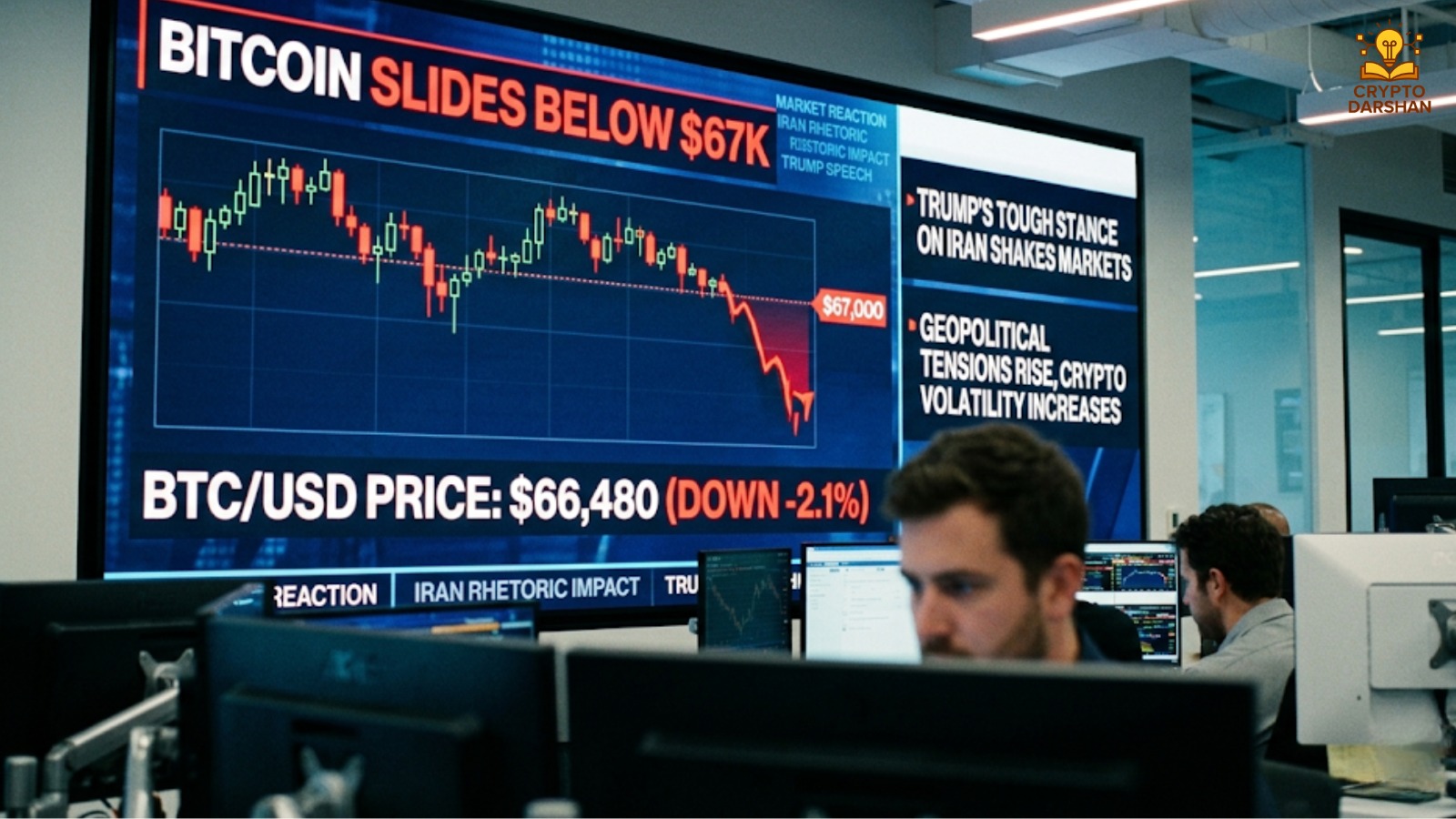
Bitcoin slides sharply on Thursday as traders dumped risk assets after US President Donald Trump signaled tougher and more sustained military strikes against Iran in the coming weeks. The move rattled both crypto and stock markets, underscoring how sensitive investor sentiment has become to every new headline from the ongoing conflict.
Bitcoin and Crypto Prices Drop
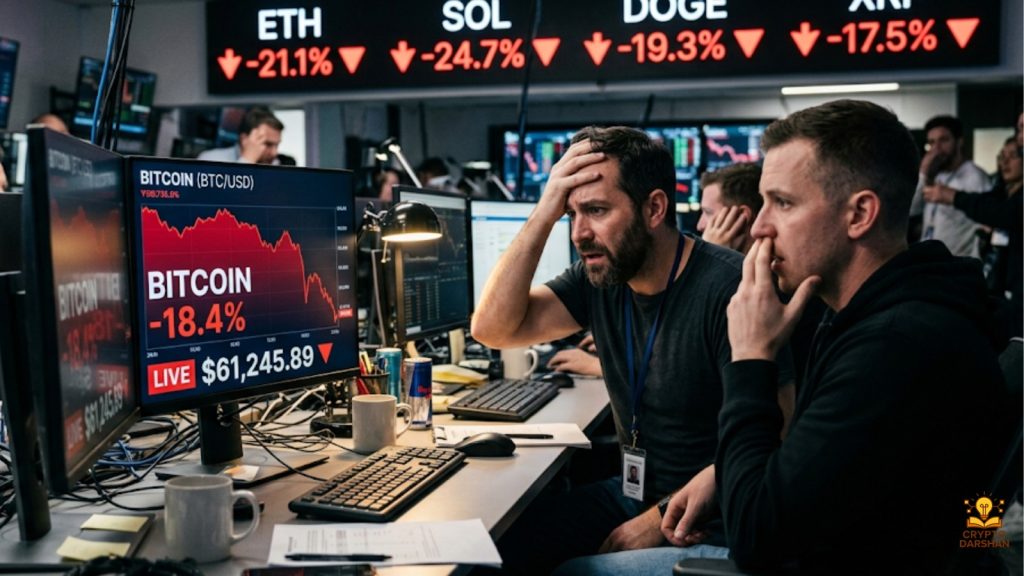
Bitcoin slides as much as about 2.8%–2.9%, trading in the mid‑66,000 dollar range during Asian and early European hours. Ether slid by up to roughly 4.9%, while Solana lost around 5.1%, showing that altcoins again faced heavier selling than Bitcoin. The broad-based sell-off highlighted a classic “risk-off” reaction, where traders quickly reduced exposure to volatile assets.
This pullback came after a brief period of optimism earlier in the week, when markets had started to price in the possibility of a quicker end to the war and a reopening of key trade routes. Instead, Trump’s latest comments strengthened fears that the conflict could drag on, leading traders to lock in profits and cut leverage. Sudden market reactions like this often catch traders off guard, which is why understanding why most retail traders lose money in crypto during volatile events is crucial.
Stocks Sink, Oil Surges
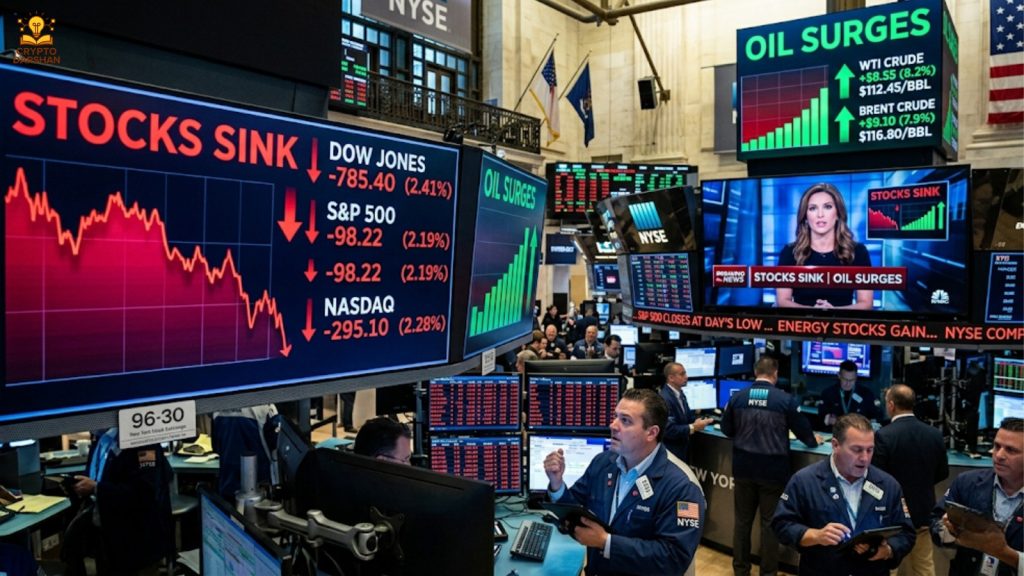
The pressure was not limited to digital assets. The MSCI Asia Pacific equity index fell about 1.7%, reversing earlier gains as investors reassessed the risk of a prolonged conflict. US stock futures also slipped, with contracts tied to the S&P 500, Nasdaq, and Dow all trading lower as Wall Street braced for more volatility.
At the same time, Brent crude oil spiked more than 5%, moving above 106 dollars per barrel on renewed concerns over supply disruptions from the Middle East. Traders worry especially about the Strait of Hormuz, a vital chokepoint for global energy shipments that has already faced repeated threats during the war. Rising oil prices add another layer of uncertainty by increasing inflation risks just as central banks try to balance growth and price stability.
Trump’s Comments Fuel Risk-Off Mood
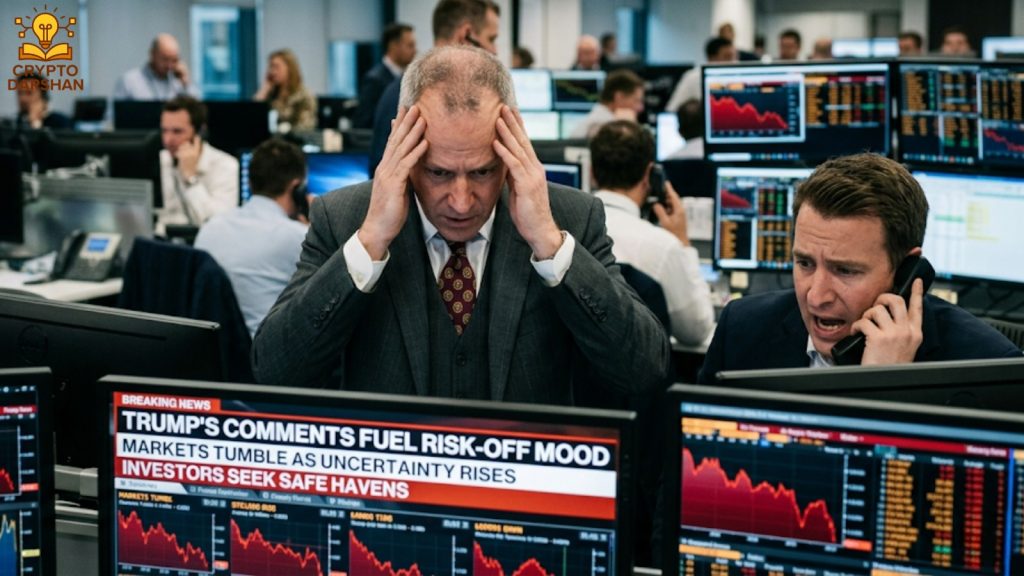
In his latest remarks, Trump indicated that the US would pursue harder strikes against Iran and keep up pressure until key strategic goals are met. This message contrasted with earlier hints that he might move toward ending the conflict sooner, which had briefly lifted markets. The shift in tone made traders less hopeful about a near-term de-escalation.
Analysts noted that markets remain extremely headline-driven. Any suggestion of more aggressive action typically sends investors running from risk assets and into safer havens such as cash or short-term government bonds. In this case, Bitcoin traded more like a high-beta risk asset, moving in the same direction as stocks rather than acting as a pure safe haven.
Bitcoin’s Mixed Role as “Digital Gold”

Interestingly, Bitcoin has still fared better than some traditional safe-haven assets over the broader war period. It managed to finish March up about 2% from February, breaking a five-month losing streak even as geopolitical tensions intensified. Gold, by contrast, fell more than 11% in March, hurt by concerns that higher energy prices and sticky inflation could keep real yields elevated.
This mixed performance complicates the narrative around Bitcoin as “digital gold.” On short time frames, especially during sudden geopolitical shocks, Bitcoin continues to trade like a speculative asset, often dropping when fear spikes. Over longer periods, however, it has shown resilience compared with some other assets, particularly when investors start looking past immediate headlines and focus on monetary policy and long-term adoption trends.
What Traders Are Watching Next
For now, crypto traders are closely tracking three main factors:
- Future statements from Trump and Iranian officials, which could quickly shift risk sentiment either way.
- Developments around the Strait of Hormuz and broader Middle East energy flows, given their direct impact on oil and inflation expectations.
- Stock market direction, as Bitcoin has been largely mirroring major equity indices during this phase of the conflict.
Many market participants expect volatility to stay elevated as long as war headlines dominate the news cycle. Short-term traders may continue to sell rallies and keep tight risk management, while longer-term holders watch for deeper dips as potential accumulation opportunities. Regardless, this latest sell-off is another reminder that Bitcoin slides and other cryptocurrencies remain highly sensitive not just to interest rates and regulation, but also to sudden geopolitical shocks