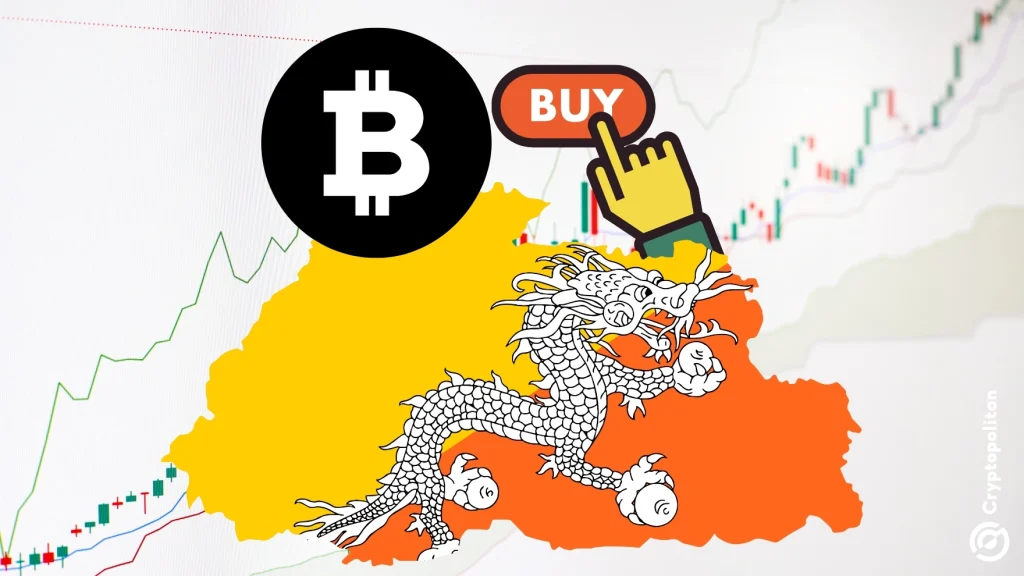
Druk Holding and Investments disputes on-chain data showing Bhutan slashed its Bitcoin holdings by 76% — from 13,000 BTC to just 3,100 BTC — since October 2024.
The Kingdom of Bhutan’s sovereign wealth fund has pushed back against widely circulated reports that it has been quietly offloading nearly $1 billion worth of Bitcoin since mid-2025 — flatly denying the sell-off despite blockchain data pointing strongly in the opposite direction.
Ujjwal Deep Dahal, the CEO of Druk Holding and Investments (DHI) — Bhutan’s state-owned investment arm — told CoinDesk in an email that he does not recall the fund selling any Bitcoin. When pressed further about specific wallet movements tracked by blockchain analytics firm Arkham Intelligence, a separate reply from DHI offered only that “our statement stands and nothing to add beyond it.”
“I don’t recall the last time we sold any $BTC.”
— Ujjwal Deep Dahal, CEO, Druk Holding and Investments (DHI)Notably, DHI did not dispute Arkham’s attribution of the tracked wallets to the fund, nor did it confirm how much Bitcoin it currently holds — leaving a significant information vacuum around one of the most unusual sovereign cryptocurrency stories of recent years.
What the Blockchain Data Shows
According to Arkham Intelligence data, wallets attributed to DHI held approximately 13,000 BTC in October 2024 — worth nearly $931 million at the time. Those holdings have since dropped dramatically to around 3,100 BTC, valued at roughly $252 million, representing a decline of more than 76% from the peak.
The sell-off, if confirmed, would total approximately $1 billion in Bitcoin moved out of Bhutanese sovereign wallets since July 2025 alone. Transfers have been sent to various exchanges and trading firms. In 2026 alone, outflows have reached $230 million. At the current pace of approximately $50 million per month, Arkham estimates Bhutan could fully exit its Bitcoin position by October 2026.
From Mining Giant to Silent Seller?
Bhutan built its Bitcoin reserves through years of state-backed, hydropower-driven mining operations — one of the most environmentally distinctive sovereign crypto strategies in the world. At its peak, the kingdom had raised over $765 million in mining-related profits and was considered one of the most crypto-forward governments globally.
However, analysts note that Bitcoin mining revenues from Bhutan have slowed sharply, with no major inflows of $100,000 or more recorded from the country’s hydro-mining operations in over a year. Digital assets analyst Crypto Patel observed that Bhutan has “gone from one of the most unique sovereign mining strategies to silent selling.”
Why Might Bhutan Be Selling?
Analysts who have studied Bhutan’s on-chain behaviour suggest the sales, if real, are consistent with a national treasury management strategy rather than market pessimism. Unlike a hedge fund, Bhutan has active fiscal obligations — building schools, paying salaries, and financing Gelephu Mindfulness City (GMC), a landmark special administrative region project in southern Bhutan.
In December 2024, Bhutan pledged up to 10,000 BTC — then worth approximately $1 billion — toward GMC’s development. The city, which has designated Bitcoin, Ethereum, and BNB as strategic reserves, recently accelerated its licensing program for crypto-related businesses. Since Bhutan mined most of its Bitcoin at near-zero cost, any sale remains profitable.
“Unlike a hedge fund, they have schools to build, salaries to pay, and a new city to fund. Bitcoin HODLing is a luxury for entities that don’t have citizens.”— Crypto Analyst on Bhutan’s treasury strategy
The Disputed Question: Who Owns Those Wallets?
The crux of the controversy lies in Arkham Intelligence’s wallet attribution. DHI’s denial is significant, but so is what the fund chose not to say: it did not dispute that Arkham correctly identified wallets belonging to the Bhutanese government. It also did not confirm or deny whether Bhutan still holds approximately 13,000 BTC — the figure that would apply if no sales had actually taken place.
This leaves open the possibility of alternative explanations — such as internal wallet restructuring, or that the tracked wallets belong to an entity other than DHI — but no such clarification has been offered by the government.
Broader Context: Sovereign Bitcoin Exits Accelerating
Bhutan is not alone. The broader trend of sovereign and institutional Bitcoin treasury liquidations has intensified in 2026. Riot Platforms, one of the largest publicly traded Bitcoin miners in the US, sold approximately $200 million worth of Bitcoin in the final two months of 2025 as it redirected capital toward AI and high-performance computing. Public Bitcoin treasury companies still collectively hold over 1.16 million BTC — representing more than 5% of Bitcoin’s total supply of 21 million — but the unwinding of smaller positions is drawing attention.
For Bhutan, the stakes are uniquely high. Its experiment with Bitcoin — mined using Himalayan rivers, managed by a sovereign wealth fund, pledged toward building a futuristic city — captured global imagination. Whether DHI’s denial represents a misunderstanding of complex on-chain data, a technicality around which entity controls the wallets, or simply an official silence strategy, the blockchain data paints an unmistakable picture of outflows.
CryptoDarshan will continue monitoring on-chain movements and any official statements from Druk Holding and Investments.