The blockchain industry has evolved from a niche technology into a global infrastructure powering finance, gaming, supply chains, and digital identity. Yet, as adoption grows, so does the need for scalability, customization, and interoperability. Many businesses want to harness blockchain’s benefits—transparency, security, and decentralization—without being limited by the constraints of existing public networks. This is where Polygon CDK (Chain Development Kit) comes in.
Polygon CDK is a revolutionary framework that allows companies to build their own customizable, Ethereum-compatible blockchains. It provides the tools, infrastructure, and modular components needed to create scalable, secure, and interoperable chains that connect seamlessly to the broader Polygon and Ethereum ecosystems. With Polygon CDK, enterprises can design blockchains tailored to their specific needs—whether for payments, gaming, supply chain management, or decentralized finance (DeFi).
This article explores how Polygon CDK works, its architecture, benefits, and real-world applications. It also examines how it empowers businesses to innovate faster, reduce costs, and maintain full control over their blockchain environments.
1. Understanding Polygon and Its Vision

1.1 The Polygon Ecosystem
Polygon, formerly known as Matic Network, is a leading Ethereum scaling solution designed to improve transaction speed and reduce costs. It provides a suite of technologies,such as sidechains, rollups, and zero-knowledge (ZK) solutions, that enhance Ethereum’s scalability while maintaining its security and decentralization.
Polygon’s ecosystem includes:
- Polygon PoS Chain: A Proof-of-Stake sidechain offering fast and low-cost transactions.
- Polygon zkEVM: A zero-knowledge rollup that replicates Ethereum’s environment with enhanced scalability.
- Polygon Miden, Nightfall, and Zero: Advanced ZK-based solutions for privacy and scalability.
- Polygon CDK: A modular framework enabling developers and enterprises to build their own ZK-powered blockchains.
1.2 The Vision Behind Polygon CDK
Polygon’s mission is to bring mass adoption to Web3 by making blockchain technology accessible, scalable, and customizable. Polygon CDK is a major step toward that goal. It allows anyone—from startups to global enterprises, to deploy their own blockchain networks that are interoperable with Ethereum and other Polygon chains.
The vision is to create a network of interconnected chains, known as the Polygon ecosystem of ZK-powered Layer 2s, where each chain can operate independently yet communicate seamlessly with others. This approach mirrors the internet’s structure—many networks connected through shared protocols.
2. What Is Polygon CDK?

2.1 Definition
The Polygon Chain Development Kit (CDK) is an enterprise-grade toolkit for building custom Ethereum Layer 2 (L2) chains. Every CDK chain connects to Agglayer by default, cross-chain interoperability, shared liquidity, and unified state are native features of the infrastructure, not optional add-ons.
In simple terms, Polygon CDK is like a toolkit for building blockchains, similar to how web developers use frameworks like React or Django to build websites. It abstracts the complexity of blockchain development, letting teams focus on their business logic rather than low-level infrastructure.
2.2 Key Features
- ZK-Powered Architecture: Uses zero-knowledge proofs for scalability and security.
- Ethereum Compatibility: Fully compatible with Ethereum Virtual Machine (EVM).
- Modular Design: Developers can choose components for consensus, data availability, and execution.
- Interoperability: Chains built with CDK can communicate with each other and Ethereum.
- Customizability: Businesses can define their own tokenomics, governance, and transaction models.
- Open Source: Built on open standards, encouraging collaboration and innovation.
2.3 Why It Matters
Traditional blockchain networks often face trade-offs between scalability, decentralization, and security. Polygon CDK eliminates these trade-offs by allowing developers to customize their own balance of these factors. It empowers enterprises to build blockchains that meet their specific performance, privacy, and compliance requirements.
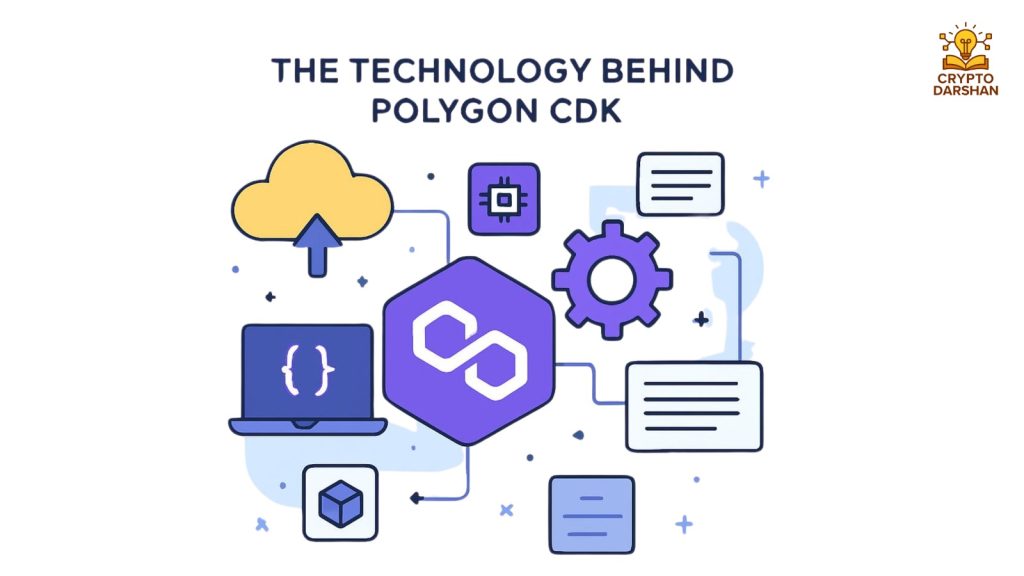
3. The Technology Behind Polygon CDK
3.1 Zero-Knowledge Proofs (ZKPs)
At the heart of Polygon CDK lies zero-knowledge proof technology. ZKPs allow one party to prove that a transaction or computation is valid without revealing the underlying data. This enables faster and more private transactions while maintaining security.
Polygon’s ZK technology compresses multiple transactions into a single proof, which is then verified on Ethereum. This drastically reduces gas fees and increases throughput, making it ideal for enterprise-scale applications.
3.2 Modular Architecture
Polygon CDK’s modular design allows developers to pick and choose components based on their needs. The main modules include:
- Execution Layer: Handles smart contract execution and transaction processing.
- Consensus Layer: Determines how blocks are validated (e.g., Proof-of-Stake, Proof-of-Authority).
- Data Availability Layer: Ensures transaction data is accessible and verifiable.
- Bridge Module: Enables interoperability between chains and Ethereum.
- ZK Prover: Generates cryptographic proofs for transaction validity.
This modularity gives developers flexibility to optimize for performance, cost, or security depending on their use case.
3.3 Ethereum Compatibility
Polygon CDK chains are EVM-compatible, meaning they can run existing Ethereum smart contracts without modification. This compatibility allows developers to leverage the vast Ethereum ecosystem—tools, wallets, and dApps—while benefiting from Polygon’s scalability.
3.4 Interoperability Through the Polygon Ecosystem
All CDK-based chains are connected through the Polygon Aggregation Layer, a network that enables seamless communication between chains. This means assets and data can move freely across different Polygon chains and Ethereum, creating a unified multi-chain ecosystem.
4. How Polygon CDK Works

Polygon CDK (Chain Development Kit) is designed to make blockchain creation simple, modular, and efficient. It provides a framework that allows developers and enterprises to build their own Ethereum-compatible Layer 2 blockchains powered by zero-knowledge (ZK) technology. To understand how Polygon CDK works, it’s important to look at its process, architecture, and the key components that make it function effectively.
4.1 Step-by-Step Process of How Polygon CDK Works
Step 1: Configuration and Setup
Developers begin by configuring the blockchain’s parameters using the CDK framework. This includes:
- Choosing the consensus mechanism (e.g., Proof-of-Stake or Proof-of-Authority).
- Setting up tokenomics, such as native tokens, gas fees, and reward systems.
- Defining governance rules for decision-making and upgrades.
- Selecting privacy settings and data availability options.
This step allows full customization, ensuring that the blockchain aligns with the organization’s goals and compliance requirements.
Step 2: Deployment of the Blockchain
Once configured, the blockchain is deployed using Polygon’s infrastructure. The deployment process automatically connects the new chain to the Polygon Aggregation Layer, which links it to Ethereum and other Polygon-based chains.
This connection ensures that the new chain can:
- Submit ZK proofs to Ethereum for verification.
- Communicate with other CDK-based chains.
- Access shared liquidity and data across the Polygon ecosystem.
Step 3: Transaction Processing and Proof Generation
After deployment, the blockchain begins processing transactions. Here’s how it works:
- Users send transactions to the new chain.
- The chain executes these transactions using its execution layer (similar to Ethereum’s EVM).
- Instead of sending every transaction to Ethereum, the chain batches multiple transactions together.
- A ZK prover generates a cryptographic proof that verifies all these transactions are valid.
- This proof is then submitted to Ethereum for final verification.
This process drastically reduces gas fees and increases transaction speed while maintaining Ethereum-level security.
Step 4: Verification on Ethereum
Once the ZK proof is submitted, Ethereum verifies it using Polygon’s smart contracts. This verification ensures that all transactions processed on the CDK-based chain are legitimate and tamper-proof.
Because only the proof (not the full transaction data) is sent to Ethereum, the process is both cost-efficient and scalable. It also ensures that even if the local chain experiences issues, the verified state on Ethereum remains secure and accurate.
Step 5: Interoperability and Communication
All CDK-based chains are connected through the Polygon Aggregation Layer (AggLayer). This layer acts as a communication hub that allows chains to:
- Transfer assets and data between each other.
- Share liquidity across DeFi platforms.
- Enable cross-chain smart contract interactions.
This interoperability transforms Polygon into a network of interconnected blockchains, similar to how the internet connects independent networks through shared protocols.
4.2 Key Components That Make It Work
a. Execution Layer
This is where smart contracts and transactions are executed. It functions similarly to Ethereum’s EVM, ensuring compatibility with existing Ethereum tools and applications.
b. Consensus Layer
Determines how blocks are validated and added to the chain. Developers can choose between different consensus mechanisms depending on their needs for speed, decentralization, or security.
c. Data Availability Layer
Ensures that transaction data is accessible and verifiable. It can use on-chain or off-chain storage solutions depending on privacy and performance requirements.
d. ZK Prover
The ZK prover is the heart of Polygon CDK’s scalability. It generates zero-knowledge proofs that confirm the validity of transactions without revealing sensitive data.
e. Bridge Module
This component enables communication between the CDK-based chain, Ethereum, and other Polygon chains. It allows seamless asset transfers and cross-chain interactions.
4.3 Example: Building a Custom Chain
Imagine a gaming company that wants to create its own blockchain for in-game assets. Using Polygon CDK, the company can:
- Launch a chain optimized for high transaction throughput.
- Use ZK proofs to ensure low fees and fast confirmations.
- Integrate NFTs and tokens for in-game economies.
- Connect to Ethereum for liquidity and interoperability.
This approach gives the company full control over its ecosystem while maintaining compatibility with the broader Web3 world.
5. Benefits of Polygon CDK for Businesses

5.1 Customization and Control
Polygon CDK allows companies to design blockchains that fit their exact needs. They can define:
- Consensus mechanisms (e.g., Proof-of-Stake, Proof-of-Authority)
- Transaction fees and gas models
- Governance structures
- Privacy settings
- Native tokens and reward systems
This level of customization ensures that businesses can align blockchain functionality with their operational goals.
5.2 Scalability and Performance
ZK technology enables high throughput and low latency, making CDK-based chains capable of handling thousands of transactions per second. This scalability is crucial for industries like gaming, finance, and supply chain management, where performance is critical.
5.3 Cost Efficiency
By batching transactions and verifying them on Ethereum through ZK proofs, Polygon CDK significantly reduces gas costs. Businesses can operate their own chains without the high expenses associated with mainnet transactions.
5.4 Security and Reliability
Polygon CDK inherits Ethereum’s security through its ZK verification process. Each chain’s state is periodically verified on Ethereum, ensuring that even if a local chain is compromised, the overall system remains secure.
5.5 Interoperability and Ecosystem Access
CDK-based chains are part of the Polygon ecosystem, meaning they can interact with other chains, dApps, and liquidity pools. This interoperability expands business opportunities and user reach.
5.6 Enterprise-Grade Privacy
For industries that require confidentiality—such as healthcare, finance, or government—Polygon CDK supports private transactions using ZK technology. This allows sensitive data to remain hidden while maintaining verifiable integrity.
6. Real-World Use Cases of Polygon CDK

6.1 Financial Services
Banks and fintech companies can use Polygon CDK to build private, compliant blockchains for payments, settlements, and asset tokenization. These chains can integrate with public networks for liquidity while maintaining regulatory compliance.
6.2 Gaming and Metaverse
Game developers can create dedicated blockchains for in-game assets, NFTs, and player economies. Polygon CDK ensures fast, low-cost transactions, enabling seamless gameplay and asset ownership.
6.3 Supply Chain Management
Enterprises can build transparent supply chain networks where every transaction—from manufacturing to delivery—is recorded on a blockchain. Polygon CDK’s scalability ensures real-time tracking and verification.
6.4 Healthcare
Healthcare providers can use CDK-based chains to manage patient records securely. ZK proofs ensure data privacy while allowing authorized access for research and treatment.
6.5 Government and Public Sector
Governments can deploy CDK-based blockchains for identity management, voting systems, and public recordkeeping. The modular design allows compliance with local regulations and data protection laws.
6.6 Decentralized Finance (DeFi)
DeFi platforms can launch their own chains to reduce congestion and fees. These chains can still connect to Ethereum for liquidity and interoperability, creating a hybrid model of scalability and decentralization.
7. Polygon CDK vs. Other Blockchain Frameworks
| Feature | Polygon CDK | Cosmos SDK | Substrate (Polkadot) | Avalanche Subnets |
| Technology Base | Zero-Knowledge Proofs | Tendermint Consensus | Nominated Proof-of-Stake | Avalanche Consensus |
| EVM Compatibility | Full | Partial | Optional | Full |
| Interoperability | Native with Ethereum & Polygon | IBC Protocol | Polkadot Relay Chain | Cross-Subnet |
| Customization | High | High | High | Medium |
| Security Model | Ethereum-anchored ZK proofs | Independent validators | Shared security | Independent |
| Scalability | High (ZK rollups) | Moderate | High | High |
| Ideal Use Case | Enterprise & Web3 apps | Custom blockchains | Interoperable parachains | App-specific chains |
Polygon CDK stands out for its Ethereum anchoring, ZK scalability, and modular flexibility, making it ideal for enterprises seeking both performance and interoperability.
8. The Role of the Polygon Aggregation Layer

The Polygon Aggregation Layer (AggLayer) is a key component that connects all CDK-based chains. It acts as a unifying protocol that aggregates proofs from multiple chains and submits them to Ethereum. This ensures:
- Unified liquidity: Assets can move freely across chains.
- Shared security: All chains benefit from Ethereum’s security.
- Cross-chain communication: Data and messages can be exchanged seamlessly.
The AggLayer transforms Polygon into a network of interconnected Layer 2s, similar to how the internet connects independent networks through shared protocols.
9. How Polygon CDK Empowers Enterprises

9.1 Simplified Blockchain Deployment
Polygon CDK abstracts the complexity of blockchain development. Enterprises can deploy production-ready blockchains in days instead of months, reducing time-to-market.
9.2 Compliance and Regulation
Businesses can configure their chains to comply with local regulations, including KYC/AML requirements. Private or permissioned chains can be built for industries with strict compliance needs.
9.3 Integration with Existing Systems
CDK-based chains can integrate with existing enterprise systems through APIs and smart contracts. This allows seamless interaction between traditional databases and blockchain networks.
9.4 Ecosystem Collaboration
By joining the Polygon ecosystem, enterprises gain access to a vast network of developers, partners, and tools. This fosters collaboration and innovation across industries.
10. Challenges and Considerations
While Polygon CDK offers immense potential, businesses must consider several factors before deployment:
- Technical Expertise: Building and maintaining a blockchain requires skilled developers.
- Security Audits: Custom chains must undergo rigorous testing to prevent vulnerabilities.
- Governance Design: Clear governance structures are essential for decision-making and upgrades.
- User Adoption: Success depends on attracting users and developers to the new chain.
- Regulatory Compliance: Enterprises must ensure adherence to data protection and financial regulations.
Polygon provides documentation, developer support, and community resources to help overcome these challenges.
11. The Future of Polygon CDK

Polygon CDK represents the next phase of blockchain evolution, modular, scalable, and interconnected networks. As more companies adopt CDK to build their own chains, the Polygon ecosystem will expand into a vast web of interoperable blockchains.
Future developments include:
- Enhanced ZK Provers: Faster and more efficient proof generation.
- Cross-chain DeFi protocols: Unified liquidity across CDK chains.
- AI and IoT integration: Smart automation and real-world data connectivity.
- Enterprise partnerships: Collaboration with global corporations to deploy industry-specific blockchains.
Polygon’s long-term vision is to create the Value Layer of the Internet, where every transaction, asset, and identity can move freely across a decentralized network of chains.
12. FAQ: How Polygon CDK Is Letting Companies Build Their Own Blockchains

1. What is Polygon CDK?
Polygon CDK (Chain Development Kit) is an open-source toolkit that allows developers and companies to build their own customizable Layer-2 blockchains powered by zero-knowledge (ZK) technology.
2. Why is Polygon CDK important?
Polygon CDK makes it easier for businesses to launch scalable, Ethereum-compatible blockchains without building infrastructure from scratch.
3. How does Polygon CDK work?
Polygon CDK uses ZK-rollup technology to bundle transactions off-chain and settle them securely on Ethereum, improving speed and reducing fees.
4. What are ZK-rollups?
ZK-rollups are scaling solutions that process transactions off-chain while using cryptographic proofs to verify transaction validity on Ethereum.
5. Can companies customize their blockchain with Polygon CDK?
Yes. Companies can customize governance, tokenomics, privacy settings, gas tokens, interoperability, and network rules using Polygon CDK.
6. Is Polygon CDK compatible with Ethereum?
Yes. Polygon CDK chains are fully compatible with Ethereum and support Ethereum Virtual Machine (EVM) applications and smart contracts.
7. What advantages does Polygon CDK offer businesses?
Key advantages include:
- Lower transaction fees
- Faster transaction speeds
- Ethereum security
- Customizable infrastructure
- Cross-chain interoperability
- Scalable applications
8. What industries can use Polygon CDK?
Industries including gaming, finance, supply chain, AI, DeFi, NFTs, and enterprise applications can benefit from custom blockchains built with Polygon CDK.
9. How is Polygon CDK different from traditional blockchains?
Traditional blockchains often operate independently, while Polygon CDK chains can connect into a larger interoperable ecosystem through shared liquidity and communication.
13. Conclusion
Polygon CDK is transforming how companies approach blockchain adoption. By providing a modular, ZK-powered framework, it enables businesses to build their own scalable, secure, and interoperable blockchains without sacrificing control or flexibility. Whether for finance, gaming, supply chain, or government, Polygon CDK offers the tools to create customized blockchain solutions that integrate seamlessly with Ethereum and the broader Web3 ecosystem.
As enterprises continue to explore blockchain technology, Polygon CDK stands out as a powerful enabler of innovation—bridging the gap between traditional systems and decentralized networks. It marks a new era where every company can become its own blockchain operator, contributing to a connected, scalable, and inclusive digital economy.