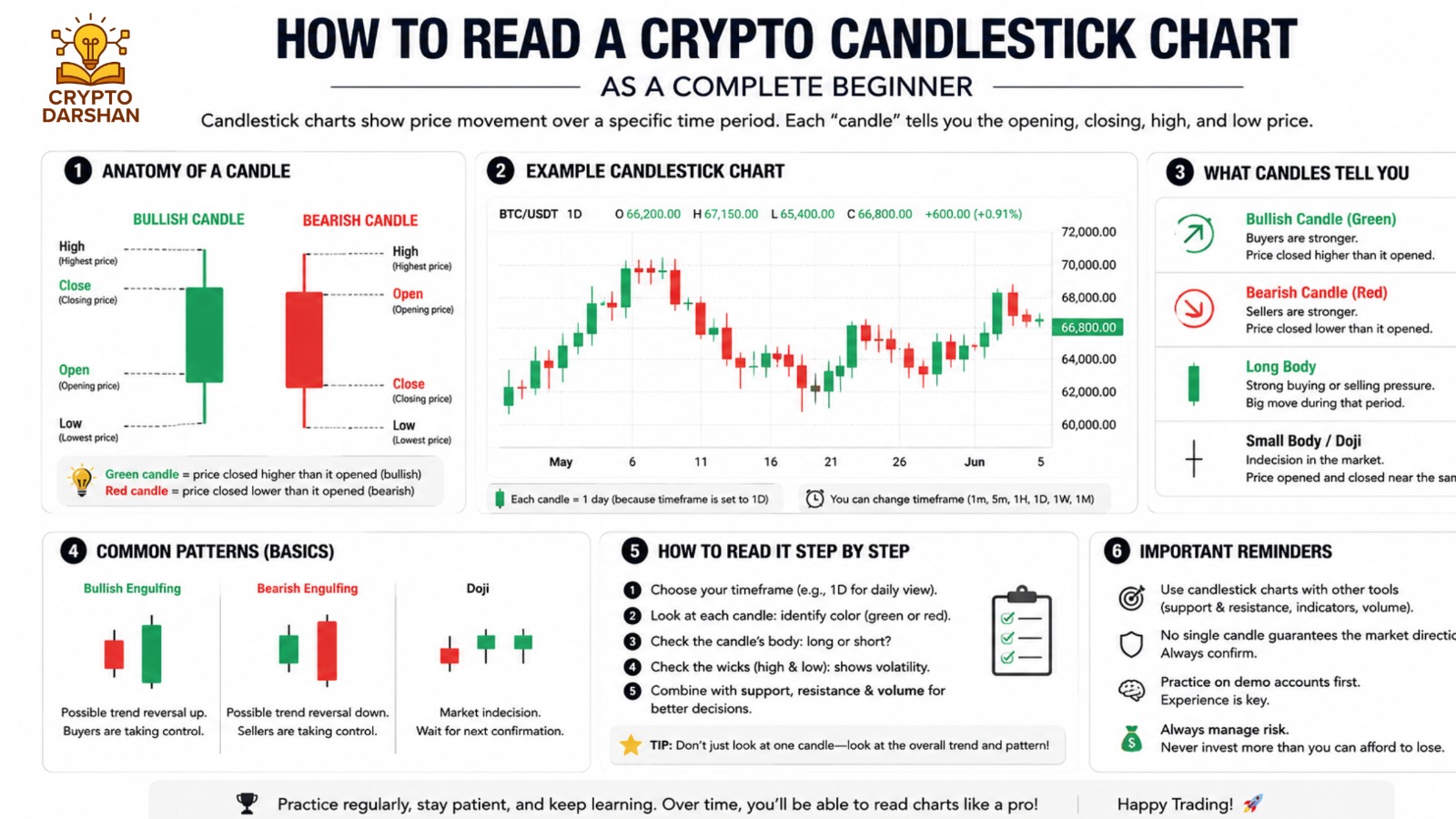


The cryptocurrency market is one of the most volatile and fast-moving financial ecosystems in the world. Prices can surge or crash within minutes, driven by speculation, global news, and investor sentiment. In such an unpredictable environment, traders rely on technical indicators to identify potential reversals and momentum shifts. Among these tools, the Relative Strength Index (RSI) stands out as one of the most effective.
When combined with the concept of divergence, RSI becomes a powerful method for detecting global crypto reversals before they occur. RSI divergence trading helps traders recognize when price action and momentum are out of sync, signaling that a trend may be losing strength.
This guide explores RSI divergence trading in depth—covering its mechanics, psychology, strategies, and advanced applications. It also includes practical examples, risk management techniques, and insights into how traders can integrate RSI divergence into a complete crypto trading system.
Understanding RSI: The Foundation of Divergence Trading

What Is the Relative Strength Index (RSI)?
The Relative Strength Index (RSI) is a momentum oscillator developed by J. Welles Wilder in 1978. It measures the speed and magnitude of recent price changes to determine whether an asset is overbought or oversold. RSI values range from 0 to 100.
- Above 70: Overbought conditions, suggesting a potential pullback.
- Below 30: Oversold conditions, indicating a possible rebound.
How RSI Is Calculated
RSI is calculated using the formula:
RSI = 100 – [100 / (1 + RS)]
Where RS (Relative Strength) = Average Gain / Average Loss over a specific period (commonly 14). This formula smooths out price fluctuations and provides a clear picture of momentum.
Why RSI Is Crucial in Crypto Trading
Cryptocurrencies often experience extreme volatility due to speculative trading and emotional reactions. RSI helps traders identify when these moves are overextended. By analyzing RSI, traders can anticipate potential reversals or corrections before they occur, giving them a strategic advantage.
What Is RSI Divergence?
RSI divergences occur when the price of an asset moves in one direction while the Relative Strength Index (RSI) moves in the opposite direction. This mismatch signals that momentum is weakening and a potential reversal may be near.
Types of RSI Divergence
Bullish Divergence
- Price forms a lower low, but RSI forms a higher low.
- Indicates weakening selling pressure and a possible upward reversal.
Bearish Divergence
- Price forms a higher high, but RSI forms a lower high
- Suggests fading buying momentum and a potential downward reversal.
Hidden Divergence
Hidden divergence signals trend continuation rather than reversal.
- Hidden Bullish Divergence: Price makes a higher low, but RSI makes a lower low.
- Hidden Bearish Divergence: Price makes a lower high, but RSI makes a higher high.
Hidden divergence helps traders confirm that the current trend is likely to continue.
The Psychology Behind RSI Divergence

RSI divergence reflects the underlying psychology of market participants. When prices continue to rise but RSI fails to confirm the move, it shows that fewer traders are supporting the rally. Similarly, when prices fall but RSI starts to rise, it indicates that selling pressure is losing strength.
This divergence between price and momentum often precedes a shift in market sentiment. Traders who recognize these signals early can position themselves ahead of major reversals.
How to Identify

Step 1: Add RSI to the Chart
Most trading platforms, including Binance, TradingView, and Coinbase Advanced, allow traders to add RSI easily. Set the RSI period to 14 for standard analysis.
Step 2: Identify Price Peaks and Troughs
Look for recent highs and lows in the price chart. These points will be compared with RSI peaks and troughs.
Step 3: Compare Price and RSI Movements
- If price forms higher highs while RSI forms lower highs, it’s a bearish divergence.
- If price forms lower lows while RSI forms higher lows, it’s a bullish divergence.
Step 4: Confirm with Volume and Trendlines
Volume analysis and trendline breaks can strengthen divergence signals. A divergence confirmed by declining volume or a trendline break is more reliable.
RSI Divergence in Crypto Markets

Why RSI Divergence Works Well in Crypto
Cryptocurrency markets are driven by speculation and emotional trading. RSI divergence captures these emotional extremes effectively. Since crypto assets often experience sharp rallies and crashes, divergence signals can help traders anticipate turning points before the broader market reacts.
Common Cryptocurrencies for RSI Divergence Trading
- Bitcoin (BTC): The most liquid and widely traded crypto, ideal for RSI analysis.
- Ethereum (ETH): High volatility and strong correlation with Bitcoin make it ideal for RSI divergence setups. Major network developments, like those explored in Beacon Chain Upgrades: The Future of Ethereum’s Proof-of-Stake Revolution, can trigger sharp momentum shifts, making RSI divergence a valuable tool for spotting potential reversals.
- Altcoins (e.g., Solana, Cardano, XRP): Offer more frequent divergence signals due to higher volatility.
Timeframes for RSI Divergence
- Short-Term (5–15 minutes): Suitable for day traders and scalpers.
- Medium-Term (1–4 hours): Ideal for swing traders.
- Long-Term (Daily–Weekly): Best for position traders and investors.
RSI Divergence Trading Strategies

1. Basic RSI Divergence Strategy
Objective: Identify reversals using standard divergence.
Steps:
- Plot RSI (14) on the chart.
- Identify divergence between price and RSI.
- Wait for confirmation (e.g., candlestick reversal pattern).
- Enter trade in the direction of the expected reversal.
- Set stop-loss below/above the recent swing.
Example:
If Bitcoin forms a lower low while RSI forms a higher low, enter a long position once a bullish candle confirms the reversal.
2. RSI Divergence with Moving Averages
Combining RSI divergence with moving averages improves accuracy.
Steps:
- Add a 50-period and 200-period moving average.
- Identify divergence on RSI.
- Confirm that price is crossing above or below the moving averages.
- Enter trade in the direction of the crossover.
This method filters out false signals and aligns trades with broader trends.
3. RSI Divergence with Fibonacci Retracement
Fibonacci retracement levels help identify potential reversal zones.
Steps:
- Draw Fibonacci retracement from the previous swing high to swing low.
- Look for RSI divergence near key levels (38.2%, 50%, 61.8%).
- Enter trade when divergence aligns with a retracement level.
This strategy works well in volatile crypto markets where price often respects Fibonacci levels.
4. RSI Divergence with Support and Resistance
Support and resistance zones strengthen divergence signals.
Steps:
- Identify major support and resistance levels.
- Look for RSI divergence near these zones.
- Confirm with candlestick patterns (e.g., hammer, engulfing).
- Enter trade once price reacts to the level.
This approach combines momentum analysis with price structure for higher accuracy.
5. Hidden Divergence Trend Continuation Strategy
Hidden divergence helps traders stay in profitable trends.
Steps:
- Identify the prevailing trend.
- Look for hidden divergence in the direction of the trend.
- Enter trade when price resumes movement in the trend direction.
For example, in an uptrend, if price makes a higher low but RSI makes a lower low, it signals continuation of the bullish trend.
Advanced RSI Divergence Techniques

Multi-Timeframe Analysis
Analyzing RSI divergence across multiple timeframes increases reliability. For instance, if a bullish divergence appears on both the 4-hour and daily charts, the probability of a reversal is higher.
RSI Divergence with MACD
Combining RSI divergence with the Moving Average Convergence Divergence (MACD) indicator provides stronger confirmation. When both indicators show divergence, the reversal signal becomes more credible.
RSI Divergence and Volume Oscillators
Volume-based indicators like the On-Balance Volume (OBV) or Volume Oscillator can confirm divergence signals. If RSI shows bullish divergence and OBV also rises, it indicates strong buying interest.
Common Mistakes

- Ignoring Trend Context: Divergence against a strong trend can lead to false signals. Always consider the broader trend.
- Overtrading Divergences: Not every divergence leads to a reversal. Wait for confirmation.
- Using RSI Alone: Combine RSI with other indicators or price action for better accuracy.
- Neglecting Risk Management: Always use stop-loss orders to protect capital.
- Forcing Divergences: Avoid seeing patterns that aren’t there. Stick to clear, visible divergences.
Risk Management

Setting Stop-Loss and Take-Profit
- Stop-Loss: Place below the recent swing low (for long trades) or above the recent swing high (for short trades).
- Take-Profit: Use risk-to-reward ratios of at least 1:2 or target key support/resistance levels.
Position Sizing
Never risk more than 1–2% of total capital on a single trade. Proper position sizing ensures long-term sustainability.
Diversification
Avoid concentrating all trades in one cryptocurrency. Diversify across multiple assets to reduce risk exposure.
Real-World Examples of RSI Divergence in Crypto

Example 1: Bitcoin Bullish Divergence
In early 2023, Bitcoin’s price dropped from $25,000 to $19,000, forming lower lows. However, RSI formed higher lows, signaling weakening bearish momentum. Shortly after, Bitcoin reversed and rallied above $30,000.
Example 2: Ethereum Bearish Divergence
Ethereum’s price surged from $1,200 to $2,000, but RSI formed lower highs. This bearish divergence preceded a correction back to $1,600, confirming the reversal signal.
Example 3: Solana Hidden Bullish Divergence
During a mid-2024 uptrend, Solana formed a higher low while RSI made a lower low. This hidden bullish divergence signaled trend continuation, leading to a breakout above $150.
Tools and Platforms for RSI Divergence Trading

- TradingView: Offers advanced charting tools and RSI divergence indicators.
- Binance: Provides real-time crypto data and customizable RSI settings.
- CoinMarketCap: Useful for tracking market trends and sentiment.
- CryptoQuant: Offers on-chain data that can complement RSI analysis.
- Bybit and OKX: Provide advanced order types and leverage options for divergence-based strategies.
Backtesting RSI Divergence Strategies

Before applying RSI divergence strategies in live trading, backtesting is essential. Use historical data to evaluate performance, win rate, and drawdowns. Platforms like TradingView and MetaTrader allow traders to backtest strategies efficiently.
When backtesting, focus on:
- Accuracy of divergence detection
- Average profit per trade
- Maximum drawdown
- Win/loss ratio
- Risk-to-reward consistency
Combining RSI Divergence with Fundamental Analysis

While RSI divergence focuses on technical signals, combining it with fundamental analysis enhances decision-making. Monitor factors such as:
- Network upgrades or forks
- Regulatory developments
- Institutional adoption
- Market sentiment and news
- On-chain metrics like wallet activity and transaction volume
When technical and fundamental signals align, the probability of success increases.
The Role of AI and Automation in RSI Divergence

Artificial intelligence and algorithmic trading have revolutionized RSI divergence analysis. Machine learning models can detect divergences faster and more accurately than manual observation. Automated bots can execute trades instantly when divergence conditions are met, reducing emotional bias.
AI-driven systems can also combine RSI divergence with other indicators, such as MACD, Bollinger Bands, and volume profiles, to create multi-layered trading strategies.
RSI Divergence in Different Market Conditions

Bull Markets
In bull markets, bearish divergences often signal short-term corrections rather than full reversals. Traders can use these signals to take partial profits or hedge positions.
Bear Markets
In bear markets, bullish divergences are more powerful, often marking the beginning of recovery phases. Traders can use them to identify accumulation zones.
Sideways Markets
During consolidation phases, RSI divergence helps identify breakout points. When RSI diverges near support or resistance, it often precedes a strong directional move.
Developing a Complete RSI Divergence Trading Plan

A structured trading plan ensures consistency and discipline.
Key Components:
- Market Selection: Focus on high-volume cryptocurrencies.
- Timeframe: Choose based on trading style (scalping, swing, or position).
- Entry Rules: Define clear divergence and confirmation criteria.
- Exit Rules: Set profit targets and stop-loss levels.
- Risk Management: Limit exposure per trade.
- Review Process: Analyze performance weekly or monthly.
Advanced Insights: RSI Divergence and Market Cycles

RSI divergence can also be used to understand broader market cycles. In crypto, markets often move through four phases: accumulation, uptrend, distribution, and downtrend.
- Accumulation Phase: Bullish divergences often appear as smart money begins buying.
- Uptrend Phase: Hidden bullish divergences confirm trend continuation.
- Distribution Phase: Bearish divergences signal that momentum is fading.
- Downtrend Phase: Bullish divergences mark potential bottoms.
By aligning RSI divergence with these phases, traders can better time entries and exits.
The Future of RSI Divergence in Crypto Trading

As global crypto adoption expands, RSI divergence will remain a cornerstone of technical analysis. With the integration of AI, blockchain analytics, and real-time data, traders will be able to detect divergences more accurately and act faster.
At the same time, enterprise-grade security innovations like Multi-Party Computation (MPC): The Future of Secure Collaborative Computing are strengthening trust in digital asset ecosystems, often influencing market momentum before fundamentals fully price in.
Future trading platforms may include automated divergence scanners and predictive tools that analyze both price action and sentiment. These innovations will make RSI divergence trading more efficient, reducing human error and improving timing for entries and exits.
Additionally, as data processing becomes faster and more accessible, traders will gain deeper insights into market momentum and behavioral trends. This evolution will make RSI divergence not only a reliable indicator but also a smarter, adaptive tool for navigating the ever-changing crypto landscape.
Frequently Asked Questions (FAQ)

1. What is RSI divergence in crypto trading?
RSI divergence happens when price action and the Relative Strength Index (RSI) move in opposite directions. This mismatch often signals weakening momentum and a possible market reversal. RSI typically ranges from 0–100, with 70+ considered overbought and below 30 oversold.
2. How do you identify bullish RSI divergence?
Bullish divergence occurs when price forms lower lows, but RSI forms higher lows. This suggests selling pressure is weakening and buyers may regain control, often signaling an upward reversal.
3. What is bearish RSI divergence?
Bearish divergence happens when price makes higher highs while RSI makes lower highs. This indicates weakening bullish momentum and can signal a possible downward reversal.
4. Does RSI divergence work in all crypto markets?
RSI divergence can work across major crypto markets like Bitcoin and Ethereum, but it’s more reliable in trending or overextended markets. It is less effective during choppy sideways conditions.
5. Which timeframe is best for RSI divergence trading?
Higher timeframes like 4-hour, daily, and weekly charts generally produce stronger divergence signals because they filter out short-term market noise.
6. Is RSI divergence enough to enter a trade?
No. Most traders combine RSI divergence with support/resistance, volume, candlestick confirmations, or trendline breaks to improve trade accuracy.
7. What RSI setting is best for crypto?
The standard 14-period RSI is the most commonly used. Some short-term traders prefer 9-period RSI for faster signals, while swing traders may use 21-period RSI for smoother analysis.
8. Can RSI divergence predict exact reversals?
No. RSI divergence highlights weakening momentum, not exact turning points. Confirmation from price action is important before making trading decisions.
Conclusion
RSI divergence trading is one of the most reliable and time-tested methods for spotting global crypto reversals. By analyzing the relationship between price and momentum, traders can anticipate shifts in market direction before they occur, gaining a strategic edge in both bullish and bearish environments.
Whether used alone or combined with other indicators such as MACD, moving averages, or Fibonacci retracements, RSI divergence provides valuable insights into market psychology and momentum dynamics. It helps traders understand when trends are weakening, when reversals are forming, and when it’s best to stay patient and wait for confirmation.
With proper risk management, disciplined execution, and continuous learning, RSI divergence can become a cornerstone of a trader’s strategy. As technology and analytics evolve, this approach will continue to adapt, offering even greater precision and reliability. Mastering RSI divergence allows traders to navigate the volatile world of cryptocurrency trading with confidence, clarity, and consistency.