

Mass Production of crypto volatility is back on the table after U.S.–Iran peace talks in Islamabad collapsed without a deal following 21 hours of negotiations.
Headlines hit global markets quickly, and major cryptocurrencies like Bitcoin and XRP turned lower as traders priced in renewed geopolitical risk.
Bitcoin slipped about 2%, dropping from recent highs near 73,000–74,000 dollars to around 71,000–71,500 dollars once it became clear that no agreement would be reached.
XRP followed the broader market, sliding roughly 1.6–1.7% to about 1.32–1.33 dollars, alongside smaller declines in Ethereum and other large‑cap altcoins.
Why the Islamabad Collapse Matters for Crypto

The failed talks matter because they keep alive the risk of further conflict in a key geopolitical region, including concerns around energy markets and trade routes such as the Strait of Hormuz.
When uncertainty increases, traders often move out of risk assets like cryptocurrencies and into safer assets, at least in the very short term.
Before the breakdown, optimism around a possible peace framework had helped push Bitcoin close to 74,000 dollars, showing how sensitive prices were to diplomatic headlines.
Once U.S. Vice President JD Vance confirmed that Iran had rejected U.S. conditions and no deal was reached, that optimism flipped into caution, triggering a quick but controlled sell‑off across the crypto market.
XRP and Bitcoin: What the Charts Are Saying Now
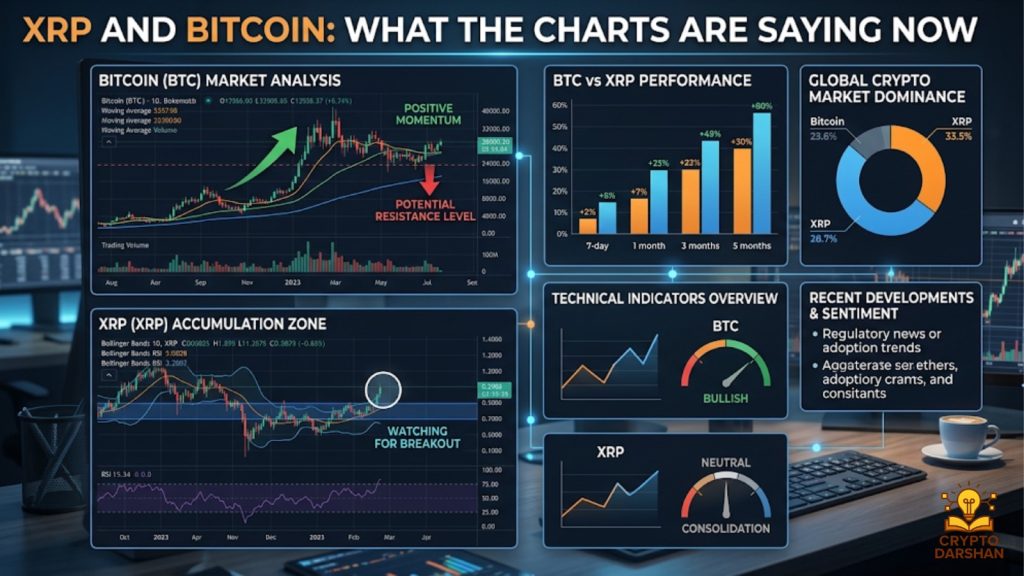
So far, the damage looks manageable rather than catastrophic.
Bitcoin is still trading well above key psychological support at 70,000 dollars, and the pullback of around 2% is small compared with past drops during severe crises.
For XRP, the move from about 1.36 dollars to roughly 1.33 dollars came on high volume, which signals aggressive selling but not necessarily a complete trend reversal.
Analysts note that broader crypto losses have stayed in the 1–3% range, suggesting traders are nervous but not panicking, and many still expect medium‑term uptrends to remain intact.
Key Catalysts Ahead: Three Big Dates
The Islamabad collapse is only one part of the story for XRP and Bitcoin in the coming weeks.
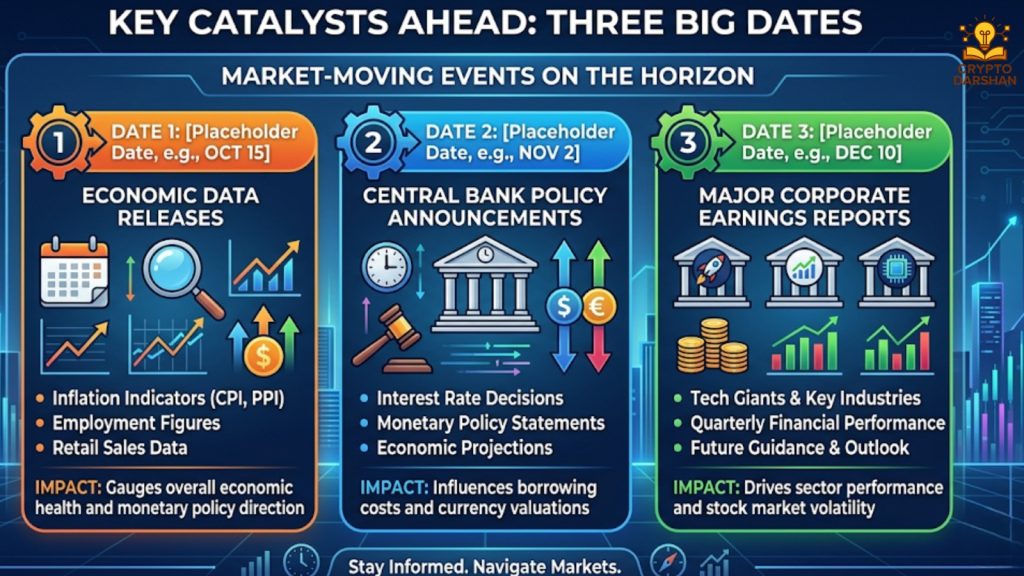
Analysts are watching three major catalysts that could drive the next big moves: the ceasefire deadline, a key U.S. crypto bill window, and the next Federal Reserve meeting.
- The ceasefire tied to the talks is expected to expire around April 22, and any escalation or surprise deal could sharply move prices again.
- In Washington, the CLARITY Act markup window (a regulatory effort that could affect how U.S. law views many tokens) is opening, which could be especially important for XRP, given its long history with U.S. regulators.
- At the end of the month, the Federal Reserve’s FOMC meeting will update markets on interest rates and liquidity, both of which remain powerful drivers for Bitcoin and other major coins.
If tensions ease and regulation turns out more friendly than feared, both XRP and Bitcoin could quickly reclaim recent highs as risk appetite returns.
On the other hand, renewed military tension plus hawkish central bank signals could weigh on all risk assets, including crypto, keeping prices under pressure.
If you want to understand the role of technical foundations during volatile periods, explore Why Consensus Algorithms Matter More Than Most Investors Think.
XRP Price Prediction: Short‑Term Caution, Event‑Driven Moves

In the near term, many traders see XRP locked in an event‑driven zone.
The drop to about 1.33 dollars puts it near a short‑term support band; if this area holds and news improves, a bounce back toward the 1.40–1.50 dollar range is possible as volatility fades.
If global tensions rise and markets face heavier sell-offs, XRP could slide back toward deeper support levels below $1.30, especially if Bitcoin drops firmly under $70,000. In a risk-off environment, investors tend to pull back quickly, and that pressure can ripple across the entire crypto market, helping in mass production.
At the same time, regulation remains a major swing factor. Headlines around U.S. token rules could either open the door for XRP to move higher or add fresh uncertainty. Updates from the CLARITY Act process will be especially important to watch, as they could shape how confidently institutions and everyday users engage with the market.
For crypto to reach true mass production-level adoption, this kind of uncertainty needs to ease—because large-scale growth depends on both market stability and clear, predictable rules.
Bitcoin Price Prediction: Still in a Larger Uptrend

For Bitcoin, the current setback looks more like a pause than a complete trend change.
Even after falling back toward 71,000 dollars, BTC remains close to recent highs and far above older resistance zones that once sat in the mid‑60,000s.
If tensions stabilize and no major negative surprise comes from the Fed, many analysts expect Bitcoin to attempt another run toward and possibly above recent record levels in the coming months.
However, if conflict expands or markets price in higher‑for‑longer interest rates, a deeper correction into the high‑60,000 range cannot be ruled out before the next leg higher.
What Traders Should Watch Next

For now, XRP and Bitcoin are trading in a zone where headlines matter just as much as technical levels. Short-term traders are likely watching intraday moves closely, especially around $70,000 for Bitcoin and the $1.30–$1.35 range for XRP, reacting quickly to any fresh signals coming out of Washington, D.C., Tehran, or Islamabad.
For longer-term holders, this pullback is more of a reminder that geopolitical shocks can shake prices in the short run, but they don’t always break the bigger trend on their own. Still, until key events like ceasefire developments, U.S. regulatory clarity, and the next Federal Reserve decision are out of the way, the market may continue to experience a kind of mass production of volatility, with crypto prices reacting rapidly to every new twist in the narrative.