Bitcoin ended March near 68,000 dollars, posting about a 1.8% gain for the month. This may sound small, but it is important because it marks BTC’s first green monthly candle since September 2025. In other words, Bitcoin has finally broken a five‑month losing streak, its longest run of monthly losses since 2018. For long‑term holders, this close is a sign that the heavy selling pressure that dominated late 2025 and early 2026 may be starting to fade.
The road to that green candle was not smooth. Bitcoin briefly rallied as high as around 76,000 dollars in mid‑March before sharp pullbacks hit after the Federal Reserve’s March meeting and rising geopolitical tensions around Iran. Those events spooked risk markets, sending BTC back below 70,000 dollars and testing the nerves of traders who had just started to hope for a rebound.
How bad was the losing streak?

To understand why March matters, you have to look at what came before. Over the five months leading into March, Bitcoin and the wider crypto market shed roughly 1.57 trillion dollars in value, with November alone wiping out about 610 billion dollars.
February saw BTC dip to just above 60,000 dollars, showing how deep the drawdown had become. This long, grinding decline weighed on sentiment, pushed many short‑term traders out of the market, and made “buying the dip” feel more like catching a falling knife.
March’s 1.8% gain added around 40 billion dollars in value back to the market, which is small compared with what was lost but still a clear reversal in direction. It tells investors that sellers are no longer fully in control, even if buyers have not yet taken over in a big way. Historically, when Bitcoin ends a long losing streak of red monthly candles, it often sets the stage for stronger moves in the following months, as seen after similar patterns in 2018–2019. That does not guarantee a repeat, but it is one reason many market watchers are paying close attention to April.
ETF flows and shifting sentiment
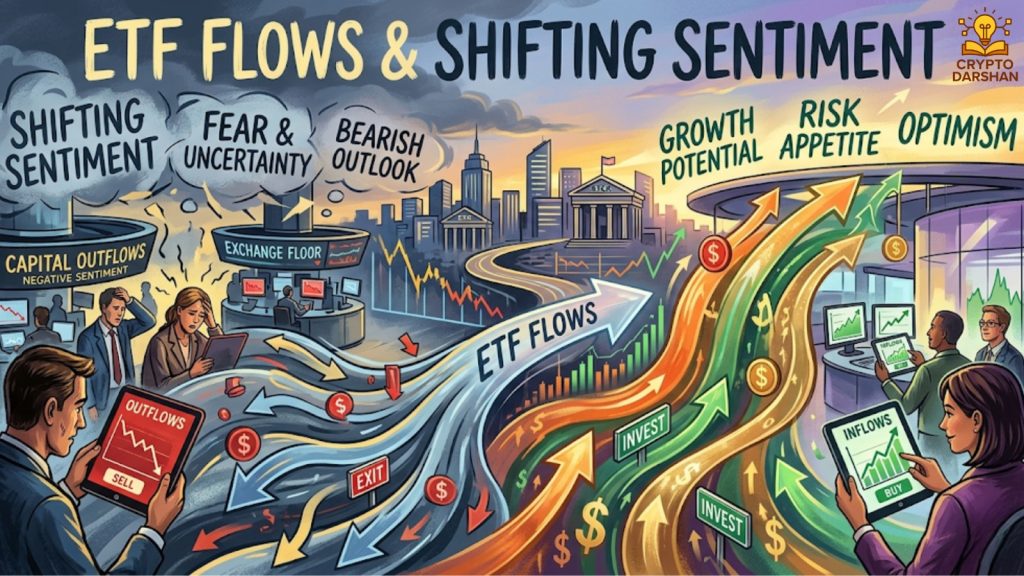
One of the biggest drivers behind March’s stabilization was renewed demand from spot Bitcoin exchange-traded funds (ETFs) in the United States. After four months of net outflows totaling more than 6.5 billion dollars, March finally saw net inflows of about 1.32 billion dollars into these products. That shift suggests that institutional and retail investors using ETFs to gain exposure to BTC are no longer rushing for the exits and have started to cautiously add risk again.
ETF inflows also helped Bitcoin hold up better than other risk assets. While gold and some major stock indexes slid in March amid worries over inflation and energy prices, BTC managed to finish the month higher. This relative strength is important because it supports the idea that Bitcoin is regaining its appeal as a high‑beta asset for investors looking past short‑term headlines. Still, positioning data shows many traders remain cautious and continue to hedge against downside, which could limit aggressive upside in the near term.
Can April build on the momentum?

History gives Bitcoin bulls a reason to keep watching April closely. Since 2013, April has been one of BTC’s stronger months on average, with most Aprils closing in the green and typical gains in the low double digits. After such a losing streak and a weak start to 2026, down about 18% year to date at one point, even a normal April could feel like a relief rally. For some long‑term investors, the recent pullback is already being framed as a potential opportunity rather than a reason to abandon the asset.
While Bitcoin’s recent recovery is encouraging, many retail investors still struggle to stay profitable. As discussed in our breakdown of why most traders lose money, emotional decisions and lack of strategy often prevent traders from capitalizing on market rebounds like this one.
However, there are no guarantees. Bitcoin is still trading around 45% below its all‑time high above 126,000 dollars, so the broader trend is not yet a full‑blown recovery. Key resistance zones in the 70,000 to 72,000 dollar area could cap rallies if buyers lose conviction. Macro risks such as interest‑rate policy, inflation, and geopolitics also remain in play, and any new shock could quickly knock BTC off course again.
What traders should watch next

For April, the market will focus on a few simple signals.
- Price action around 70,000–72,000 dollars: A clear break and hold above this zone would strengthen the case that March’s green candle is the start of a larger uptrend.
- ETF flows: Continued net inflows into Bitcoin ETFs would show that fresh capital is still entering the market and not just rotating around existing holders.
- Volatility and pullbacks: Healthy uptrends often include sharp but short‑lived dips; deep and prolonged sell‑offs would hint that bears are not done yet.
For now, March’s close gives Bitcoin its first real win in months and sends a simple message: the downtrend has at least paused, and the door to a stronger second quarter is open. Whether April walks through that door will depend on how buyers, ETF flows, and macro headlines line up over the next few weeks