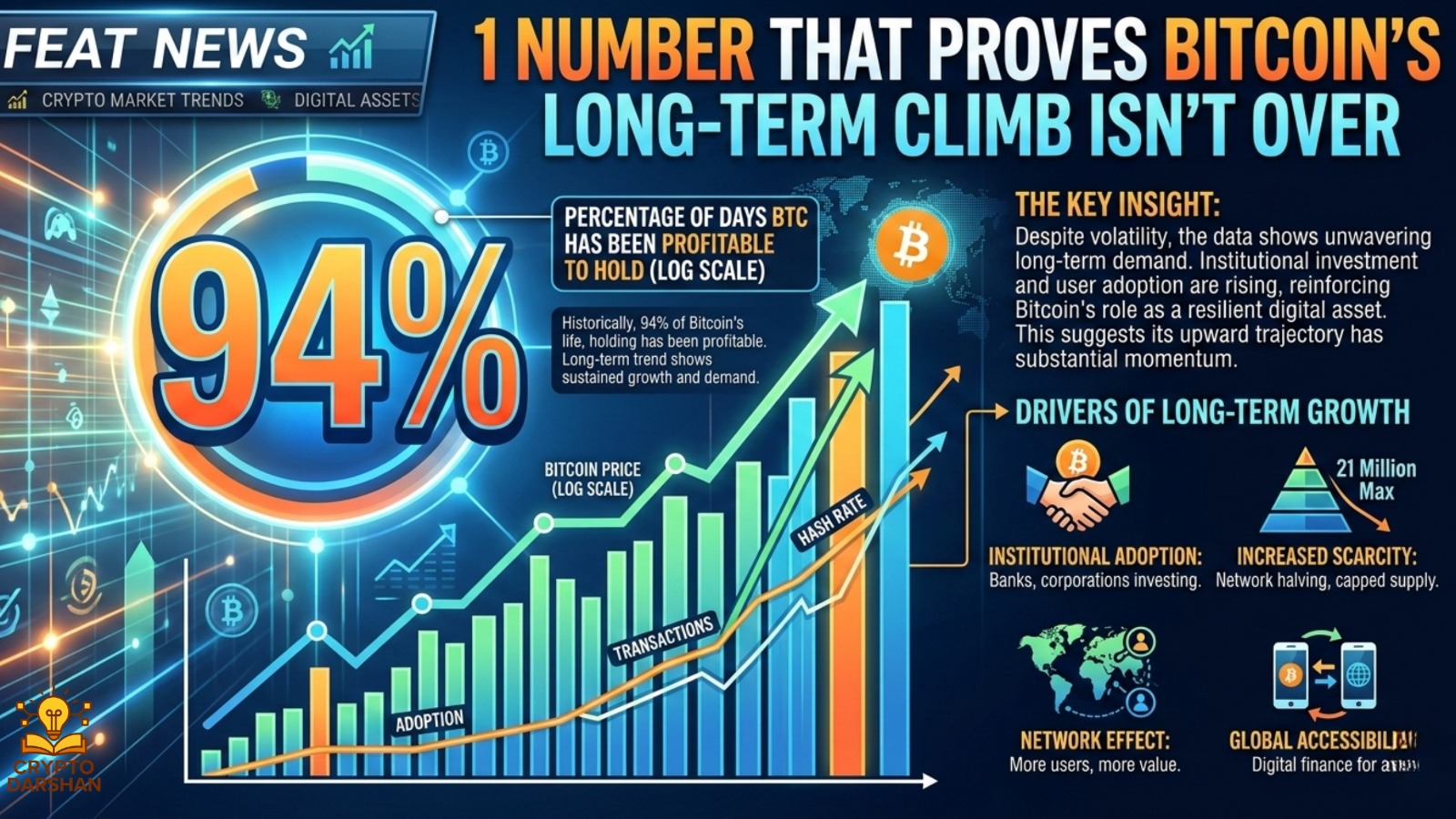
Bitcoin’s long-term climb looks unstoppable when you zoom out from daily ups and downs. Bitcoin has been on a wild ride, hitting new peaks and dipping back down. But one simple number stands out, showing why this digital gold could keep rising for years. It’s not hype, it’s real data on supply and demand that everyday investors can grasp.
The Magic Number: 95% of Bitcoin Already Mined
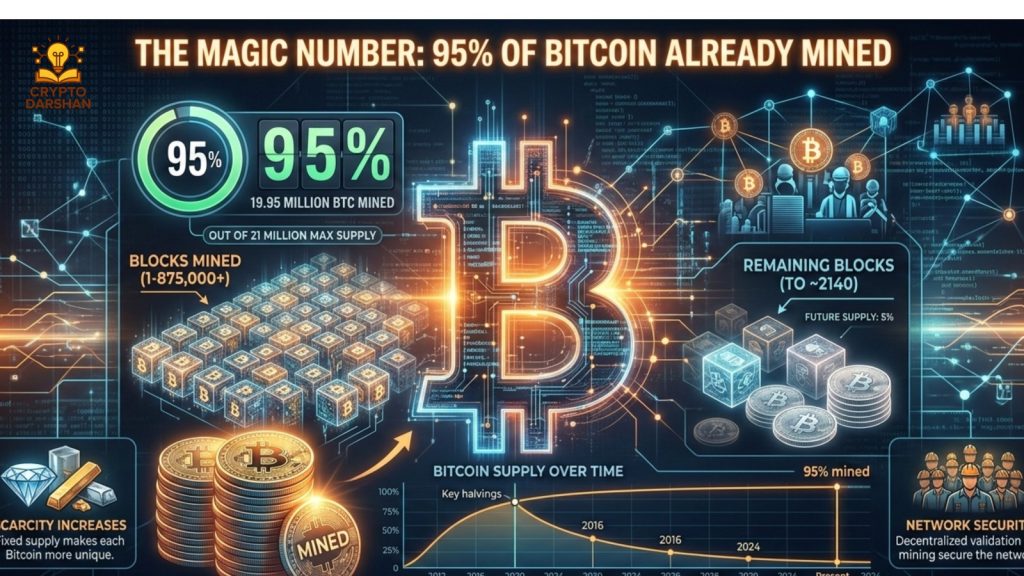
Bitcoin has a hard cap of 21 million coins, like a treasure chest that can’t hold more. Right now, miners have dug up about 95% of them. That leaves just 5% around 1 million coins still to come over the next century or so.
This scarcity isn’t some abstract idea. It means new Bitcoin trickles in more slowly each year. The latest halving in 2024 cut daily rewards in half, and the next one hits around 2028. Fewer coins entering the market creates upward pressure on price as buyers chase what’s left. Understanding Bitcoin’s supply dynamics also helps explain broader market cycles discussed in Bitcoin Bottom in Sight? VanEck Signals End of Downturn as Altcoins Hit Rock Bottom.
Why does this matter for you? Holders aren’t rushing to sell because supply shrinks while demand grows from big players like ETFs. In early 2026, spot Bitcoin ETFs pulled in billions, with Fidelity alone adding $111 million in one day. That demand soaks up the limited new supply, pushing prices higher over time.
Why Scarcity Fuels Bitcoin’s Future: Bitcoin’s long-term climb
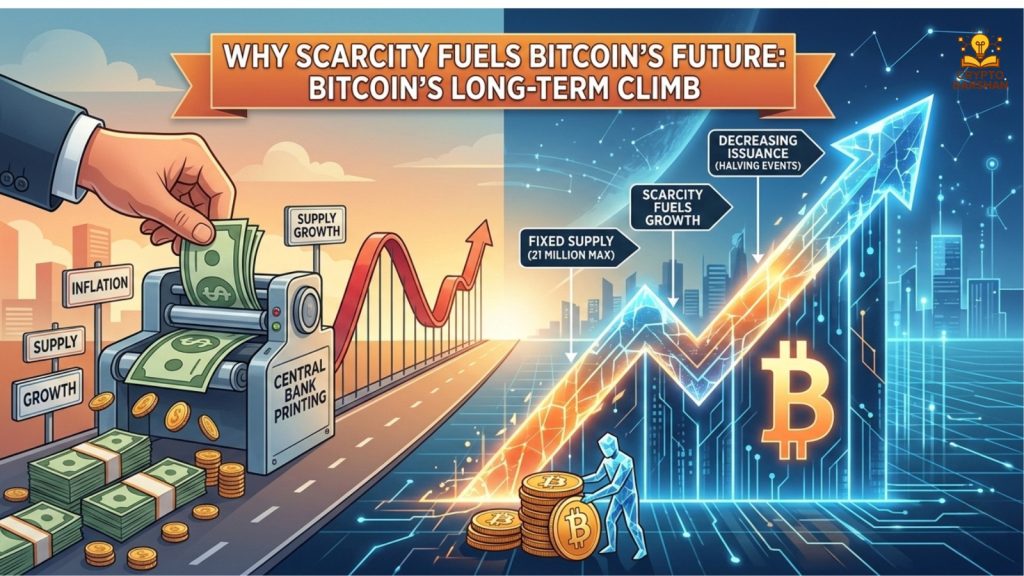
Think of Bitcoin like rare land in a growing city. As more people move in retail folks, companies, even countries, the value per plot goes up. With 95% mined, the daily fresh supply is tiny: just 450 coins now, heading to 225 post-2028.
Experts see this playing out big. Bernstein predicts $150,000 by end of 2026, driven by institutions finally piling in. Grayscale expects a new all-time high in the first half of 2026, thanks to clearer U.S. rules and steady ETF money. Even conservative forecasts like Citi’s $143,000 base case bank on this supply crunch.
Real-world proof? When 88% of wallets were in profit at $95,000 last year, few sold—boosting the rally to $103,000+. Today, with prices hovering high, that “in-profit” rate is even stronger, locking in holders for the long haul.
ETFs and Institutions: The Demand Engine
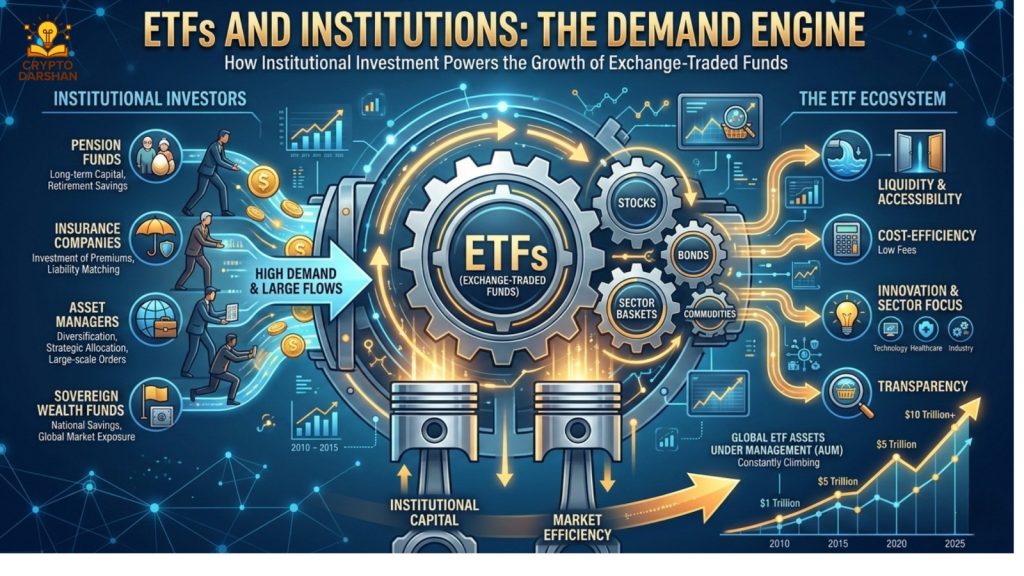
ETFs changed everything. Since launch, they’ve vacuumed up Bitcoin, creating a “demand floor.” Public companies now hold billions in BTC on balance sheets, treating it like a hedge against inflation. Add nation-states eyeing Bitcoin reserves, and you see why 95% mined signals no peak in sight.
In 2026, inflows keep rolling despite dips. Regulatory wins, like potential Clarity Act tweaks, make it safer for pensions and banks to join. This isn’t retail frenzy—it’s steady, big-money buying that matches the shrinking supply.
Volatility? Sure, Bitcoin swings. But history shows halvings spark bull runs: 2020’s led to 2021 highs. The 2024 event set the stage for now, with 2028 looming larger.
Beyond the Number: Real Adoption Stories

Bitcoin isn’t just trading charts. El Salvador thrives on BTC bonds and mining with volcanoes. Companies like MicroStrategy stack sats quarterly. Everyday use grows too remittances in Africa, payments in tough economies.
Metrics back it: On-chain activity surges with ETF buys, but supply stays fixed. Puell Multiple (miner revenue vs. history) turning green signals rallies ahead, just like past cycles.
Risks exist,regulation shifts, and macro storms like rate hikes. But the 95% number overrides: Demand keepers outweigh sellers in a supply squeeze.
What This Means for Your Wallet

If you’re holding Bitcoin, this limited supply can work in your favor. A common strategy is dollar-cost averaging buying small amounts during price dips because over time, patience often pays off. If you’re new to crypto, start small. Many apps now make it simple to begin investing without needing a lot of money.
Looking ahead, long-term predictions for 2026 vary widely, with estimates between $75,000 and $225,000. Still, most analysts agree on one key factor: Bitcoin’s fixed supply. As governments continue printing more traditional money, Bitcoin’s reputation as “digital gold” keeps getting stronger.
That’s why this one number—95%—matters more than it seems. It highlights how scarce Bitcoin already is. While it may not sound exciting, it helps explain why many believe prices could rise over time. For investors who think long term, understanding the bigger picture can make all the difference.