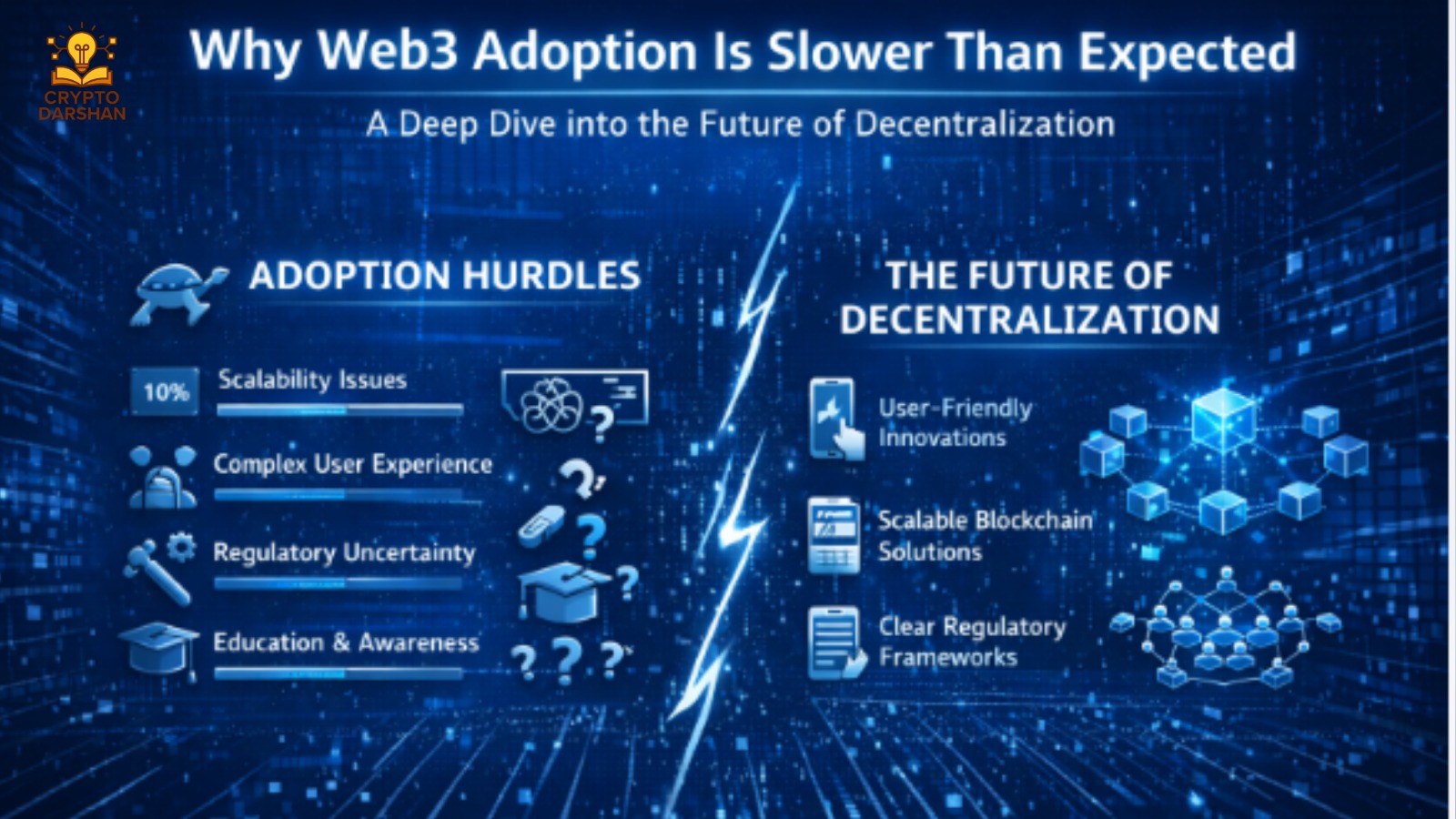
The promise of Web3, a decentralized, user-owned internet powered by blockchain technology, has captured the imagination of technologists, investors, and innovators worldwide. It envisions a digital ecosystem where users control their data, creators are rewarded, and intermediaries are minimized. Yet, despite the hype and billions of dollars in investment, Web3 adoption remains slower than expected.
This comprehensive analysis examines the reasons behind the slow adoption of Web3, considering technical, economic, psychological, and regulatory factors. It also highlights what needs to change for Web3 to achieve mainstream success.
Understanding Web3: The Vision Behind the Movement
Web3 represents the next evolution of the internet a decentralized version of the web built on blockchain technology. Unlike Web2, which is dominated by centralized platforms like Google, Facebook, and Amazon, Web3 aims to give users ownership and control over their digital identities, assets, and interactions.
Key Principles of Web3
- Decentralization: Data and applications are hosted on distributed networks rather than centralized servers.
- Ownership: Users own their digital assets, identities, and content through cryptographic keys.
- Transparency: Blockchain ensures open and verifiable transactions.
- Interoperability: Applications can interact seamlessly across different blockchains.
- Tokenization: Digital tokens represent ownership, access, or participation rights.
Despite these revolutionary ideas, the transition from Web2 to Web3 has been far from smooth. The gap between vision and reality is wide, and several barriers have slowed down adoption.
The History of Web3: From Web1 to the Decentralized Internet
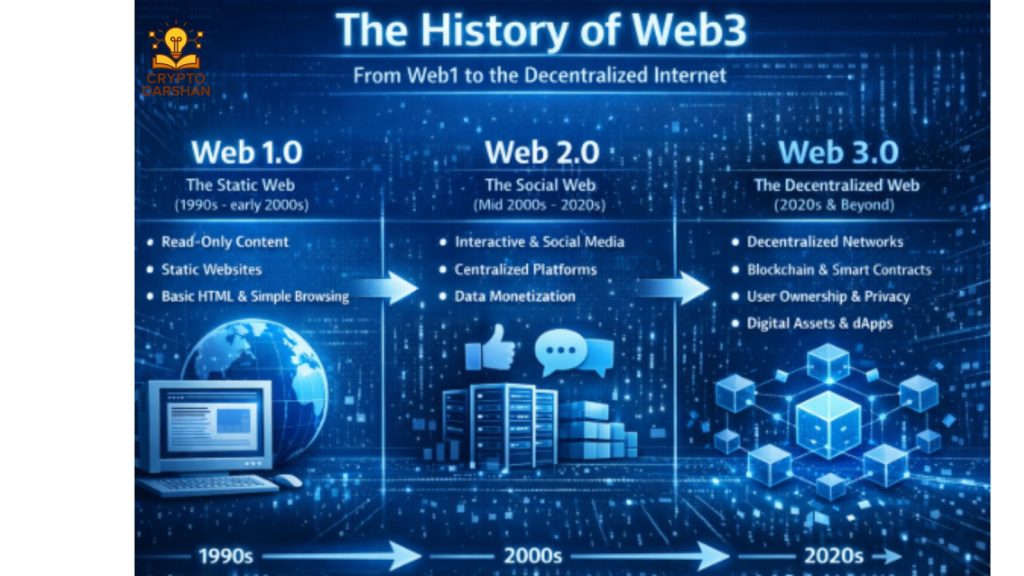
To understand why Web3 adoption is slower than expected, it’s essential to trace its origins and evolution. The internet has gone through several distinct phases, each building upon the previous one.
1. Web1: The Static Web (1990s–early 2000s)
Web1, often called the “read-only web,” was the first generation of the internet. It consisted mainly of static websites where users could consume information but not interact or contribute.
- Characteristics: Static HTML pages, limited interactivity, centralized hosting.
- Examples: Early websites like Yahoo!, Netscape, and personal blogs.
- Limitations: Lack of user-generated content and dynamic engagement.
Web1 laid the foundation for global connectivity but offered little in terms of participation or personalization.
2. Web2: The Social and Interactive Web (mid-2000s–present)
Web2 marked the rise of user-generated content and social media platforms. It transformed the internet into a participatory space where users could create, share, and interact.
- Characteristics: Dynamic content, social networking, cloud computing, mobile apps.
- Examples: Facebook, YouTube, Twitter, Instagram, and Google.
- Business Model: Centralized platforms monetized user data through targeted advertising.
While Web2 democratized content creation, it also concentrated power in the hands of a few tech giants. Users became the product, as their data was collected and monetized without direct compensation.
3. The Birth of Web3: The Decentralized Web (2014–present)
The term “Web3” was coined by Gavin Wood, co-founder of Ethereum, in 2014. He envisioned a decentralized internet where users could interact without intermediaries, using blockchain as the foundation for trust and ownership.
- Core Idea: Replace centralized servers with decentralized networks.
- Technological Backbone: Blockchain, smart contracts, and cryptographic tokens.
- Key Innovations:
- Bitcoin (2009): Introduced decentralized digital currency.
- Ethereum (2015): Enabled programmable smart contracts.
- DeFi (2019–2020): Brought decentralized finance to the mainstream.
- NFTs (2021): Popularized digital ownership and creator monetization.
4. The Evolution of Web3 Ecosystem
Over the years, Web3 has expanded beyond cryptocurrencies into various sectors:
- Decentralized Finance (DeFi): Platforms like Uniswap and Aave enable peer-to-peer financial services.
- Non-Fungible Tokens (NFTs): Empower artists and creators to monetize digital assets.
- Decentralized Autonomous Organizations (DAOs): Enable community-driven governance.
- Metaverse and Web3 Gaming: Combine blockchain with immersive digital experiences.
Despite these innovations, Web3 remains in its early stages. The infrastructure, usability, and regulatory clarity required for mass adoption are still being developed. Web3 is a key part of the broader crypto ecosystem. Learn more in FromBitcoin to DeFi.
1. Complexity and Poor User Experience

One of the biggest hurdles to Web3 adoption is its complexity. For the average internet user, interacting with blockchain-based applications is far from intuitive.
1.1 Wallets and Private Keys
To use Web3, users must create a crypto wallet, manage private keys, and understand concepts like gas fees and seed phrases. Losing a private key means losing access to assets permanently — a level of responsibility most users are not accustomed to.
1.2 Complicated Onboarding
Setting up a wallet, buying cryptocurrency, and connecting to decentralized applications (dApps) can be overwhelming. In contrast, Web2 platforms offer seamless onboarding with simple email or social logins.
1.3 Poor Interface Design
Many dApps lack the polished design and usability of mainstream Web2 apps. The interfaces often feel clunky, slow, and unintuitive, discouraging non-technical users from exploring further.
1.4 Fragmented Ecosystem
Different blockchains (Ethereum, Solana, Polygon, etc.) have their own standards, tokens, and wallets. This fragmentation creates confusion and friction for users trying to navigate the ecosystem.
2. Scalability and Performance Limitations

Web3 technologies, particularly blockchain networks, face significant scalability challenges that limit their ability to handle mass adoption.
2.1 Slow Transaction Speeds
Popular blockchains like Ethereum can process only a limited number of transactions per second (TPS). During peak usage, network congestion leads to delays and high transaction fees.
2.2 High Gas Fees
Transaction costs on networks like Ethereum can spike dramatically, making small transactions impractical. This discourages everyday users and developers from building or using dApps.
2.3 Layer 2 Solutions Still Maturing
While Layer 2 scaling solutions (like Arbitrum, Optimism, and zkSync) promise faster and cheaper transactions, they are still evolving. Many users find bridging assets between layers confusing and risky.
2.4 Energy Consumption Concerns
Although Ethereum’s shift to Proof of Stake reduced energy usage, other blockchains still face criticism for their environmental impact. This perception affects public acceptance and institutional adoption.
3. Lack of Clear Use Cases for the Average User

While Web3 offers exciting possibilities, many of its current applications cater primarily to crypto enthusiasts rather than mainstream users.
3.1 Speculative Focus
Much of Web3 activity revolves around trading cryptocurrencies, NFTs, and tokens activities driven by speculation rather than utility. This speculative nature alienates users seeking practical value.
3.2 Limited Real-World Integration
Few Web3 applications have achieved meaningful integration into daily life. Most people still rely on traditional Web2 services for communication, shopping, and entertainment.
3.3 Overhyped Projects
The Web3 space has seen numerous projects that overpromise and underdeliver. Failed NFT collections, rug pulls, and abandoned dApps have eroded public trust.
3.4 Lack of Compelling Consumer Benefits
For most users, Web3 doesn’t yet offer a clear advantage over existing Web2 platforms. Without tangible benefits like better performance, lower costs, or unique features, adoption remains limited.
4. Regulatory Uncertainty
Regulation plays a crucial role in shaping the future of Web3. However, the current regulatory landscape is fragmented and uncertain.
4.1 Ambiguous Legal Frameworks
Governments worldwide are still figuring out how to classify cryptocurrencies, tokens, and decentralized organizations. This uncertainty discourages businesses from investing heavily in Web3 projects.
4.2 Compliance Challenges
Decentralized systems often lack a central authority, making compliance with Know Your Customer (KYC) and Anti-Money Laundering (AML) regulations difficult.
4.3 Fear of Crackdowns
High-profile regulatory actions against crypto exchanges and projects have created fear within the community. Many developers hesitate to launch new projects due to potential legal risks.
4.4 Global Inconsistency
Different countries have vastly different approaches to crypto regulation. This inconsistency complicates cross-border operations and limits global scalability.
5. Security and Trust Issues

Security remains a major concern in the Web3 ecosystem. Despite blockchain’s inherent security, vulnerabilities in smart contracts and user behavior have led to massive losses.
5.1 Smart Contract Exploits
Bugs and vulnerabilities in smart contracts have resulted in billions of dollars in hacks and exploits. Once funds are stolen, recovery is nearly impossible.
5.2 Phishing and Scams
The decentralized nature of Web3 makes it fertile ground for scams. Fake airdrops, phishing websites, and rug pulls have damaged the ecosystem’s reputation.
5.3 Lack of Consumer Protection
Unlike traditional financial systems, Web3 lacks mechanisms for dispute resolution or fraud protection. Users bear full responsibility for their actions, which can be intimidating.
5.4 Trust Deficit
Mainstream users are hesitant to trust decentralized systems without clear accountability. The absence of customer support or centralized oversight adds to this hesitation.
7. Psychological and Cultural Barriers

Beyond technology and economics, human psychology plays a significant role in adoption rates.
7.1 Resistance to Change
Most users are comfortable with familiar Web2 platforms. Switching to Web3 requires learning new tools and concepts, which many find unnecessary or intimidating.
7.2 Lack of Trust in New Systems
People tend to trust established brands and institutions. Web3’s decentralized nature, while empowering, also removes the safety net of centralized accountability.
7.3 Negative Media Coverage
Mainstream media often focuses on scams, hacks, and speculative bubbles, shaping public perception negatively. This discourages newcomers from exploring the space.
7.4 Generational Divide
Younger, tech-savvy users are more open to experimenting with Web3, while older generations remain skeptical. This generational gap slows widespread adoption.
8. Interoperability Challenges
For Web3 to succeed, different blockchains and protocols must work seamlessly together. However, interoperability remains a major challenge.
8.1 Siloed Blockchains
Most blockchains operate independently, with limited ability to communicate or share data. This fragmentation hinders the creation of unified user experiences.
8.2 Complex Bridging Processes
Moving assets between blockchains often requires using third-party bridges, which can be slow, expensive, and vulnerable to hacks.
8.3 Lack of Universal Standards
The absence of standardized protocols for identity, data sharing, and token formats creates compatibility issues across platforms.
8.4 Developer Fragmentation
Developers must choose which blockchain to build on, limiting cross-platform innovation and collaboration.
9. Limited Developer Tools and Infrastructure

Developing Web3 applications is still more complex than building traditional Web2 apps.
9.1 Steep Learning Curve
Developers must learn new programming languages like Solidity or Rust, understand blockchain architecture, and manage smart contract security.
9.2 Immature Tooling
While frameworks like Hardhat and Truffle exist, the overall developer ecosystem is still maturing. Debugging, testing, and deployment tools are less robust than Web2 equivalents.
9.3 Infrastructure Bottlenecks
Running decentralized applications requires reliable nodes, oracles, and indexing services. Outages or inefficiencies in these components can disrupt entire ecosystems.
9.4 Limited Talent Pool
The demand for skilled blockchain developers far exceeds supply, slowing innovation and project delivery.
10. Fragmented Community and Governance Issues
Web3’s decentralized nature also leads to governance challenges.
10.1 DAO Inefficiencies
Decentralized Autonomous Organizations (DAOs) promise community-driven governance but often struggle with voter apathy, low participation, and decision-making gridlock.
10.2 Conflicting Interests
Token holders, developers, and users may have different priorities, leading to conflicts within communities.
10.3 Lack of Leadership
While decentralization is a strength, the absence of clear leadership can slow progress and coordination.
10.4 Governance Token Concentration
In many DAOs, a small number of large holders control most of the voting power, undermining the principle of decentralization.
11. Education and Awareness Gaps

A lack of understanding about Web3 concepts remains a major barrier to adoption.
11.1 Limited Public Knowledge
Most people still don’t understand how blockchain works or why decentralization matters. Without education, adoption will remain niche.
11.2 Misconceptions About Web3
Many associate Web3 solely with cryptocurrencies or NFTs, overlooking its broader potential in identity, data ownership, and governance.
11.3 Lack of Institutional Education
Few universities or training programs offer comprehensive Web3 education, limiting the development of skilled professionals.
11.4 Poor Communication from Projects
Many Web3 projects fail to communicate their value propositions clearly, using jargon that alienates non-technical audiences.
12. The Role of Big Tech and Centralization Forces
Ironically, the very entities Web3 seeks to disrupt, Big Tech companies still dominate the digital landscape.
12.1 Network Effects of Web2 Giants
Platforms like Facebook, Google, and Amazon benefit from massive user bases and data ecosystems, making it difficult for decentralized alternatives to compete.
12.2 Centralized Infrastructure Dependence
Many Web3 projects still rely on centralized services like AWS or Cloudflare for hosting, undermining the decentralization narrative.
12.3 Corporate Resistance
Big Tech companies have little incentive to support Web3, as it threatens their business models based on data control and advertising.
12.4 Acquisition and Absorption
Some Web3 innovations are absorbed by large corporations through acquisitions, diluting their decentralized ethos.
13. The Path Forward: What Needs to Change
Despite the challenges, Web3’s potential remains immense. For adoption to accelerate, several key developments must occur.
13.1 Simplified User Experience
Web3 applications must become as easy to use as Web2 platforms. Seamless onboarding, intuitive wallets, and gasless transactions can make a huge difference.
13.2 Scalable Infrastructure
Layer 2 solutions, sharding, and cross-chain interoperability must mature to support mass adoption without compromising decentralization.
13.3 Real-World Use Cases
Developers should focus on solving real problems such as digital identity, supply chain transparency, and creator monetization, rather than speculative trading.
13.4 Regulatory Clarity
Governments need to establish clear, supportive frameworks that encourage innovation while protecting consumers.
13.5 Enhanced Security Standards
Auditing, insurance, and better smart contract practices can reduce risks and build trust among users.
13.6 Education and Awareness
Comprehensive education initiatives can demystify Web3 and empower users to participate confidently.
13.7 Collaboration Over Competition
Interoperability and open standards can unite the fragmented ecosystem, fostering collective growth.
14. Emerging Trends That Could Accelerate Adoption

Several emerging trends indicate that Web3 adoption may soon gain momentum.
14.1 Decentralized Identity (DID)
DID solutions allow users to control their digital identities securely, reducing reliance on centralized logins.
14.2 Web3 Gaming
Play-to-earn and blockchain-based gaming are introducing millions of users to Web3 concepts in an engaging way.
14.3 Tokenized Real-World Assets
Real estate, art, and commodities are being tokenized, bridging the gap between traditional finance and blockchain.
14.4 SocialFi and Creator Economy
Decentralized social platforms and creator tools empower individuals to monetize content without intermediaries.
14.5 Institutional Adoption
Banks, corporations, and governments are exploring blockchain for payments, identity, and record-keeping, legitimizing the technology.
15. The Long-Term Outlook for Web3

Web3 adoption may be slower than expected, but it is steadily progressing. Every technological revolution from the internet to smartphones faced skepticism and slow early growth. The same pattern is unfolding with Web3.
15.1 Gradual Integration
Rather than replacing Web2 overnight, Web3 will likely integrate gradually into existing systems, creating hybrid models.
15.2 Infrastructure Maturity
As scalability, security, and usability improve, barriers will diminish, paving the way for mainstream adoption.
15.3 Cultural Shift
As digital ownership and privacy become more valued, users will naturally gravitate toward decentralized alternatives.
15.4 The Next Generation
Younger generations growing up with blockchain-native experiences will drive the next wave of adoption.
Conclusion
Web3’s slower-than-expected adoption is not a sign of failure but a reflection of the immense complexity involved in reshaping the internet’s foundation. The challenges from usability and scalability to regulation and trust are significant but not insurmountable.
As technology matures, education spreads, and real-world use cases emerge, Web3 will evolve from a niche movement into a mainstream paradigm. The journey may be long, but the destination a more open, equitable, and user-owned internet, remains worth pursuing.
The future of Web3 depends not on hype, but on building sustainable, secure, and user-friendly systems that deliver real value. When that happens, adoption will follow naturally, not as a trend, but as a transformation.