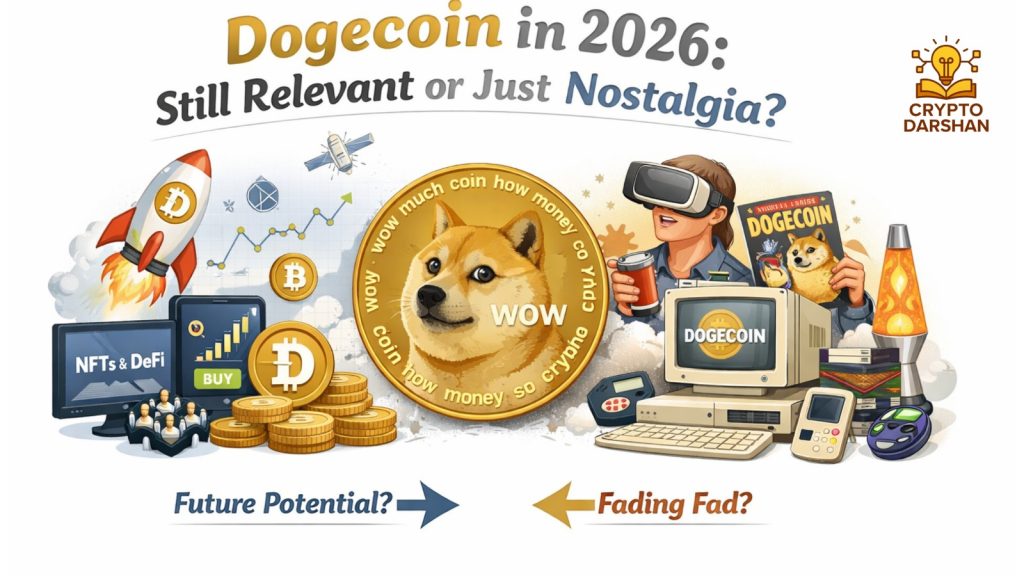
Dogecoin in 2026 trades around $0.094, down from its 2025 peaks, sparking debates on whether it’s evolving beyond meme status or clinging to nostalgia. Dogecoin, the cryptocurrency that began as a joke in 2013, has had one of the most unpredictable journeys in the digital asset world. What started as a meme inspired by the Shiba Inu dog quickly evolved into a cultural phenomenon, capturing the attention of retail investors, celebrities, and even major corporations. By 2021, Dogecoin had become a household name, largely thanks to social media hype and endorsements from figures like Elon Musk. But as the crypto market matured and new technologies emerged, Dogecoin’s relevance began to be questioned.
Now, in 2026, the question remains: is Dogecoin still a meaningful player in the crypto ecosystem, or has it become a nostalgic relic of the early crypto boom?
This article explores Dogecoin’s evolution, its current standing, technological developments, community strength, and its potential future in a rapidly changing digital economy.
The Origins of Dogecoin: From Meme to Movement

The story of Dogecoin dates back to 2013, when two software engineers, Billy Markus and Jackson Palmer, met and decided to do something different. Unlike the serious, technical style of Bitcoin, they wanted to create a more fun and approachable cryptocurrency. Thus, Dogecoin was born – it is not only a digital currency, but also has a strong “joke” flavor.
Unlike Bitcoin, which was often associated with complex technology and serious financial discussions, Dogecoin was approachable and humorous. It quickly gained traction on Reddit and other online communities, where users began tipping each other small amounts of Dogecoin for entertaining or helpful posts.
By 2014, Dogecoin had already achieved several milestones, including sponsoring NASCAR driver Josh Wise and funding charitable causes such as clean water projects in Kenya. These early successes demonstrated that Dogecoin was more than just a meme it was a community-driven movement.
Dogecoin’s Meteoric Rise: The 2021 Boom

Dogecoin’s biggest moment came in 2021, during the massive bull run that saw Bitcoin and Ethereum reach all-time highs. Fueled by social media hype, celebrity endorsements, and the power of online communities, Dogecoin’s price skyrocketed from fractions of a cent to over $0.70 in May 2021.
Key Factors Behind the 2021 Surge
- Elon Musk’s Influence
Tesla CEO Elon Musk became Dogecoin’s most famous supporter, frequently tweeting memes and comments about the coin. His tweets often caused immediate price spikes, earning him the nickname “The Dogefather.” - Social Media and Meme Culture
Platforms like Reddit, Twitter, and TikTok played a crucial role in Dogecoin’s viral growth. The “Dogecoin to the Moon” movement became a rallying cry for retail investors seeking to challenge traditional finance. - Accessibility and Low Entry Barrier
Dogecoin’s low price per coin made it appealing to new investors who felt priced out of Bitcoin and Ethereum. It became a gateway for many first-time crypto buyers. - Community Spirit
The Dogecoin community’s humor, generosity, and inclusivity helped sustain interest even during market downturns. The coin’s slogan, “Do Only Good Everyday,” reflected its positive ethos.
Despite its success, critics argued that Dogecoin lacked real-world utility and technological innovation. Many viewed it as a speculative asset driven by hype rather than fundamentals.
Dogecoin’s Technological Foundation
Dogecoin is based on the Luckycoin protocol, which itself is derived from Litecoin, a fork of Bitcoin. It uses the Scrypt algorithm, making it more energy-efficient than Bitcoin’s SHA-256 mining process. Dogecoin’s block time is one minute, significantly faster than Bitcoin’s ten minutes, allowing for quicker transactions.
Key Technical Features
- Algorithm: Scrypt (Proof-of-Work)
- Block Time: 1 minute
- Block Reward: 10,000 DOGE per block
- Total Supply: Unlimited (Inflationary model)
- Transaction Speed: Approximately 33 transactions per second
Dogecoin’s inflationary supply model is one of its defining characteristics. Unlike Bitcoin, which has a capped supply of 21 million coins, Dogecoin has no maximum limit. Around 5 billion new DOGE are added to circulation each year. This design ensures that Dogecoin remains abundant and suitable for everyday transactions rather than hoarding.
Dogecoin in 2026: The Current Landscape
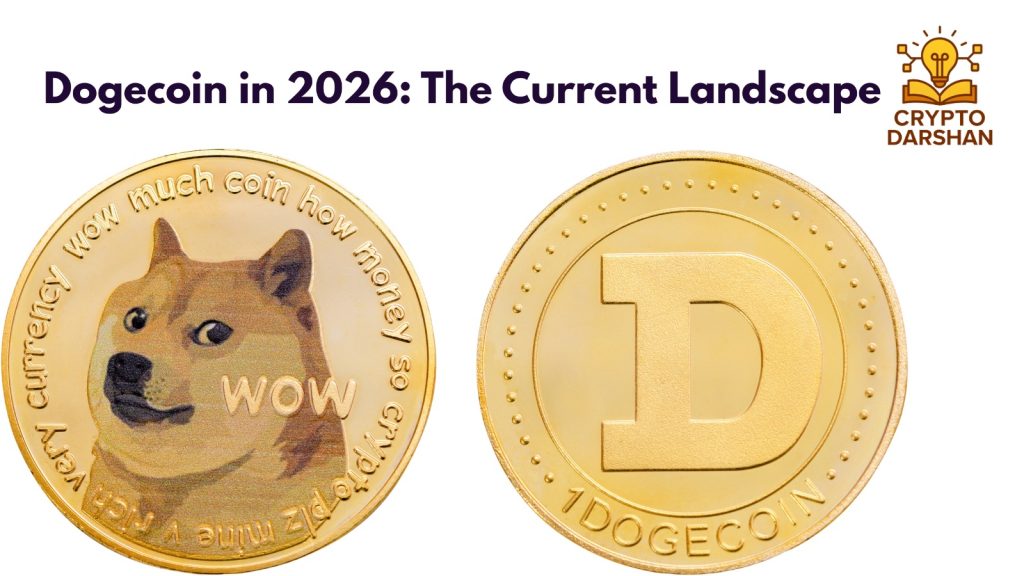
As of 2026, Dogecoin remains one of the most recognizable cryptocurrencies in the world. While it no longer dominates headlines as it did in 2021, it continues to maintain a loyal community and a stable presence in the top 20 cryptocurrencies by market capitalization.
Dogecoin’s rise proves that meme coin culture and community-driven narratives can push a cryptocurrency into the mainstream even without complex technology behind it. Top Meme Coins 2026: Dogecoin and Shiba Alternatives
Market Performance
Dogecoin’s price has stabilized compared to its volatile past. It trades within a moderate range, supported by consistent trading volume and community engagement. Institutional interest has waned, but retail investors still see Dogecoin as a symbol of crypto’s playful side.
Adoption and Use Cases
Dogecoin’s adoption has grown modestly over the years. Several online merchants, gaming platforms, and tipping services accept DOGE as payment. The integration of Dogecoin into payment processors like BitPay and Coinbase Commerce has made it easier for businesses to accept it.
In 2024, Elon Musk’s X (formerly Twitter) announced limited support for Dogecoin payments, allowing users to tip creators and make small transactions. This moves reignited interest in Dogecoin’s utility as a microtransaction currency.
Technological Developments
While Dogecoin’s core development has been slower compared to other major cryptocurrencies, the Dogecoin Foundation has made efforts to modernize the network. Key updates include:
- Improved Security and Node Synchronization: Enhancements to make the network more stable and secure.
- Integration with the Ethereum Ecosystem: Through wrapped DOGE (wDOGE), users can now use Dogecoin in decentralized finance (DeFi) applications.
- Community-Driven Development: Open-source contributions have increased, with developers focusing on usability and scalability.
Despite these improvements, Dogecoin still lags behind newer blockchains that offer smart contracts, staking, and advanced scalability solutions.
The Role of Community in Dogecoin’s Longevity

Dogecoin’s greatest strength has always been its community. Unlike many cryptocurrencies that rely heavily on institutional backing or complex technology, Dogecoin thrives on its social and cultural appeal.
The Power of the Doge Army
The “Doge Army” remains active across social media platforms, promoting positivity, humor, and inclusivity. This community-driven energy has kept Dogecoin relevant even during bear markets. The Dogecoin subreddit, with millions of members, continues to be a hub for discussions, memes, and charitable initiatives.
Charitable and Social Impact
Dogecoin’s community has a long history of philanthropy. From funding clean water projects in Kenya to supporting disaster relief efforts, Dogecoin holders have consistently used their resources for good causes. This charitable spirit reinforces Dogecoin’s identity as a currency with a conscience.
Cultural Relevance
Dogecoin’s meme-based origin has made it a cultural icon. It represents the intersection of internet culture, finance, and humor. Even in 2026, Dogecoin memes circulate widely, keeping the brand alive in the public consciousness.
Comparing Dogecoin to Other Cryptocurrencies in 2026

The crypto landscape in 2026 is vastly different from what it was five years ago. With the rise of Web3, AI-integrated blockchains, and central bank digital currencies (CBDCs), the competition for relevance is fierce.
Dogecoin vs. Bitcoin
Bitcoin remains the dominant store of value in the crypto world. Its scarcity and institutional adoption give it a level of legitimacy that Dogecoin lacks. However, Dogecoin’s faster transaction times and lower fees make it more practical for small payments.
Dogecoin vs. Ethereum
Ethereum’s smart contract capabilities and vast ecosystem of decentralized applications (dApps) make it a technological powerhouse. Dogecoin, on the other hand, focuses on simplicity and accessibility. While Ethereum drives innovation, Dogecoin thrives on community and culture.
Dogecoin vs. Newer Cryptos
Newer cryptocurrencies like Solana, Avalanche, and Cardano offer advanced features such as high-speed transactions, low fees, and interoperability. Dogecoin’s lack of smart contract functionality limits its competitiveness in these areas. However, its brand recognition and loyal user base give it a unique advantage that technology alone cannot replicate.
The Economics of Dogecoin: Inflation and Value

Dogecoin’s inflationary model continues to be a topic of debate. With 5 billion new coins minted annually, its supply grows steadily. This design ensures that Dogecoin remains affordable and abundant, supporting its use as a transactional currency.
Pros of Inflationary Supply
- Encourages Spending: Holders are more likely to use Dogecoin for transactions rather than hoard it.
- Stable Transaction Fees: The abundance of coins helps maintain low fees.
- Sustainable Mining Rewards: Continuous issuance ensures miners remain incentivized to secure the network.
Cons of Inflationary Supply
- Limited Store of Value: Inflation dilutes long-term value compared to deflationary assets like Bitcoin.
- Investor Hesitation: Some investors prefer assets with capped supply for long-term appreciation.
- Dependence on Demand: Sustained demand is necessary to offset inflationary pressure.
Despite these challenges, Dogecoin’s economic model aligns with its original vision: a fun, usable, and accessible digital currency for everyday transactions.
Integration with Emerging Technologies
As blockchain technology merges with artificial intelligence, the Internet of Things (IoT), and decentralized identity systems, Dogecoin could integrate into broader ecosystems. For example, IoT devices could use Dogecoin for automated microtransactions, or AI-driven platforms could use it for content monetization.
Challenges Facing Dogecoin in 2026

Despite its enduring popularity, Dogecoin faces several challenges that could impact its long-term relevance.
1. Technological Stagnation
Dogecoin’s development pace remains slow compared to other major cryptocurrencies. Without significant upgrades, it risks falling behind in scalability, security, and interoperability.
2. Competition from Utility Tokens
Newer cryptocurrencies offer advanced features like smart contracts, staking, and decentralized governance. Dogecoin’s lack of these capabilities limits its utility beyond simple transactions.
3. Regulatory Uncertainty
Global crypto regulations continue to evolve. While Dogecoin’s decentralized nature offers resilience, increased scrutiny on meme coins could affect its accessibility on major exchanges.
4. Market Volatility
Dogecoin’s price remains heavily influenced by social media trends and celebrity endorsements. This volatility can deter serious investors seeking stability.
5. Perception as a “Joke Coin”
Despite its achievements, Dogecoin still struggles to shed its meme coin label. For many, it symbolizes the speculative side of crypto rather than technological innovation.
The Role of Elon Musk and Corporate Influence

Elon Musk’s relationship with Dogecoin remains a defining factor in its public perception. His companies, including Tesla and X, have experimented with Dogecoin payments, lending credibility to the coin. However, this dependence on a single influencer also poses risks. If Musk’s interest wanes, Dogecoin could lose a significant source of visibility.
In 2025, Musk hinted at integrating Dogecoin into Starlink’s payment system for microtransactions in remote areas. While still in early stages, such initiatives could expand Dogecoin’s real-world utility.
Dogecoin’s Environmental Impact
Dogecoin’s Proof-of-Work (PoW) mechanism consumes energy, though significantly less than Bitcoin due to its Scrypt algorithm. As environmental concerns grow, the crypto industry is shifting toward greener alternatives like Proof-of-Stake (PoS).
The Dogecoin Foundation has discussed potential hybrid models or partnerships to reduce energy consumption. If implemented, these changes could enhance Dogecoin’s sustainability and appeal to eco-conscious users.
Predictions for Dogecoin’s Future

Scenario 1: Continued Relevance Through Community and Culture
Dogecoin could maintain its position as the “people’s crypto,” driven by its loyal community and cultural significance. It may not compete technologically with advanced blockchains, but its simplicity and charm could ensure its survival as a niche digital currency.
Scenario 2: Integration into Broader Ecosystems
If Dogecoin successfully integrates with DeFi, gaming, and social media platforms, it could gain renewed utility. Partnerships with major tech companies could further solidify its role in digital payments.
Scenario 3: Gradual Decline into Nostalgia
Without significant innovation or adoption, Dogecoin could fade into nostalgia a beloved relic of crypto’s early days. It would remain a symbol of internet culture but lose financial relevance.
Expert Opinions on Dogecoin’s Future
Crypto analysts remain divided on Dogecoin’s long-term prospects. Some view it as a resilient community-driven asset, while others see it as a speculative bubble that has already peaked.
- Optimists argue that Dogecoin’s brand recognition and simplicity make it ideal for mass adoption.
- Skeptics believe that without technological innovation, Dogecoin will struggle to stay relevant in a rapidly evolving market.
Financial institutions have shown limited interest in Dogecoin compared to Bitcoin or Ethereum, but retail investors continue to support it as a fun and accessible entry point into crypto.
Dogecoin’s Legacy in the Crypto World
Regardless of its future trajectory, Dogecoin’s impact on the crypto industry is undeniable. It introduced millions of people to digital currencies, demonstrated the power of online communities, and proved that humor and finance can coexist.
Dogecoin’s legacy lies not in its technology but in its spirit. It represents the democratization of finance, the creativity of internet culture, and the unpredictable nature of decentralized movements.
Dogecoin continues to be one of the most sentiment-driven crypto assets, where social media trends and influencer attention can outweigh fundamentals. Financial Freedom ≠ Financial Literacy: The Crypto Perspective
Dogecoin in the Web3 Era
The rise of Web3 a decentralized internet powered by blockchain technology, has opened new opportunities for Dogecoin. Through cross-chain bridges and wrapped tokens, Dogecoin can now interact with decentralized applications (dApps) on networks like Ethereum and Binance Smart Chain.
This interoperability has expanded Dogecoin’s use cases beyond simple payments. Users can stake wrapped Dogecoin in liquidity pools, participate in decentralized exchanges, and even use it as collateral in lending platforms. These integrations have given Dogecoin a new layer of utility in the evolving digital economy.
Dogecoin and the Metaverse
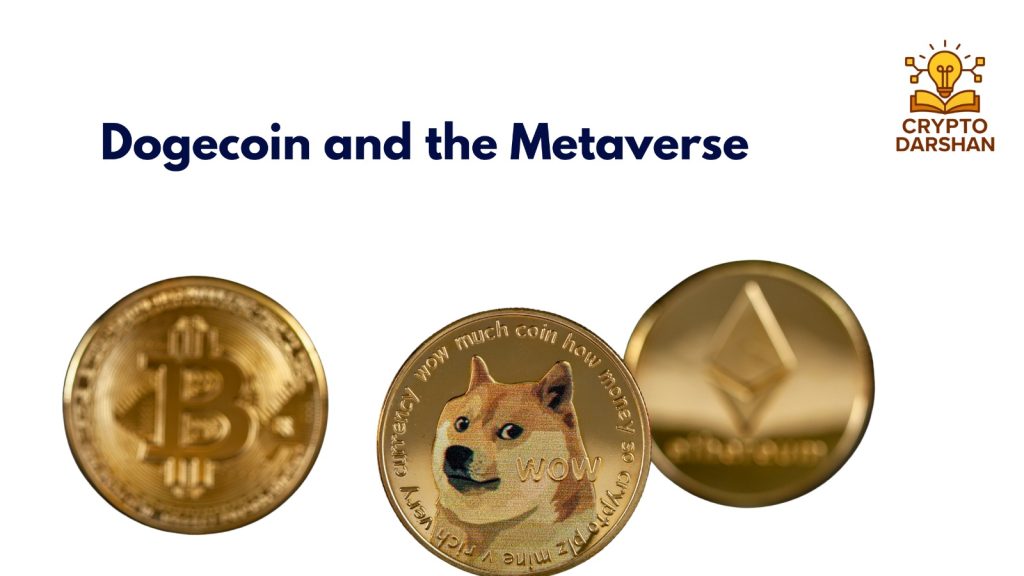
The metaverse a virtual world where users interact through digital avatars has become a major trend in the mid-2020s. Cryptocurrencies play a central role in powering these virtual economies, and Dogecoin has found its place as a fun and accessible currency for metaverse transactions.
Several metaverse platforms have integrated Dogecoin as a payment option for virtual goods, events, and experiences. Its lighthearted brand and strong community make it a natural fit for digital environments that value creativity and social interaction.
While Dogecoin thrives on community and culture, the broader crypto ecosystem is exploring how Bitcoin could function as a foundational asset inside virtual economies. This shift is examined in Blockchain and the Metaverse, where value transfer and digital ownership take center stage.
Dogecoin and the Future of Payments

Dogecoin’s simplicity and low transaction fees make it suitable for microtransactions, tipping, and online payments. As digital payments evolve, Dogecoin could find renewed relevance in niche markets.
Potential Use Cases
- Social Media Tipping: Platforms like X and Reddit could expand Dogecoin tipping features, rewarding creators directly.
- Gaming and Virtual Economies: Dogecoin’s fast transactions make it ideal for in-game purchases and rewards.
- Charitable Donations: Its community-driven nature aligns with philanthropic initiatives.
- Cross-Border Payments: Dogecoin’s low fees could make it a viable option for small international transfers.
Dogecoin in 2026: FAQ

Is Dogecoin still relevant in 2026?
Yes, Dogecoin is still relevant in 2026 but for different reasons than before. While it began as a meme, it now survives due to strong brand recognition, fast transactions, low fees, and continued community support. However, its relevance depends more on usage and culture than on cutting-edge technology.
Is Dogecoin still considered a “meme coin”?
Partially. Dogecoin has outgrown its joke origins, but it still lacks the advanced features seen in newer blockchains. In 2026, it sits in a unique category: a cultural crypto asset rather than a pure utility or DeFi powerhouse.
Does Dogecoin have real-world use cases?
Dogecoin is mainly used for micro-transactions, tipping, and small online payments. Its low transaction fees make it practical for everyday use, but it hasn’t become a dominant platform for smart contracts, DeFi, or NFTs.
Can Dogecoin compete with newer cryptocurrencies?
Technically, no. Newer blockchains offer faster scaling, smart contracts, and energy efficiency. Dogecoin’s advantage lies in simplicity, community loyalty, and name recognition not innovation.
Is Dogecoin a good long-term investment in 2026?
Dogecoin is a high-risk, sentiment-driven asset. Its price still reacts heavily to social media hype, influencers, and broader market trends. It may offer short-term opportunities, but long-term investors usually prefer assets with stronger fundamentals.
Does Dogecoin benefit from Elon Musk’s influence in 2026?
Elon Musk’s influence still impacts Dogecoin, but less dramatically than in previous years. Markets have matured, and Dogecoin now requires more than tweets to sustain long-term price growth.
How is Dogecoin affected by inflation?
Dogecoin has no fixed supply cap, meaning new coins are continuously added. This inflationary model makes it better suited for spending rather than long-term value storage compared to deflationary cryptocurrencies like Bitcoin.
Is Dogecoin good for payments in 2026?
Yes, Dogecoin remains efficient for payments due to fast confirmation times and low fees. However, stablecoins are increasingly preferred for payments because they avoid price volatility.
Will Dogecoin survive long-term?
Dogecoin is unlikely to disappear anytime soon. Its survival is driven by a strong community, widespread recognition, and exchange support. Still, survival doesn’t automatically mean massive growth.
Conclusion: Still Relevant or Just Nostalgia?
As of 2026, Dogecoin stands at a crossroads. It is no longer just a meme, but not yet a fully-fledged financial powerhouse. Its relevance depends on how well it adapts to the evolving crypto landscape, embraces technological innovation, and continues to engage its passionate community.
Dogecoin’s journey from joke to global phenomenon is a testament to the power of community and culture in shaping financial ecosystems. Whether it remains a key player or becomes a nostalgic symbol, Dogecoin has already secured its place in history as one of the most influential cryptocurrencies ever created.
In the end, Dogecoin’s true value may not lie in its price or technology, but in the joy, creativity, and unity it has inspired across the world. In that sense, Dogecoin is far more than nostalgia it is a living reminder that even in the world of finance, fun and community can create lasting impact.