

Visa has launched commercial USDC stablecoin funding for international payments through Visa Direct, with Inyo Global becoming the first processor to bring the service into production on October 15, 2026. Eligible businesses can now use USDC to prefund cross-border payouts, reducing reliance on traditional banking hours.
How the new service works
The service lets companies supply USDC through Inyo’s payment infrastructure to fund international payouts made through Visa Direct. USDC is a dollar-backed stablecoin issued by Circle and designed to maintain a value of $1.
In traditional prefunding arrangements, businesses often deposit money into designated accounts before payments can be processed. Those deposits may depend on banking hours, settlement schedules and the countries involved.
With the new integration, participating businesses can provide USDC for payout obligations in near real time. Visa says the capability is available through Inyo, but access depends on customer eligibility and geographic restrictions.
The announcement describes near-real-time prefunding, not guaranteed instant delivery to every recipient. Actual payment arrival can still depend on the destination market, payment method and local availability rules.
Inyo’s role in the rollout
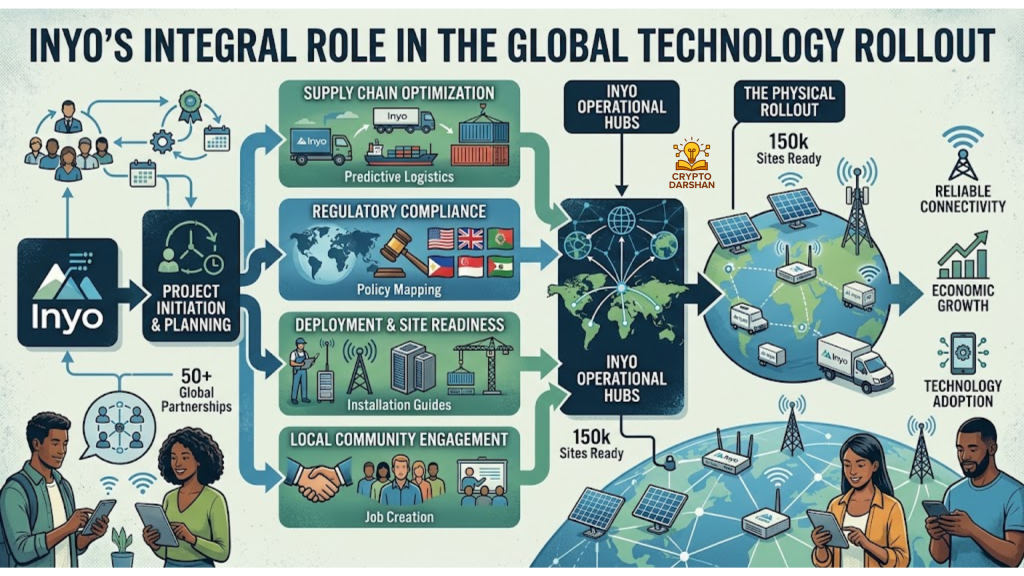
Inyo Global serves banks, money transmitters, fintech companies and payment providers. Its platform supports customer onboarding, compliance checks, fraud management, payment acceptance, and domestic and international transfers through one technical integration.
Inyo has added USDC prefunding to the application programming interfaces already used by its customers. That means companies using the platform do not need to build a separate stablecoin payment system to access the service.
Inyo says its infrastructure supports domestic and international payouts in more than 180 countries through Visa Direct. However, Visa has not confirmed that USDC prefunding is available in every market served by Inyo.
Inyo co-founder and chief product and technology officer Robson Dantas said the integration gives businesses a funding method available around the clock through familiar technology.
USDC’s role in digital payments highlights the growing importance of stablecoins in global finance. To understand how privately issued digital currencies differ from government-backed alternatives, explore our guide to Stablecoins vs CBDCs.
What this means for businesses
The service is aimed at companies that make repeated international payments, including money transfer operators and fintech platforms serving customers across multiple markets. It may help them manage liquidity without waiting for banks to open or process deposits.
For example, a payment company that needs to send funds to recipients in several countries could use USDC to prefund payouts outside normal banking hours. The recipient does not necessarily need to hold USDC or use a crypto wallet; the announcement concerns funding the payout, not changing the asset received by every final customer.
Visa has not disclosed how many businesses are using the service, its initial transaction volume, or the amount of USDC processed since production began. It also did not publish a full list of eligible countries or a timetable for expanding access.
From pilots to production

The launch follows two Visa pilots during 2025. In September 2025, Visa introduced a stablecoin prefunding pilot under Visa Direct to test how businesses could finance international payouts using digital dollars.
In November 2025, Visa launched a separate pilot allowing eligible businesses to send dollar-backed stablecoins directly to digital wallets. That program targeted freelancers, online creators and gig workers receiving payments from international platforms.
The two pilots tested different parts of the payment process. Prefunding concerns how a business supplies money to support a payout, while direct stablecoin payouts concern the asset received by the end user.
Thursday’s announcement specifically identifies Inyo Global as the first processor to put USDC prefunding into production. Visa did not announce that every payout processed through Inyo would be delivered as USDC.
Visa’s wider stablecoin strategy

Visa’s stablecoin work extends beyond this launch. In September, the company said its stablecoin-linked card network had grown to more than 160 programs worldwide, with spending through those programs up nearly 200% year over year.
Visa also reported that stablecoin settlement activity had exceeded a $20 billion annualized rate. That figure covers settlement activity across supported programs and does not represent transaction volume from the newly launched Inyo service.
The company’s strategy includes partnerships with banks, fintechs and payment providers that connect blockchain transfers with existing accounts and payment networks. Products can differ by market and may involve digital asset settlement, fiat payouts or cards linked to stablecoin balances.
What to watch next
Visa says it plans to work with clients and partners on additional stablecoin payment applications. It has not named another Visa Direct prefunding processor or announced a date for the next rollout.
The Inyo launch is an important step because it moves stablecoin funding from testing into commercial use. Its impact will depend on how many eligible businesses adopt it, which markets gain access, and whether the service can reduce funding delays and costs without adding compliance or operational complexity.