


Japanese Bitcoin treasury company Metaplanet plans to raise about $340 million through zero-interest convertible bonds due in 2031. The company will use most of the money to repay Bitcoin-backed loans and buy back its own shares, rather than to buy more Bitcoin.
What Metaplanet is raising
Metaplanet disclosed the plan in an October 13 filing with the Tokyo Stock Exchange. It intends to issue ¥52 billion in unsecured, zero-coupon convertible bonds on October 29, 2026. The bonds mature on October 29, 2031 and do not pay regular interest.
The company expects net proceeds of about ¥51.9 billion. It has allocated ¥23.6 billion to repay debt and up to ¥28.3 billion to repurchase ordinary shares.
Convertible bonds are debt securities that investors can later exchange for company shares under certain conditions. Because the bonds are convertible, Metaplanet’s debt could fall if investors convert their holdings into equity. Until then, the issuance will increase the company’s total liabilities.
Bitcoin’s price fluctuations can create financial risks for companies with large BTC holdings, making it important to understand why crypto markets are highly volatile and how market movements affect corporate investment strategies.
Why Metaplanet wants to repay loans
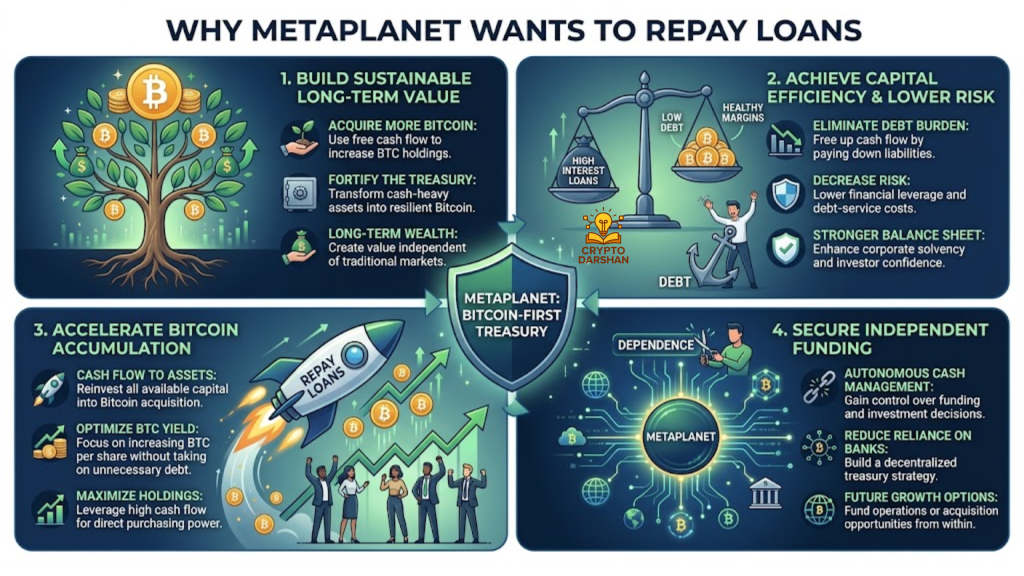
Metaplanet plans to use ¥23.6 billion in November 2026 to repay part of its Bitcoin-backed credit facility. As of September 30, the company had borrowed about $650 million under a facility that allows up to $800 million in financing.
The repayment will also cover money previously borrowed to support Metaplanet’s acquisition of Siiibo Securities. The company says the new bonds will replace part of its interest-bearing, Bitcoin-collateralized debt with longer-term unsecured debt.
This change could reduce borrowing costs and release some Bitcoin currently pledged as collateral. However, it does not remove the company’s debt. Metaplanet says its liabilities will decline only if bondholders convert their bonds into shares or the company later repays the remaining obligations.
Borrowing limits were exceeded
Metaplanet revised its Bitcoin borrowing policy to reduce its reliance on leveraged Bitcoin financing. Under the new framework, Bitcoin-backed borrowing should generally stay below 10% of the company’s Bitcoin net asset value.
But the company said its borrowing ratio reached about 17.7% at the end of September, above the policy limit. A fall in Bitcoin’s price could push the ratio even higher because it would reduce the value of the company’s Bitcoin holdings.
The planned repayment is therefore an effort to bring leverage back under control. It also reduces the risk created by using Bitcoin as collateral: if Bitcoin prices fall sharply, lenders may require additional collateral or take other actions under the credit agreement.
Up to ¥28.3 billion for buybacks
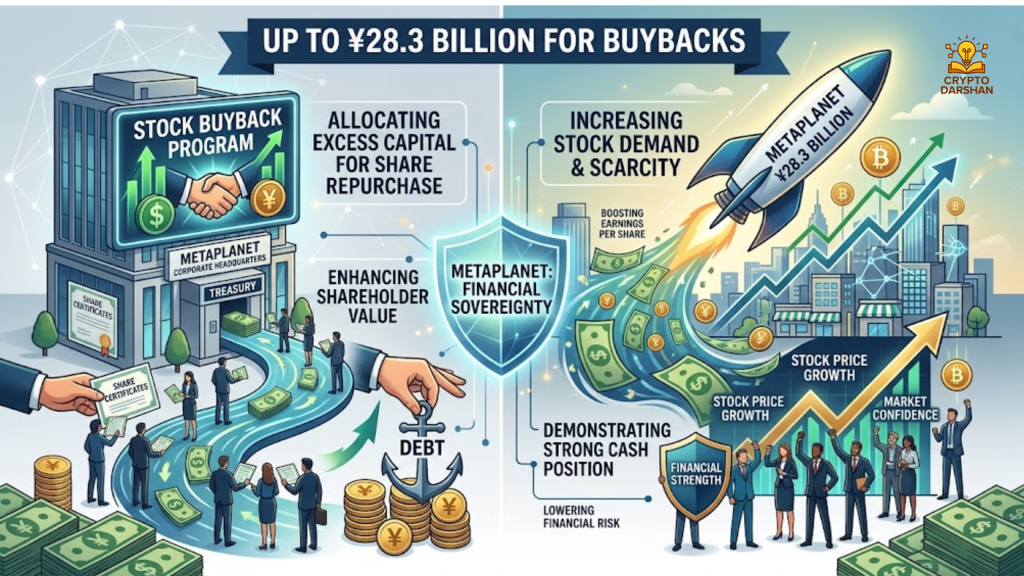
Metaplanet has set aside up to ¥28.3 billion from the bond proceeds to buy back shares between October and December 2026. The company says buybacks are part of its capital-allocation strategy, which aims to increase the amount of Bitcoin backing each remaining share.
The filing identifies an off-market repurchase of up to ¥25.3 billion through the Tokyo Stock Exchange’s ToSTNeT-3 system. This mechanism allows the company to buy shares while limiting the impact of large orders on prices during regular trading.
Metaplanet plans to carry out a ToSTNeT-3 transaction on October 14. If it uses the full ¥25.3 billion allocation, it estimates that it could buy back about 97.94 million shares, or roughly 7.1% of its issued ordinary shares.
The company’s board has also approved a broader share-repurchase authorization of up to ¥60 billion. That authorization is larger than the amount specifically allocated from the convertible-bond proceeds.
How buybacks affect Bitcoin per share
Metaplanet uses a measure called mNAV to compare its market value with the net asset value of its Bitcoin holdings. If its shares trade below the value of the Bitcoin it holds, buying back shares can increase the Bitcoin backing behind each remaining share.
For example, if a company holds a fixed amount of Bitcoin and reduces the number of shares outstanding, each remaining share represents a larger portion of that Bitcoin. This is why some Bitcoin treasury companies use buybacks when their shares trade at a discount to their Bitcoin holdings.
The filing says the new financing will not directly fund additional Bitcoin purchases. Any unused buyback allocation may instead be used for further share repurchases or to reduce borrowing.
As corporate interest in Bitcoin continues to evolve, understanding Bitcoin layers can help readers explore the broader technology supporting the Bitcoin ecosystem beyond its role as an investment asset.
Terms of the 2031 bonds
This will be Metaplanet’s first euroyen-denominated convertible bond offering. Merrill Lynch International will act as sole bookrunner and lead manager. The offering is aimed mainly at investors in Europe and Asia and will not be registered or sold in the United States.
Each bond has a face value of ¥10 million, and the planned issuance includes 5,200 stock-acquisition rights. The offering price is set at 102.5% of face value, while investors will pay Metaplanet 100% of the principal amount under the issuance structure.
The initial conversion price has not been finalized. Metaplanet says it will set the price based on investor demand and market conditions, subject to a minimum equal to the closing price of its Tokyo-listed shares on the date of the underwriting agreement.
Bondholders may convert their bonds into ordinary shares from November 12, 2026 through October 15, 2031, subject to the filing’s conditions. Metaplanet may also redeem the bonds early under certain circumstances, including a stock-price condition that begins on October 29, 2029.
Metaplanet’s Bitcoin position
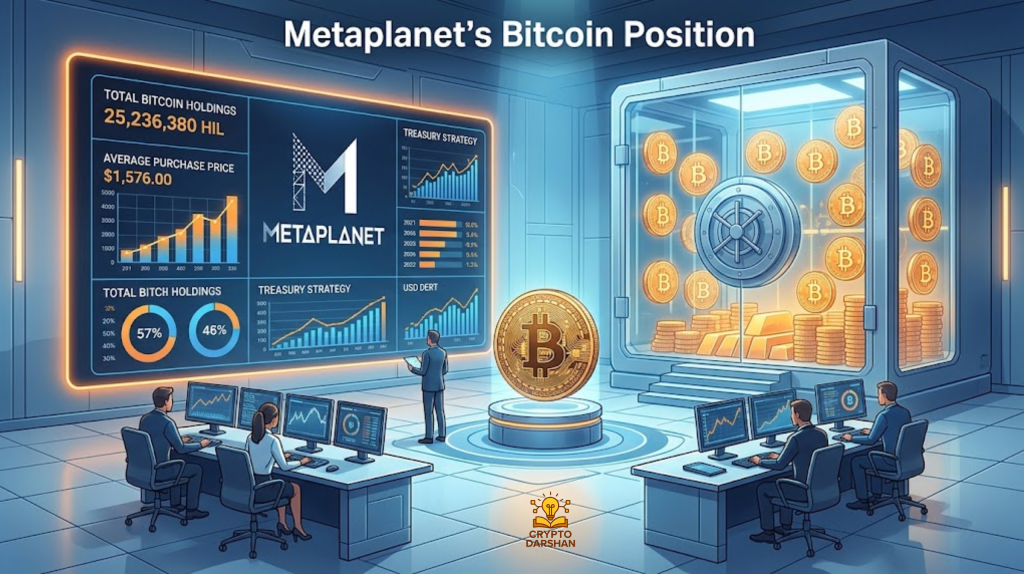
Metaplanet reported holdings of 44,000 BTC as of September 30. Bitcoin is the company’s main treasury reserve asset, and its revised capital-allocation policy calls for keeping about 85% to 90% of total assets in Bitcoin. The remaining 10% to 15% is intended for strategic investments and income-generating businesses.
The company is also expanding beyond simply holding Bitcoin. Its Project Nova initiative is building Bitcoin-related financial products and services. In July, Metaplanet completed its ¥2.1 billion acquisition of Siiibo Securities and renamed it Metaplanet Securities.
The subsidiary has begun offering Bitcoin-related bond products through its BitBonds program. Metaplanet is also working with JPYC and Progmat to explore Bitcoin-backed credit, stablecoins and tokenized securities, although those services remain subject to development and regulatory requirements. Metaplanet’s approach also highlights the financial risks businesses must consider when investing in digital assets, raising broader questions about whether crypto is safe as part of a long-term investment strategy.
A leveraged strategy under pressure
Metaplanet’s latest move shows the trade-offs involved in running a Bitcoin treasury company. Holding Bitcoin can increase the value of the balance sheet when prices rise, but borrowing against it can create pressure when prices fall.
By refinancing Bitcoin-backed loans with longer-term convertible debt and buying back shares, Metaplanet is trying to lower leverage and strengthen the Bitcoin backing of each share. The plan still depends on market conditions, investor demand for the bonds, and Bitcoin’s price performance over the coming years.