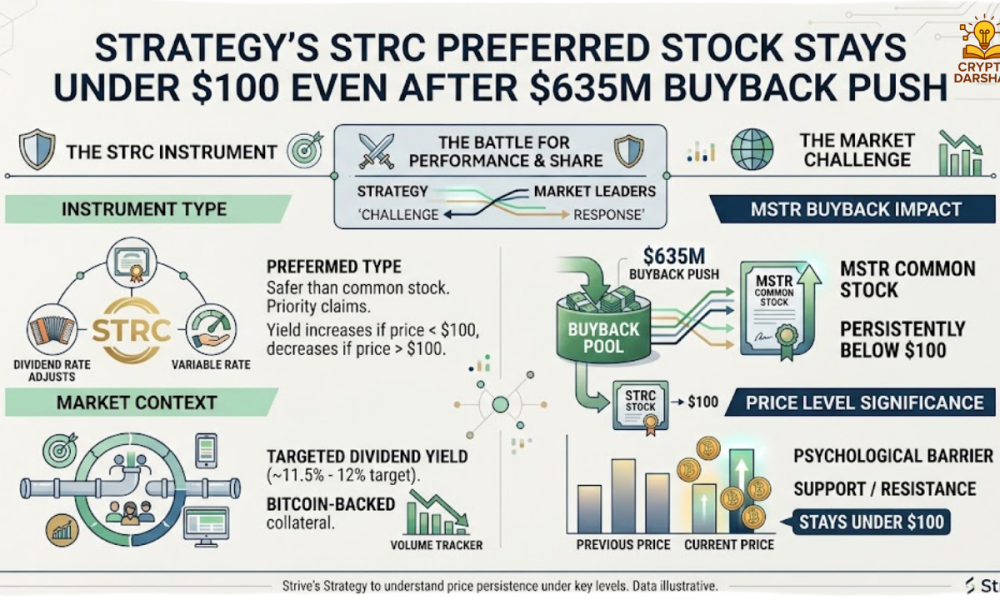
Strategy has poured more than $635 million into repurchasing its STRC perpetual preferred stock, yet the security continues to trade below its $100 par value. Despite a strong recovery from June lows near $71, STRC was still hovering around $97 in early September 2026, frustrating the company’s efforts to restore full confidence in the instrument.
What Is STRC and Why Does the $100 Level Matter?
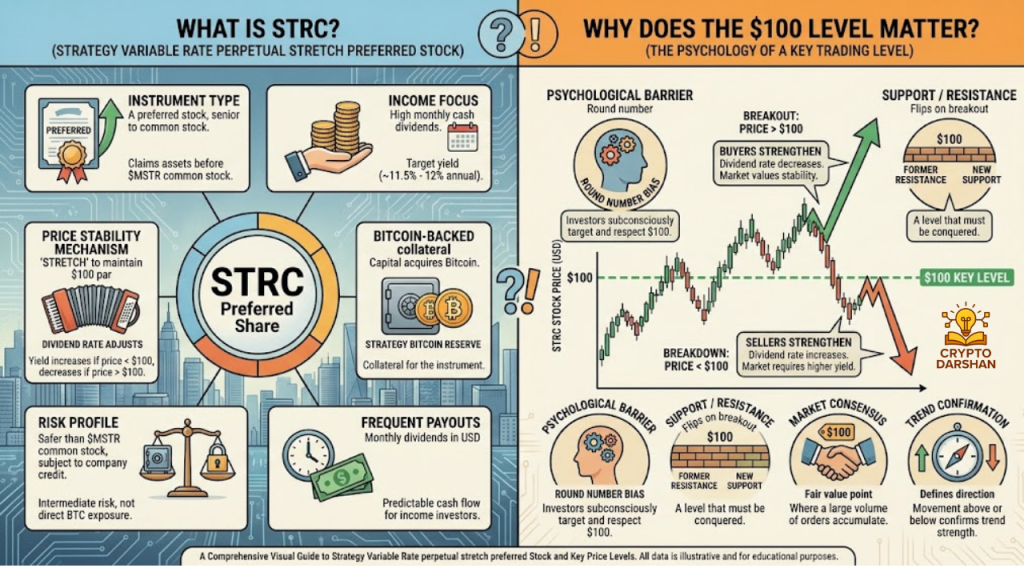
STRC, short for “Stretch,” is Strategy’s variable-rate perpetual preferred stock, designed to function like a high-yield, bond-like instrument tied to the company’s Bitcoin treasury model. It was issued at a $100 par value with a target annualized dividend rate of 12%, paid twice monthly
For Strategy, keeping STRC at or above $100 is critical. The company has said it plans to resume issuing new STRC shares once the price sustainably returns to par, using the proceeds to fund additional Bitcoin purchases. Until then, the trading at a discount limits Strategy’s ability to efficiently raise capital through this channel.
$635 Million in Buybacks—But Still Short of Par
Strategy launched a $1 billion buyback authorization for preferred stock in late June 2026 as part of its Digital Credit Capital Framework. The program was explicitly designed to support STRC when it trades below $100, reducing the outstanding supply and propping up the price.
Key buyback milestones include:
- Week ended July 26: Strategy repurchased $25 million of STRC while the security was well below par.
- Late July to early August: The company sold 1,638 BTC for $104.7 million, directing part of the proceeds toward STRC dividends and repurchases.
- Week ended August 30: Strategy bought back another $151.8 million of STRC at an average price of $97.48 per share, covering 1.56 million shares.
Cumulatively, these purchases total $635.2 million, yet it remains stuck around $97.34, roughly 2.7% below its $100 face value.
How Strategy Is Funding the Buybacks
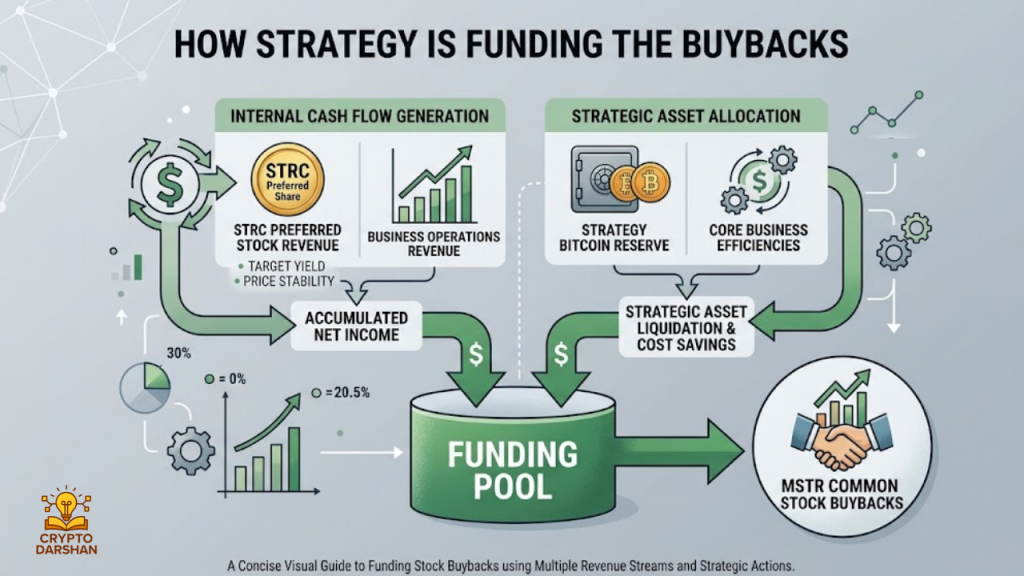
Strategy is not using existing cash alone to fund STRC repurchases. Instead, it relies heavily on its at-the-market (ATM) program for common shares (ticker: MSTR). In the latest reporting week:
- The company sold 4.53 million MSTR shares, raising $602.8 million.
- Of that amount:
- $369.7 million went to buying 4,603 BTC at an average price of $80,318
- $151.8 million funded STRC buybacks.
- $50.7 million covered them dividend payments.
- $30 million was added to Strategy’s USD Cash account.
As of August 30, Strategy reported $1.61 billion in USD Cash and $5.1 billion in its broader USD Reserve, alongside 845,050 BTC in holdings.
Why STRC Isn’t Hitting $100 Yet
Several factors explain why STRC remains below par despite aggressive support:
- Market skepticism: Investors remain cautious about the long-term sustainability of Strategy’s Bitcoin-heavy balance sheet, especially after periods of sharp price volatility.
- Competition from Strive’s SATA: Strive’s competing preferred stock, SATA, offers a 13% annualized dividend with daily payments, compared to STRC’s 12% paid semi-monthly. SATA has traded much closer to $100, attracting income-focused investors.
- Discount buying dynamics: Some institutional investors appear content to hold it at a slight discount, collecting the 12% yield while Strategy continues to buy back shares at prices like $97.48.
Institutional Demand Remains Strong
Even with STRC below $100, institutional appetite has grown. By late July 2026, it had become the largest holding in three major U.S. preferred-stock ETFs, with combined holdings of about $756 million. Institutional ownership of STRC rose 105% over a short period, while retail ownership declined from 78% to 71%.
This shift suggests that large asset managers and income funds view as an attractive yield vehicle, even if it trades at a small discount to par.
Strive’s SATA: A Tough Competitor
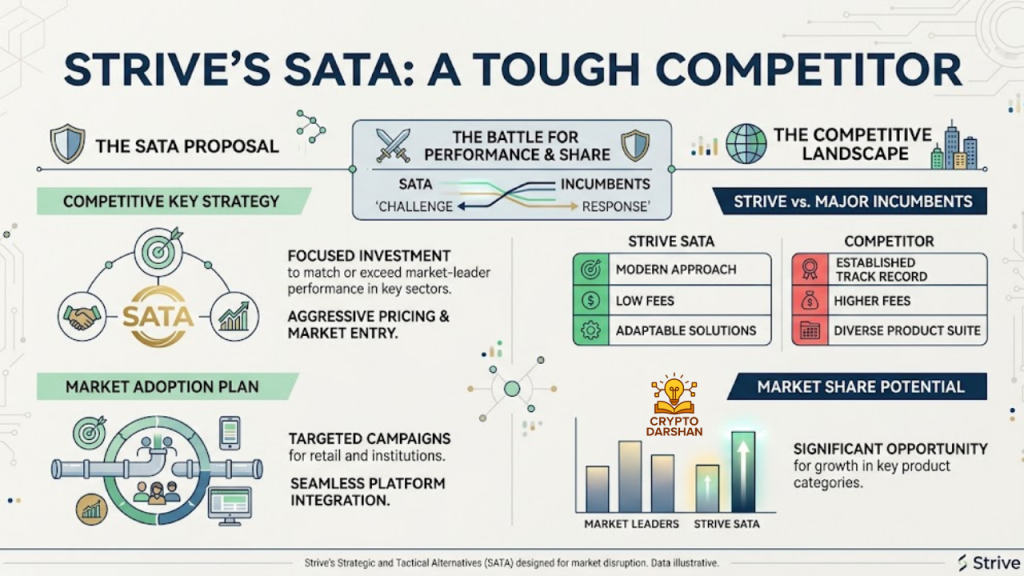
Strive has emerged as a direct competitor in the Bitcoin treasury–linked preferred stock space. Its SATA instrument offers:
- 13% annualized dividend rate (vs. STRC’s 12%).
- Daily cash dividend payments, making it the first U.S.-listed security to pay dividends every business day.
- Stable pricing near $100, allowing Strive to continuously issue new SATA shares to fund Bitcoin buys.
Strive has used SATA proceeds to acquire thousands of BTC in 2026, including 1,800 BTC in a single week while SATA remained around par. In contrast, Strategy has had to pause new issuance until the price recovers.
Strategy Returns to Bitcoin Buying
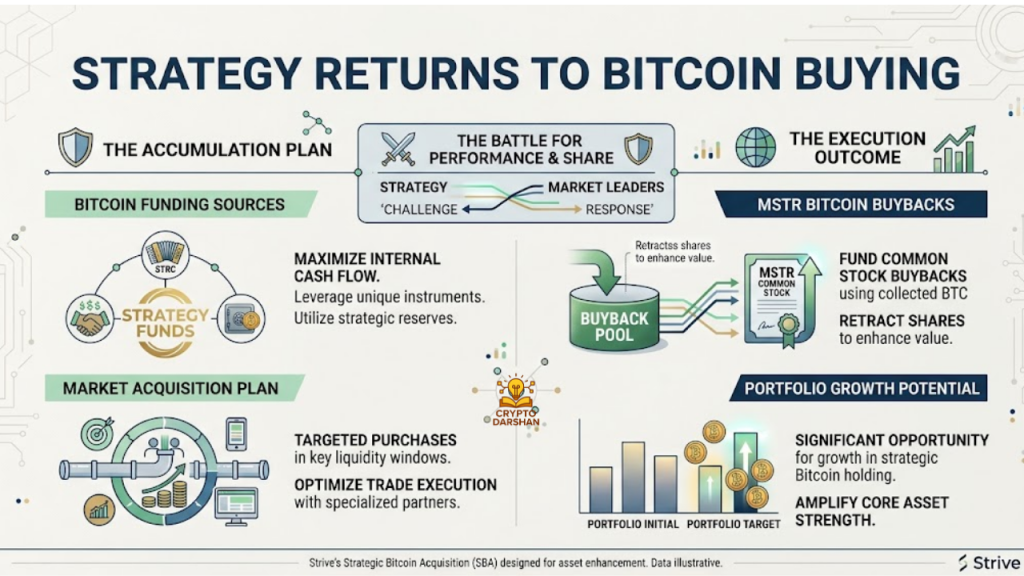
Alongside STRC support, Strategy has resumed accumulating Bitcoin. Its latest purchase of 4,603 BTC ended a roughly 10-week pause in net Bitcoin acquisitions. Total holdings now stand at 845,050 BTC, worth approximately $65.9 billion at then-current prices.
Management has indicated that once it consistently trades at $100, the company will issue new shares and channel the proceeds into more Bitcoin purchases. Until that happens, Strategy will likely continue using a mix of MSTR equity sales, cash reserves, and selective BTC sales to fund both buybacks and accumulation.
What Investors Should Watch
For STRC holders and MSTR shareholders, key signals to monitor include:
- STRC price action: A sustained move above $99–$100 would signal that buybacks and dividend tweaks are working.
- Dividend policy changes: Further increases beyond 12% or shifts in payment frequency could boost demand.
- Strive’s momentum: If SATA continues to outperform in price and yield, it may cap it’s upside.
- Bitcoin price trends: Strong BTC performance generally improves sentiment around both Strategy’s and Strive’s treasury models.news.
For now, Strategy’s $635 million buyback campaign shows commitment to supporting them, but the market is waiting for clearer proof that the preferred stock can reliably trade at par before fully repricing the instrument.