

Best low risk cryptocurrencies for beginners ,focuses on established assets like Bitcoin, Ethereum, and stablecoins, which offer relative stability through proven track records, high liquidity, and institutional adoption. These minimize volatility risks for newcomers while providing long-term growth potential in 2026. Beginners should prioritize blue-chip cryptos over speculative altcoins to build confidence safely.
Why Low-Risk Crypto Matters for Beginners
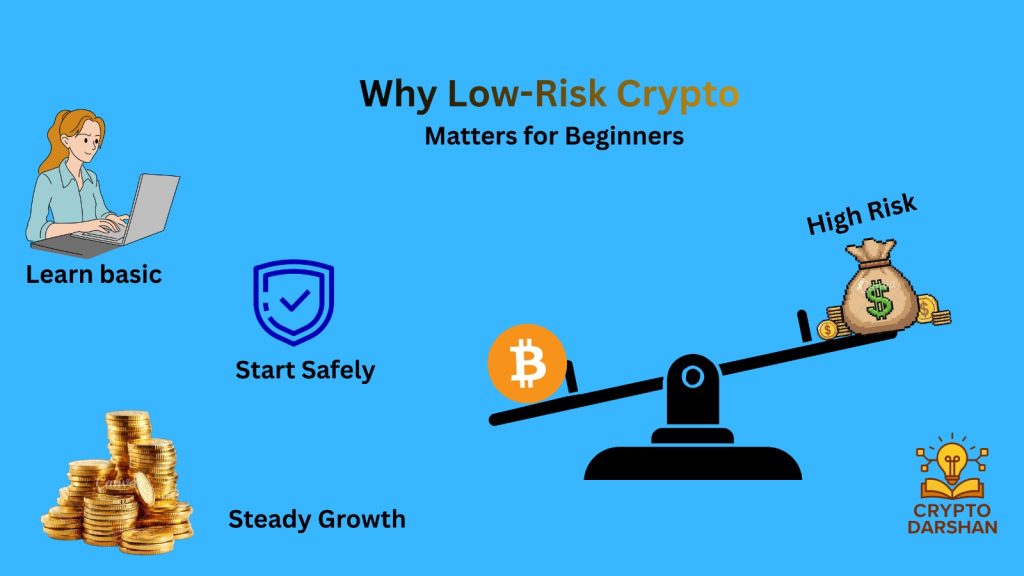
No cryptocurrency is completely risk-free, but some low-risk options stand out. These have large market caps typically over $50 billion proven networks, and wide support across exchanges, which lowers the chance of total loss.
Safety is critical for beginners. Avoiding fraudulent projects and exchanges is essential, as explained in Common Crypto Scams Explained and How to Protect Your Assets.
Best Low-Risk Cryptocurrencies for Beginners
Bitcoin leads the market with more than 50% dominance, making it the safest entry point, especially with institutional holdings like MicroStrategy’s 240,000 BTC stash.
Ethereum comes next, offering utility in DeFi and staking yields of 3–5%, making it appealing for patient investors.
Stablecoins like USDT provide dollar-pegged stability, allowing beginners to learn trading without worrying about price swings.
Top Low-Risk Picks: Bitcoin (BTC)
Bitcoin stands as the lowest-risk cryptocurrency for beginners, often called “digital gold” for its fixed 21 million supply cap and halving events that cut new issuance every four years. The 2024 halving dropped rewards to 3.125 BTC per block, historically sparking12-18 month bull runs positioning 2026 for $150,000-$200,000 targets amid $100 billion ETF inflows from BlackRock and Fidelity. Its decentralization resists government control, with over half the crypto market cap ensuring liquidity you can sell large amounts without crashing prices.
Energy concerns persist despite 50% renewable mining, but volatility (5-8% daily swings) suits HODLers over traders. Beginners allocate 50-70% here: buy via Coinbase, store in Ledger hardware wallet, dollar-cost average $50 weekly to average out dips. Risks include 50% bear market drawdowns, but 15-year history shows recovery never invest more than 5% net worth.
Ethereum (ETH): Smart Contracts with Stability
Ethereum is the second-safest cryptocurrency, powering around 80% of DeFi projects, with $110 billion currently staked. Its deflationary mechanism, through EIP-1559 fee burns, reduces supply over time. The Pectra upgrade has cut Layer-2 fees by 60–80%, making applications on networks like Arbitrum cheaper while the mainnet continues to secure trillions in value.
You can stake ETH to earn around 4% yields without selling, or lend it on platforms like Uniswap or AAVE to generate real utility beyond speculation. By 2026, Ethereum could reach $6,000–$8,000 as institutions like BlackRock start tokenizing funds on its network. Competition from faster chains like Solana adds some risk, but Ethereum remains strong.
For beginners, a 20–30% portfolio allocation is recommended. Buy ETH on exchanges like Binance, bridge it to Layer-2 networks like Optimism for lower fees, and enable two-factor authentication (2FA) everywhere. Gas fee spikes during hype periods are the main downside, but Layer-2 solutions help, and volatility of around 40% can be cushioned by institutional ETFs.
Stablecoins: Zero-Volatility Training Wheels

Stablecoins like Tether (USDT) and USD Coin (USDC) are pegged 1:1 to the US dollar and backed by reserves that are audited quarterly. They offer a low-risk way for beginners to test crypto trading without worrying about price swings.
USDT is the most widely used, with a market cap of around $120 billion. It’s available on almost every exchange, making it perfect for quick swaps or parking funds during market dips. USDC focuses on transparency, with Circle providing regular reports, making it ideal for earning interest through DeFi platforms like Aave, where rates can range from 5–8% APY.
While stablecoins don’t offer growth potential, their safety makes them useful for users in countries like Nepal, where regulations can be restrictive. For example, you can hold USDT during Bitcoin dips and convert back when prices rise.
Risks: Rare depegs can happen USDT dropped 6% in 2022 but quickly recovered. To manage risk, consider splitting holdings 50/50 between USDT and USDC and use non-custodial wallets like MetaMask. Allocating 10–20% of your portfolio in stablecoins, buying on exchanges like Kraken, earning yield, and converting to BTC strategically is a safe way to build trading habits.
Cardano (ADA): Research-Driven Safety
Cardano’s peer-reviewed upgrades provide strong security, and its Hydra scaling solution can handle up to 1,000 transactions per second while using 99.99% less energy than Bitcoin. Real-world adoption is also growing partnerships in Ethiopia have credentialed 5 million students, showing that Cardano’s impact goes beyond hype. By 2026, its price could target $1.50–$2.50. With low transaction fees and steady growth (up 124% year-to-date), it’s beginner-friendly and suitable for a 5–10% portfolio allocation.
While slower development can frustrate some investors, Cardano’s stability becomes valuable during market downturns. You can buy ADA on exchanges like eToro and stake it through the Daedalus wallet to earn 4–6% rewards a simple and safe setup for beginners.
Chainlink (LINK): Infrastructure Anchor
Chainlink provides secure data to over $75 billion in DeFi projects and partners with companies like Vodafone and SWIFT to enable real-world asset (RWA) tokenization ,a market potentially worth trillions. Chainlink’s oracles solve the “blindness” problem of smart contracts, feeding them accurate real-world data, while its CCIP protocol allows cross-chain communication. By 2026, Chainlink could reach $40–$60 as more banks and enterprises adopt its technology.
Though competition exists, Chainlink’s first-mover advantage gives it an edge. A 5% portfolio allocation is recommended for diversification. You can safely store LINK in wallets like Exodus and monitor its integrations and activity using platforms like Dune Analytics.
Portfolio Building Strategies
Conservative beginners often follow a simple allocation: 80% in BTC and ETH, 10% in stablecoins, and 10% in ADA or LINK to manage market volatility.
| Allocation | Assets | Risk Level | Expected Yield |
| 60% | BTC/ETH | Low | 0–5% staking |
| 20% | USDT/USDC | Very Low | 4–8% lending |
| 10% | ADA | Low–Medium | 4–6% staking |
| 10% | LINK | Low–Medium | Price growth potential |
Rebalance your portfolio quarterly and avoid chasing FOMO. Using dollar-cost averaging (DCA) is generally more effective than trying to time the market.
6 Steps for Buying cryptocurrencies guide
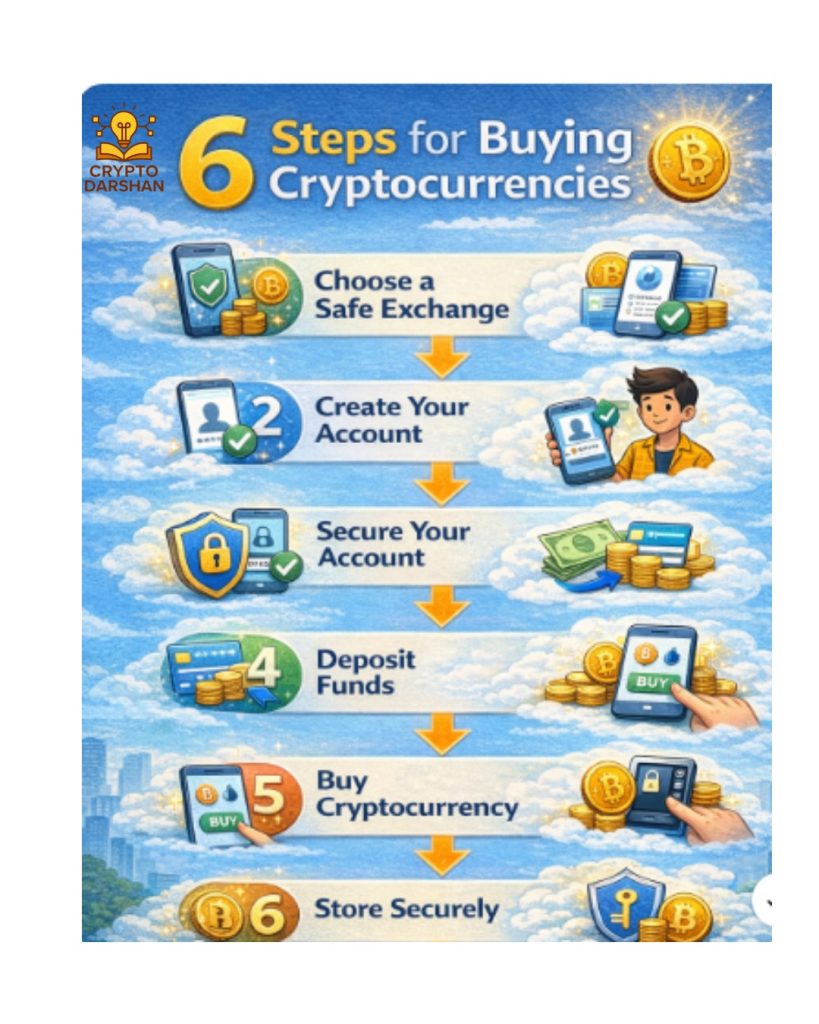
- Pick a regulated exchange:
For beginners, Coinbase is user-friendly with 350+ coins, while Binance offers lower fees for active traders. - Complete KYC verification:
Upload your ID and a selfie—usually takes about 5 minutes. - Deposit funds:
Add money via bank transfer or P2P options that work in Nepal. - Start with BTC or ETH:
Buy Bitcoin or Ethereum first, then swap for other cryptocurrencies. - Secure your crypto:
Withdraw funds to a hardware wallet like Ledger or Trezor (costs $60–$150). - Enhance security:
Enable two-factor authentication (2FA) and back up your seed phrase offline never share it with anyone.
Security Essentials
Phishing attacks are behind about 80% of crypto hacks. Always double-check website URLs and ignore direct messages promising unrealistic returns, like “10x gains.” For large amounts over $10,000, use non-custodial wallets and consider multi signature setups. When on public WiFi, use a VPN for added security. Avoid accessing your crypto on shared devices, and store your seed phrases safely preferably engraved on metal plates and kept in a secure location like a safe or bank.
Common Pitfalls and Taxes
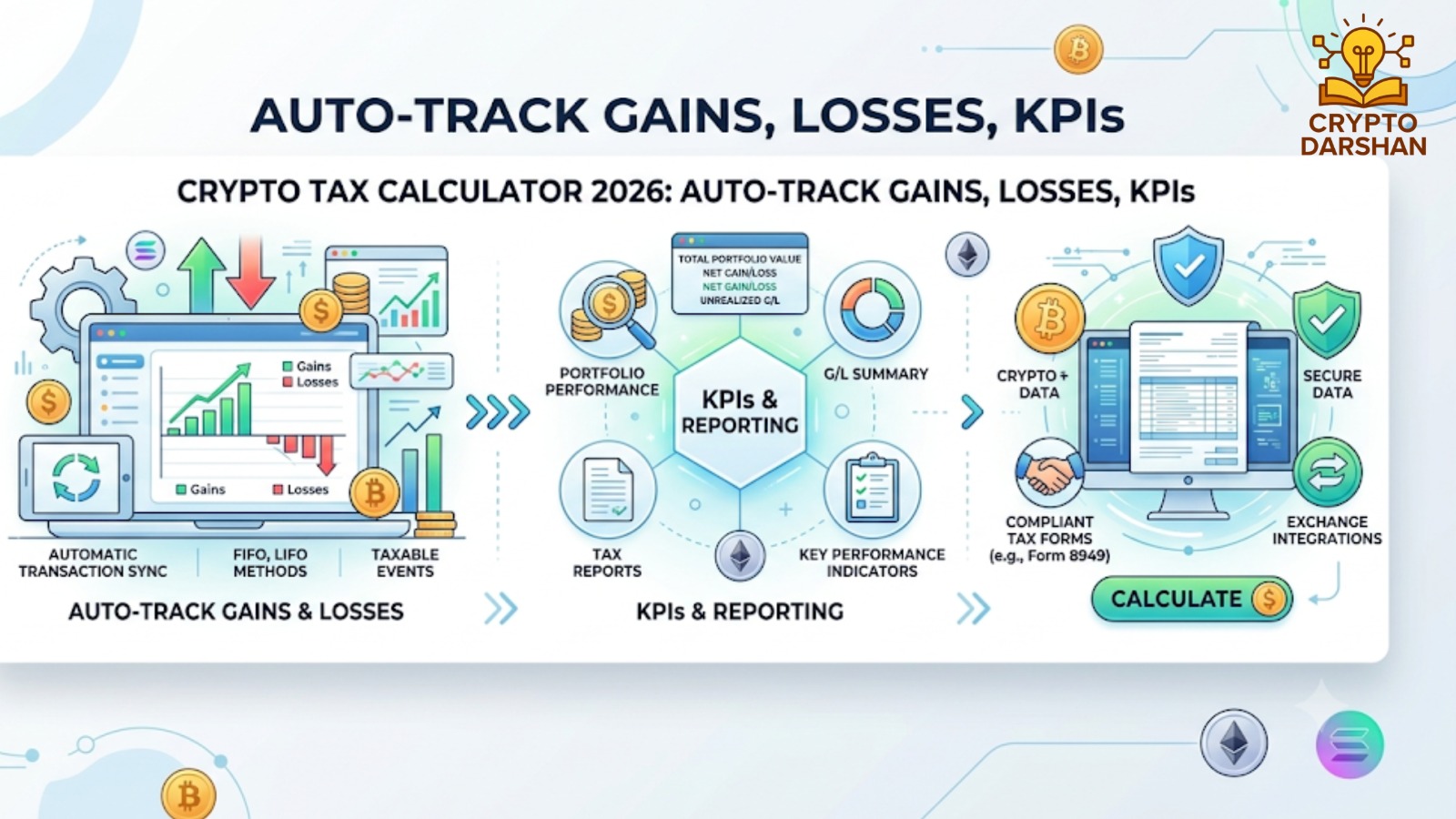
Avoid meme coins and Ponzi schemes. Projects with anonymous teams or promises of “guaranteed returns” are almost always scams. Crypto is naturally volatile 50% price drops can happen, so it’s important to HODL through tough times. Keep track of your trades for taxes; in Nepal, gains must be reported, and tools like Koinly can help. Only invest money you can afford to lose.
2026 Outlook and Final Tips
Bullish regulations, ETF inflows, and growth in real-world asset tokenization could push BTC and ETH to new highs, with stablecoins serving as a safe backbone. Beginners should start small around $100 to learn the ropes using tools like CoinMarketCap and communities such as r/cryptocurrency.
Patience pays off: Bitcoin, for example, grew from $100 in 2013 to $12,000 today. Learn the fundamentals, track the market, and expand your portfolio confidently crypto rewards those who are prepared.