
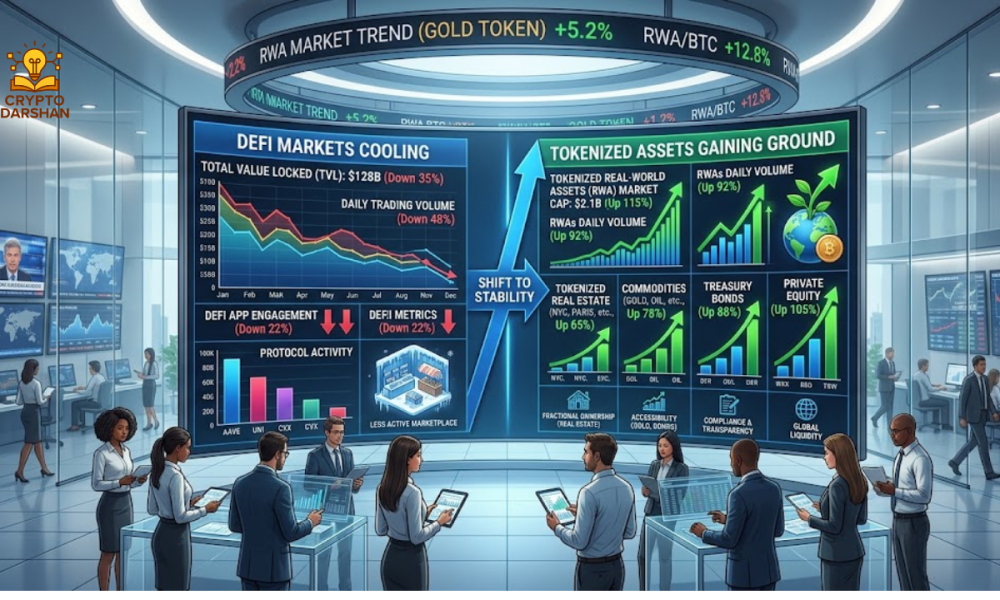
Tokenized assets are becoming one of the strongest growth areas in decentralized finance, even as broader DeFi activity slows. Deposits tied to tokenized assests, funds, stocks, commodities, and credit products reached $7.4 billion in the second quarter of 2026, up from $2.3 billion a year earlier.
The figures come from a CoinShares report prepared with Token Terminal. The data points to a growing demand for blockchain-based financial products that offer practical uses, such as collateral, lending, trading, and yield generation. However, the expansion does not mean the wider DeFi market has returned to strong growth.
RWA deposits rise sharply
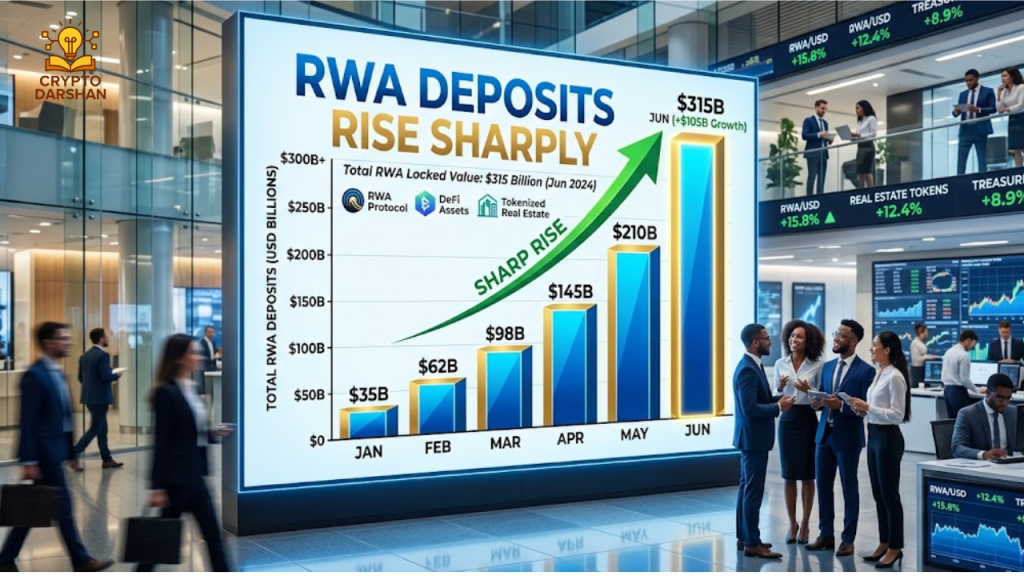
RWA deposits increased more than threefold between the second quarter of 2025 and the same period in 2026. These deposits represent tokenized financial assets placed into decentralized lending platforms and trading applications.
This is different from simply measuring the total value of assets issued on a blockchain. An asset’s market capitalization shows how much has been tokenized, while deposits show how much capital is being used inside DeFi applications.
For example, an investor may deposit a tokenized Treasury fund as collateral, borrow stablecoins against it, and continue earning income from the underlying asset. This approach allows the investor to access liquidity without selling the original position.
The report identified several products that contributed to the growth, including BlackRock’s BUIDL, JTRSY, Sky’s sUSDS, and private credit products such as JAAA, PRIME, syrupUSDC, and syrupUSDT.
DeFi activity moves in the opposite direction
The rise in RWA deposits came during a weaker period for the broader DeFi market. Total DeFi deposits declined by approximately 15% year over year, while overall decentralized exchange activity fell by about 70%.
At the same time, spot trading involving tokenized assets increased by roughly 220%. This contrast suggests that some users are turning to tokenized assets because of their financial utility rather than relying only on speculative crypto trading.
CoinShares described the trend as potentially “structural, not cyclical.” That means tokenization may be developing as a long-term financial infrastructure trend. Still, the available data does not prove that RWA demand is fully independent of crypto market conditions.
The sector remains relatively small compared with traditional financial markets. Strong percentage growth is easier to achieve when a market starts from a limited base.
Ethereum remains the leading network
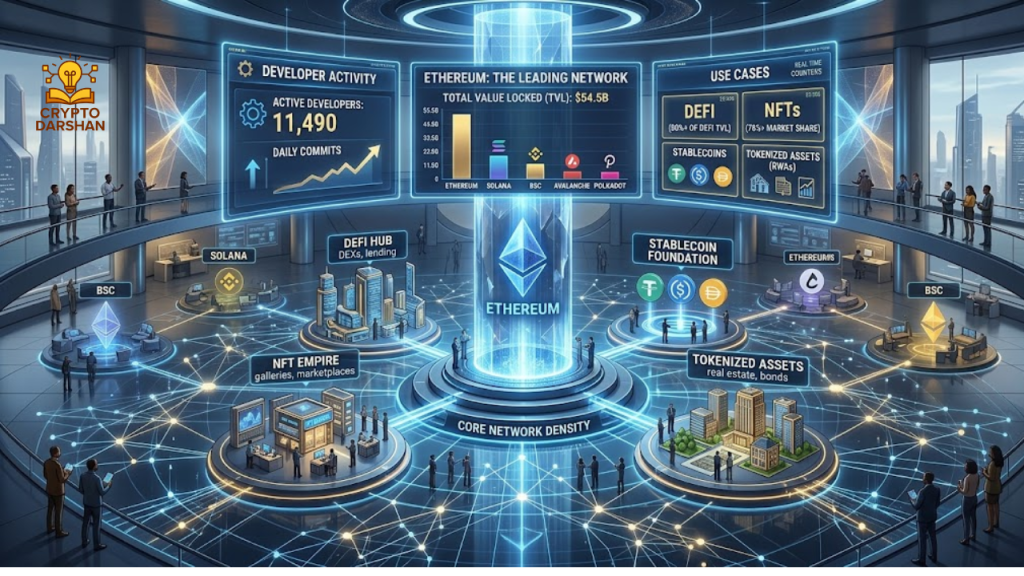
Ethereum-based lending markets held almost 70% of the RWA collateral measured in the report. Established platforms such as Aave and Morpho benefited from Ethereum’s deep stablecoin liquidity, mature infrastructure, and large network of lenders and borrowers.
This dominance reflects a powerful network effect. Lenders tend to use platforms where borrowing demand is strong, while borrowers prefer markets with ample liquidity and competitive interest rates. As more participants use the same ecosystem, it becomes harder for newer networks to compete.
Plasma ranked as the second-largest ecosystem, helped by Aave’s expansion beyond Ethereum. Solana also recorded meaningful activity, particularly through the Kamino lending platform.
Other blockchains may still gain market share. Lower transaction fees and faster execution could attract traders and smaller investors. However, users must also consider bridge risks, smart contract security, liquidity conditions, and the legal structure of tokenized assets when moving between networks.
Tokenized trading expands
Tokenized asset spot trading recorded significant growth during the period. Tokenized gold products, including XAUT and PAXG, represented a large portion of this activity. Traders used these assets to gain onchain exposure to gold and adjust their positions as the metal’s price changed.
Ethereum and Solana accounted for much of the RWA spot volume. Arbitrum, Base, and BNB Chain did not show comparable activity during the measured period, according to the report.
Tokenized equities were another fast-growing category based on the number of holders. The total value of tokenized equities reached approximately $2.2 billion. Although that figure is notable within crypto, it remains very small compared with the global stock market, which is valued at more than $100 trillion.
Tokenized stocks also face challenges that do not affect every cryptocurrency. These include shareholder rights, voting, dividends, corporate actions, custody arrangements, and restrictions on who can access the products.
Perpetual futures attract traders

RWA-based perpetual futures also gained traction. TradeXYZ, an RWA-focused trading platform built on Hyperliquid, recorded approximately twentyfold volume growth after launching.
The platform offered exposure to markets such as oil, precious metals, the S&P 500, the Nasdaq 100, technology companies, and semiconductor stocks. These contracts allow users to trade price movements around the clock, including when traditional markets are closed.
However, perpetual futures generally do not provide ownership of the underlying stock or commodity. Instead, they provide leveraged exposure through a derivatives contract. Traders usually post stablecoins as collateral and can open long or short positions.
Open interest increased alongside trading volume, suggesting that traders maintained outstanding positions rather than simply creating short-term turnover. Yet higher open interest can also mean greater liquidation risk, especially when leverage is involved.
Growth does not guarantee higher revenue
Despite the rise in RWA deposits and trading, DeFi application revenue declined year over year. Crypto-native assets still generate most of the revenue across lending and trading platforms, so the expanding RWA sector was not large enough to compensate for the broader slowdown.
This distinction is important for investors and protocol users. Growing deposits do not automatically translate into profitable businesses. Platforms must also generate sustainable borrowing demand, trading fees, and liquidity without depending too heavily on temporary incentives.
The RWA market is also becoming divided between institutional and retail products. Large funds such as BUIDL tend to attract wallets with balances worth millions of dollars. Tokenized assets equities, by comparison, appeal to smaller investors and have shown faster growth in user numbers.
Reported yields across the products studied ranged from about 3.2% to 5.5%. Treasury products generally offered lower returns, while private credit, lending strategies, and funding-based products offered higher yields with additional risks.
Regulation remains a key factor
The future of tokenized assets will depend heavily on regulation and legal enforceability. A token may exist on a public blockchain, but investor rights still depend on the issuer, custodian, legal agreements, and applicable securities rules.
This is especially important for tokenized assets stocks and private credit products. Users need to understand whether a token represents direct ownership, a beneficial interest, a claim against an issuer, or only exposure to an asset’s price.
Smart contract vulnerabilities, counterparty failures, settlement problems, and redemption restrictions also remain important risks. Greater adoption will require more transparent disclosures and stronger links between onchain records and traditional legal systems.
What the growth means for DeFi
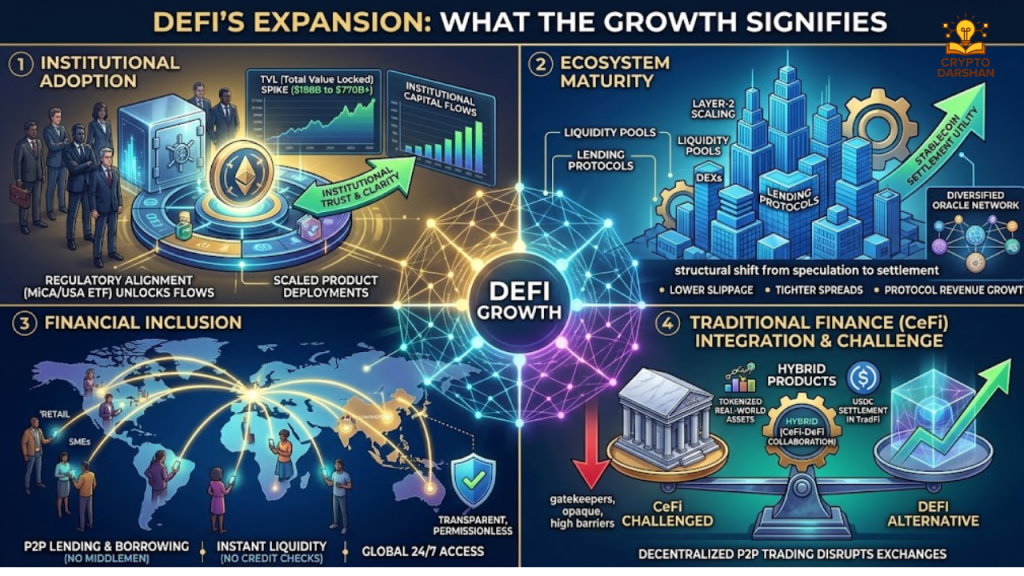
The latest figures show that real-world assets are moving beyond simple token issuance. Investors are beginning to use tokenized assets products as collateral, trading instruments, and yield-generating positions.
RWA deposits rose to $7.4 billion even as wider DeFi deposits and decentralized exchange volumes declined. This resilience suggests that tokenization may become a meaningful part of the next phase of decentralized finance.
Still, the sector is not risk-free, and the data covers only selected assets and platforms. The report excludes many institutional tokenization projects on networks such as Canton and Provenance. As a result, the total size of the global tokenized asset market may be larger than the figures measured.
The next stage will depend on whether RWA platforms can maintain liquidity, attract repeat users, improve compliance, and generate sustainable revenue. If they succeed, tokenized assets, funds, credit, equities, and commodities could become an important bridge between traditional finance and blockchain-based markets.