
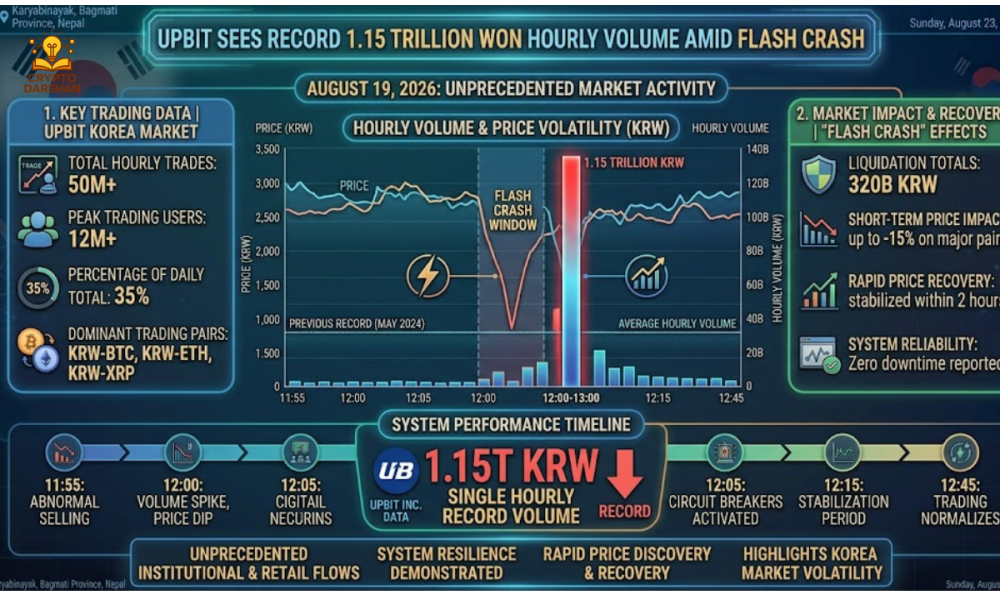
South Korea’s largest crypto exchange, Upbit, recorded an extraordinary 1.15 trillion won (about $830 million) in trading volume within a single hour as a sharp market-wide flash crash triggered massive liquidations and frantic repositioning. The surge highlights how quickly volatility can concentrate activity on dominant regional platforms, especially when leveraged traders are forced to exit positions.
What happened during the flash crash?
The spike occurred around 05:00 UTC on Saturday, August 22, 2026, when Bitcoin, XRP, and other major cryptocurrencies posted abrupt downward price wicks before partially recovering. Data attributed to CoinGlass showed roughly $523 million in liquidations within that hour, with about $448 million coming from long positions and $74.76 million from shorts. Over a 24-hour window, total liquidations approached $1.8 billion and affected more than 286,000 traders, underscoring the scale of forced selling.
During the same volatile period, Upbit’s rolling 24-hour volume climbed to approximately $3.818 billion, far outpacing rivals Bithumb ($1.954 billion) and Coinone ($172 million). These figures are snapshots from rolling windows and should not be treated as audited daily totals, but they clearly show Upbit absorbing the bulk of Korean trading flow as prices whipsawed.
XRP and TRUMP lead the volume surge
XRP dominated activity on Upbit, accounting for 32.20% of measured volume during the surge, according to Upbit Datalab figures cited by market-data outlets. The political meme token TRUMP ranked second with 10.93%, while Tether (USDT) made up 8.39%. Ethereum and Bitcoin followed at 5.44% and 5.40%, respectively, indicating the spike was not driven solely by Bitcoin despite its broader market influence.
XRP had already rallied more than 14% on August 21 and briefly traded above key moving averages before the liquidation event, helping fuel strong won-denominated demand on Korean exchanges. The concentration also reflects Upbit’s outsized role in XRP liquidity, where KRW pairs often generate more turnover than Bitcoin pairs during retail-heavy sessions.
Why flash crashes trigger volume explosions
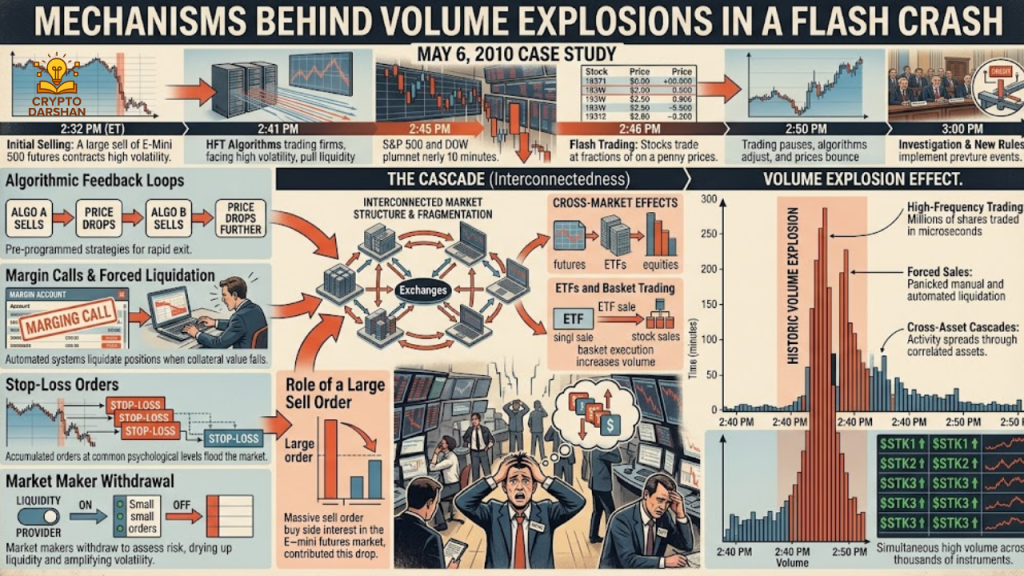
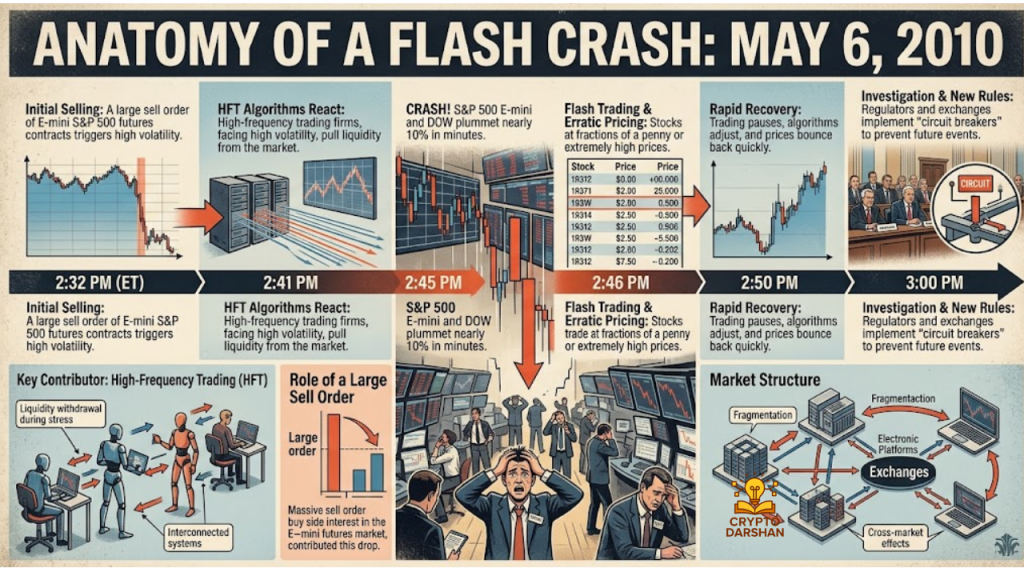
Flash crashes in crypto rarely stem from a single piece of bad news. Instead, they often arise from leveraged positions triggering each other in sequence, especially when liquidity is thin and risk controls are limited. When prices fall through liquidation thresholds, derivatives exchanges automatically close leveraged long positions via market orders, which can push prices lower and set off another round of liquidations.
This cascade effect explains why a relatively short-lived price wick can generate outsized trading volume: the same assets change hands repeatedly as traders enter, exit, hedge, and get forcibly closed out. In Upbit’s case, no verified exchange statement identified a technical fault as the cause, and available evidence points to a broader market deleveraging event rather than an isolated platform malfunction.
Context: Korean crypto activity rebounds after a weak first half
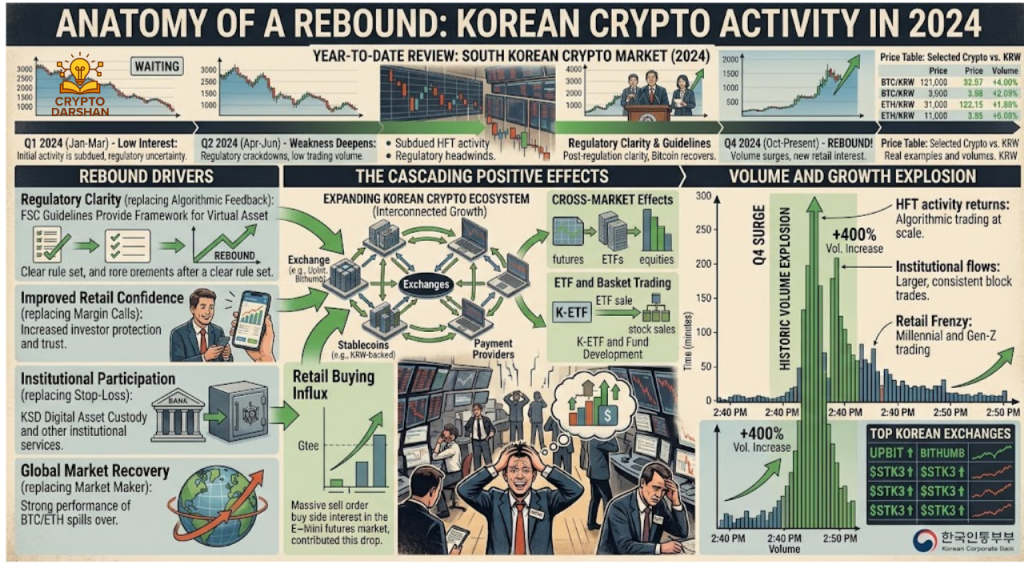
The sharp increase followed months of declining activity across South Korean won-based exchanges, which saw trading fall 54.6% in the first half of 2026 compared with the previous year. Even so, Upbit strengthened its domestic position, with its share of trading across the five major won exchanges reaching approximately 67.4% in July.
The rebound does not yet confirm a sustained recovery. A single volatile session can inflate exchange volume because the same assets may change hands repeatedly as traders enter, exit, and hedge positions. Market participants will now watch whether Upbit’s activity remains elevated after the liquidation-driven turnover leaves the 24-hour calculation window.
What traders should watch next
After events like this, attention typically shifts to order-book depth, funding rates, and open interest to gauge whether leverage is building up again. Traders will also monitor XRP and other heavily traded assets for renewed price gaps, thinner liquidity, or another increase in leveraged positions that could set up the next volatile move.
For retail investors, the key lesson is that high-volume flash crashes are often a symptom of crowded leverage rather than a fundamental breakdown. Managing position size, using sensible stop-losses, and avoiding excessive leverage can help reduce exposure to these rapid, liquidation-driven swings.