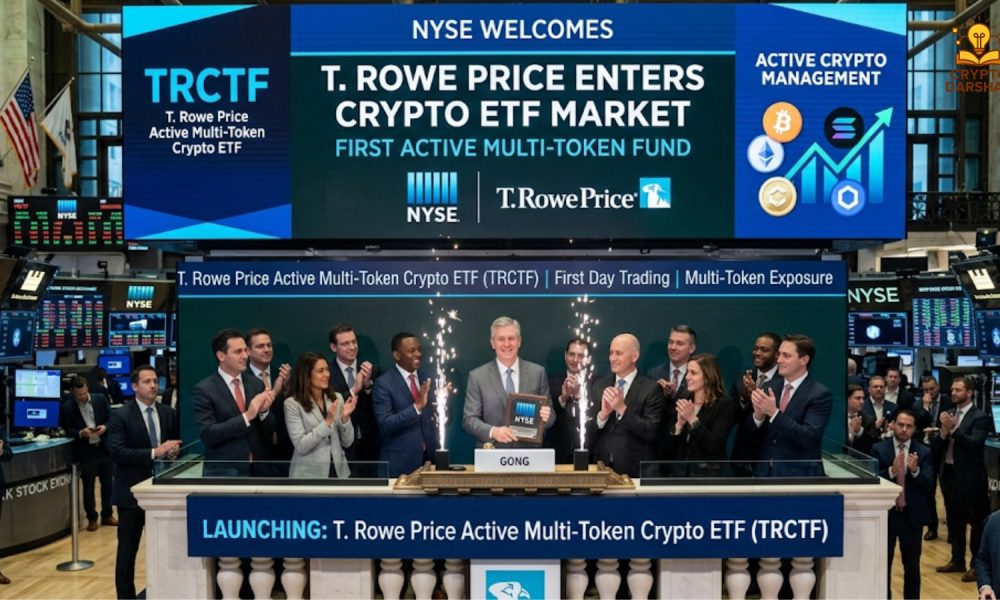
T. Rowe Price has taken a big step into digital assets with the launch of what it says is the first actively managed multi-token spot crypto ETF. The new fund gives investors a simple way to get exposure to several major cryptocurrencies in one product, which could make crypto investing feel less complex for traditional market users.
Why This Launch Matters

This launch is important because it comes from a major asset manager, not a crypto-native company. T. Rowe Price manages about $1.9 trillion in client assets, so its move into crypto adds more credibility to the market and shows that digital assets are becoming more mainstream. It also marks a shift from single-asset spot ETFs, like Bitcoin-only or Ether-only products, toward a basket-style fund that can move across multiple coins.
For many investors, that matters because crypto can be hard to follow one coin at a time. A multi-token ETF gives them a way to spread risk without having to buy and manage each asset separately. That can appeal to both retail investors and advisors who want crypto exposure but prefer a more familiar structure.
What The Fund Holds

The ETF, called T. Rowe Price Active Crypto ETF and traded under the ticker TKNZ, is designed to hold a diversified mix of digital assets. Reports say the fund can include Bitcoin, Ethereum, BNB, XRP, Solana, Hyperliquid, and other digital assets depending on market conditions and the firm’s research. That active approach means the portfolio is not fixed in the same way a passive index fund would be.
This is a key difference from the older spot Bitcoin and Ether ETFs that simply track one token. TKNZ gives portfolio managers room to rebalance based on market trends, asset quality, and risk levels. In plain terms, it is not just a crypto basket — it is a basket that can change over time.
How It Works
Unlike a passive ETF that tracks a set formula, this fund is actively managed. That means T. Rowe Price’s team can adjust the mix if they see better opportunities or higher risks in the market. If one asset looks stronger or another becomes more volatile, the fund can shift its exposure rather than stay locked in place.
The ETF also launched on NYSE Arca, which is a major ETF trading venue in the U.S.. That makes the product easier for traditional investors to access through normal brokerage accounts. For many people, that convenience may matter more than trying to open a crypto exchange account and manage wallets.
Fees And Investor Appeal

The fund charges a 0.75% management fee at launch, with that rate set to remain in place through May 31, 2027 before rising to 0.90%. For some investors, that fee may seem higher than passive products, but active management usually costs more because it involves research, trading, and portfolio decisions.
Still, the product could appeal to investors who want diversification and professional oversight. Instead of guessing which coin will win next, they can get exposure to a group of assets under one strategy. That could be especially useful for investors who believe crypto is growing but do not want a single-coin bet.
What Crypto Investors Should Watch

The launch may encourage more traditional firms to build similar products. If TKNZ gets strong demand, other asset managers may push harder into multi-crypto ETFs. That could bring more capital, more competition, and more attention to assets beyond Bitcoin and Ethereum.
Investors should also watch how the fund behaves during sharp market swings. Because it is actively managed, its performance may differ a lot from a simple Bitcoin ETF. That means buyers need to understand that this is not a pure Bitcoin proxy — it is a broader crypto strategy with more moving parts.
Bigger Picture For Crypto

This launch is another sign that crypto is becoming part of mainstream finance. A few years ago, most big firms were still testing the waters. Now one of the world’s largest asset managers is offering a live multi-token spot ETF to ordinary investors.
For the crypto market, that is a strong signal. It suggests that digital assets are no longer seen only as a niche trade, but as a serious asset class that large firms are willing to package, manage, and sell. That does not remove crypto’s risks, but it does show how far the industry has come.