
The world of cryptocurrency investing continues to evolve rapidly, and 2026 marks a major milestone in this journey. One of the most significant developments in recent years has been the rise of Crypto ETFs (Exchange-Traded Funds). These investment vehicles allow investors to gain exposure to digital assets like Bitcoin, Ethereum, and other cryptocurrencies without directly owning or managing them.
Crypto ETFs combine the accessibility of traditional stock market investing with the innovation of blockchain technology. They are traded on major exchanges, regulated by financial authorities, and designed to track the performance of specific cryptocurrencies or a basket of digital assets.
This guide explores the best cryptocurrency ETFs in 2026, how they work, their benefits and risks, and the top 30 options available for investors seeking diversified exposure to the crypto market.
What Is a Crypto ETF?

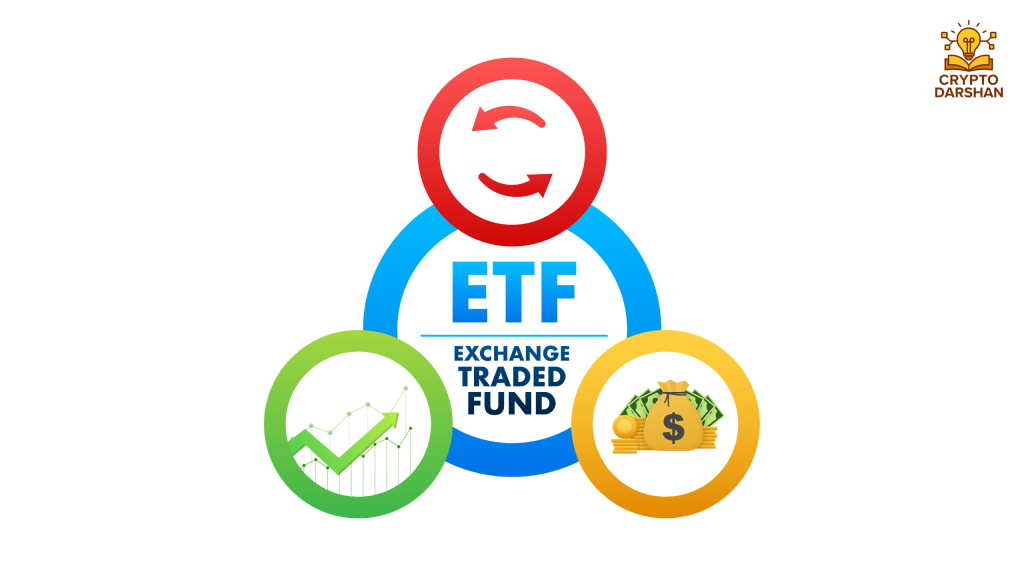
A Crypto ETF is an exchange-traded fund that tracks the price of one or more cryptocurrencies.It works like a traditional ETF and is traded like a standard share on a stock exchange. Instead of buying and storing digital coins directly, investors can purchase shares of the ETF through a brokerage account. Each share represents a portion of the fund’s holdings, which may include cryptocurrencies, futures contracts, or companies involved in blockchain technology.
How Crypto ETFs Work

- Tracking Mechanism:
The ETF mirrors the price movements of the underlying crypto assets. For example, a Bitcoin ETF follows the price of Bitcoin. - Custody and Security:
The fund manager handles the storage and security of the digital assets, reducing the risk of hacks or lost private keys. - Trading on Exchanges:
Crypto ETFs trade on traditional stock exchanges, making them accessible to both retail and institutional investors. - Regulation:
Most ETFs are regulated by financial authorities, providing a layer of investor protection not always present in direct crypto trading.
Why Invest in Crypto ETFs?
1. Accessibility
Crypto ETFs make it easy for anyone to invest in digital assets without needing a crypto wallet or exchange account.
2. Diversification
Many ETFs hold multiple cryptocurrencies or blockchain-related companies, spreading risk across different assets.
3. Regulation and Transparency
ETFs are subject to strict reporting and compliance standards, offering more transparency than many crypto exchanges.
4. Liquidity
Since ETFs trade on major exchanges, investors can buy or sell shares quickly during market hours.
5. Tax Efficiency
In many jurisdictions, ETFs offer more favorable tax treatment compared to direct crypto trading.
Risks of Investing in Crypto ETFs
Even if you buy a crypto ETF instead of holding coins directly, your investment still depends on the same underlying networks, so it helps to understand what a blockchain node is and why nodes are essential for keeping those networks running securely. While Crypto ETFs offer many advantages, they also carry certain risks:
- Market Volatility: Cryptocurrencies are known for price swings, which can affect ETF performance.
- Regulatory Changes: Government policies can impact the availability or legality of certain ETFs.
- Tracking Errors: Some ETFs may not perfectly mirror the price of the underlying assets.
- Management Fees: ETFs charge expense ratios that can reduce overall returns.
- Limited Exposure: Some ETFs invest in futures or blockchain companies rather than holding actual crypto assets.
High‑profile crypto ransomware attacks and other abuse cases are part of the reason regulators move slowly on approving new crypto ETFs, and they are a reminder that security and crime‑related headlines can influence sentiment and policy, even if you only hold an ETF on a regulated stock exchange.
Types of Crypto ETFs
1. Spot Crypto ETFs
These funds hold actual cryptocurrencies in custody. For example, a Bitcoin Spot ETF directly owns Bitcoin.
2. Futures-Based Crypto ETFs
These ETFs invest in futures contracts that speculate on the future price of cryptocurrencies.
3. Blockchain ETFs
Instead of holding crypto, these funds invest in companies developing blockchain technology.
4. Hybrid ETFs
Hybrid ETFs combine direct crypto exposure with investments in blockchain-related firms.
Top 30 Crypto ETFs in 2026
Below is a list of 30 leading cryptocurrency ETFs available in 2026. These funds represent a mix of spot, futures, and blockchain-based ETFs from around the world.
| No. | ETF Name | Type | Primary Holdings | Region |
| 1 | iShares Bitcoin Trust (IBIT) | Spot Bitcoin ETF | Bitcoin | USA |
| 2 | Fidelity Wise Origin Bitcoin Fund (FBTC) | Spot Bitcoin ETF | Bitcoin | USA |
| 3 | ARK 21Shares Bitcoin ETF (ARKB) | Spot Bitcoin ETF | Bitcoin | USA |
| 4 | VanEck Bitcoin Trust (HODL) | Spot Bitcoin ETF | Bitcoin | USA |
| 5 | Grayscale Bitcoin Mini Trust (BTCM) | Spot Bitcoin ETF | Bitcoin | USA |
| 6 | Bitwise Bitcoin ETF (BITB) | Spot Bitcoin ETF | Bitcoin | USA |
| 7 | Invesco Galaxy Bitcoin ETF (BTCO) | Spot Bitcoin ETF | Bitcoin | USA |
| 8 | Franklin Bitcoin ETF (EZBC) | Spot Bitcoin ETF | Bitcoin | USA |
| 9 | Hashdex Bitcoin ETF (DEFI11) | Spot Bitcoin ETF | Bitcoin | Brazil |
| 10 | Purpose Bitcoin ETF (BTCC) | Spot Bitcoin ETF | Bitcoin | Canada |
| 11 | Evolve Bitcoin ETF (EBIT) | Spot Bitcoin ETF | Bitcoin | Canada |
| 12 | CI Galaxy Bitcoin ETF (BTCX) | Spot Bitcoin ETF | Bitcoin | Canada |
| 13 | ProShares Bitcoin Strategy ETF (BITO) | Futures ETF | Bitcoin Futures | USA |
| 14 | Valkyrie Bitcoin Strategy ETF (BTF) | Futures ETF | Bitcoin Futures | USA |
| 15 | VanEck Bitcoin Strategy ETF (XBTF) | Futures ETF | Bitcoin Futures | USA |
| 16 | Global X Blockchain ETF (BKCH) | Blockchain ETF | Blockchain Companies | USA |
| 17 | Amplify Transformational Data Sharing ETF (BLOK) | Blockchain ETF | Blockchain Companies | USA |
| 18 | Bitwise Crypto Industry Innovators ETF (BITQ) | Blockchain ETF | Crypto Companies | USA |
| 19 | First Trust Indxx Innovative Transaction & Process ETF (LEGR) | Blockchain ETF | Blockchain Firms | USA |
| 20 | Siren Nasdaq NexGen Economy ETF (BLCN) | Blockchain ETF | Blockchain Companies | USA |
| 21 | Defiance Digital Revolution ETF (NFTZ) | Blockchain ETF | NFT & Metaverse Firms | USA |
| 22 | VanEck Digital Assets Mining ETF (DAM) | Blockchain ETF | Crypto Mining Firms | USA |
| 23 | Global X Metaverse ETF (VR) | Blockchain ETF | Metaverse Companies | USA |
| 24 | WisdomTree Bitcoin ETF (BTCW) | Spot Bitcoin ETF | Bitcoin | Europe |
| 25 | 21Shares Bitcoin ETP (ABTC) | Spot Bitcoin ETF | Bitcoin | Switzerland |
| 26 | CoinShares Physical Bitcoin (BITC) | Spot Bitcoin ETF | Bitcoin | Europe |
| 27 | ETC Group Physical Bitcoin (BTCE) | Spot Bitcoin ETF | Bitcoin | Germany |
| 28 | Purpose Ether ETF (ETHH) | Spot Ethereum ETF | Ethereum | Canada |
| 29 | CI Galaxy Ethereum ETF (ETHX) | Spot Ethereum ETF | Ethereum | Canada |
| 30 | VanEck Ethereum Strategy ETF (EFUT) | Futures ETF | Ethereum Futures | USA |
Best Performing Crypto ETFs in 2026
Performance varies depending on market conditions, but as of mid-2026, the following ETFs have shown strong returns:
- iShares Bitcoin Trust (IBIT): Consistent growth due to Bitcoin’s price surge.
- ARK 21Shares Bitcoin ETF (ARKB): High liquidity and strong institutional adoption.
- Purpose Ether ETF (ETHH): Ethereum’s network upgrades boosted returns.
- Global X Blockchain ETF (BKCH): Benefited from blockchain adoption in finance and logistics.
- Bitwise Crypto Industry Innovators ETF (BITQ): Exposure to leading crypto firms like Coinbase and MicroStrategy.
How to Invest in Crypto ETFs
Step 1: Choose a Brokerage
Select a regulated brokerage platform that offers access to crypto ETFs. Examples include Fidelity, Charles Schwab, and Robinhood.
Step 2: Research ETFs
Compare ETFs based on expense ratios, performance history, and underlying assets.
Step 3: Diversify
Consider investing in multiple ETFs to balance exposure between Bitcoin, Ethereum, and blockchain companies.
Step 4: Monitor Performance
Track ETF performance regularly and rebalance the portfolio as needed.
Step 5: Understand Tax Implications
Consult a financial advisor to understand how crypto ETF investments are taxed in your region.
Factors to Consider Before Investing
- Expense Ratio: Lower fees mean higher potential returns.
- Liquidity: ETFs with higher trading volumes are easier to buy and sell.
- Tracking Accuracy: Choose funds that closely follow their underlying assets.
- Regulatory Environment: Ensure the ETF operates under a trusted regulatory framework.
- Market Outlook: Assess the long-term potential of the crypto market before investing.
Future of Crypto ETFs

The future of Crypto ETFs looks promising. As more countries approve spot ETFs and expand regulatory clarity, institutional adoption is expected to rise. Innovations such as multi-asset crypto ETFs, DeFi ETFs, and AI-integrated blockchain ETFs are likely to emerge by 2027.
Key trends shaping the future include:
- Increased Institutional Participation: Pension funds and hedge funds are entering the crypto ETF space.
- Global Expansion: More ETFs are launching in Asia, Europe, and Latin America.
- Integration with Traditional Finance: Banks and asset managers are offering crypto ETF products to clients.
- Sustainability Focus: Green crypto ETFs investing in eco-friendly mining operations are gaining traction.
Comparing Crypto ETFs vs. Direct Crypto Investment
| Feature | Crypto ETFs | Direct Crypto Investment |
| Ownership | Indirect (via fund shares) | Direct (own coins) |
| Security | Managed by fund custodian | Investor responsible |
| Regulation | Highly regulated | Varies by exchange |
| Liquidity | High (exchange-traded) | Depends on exchange |
| Complexity | Simple | Requires technical knowledge |
| Taxation | Standard ETF taxation | Varies by jurisdiction |
Expert Insights on Crypto ETFs in 2026

Financial analysts predict that by the end of 2026, the global crypto ETF market could exceed $100 billion in assets under management (AUM). The approval of multiple spot Bitcoin and Ethereum ETFs in the U.S. has opened the door for broader adoption.
Experts also highlight that diversified crypto ETFs—those combining Bitcoin, Ethereum, and blockchain equities—may outperform single-asset funds due to reduced volatility. Even if you never touch a self‑custodied wallet, the long‑term performance of many crypto ETFs will depend on how major networks like Ethereum execute on their roadmaps, including scaling upgrades such as danksharding that aim to make the chain cheaper and more efficient for real‑world use.
Top Strategies for Crypto ETF Investors

- Long-Term Holding (HODL): Hold ETFs for several years to benefit from long-term crypto growth.
- Dollar-Cost Averaging: Invest a fixed amount regularly to reduce the impact of volatility.
- Sector Rotation: Shift between Bitcoin, Ethereum, and blockchain ETFs based on market trends.
- Risk Management: Limit exposure to high-volatility ETFs and maintain a balanced portfolio.
- Reinvestment: Reinvest dividends or profits to compound returns over time.
Regulatory Landscape in 2026
By 2026, several countries have approved spot crypto ETFs, including the United States, Canada, Brazil, and parts of Europe. The U.S. Securities and Exchange Commission (SEC) has established clearer guidelines for digital asset funds, improving investor confidence.
In Europe, regulators have embraced crypto ETFs under the MiCA (Markets in Crypto-Assets) framework, ensuring transparency and consumer protection. Meanwhile, Asian markets like Japan and Singapore are exploring similar approvals.
FAQ

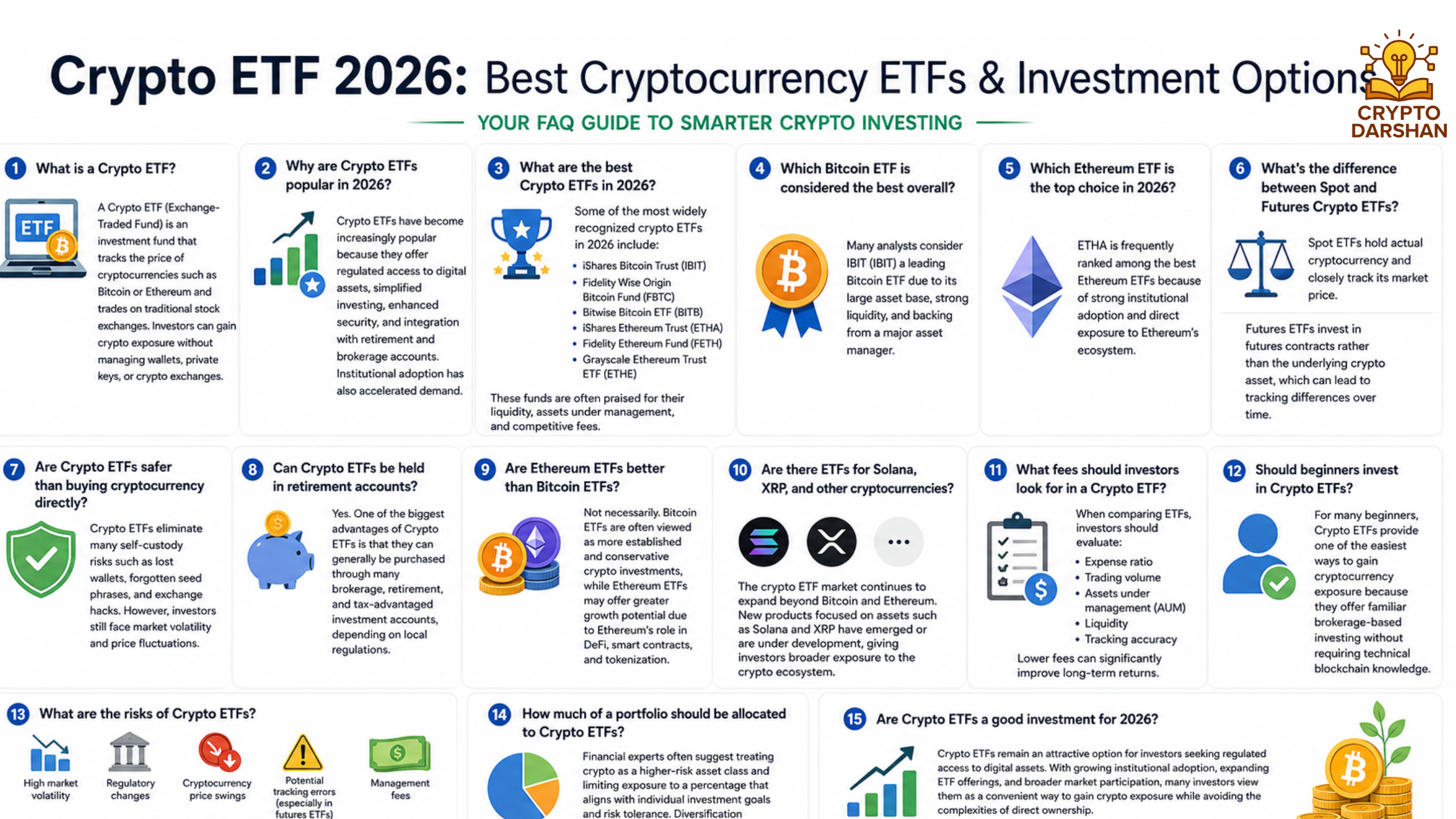
1. What is a Crypto ETF?
A Crypto ETF (Exchange-Traded Fund) is an investment fund that tracks the price of cryptocurrencies such as Bitcoin or Ethereum and trades on traditional stock exchanges. Investors can gain crypto exposure without managing wallets, private keys, or crypto exchanges.
2. Why are Crypto ETFs popular in 2026?
Crypto ETFs have become increasingly popular because they offer regulated access to digital assets, simplified investing, enhanced security, and integration with retirement and brokerage accounts. Institutional adoption has also accelerated demand.
3. What are the best Crypto ETFs in 2026?
Some of the most widely recognized crypto ETFs in 2026 include:
- iShares Bitcoin Trust (IBIT)
- Fidelity Wise Origin Bitcoin Fund (FBTC)
- Bitwise Bitcoin ETF (BITB)
- iShares Ethereum Trust (ETHA)
- Fidelity Ethereum Fund (FETH)
- Grayscale Ethereum Trust ETF (ETHE)
These funds are often praised for their liquidity, assets under management, and competitive fees.
4. Which Bitcoin ETF is considered the best overall?
Many analysts consider IBIT (IBIT) a leading Bitcoin ETF due to its large asset base, strong liquidity, and backing from a major asset manager.
Conclusion
Crypto ETFs in 2026 represent a bridge between traditional finance and the digital asset revolution. They offer investors a secure, regulated, and convenient way to participate in the growth of cryptocurrencies without the complexities of direct ownership.
With dozens of options available—from Bitcoin and Ethereum ETFs to blockchain innovation funds—investors can tailor their portfolios to match their risk tolerance and investment goals.
As the crypto market matures, Crypto ETFs are set to become a cornerstone of modern investment portfolios, blending innovation, accessibility, and long-term potential.
Key Takeaways
- Crypto ETFs provide exposure to digital assets through regulated financial instruments.
- They offer diversification, liquidity, and ease of access compared to direct crypto ownership.
- The top 30 ETFs in 2026 include both spot and futures-based funds across multiple regions.
- Investors should consider expense ratios, regulation, and market trends before investing.
- The future of crypto ETFs looks bright, with growing institutional adoption and global expansion.
Disclaimer: This content is for informational purposes only and does not constitute financial advice. Always conduct independent research or consult a licensed financial advisor before making investment decisions.