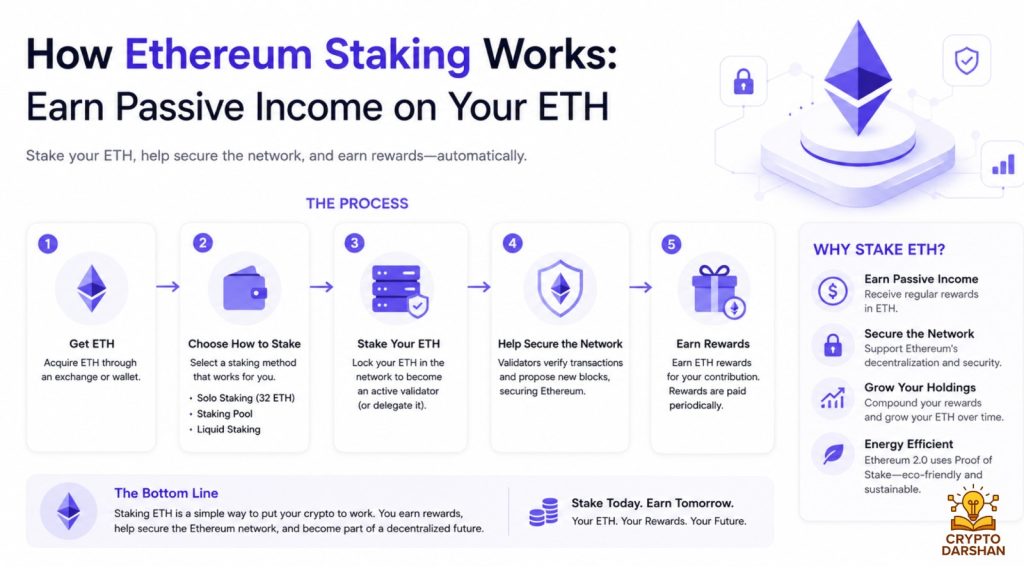
Ethereum staking is one of the most popular ways to earn passive income in the cryptocurrency world. It allows holders of Ether (ETH) to participate in securing the Ethereum network while earning rewards in return. Instead of relying on energy-intensive mining, Ethereum staking uses a Proof-of-Stake (PoS) mechanism that is more efficient, eco-friendly, and accessible to a wider range of users.
Since the Ethereum network transitioned from Proof-of-Work (PoW) to Proof-of-Stake through the Merge in 2022, staking has become the backbone of its consensus mechanism. This shift has opened up new opportunities for investors to earn consistent returns simply by locking up their ETH and helping validate transactions.
This guide explains how Ethereum staking works, the benefits and risks involved, how to get started, and strategies to maximize staking rewards. It also explores the different staking options available, from solo staking to staking pools and exchanges.
What Is Ethereum Staking?
Ethereum staking is the process of locking up ETH to support the operations of the Ethereum blockchain. In return, participants—known as validators—earn rewards for confirming transactions and maintaining network security.
In the Proof-of-Stake model, validators are chosen to propose and validate new blocks based on the amount of ETH they have staked and how long it has been staked. This system replaces the energy-intensive mining process used in Proof-of-Work networks.
When staking ETH, participants commit their tokens to the network for a certain period. During this time, the staked ETH cannot be freely traded or withdrawn, but it generates rewards in the form of additional ETH.
The Evolution of Ethereum Staking
Ethereum’s transition to staking was a major milestone in blockchain history. The journey began with the launch of the Beacon Chain in December 2020, which introduced staking to the Ethereum ecosystem. Initially, staking was separate from the main Ethereum network, but after the Merge in September 2022, the two systems combined into a single Proof-of-Stake blockchain.
This upgrade reduced Ethereum’s energy consumption by over 99% and made the network more scalable and sustainable. It also democratized participation, allowing anyone with ETH to contribute to network security and earn rewards.
How Ethereum Staking Works
Ethereum staking operates through a network of validators who are responsible for proposing and validating new blocks. Here’s a simplified breakdown of how it works:
- Deposit ETH: To become a validator, a participant must deposit 32 ETH into the official Ethereum staking contract.
- Validator Selection: The network randomly selects validators to propose and attest to new blocks based on their staked amount and other factors.
- Block Validation: Validators confirm transactions and ensure that blocks follow the network’s rules.
- Rewards Distribution: Validators earn rewards for their participation, which are distributed in ETH.
- Penalties and Slashing: Validators who act maliciously or fail to perform their duties can lose part of their staked ETH through a process called slashing.
This system ensures that validators are incentivized to act honestly and maintain the integrity of the network.
Benefits of Ethereum Staking

Ethereum staking offers several advantages for both individual investors and the broader ecosystem.
1. Passive Income Generation
Staking allows ETH holders to earn passive income without actively trading. The rewards are typically paid in ETH, compounding over time as the staked amount grows.
2. Network Security
By staking ETH, participants help secure the Ethereum network. The more ETH that is staked, the harder it becomes for malicious actors to attack the system.
3. Energy Efficiency
Unlike mining, Ethereum staking does not require expensive hardware or high electricity consumption. This makes it more sustainable and environmentally friendly.
4. Accessibility
Anyone with ETH can participate in staking, either directly or through staking pools and exchanges. This inclusivity encourages broader participation in the Ethereum ecosystem.
5. Long-Term Investment
Staking encourages long-term holding of ETH, which can reduce market volatility and strengthen the network’s stability.
Risks of Ethereum Staking

While Ethereum staking offers attractive rewards, it also comes with certain risks that participants should understand.
1. Lock-Up Periods
When ETH is staked, it may be locked for a specific period, depending on the staking method. During this time, it cannot be sold or transferred.
2. Slashing Risks
Validators who fail to follow network rules or go offline for extended periods can lose part of their staked ETH through slashing.
3. Market Volatility
The value of ETH can fluctuate significantly. Even if staking rewards are earned, a drop in ETH’s market price can reduce overall returns.
4. Technical Complexity
Running a validator node requires technical knowledge and constant uptime. Mistakes can lead to penalties or missed rewards.
5. Centralization Risks
Relying on large staking pools or exchanges can lead to centralization, which may undermine the decentralized nature of Ethereum.
Types of Ethereum Staking
There are several ways to participate in Ethereum staking, each with its own advantages and trade-offs.
1. Solo Staking
Solo staking involves running a validator node independently. It requires 32 ETH and technical expertise to maintain the node. Solo stakers have full control over their funds and earn the highest possible rewards.
Pros:
- Full control over staked ETH
- Maximum rewards
- Direct contribution to network security
Cons:
- Requires 32 ETH minimum
- Technical setup and maintenance
- Risk of slashing if misconfigured
2. Staking Pools
Staking pools allow multiple users to combine their ETH to reach the 32 ETH requirement. The rewards are distributed proportionally among participants.
Pros:
- Accessible with less than 32 ETH
- No need for technical setup
- Lower risk of slashing
Cons:
- Lower rewards due to pool fees
- Reliance on third-party operators
3. Exchange Staking
Many cryptocurrency exchanges offer Ethereum staking services. Users can stake ETH directly through the exchange interface.
Pros:
- Simple and convenient
- No technical knowledge required
- Flexible staking options
Cons:
- Custodial risk (exchange holds the ETH)
- Lower transparency
- Potential withdrawal restrictions
4. Liquid Staking
Liquid staking platforms issue tokens representing staked ETH, such as stETH or rETH. These tokens can be traded or used in decentralized finance (DeFi) applications.
Pros:
- Liquidity while staking
- Can earn additional yield in DeFi
- Easy to use
Cons:
- Smart contract risks
- Price fluctuations of staking tokens
- Dependence on third-party protocols
How to Start Ethereum Staking

Starting Ethereum staking depends on the chosen method. Below is a step-by-step guide for each approach.
Solo Staking Setup
- Prepare 32 ETH: Ensure at least 32 ETH is available for staking.
- Set Up Hardware: Use a reliable computer or server with stable internet.
- Install Ethereum Client: Choose a client such as Prysm, Lighthouse, or Teku.
- Generate Validator Keys: Create validator and withdrawal keys securely.
- Deposit ETH: Send 32 ETH to the official Ethereum staking contract.
- Run the Validator Node: Keep the node online to earn rewards and avoid penalties.
Staking Pool Participation
- Choose a Pool: Select a reputable staking pool with transparent fees.
- Deposit ETH: Contribute any amount of ETH to the pool.
- Earn Rewards: Receive proportional rewards based on the contribution.
Exchange Staking
- Select an Exchange: Use a trusted exchange that supports Ethereum staking.
- Deposit ETH: Transfer ETH to the exchange wallet.
- Activate Staking: Opt into the staking program and start earning rewards.
Liquid Staking
- Choose a Platform: Use services like Lido, Rocket Pool, or StakeWise.
- Stake ETH: Deposit ETH and receive liquid staking tokens.
- Use Tokens in DeFi: Trade or lend staking tokens for additional yield.
Ethereum Staking Rewards

Ethereum staking rewards vary based on several factors, including the total amount of ETH staked, network activity, and validator performance. On average, staking yields range between 3% and 7% annually.
Rewards are distributed in ETH and automatically added to the validator’s balance. Over time, these rewards compound, increasing the total staked amount and future earnings.
Factors Affecting Rewards
- Total ETH Staked: As more ETH is staked, the reward rate decreases.
- Validator Uptime: Consistent uptime ensures maximum rewards.
- Network Performance: Higher transaction volumes can increase rewards.
- Penalties: Validators who go offline or act maliciously lose rewards.
Ethereum Staking vs. Mining
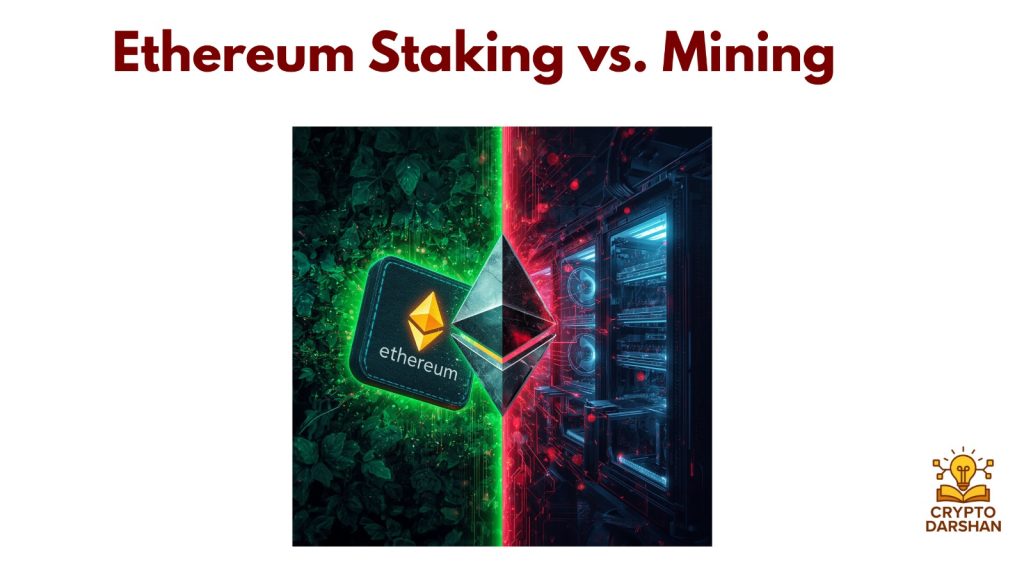
Ethereum staking and mining serve the same purpose—securing the network—but operate differently.
| Feature | Ethereum Staking | Ethereum Mining |
| Consensus Mechanism | Proof-of-Stake | Proof-of-Work |
| Energy Usage | Low | High |
| Hardware Requirement | Standard computer | Specialized mining rigs |
| Entry Barrier | Low (via pools) | High |
| Rewards | ETH staking rewards | Block rewards + transaction fees |
| Environmental Impact | Eco-friendly | Energy-intensive |
The shift to staking has made Ethereum more sustainable and accessible, aligning with global efforts to reduce energy consumption.
Tax Implications of Ethereum Staking
In many jurisdictions, Ethereum staking rewards are considered taxable income. The exact tax treatment depends on local regulations.
- Income Tax: Rewards received from staking may be taxed as income at the time they are earned.
- Capital Gains Tax: Selling staked ETH or staking tokens later may trigger capital gains tax based on price appreciation.
It is important to keep detailed records of staking rewards, transactions, and ETH prices at the time of receipt for accurate tax reporting.
Security Considerations in Ethereum Staking
Security is crucial when participating in Ethereum staking. Validators and stakers should follow best practices to protect their assets.
Best Practices
- Use Hardware Wallets: Store withdrawal keys in secure hardware wallets.
- Keep Software Updated: Regularly update validator clients to the latest versions.
- Monitor Node Performance: Ensure consistent uptime to avoid penalties.
- Avoid Phishing Scams: Only use official Ethereum staking portals.
- Diversify Staking Methods: Spread ETH across different staking options to reduce risk.
The Future of Ethereum Staking

Ethereum staking continues to evolve as the network grows. Upcoming upgrades, such as sharding and scalability improvements, will further enhance staking efficiency and accessibility.
As more ETH becomes staked, the network’s security and decentralization will strengthen. Additionally, innovations in liquid staking and DeFi integration will create new opportunities for yield generation.
Institutional adoption is also increasing, with major financial firms exploring Ethereum staking as a source of passive income and blockchain exposure.
Strategies to Maximize Ethereum Staking Rewards

1. Maintain High Uptime
Keeping your validator node online and operational 24/7 is critical for maximizing Ethereum staking rewards. When your validator is active and available, it can participate in proposing new blocks and attesting to others’ proposals, which is how you earn rewards.
If your validator goes offline, you’ll miss out on potential rewards during that downtime. Even worse, extended periods of inactivity can result in penalties where you lose a small portion of your staked ETH. The Ethereum network expects validators to be reliable participants, so consistency matters.
2. Use Reliable Hardware
The quality and reliability of your hardware directly impacts your validator’s performance and your staking rewards. While Ethereum staking doesn’t require expensive mining equipment, you still need dependable hardware that can run continuously without failures.
A good validator setup includes a computer with sufficient processing power (a modern multi-core CPU), adequate RAM (at least 16GB is recommended), and fast storage (an SSD with at least 2TB of capacity for blockchain data). The hardware should be able to handle the computational requirements of validating transactions and maintaining synchronization with the Ethereum network.
3. Join Reputable Pools
If you don’t have 32 ETH or prefer not to manage technical infrastructure yourself, joining a reputable staking pool is an excellent strategy. However, not all pools are created equal, and choosing the right one can significantly impact your returns.
Look for pools with transparent fee structures—typically ranging from 5% to 25% of your staking rewards. Lower fees mean more rewards stay in your pocket. Research the pool’s track record, including their uptime statistics, total ETH staked, and how long they’ve been operating. Established pools with strong reputations are less likely to experience technical issues or security breaches.
4. Reinvest Rewards
Compounding is one of the most powerful strategies for growing your Ethereum staking returns over time. When you reinvest your staking rewards back into staking, you increase your total staked amount, which then generates even more rewards in the future.
For example, if you earn 5% annual rewards on your staked ETH, reinvesting those rewards means you’ll earn 5% on a larger amount the following year. Over multiple years, this compounding effect can significantly boost your total returns compared to simply withdrawing and spending your rewards.
5. Diversify Platforms
Spreading your ETH across multiple staking methods and platforms is a smart risk management strategy that can also optimize your overall returns. Diversification protects you from platform-specific risks while allowing you to take advantage of different opportunities.
Consider allocating your ETH across different approaches: perhaps some in a staking pool for simplicity, some in liquid staking protocols to maintain liquidity, and if you have enough, some in solo staking for maximum rewards. Each method has different risk-reward profiles, and diversifying helps balance these factors.
Ethereum Staking and Decentralized Finance (DeFi)
Ethereum staking has become deeply integrated with DeFi. Liquid staking tokens like stETH and rETH can be used in lending, borrowing, and yield farming protocols, allowing users to earn multiple layers of rewards.
This synergy between staking and DeFi enhances liquidity and capital efficiency, making Ethereum one of the most dynamic ecosystems in the blockchain space.
Environmental Impact of Ethereum Staking

Ethereum staking has drastically reduced the network’s carbon footprint. The transition from mining to staking cut energy consumption by over 99%, making Ethereum one of the most sustainable blockchains.
This eco-friendly model aligns with global sustainability goals and attracts environmentally conscious investors.
Comparing Ethereum Staking to Other Blockchains
| Blockchain | Consensus Mechanism | Minimum Stake | Average Reward | Energy Efficiency |
| Ethereum | Proof-of-Stake | 32 ETH | 3–7% | High |
| Cardano | Ouroboros PoS | No minimum | 4–6% | High |
| Polkadot | Nominated PoS | 120 DOT | 10–14% | High |
| Solana | Proof-of-History + PoS | No minimum | 6–8% | High |
Ethereum staking stands out due to its large ecosystem, liquidity options, and integration with DeFi.
The Role of Validators in Ethereum Staking
Validators are the backbone of Ethereum staking. They propose and attest to new blocks, ensuring the network remains secure and decentralized. Each validator must maintain uptime, follow protocol rules, and avoid malicious behavior to earn rewards and prevent slashing.
The more validators participate, the more decentralized and resilient the Ethereum network becomes.
Ethereum Staking After the Merge
After the Merge, Ethereum fully transitioned to Proof-of-Stake, eliminating mining entirely. Validators replaced miners, and staking became the primary method of securing the network.
This change improved scalability, reduced energy use, and made Ethereum more accessible to everyday users. It also paved the way for future upgrades like sharding, which will further enhance performance.
FAQ: How Ethereum Staking Works: Earn Passive Income on Your ETH

1. What is Ethereum staking?
Ethereum staking is the process of locking up ETH to help secure the Ethereum network and validate transactions. In return, participants receive staking rewards.
2. How does Ethereum staking work?
When you stake ETH, your funds are used by validators to verify transactions and maintain the blockchain. Validators earn rewards for performing these duties correctly.
3. How much ETH do I need to start staking?
To run your own validator, you need 32 ETH. However, staking pools and liquid staking platforms allow users to stake with much smaller amounts.
4. What are staking rewards?
Staking rewards are payments earned by validators and stakers for helping secure the Ethereum network. Rewards vary based on network conditions and the total amount of ETH being staked.
5. Is Ethereum staking considered passive income?
Many investors view staking rewards as a form of passive income because they can earn ETH without actively trading. However, rewards are not guaranteed and can fluctuate.
6. What is the difference between solo staking and staking pools?
Solo staking requires running your own validator and managing technical requirements. Staking pools combine funds from multiple users, making staking accessible to smaller investors.
7. What is liquid staking?
Liquid staking allows users to stake ETH while receiving a tokenized version of their staked assets, which can be used in DeFi applications while still earning staking rewards.
8. Are staking rewards guaranteed?
No. Rewards depend on validator performance, network participation rates, and Ethereum protocol rules.
9. What risks are involved in Ethereum staking?
Risks include smart contract vulnerabilities, validator penalties (slashing), platform failures, market volatility, and temporary illiquidity of staked assets.
Conclusion
Ethereum staking represents a revolutionary shift in how blockchain networks operate and reward participants. It allows ETH holders to earn passive income while contributing to the security and sustainability of the Ethereum ecosystem.
Whether through solo staking, pools, exchanges, or liquid staking platforms, Ethereum staking offers flexible options for all types of investors. While it carries certain risks, careful planning, diversification, and security practices can help maximize rewards and minimize exposure.
As Ethereum continues to evolve, staking will remain a cornerstone of its growth, driving decentralization, innovation, and long-term value creation. For anyone looking to earn passive income and support the future of decentralized finance, Ethereum staking is one of the most promising opportunities in the crypto landscape.