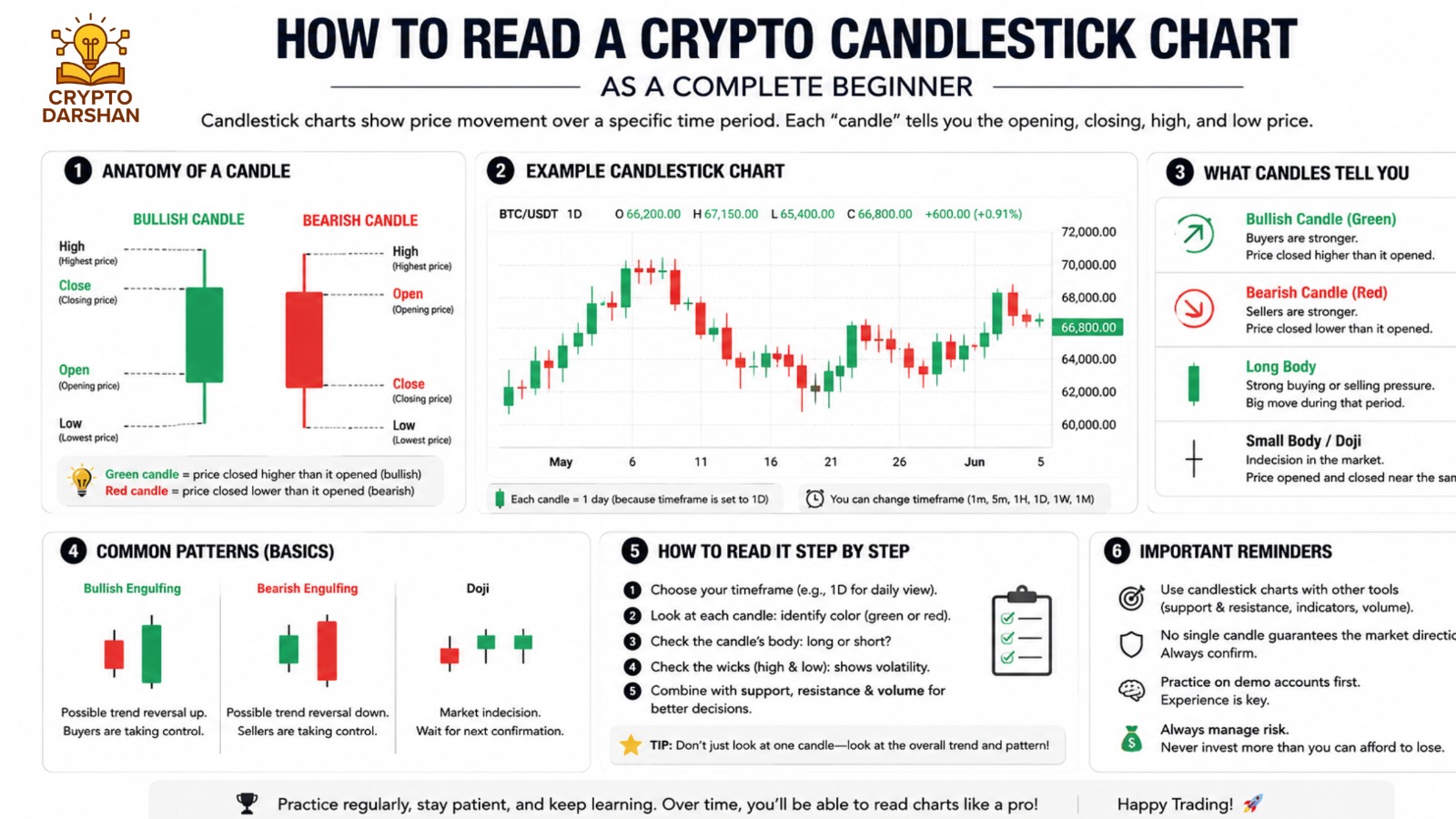


The crypto market in 2026 moves fast. Prices spike, crash, and recover within hours. If you want to stay ahead, you need a solid crypto pattern strategy. This type of chart formation is a visual shape that appears on a price chart. It tells you what buyers and sellers are doing. It helps you predict where the price is going next.
Two of the most powerful tools in a trader’s toolkit are the Head and Shoulders formation and the Flag setup.. These two setups appear again and again across Bitcoin, Ethereum, Solana, and hundreds of altcoins. When you learn how to read each chart formation correctly, you gain a real edge in the market.
This guide breaks down every key detail. You will learn what each crypto pattern looks like, how to confirm it, when to enter a trade, and how to manage your risk. Whether you are new to chart reading or a seasoned trader looking to sharpen your skills, this article has everything you need.
What Is a Crypto Pattern and Why Does It Matter?

Crypto chart patterns are recurring price formations on candlestick charts used in technical analysis to anticipate future price movements.. Fear and greed drive buying and selling decisions. Those emotions create the same shapes on charts over and over again. Each formation captures that behavior in a clean, visual way.
Technical analysts have studied these chart formations for decades. The same setups that appeared in stock markets in the 1900s now show up in crypto charts every single day. The reason is simple: traders react the same way to price movement regardless of the asset.
When you identify a breakout setup early, you can position yourself before the crowd. You can set a clear entry point, place a stop-loss, and target a specific price. That is the power of pattern-based trading. Every reliable crypto pattern gives you three things: a signal, a confirmation, and a plan.
The Head and Shoulders Crypto Pattern Explained

What the Head and Shoulders Crypto Pattern Looks Like
The Head and Shoulders is one of the most recognized reversal formations in technical analysis. This reversal formation appears at the end of an uptrend. It signals that buying momentum is fading and sellers are starting to take control.
The formation has three peaks. The middle peak is the tallest and is called the “head.” The two shorter peaks on either side are called the “left shoulder” and the “right shoulder.” A line called the “neckline” connects the two troughs between the peaks.
When price breaks below the neckline, the Head and Shoulders crypto pattern is confirmed. At that point, traders expect the price to fall by roughly the same distance as the head is above the neckline.
How to Spot This Crypto Pattern in Real Time
To identify this formation on a live chart, follow these steps:
Step 1 — Find the Uptrend. The Head and Shoulders setup only forms after a clear upward move. Look for a market that has been rising for a while before the pattern begins.
Step 2 — Identify the Left Shoulder. The price rallies to a new high, then pulls back. This pullback forms the left trough. The rally and retreat make up the left shoulder of the this setup.
Step 3 — Identify the Head. After the left shoulder, the price pushes even higher to form a new peak. Then it falls back again, usually to roughly the same level as the first trough. This is the most important peak in the entire structure.
Step 4 — Identify the Right Shoulder. The price makes one more attempt to rally but fails to reach the height of the head. It forms a peak around the same level as the left shoulder. This weakness confirms the chart is setting up for a breakdown.
Step 5 — Draw the Neckline. Connect the two troughs with a horizontal or slightly angled line. This is the neckline. A close below this level triggers the breakdown and signals a potential shorting opportunity.
Volume Clues in This Crypto Pattern
Volume plays a critical role in verifying the Head and Shoulders crypto pattern. During the left shoulder, volume is typically strong. As the head forms, volume may decrease slightly even though the price is higher. This divergence is a warning sign. During the right shoulder, volume often drops further. When price finally breaks the neckline, a surge in volume confirms the breakdown is genuine.
Price Target for the Head and Shoulders Crypto Pattern
Measure the vertical distance from the top of the head to the neckline. Apply that same distance downward from the neckline breakout point. This gives you the price target for the crypto pattern. For example, if the head is 20% above the neckline and price breaks the neckline at $100, the target for this crypto pattern is $80.
The Inverse Version of This Crypto Pattern
The Inverse Head and Shoulders is the bullish mirror image. This version of the crypto pattern appears at the end of a downtrend. Instead of three peaks, you see three troughs. The middle trough is the deepest. A break above the neckline in this inverse setup signals a potential rally. Many traders use bullish breakout signals from the Inverse Head and Shoulders pattern when executing strategies discussed in Crypto Futures Trading: Advanced Perpetual Contracts, particularly when entering long positions after neckline confirmation. Traders use the same measuring technique to set a price target.
Real-World Examples of the Head and Shoulders Crypto Pattern in 2025–2026

In late 2024 and early 2025, several major altcoins printed textbook Head and Shoulders setups. Ethereum formed this same structure on its weekly chart as it failed to reclaim its all-time highs. The left shoulder, head, and right shoulder were all clearly visible. The neckline held for weeks before a clean break triggered the anticipated move lower.
Bitcoin also showed an Inverse Head and Shoulders setup in early 2026 after a significant correction. Traders who recognized the crypto pattern early were able to position for the subsequent bounce well before the general market caught on.
The Flag Crypto Pattern Explained
What the Flag Crypto Pattern Looks Like
The Flag crypto pattern is one of the most reliable continuation setups in technical analysis. Unlike the Head and Shoulders, which signals a reversal, the Flag signals that the existing trend is likely to continue. It appears in both bull markets and bear markets.
The crypto pattern has two key parts. First, a sharp, near-vertical price move called the “flagpole.” Second, a rectangular consolidation zone called the “flag.” The flag forms when price drifts sideways or slightly against the trend inside two parallel trendlines. When price breaks out of the flag, the original trend resumes.
There are two types of this formation depending on the trend direction: the Bull Flag and the Bear Flag.
The Bull Flag Crypto Pattern
The Bull Flag crypto pattern forms during an uptrend. The price makes a strong upward move that forms the pole. Then the price enters a brief period of consolidation, drifting slightly lower or moving sideways. This creates the flag portion of the setup. The downward drift is gradual and controlled. Volume typically decreases during the consolidation phase.
When price breaks above the upper boundary of the flag, the Bull Flag is confirmed. Volume often spikes on the breakout. Traders enter on the breakout or on a retest of the breakout level. The price target is calculated by adding the height of the pole to the breakout point.
The Bear Flag Crypto Pattern
The Bear Flag is the downward version of the same setup. The price makes a sharp drop that forms the pole. Then it enters a brief consolidation, drifting slightly higher or moving sideways. This creates the flag. The upward drift is shallow, showing that buyers are not strong enough to reverse the trend.
When price breaks below the lower boundary of the flag, the Bear Flag is confirmed. This signals that the downtrend is resuming. Traders measure the height of the pole and subtract it from the breakout point to get the downside target.
How to Identify a Valid Flag Crypto Pattern
Not every small consolidation is a valid Flag setup. Here are the key criteria:
Strong Pole. The initial price move should be sharp and clean. A weak, choppy pole reduces the reliability of this formation.
Controlled Consolidation. The flag portion should drift against the trend in a controlled manner. The trendlines should be roughly parallel. A deep or chaotic consolidation weakens the setup entirely.
Decreasing Volume in the Flag. As price consolidates, volume should drop. This shows that the correction is just a pause, not a reversal. When volume dries up and price breaks out, the trade has a higher chance of success.
Clean Breakout. The breakout from this formation should happen on a candle close, not just an intraday spike. A close beyond the boundary adds confidence to the signal.
Timeframes for the Flag Crypto Pattern
The Flag setup works on all timeframes. Day traders use it on the 5-minute and 15-minute charts. Swing traders look for it on the 4-hour and daily charts. Long-term investors find it on the weekly chart. The reliability of this formation increases on higher timeframes because there is more data behind each candle and more institutional activity shaping the move.
Volume Confirmation in the Flag Crypto Pattern
Just like the Head and Shoulders, volume is a key confirmation tool for the Flag crypto pattern. The ideal setup shows high volume during the pole, declining volume during the flag consolidation, and a volume spike on the breakout. When all three volume conditions align with the price action, the trade carries much higher reliability.
Combining the Head and Shoulders and Flag Crypto Pattern

The most skilled traders do not rely on a single crypto pattern in isolation. They look for confluence. Combining the Head and Shoulders reversal with the Flag continuation crypto pattern gives you a complete picture of where the market is in its cycle.
For example, after a Head and Shoulders breaks down on the daily chart, the new downtrend may produce multiple Bear Flag setups along the way. Each Bear Flag gives you a fresh entry opportunity to ride the continuation move.
Conversely, after an Inverse Head and Shoulders crypto pattern signals a reversal to the upside, the new uptrend will often form several Bull Flag crypto pattern setups. Each one offers a low-risk entry in the direction of the new trend.
This approach of chaining a reversal formation with continuation crypto patterns is one of the most effective ways to maximize gains while minimizing risk.
Risk Management With Every Crypto Pattern Trade

No crypto pattern is perfect. Every setup has a failure rate. Proper risk management ensures that when a setup fails, your losses are small. When a trade succeeds, your gains are significant.
Stop-Loss Placement for the Head and Shoulders Crypto Pattern
Place your stop-loss just above the right shoulder. If price moves back above that level, the signal is invalid. Exiting with a small loss is far better than holding through a failed setup.
Stop-Loss Placement for the Flag Crypto Pattern
Place your stop-loss just inside the opposite boundary of the flag. For a Bull Flag, that means just below the bottom of the flag. For a Bear Flag crypto pattern, it means just above the top of the flag. If price re-enters the flag after a breakout, the crypto pattern may be breaking down.
Position Sizing
Never risk more than 1–2% of your trading capital on a single trade. Even the most reliable formation will fail a percentage of the time. Keeping position sizes small protects your account from any one bad trade.
Risk-to-Reward Ratio
Before entering any crypto pattern trade, calculate your risk-to-reward ratio. A ratio of at least 1:2 or 1:3 is recommended. This means for every $1 you risk, you aim to make $2 or $3. Consistently trading with this mindset makes even a 50% win rate profitable. Many traders use tools discussed in Build a Crypto Screener With On-Chain Volume & Breakout Signals to find setups that offer favorable risk-to-reward ratios before committing to a trade.
Common Mistakes

Many beginners lose money not because the crypto pattern failed, but because they made avoidable mistakes. Here are the most common errors:
Trading Without Confirmation
Entering a crypto pattern trade before the breakout is confirmed is one of the biggest mistakes. Wait for a candle close beyond the key level before committing.
Ignoring Volume
A crypto pattern breakout without volume support is unreliable. Always check whether volume is backing up the price move.
Forcing a Pattern
Not every chart setup is a valid crypto pattern. If you have to squint to see it, it probably is not there. Trade only the clear, clean setups.
Over-Leveraging
Using high leverage on a crypto pattern trade magnifies losses when the setup fails. Keep leverage low, especially while you are still learning how to read each crypto pattern.
Ignoring the Broader Market
A Bull Flag crypto pattern in a coin that is moving against the broader crypto market has a much lower chance of success. Always consider the macro environment when evaluating a crypto pattern.
Tools to Help You Spot a Crypto Pattern Faster

Several tools make it easier to identify a crypto pattern on any chart:
TradingView is the most popular charting platform among crypto traders. It offers drawing tools, pattern recognition scripts, and a massive community where traders share crypto pattern ideas.
Volume Profile helps you see where the most trading activity has occurred. This adds depth to your crypto pattern analysis by showing key support and resistance zones. Many traders using the strategies covered in Crypto Leverage Trading 2026: Best Strategies, Platforms, and Trading Tips rely on moving averages to confirm trend direction before entering leveraged positions.
Moving Averages can confirm the direction of the trend in which your crypto pattern is forming. A Bull Flag crypto pattern forming above the 50-day moving average is stronger than one forming below it.
RSI (Relative Strength Index) helps you gauge momentum. A crypto pattern breakout that coincides with RSI moving above 50 adds confidence to a bullish setup.
The Psychology Behind Every Crypto Pattern

Every crypto pattern is a map of trader psychology. The Head and Shoulders crypto pattern reflects exhaustion. Buyers pushed the price up three times, but by the third attempt they ran out of energy. Sellers recognized the weakness and stepped in aggressively at the neckline break.
The Flag crypto pattern reflects confidence and patience. After a big move, smart traders wait for weak hands to exit during the consolidation. The shrinking volume in the flag shows that the selling pressure is fading. When strong hands step back in on the breakout, the original move resumes with force.
Understanding the psychology behind each crypto pattern makes you a more disciplined trader. You stop chasing random price moves and start waiting for structured, high-probability setups.
Crypto Pattern 2026: Head & Shoulders, Flag Patterns – FAQ

1. What are crypto chart patterns?
Crypto chart patterns are recurring price formations that traders use to identify potential trend continuations or reversals in cryptocurrency markets.
2. What is the Head & Shoulders pattern?
The Head & Shoulders pattern is a bearish reversal pattern consisting of three peaks: a central peak (head) flanked by two smaller peaks (shoulders). It often signals the end of an uptrend.
3. What does an Inverse Head & Shoulders pattern indicate?
An Inverse Head & Shoulders pattern is a bullish reversal signal that appears after a downtrend and suggests a potential move higher.
4. What is a Flag pattern in crypto trading?
A Flag pattern is a continuation pattern that forms after a strong price movement, followed by a brief consolidation period before the trend resumes.
5. What is a Bull Flag?
A Bull Flag appears during an uptrend and indicates that buyers may continue pushing prices higher after consolidation.
6. What is a Bear Flag?
A Bear Flag appears during a downtrend and suggests that sellers may continue driving prices lower after a temporary pause.
7. Why are Flag patterns popular among traders?
Flag patterns are easy to identify, provide clear entry and exit points, and often occur during strong market trends.
8. How is the Head & Shoulders pattern confirmed?
The pattern is generally confirmed when the price breaks below the neckline support level with increased trading volume.
Conclusion: Build Your 2026 Strategy Around a Crypto Pattern
In 2026, the crypto market rewards traders who are prepared. Randomly buying and selling based on news or hype is a losing strategy over time. Building your approach around a solid crypto pattern framework is how consistent traders generate returns.
The Head and Shoulders crypto pattern and the Flag crypto pattern are two of the best tools available. Each crypto pattern gives you a defined entry, a clear stop-loss, and a measurable price target. Together, they cover two of the most important market phases: reversal and continuation.
Start by identifying one crypto pattern at a time on your charts. Practice recognizing the crypto pattern before it completes. Paper trade the crypto pattern until you are confident. Developing patience and emotional discipline is just as important as technical skill, a concept explored in The Psychology of ICO Crypto Investing, where common investor mistakes and behavioral biases are examined. Then apply it with real capital using strict risk management.
The more time you spend studying each crypto pattern, the faster you will begin to see them everywhere. Every major move in Bitcoin, Ethereum, and altcoins is shaped by trader behavior — and that behavior leaves behind a recognizable crypto pattern on the chart. Your job is to read it, trust it, and trade it with discipline.
A well-executed crypto pattern trade is not luck. It is the result of preparation, patience, and a clear understanding of what the market is telling you. Master the crypto pattern, and you master the market.