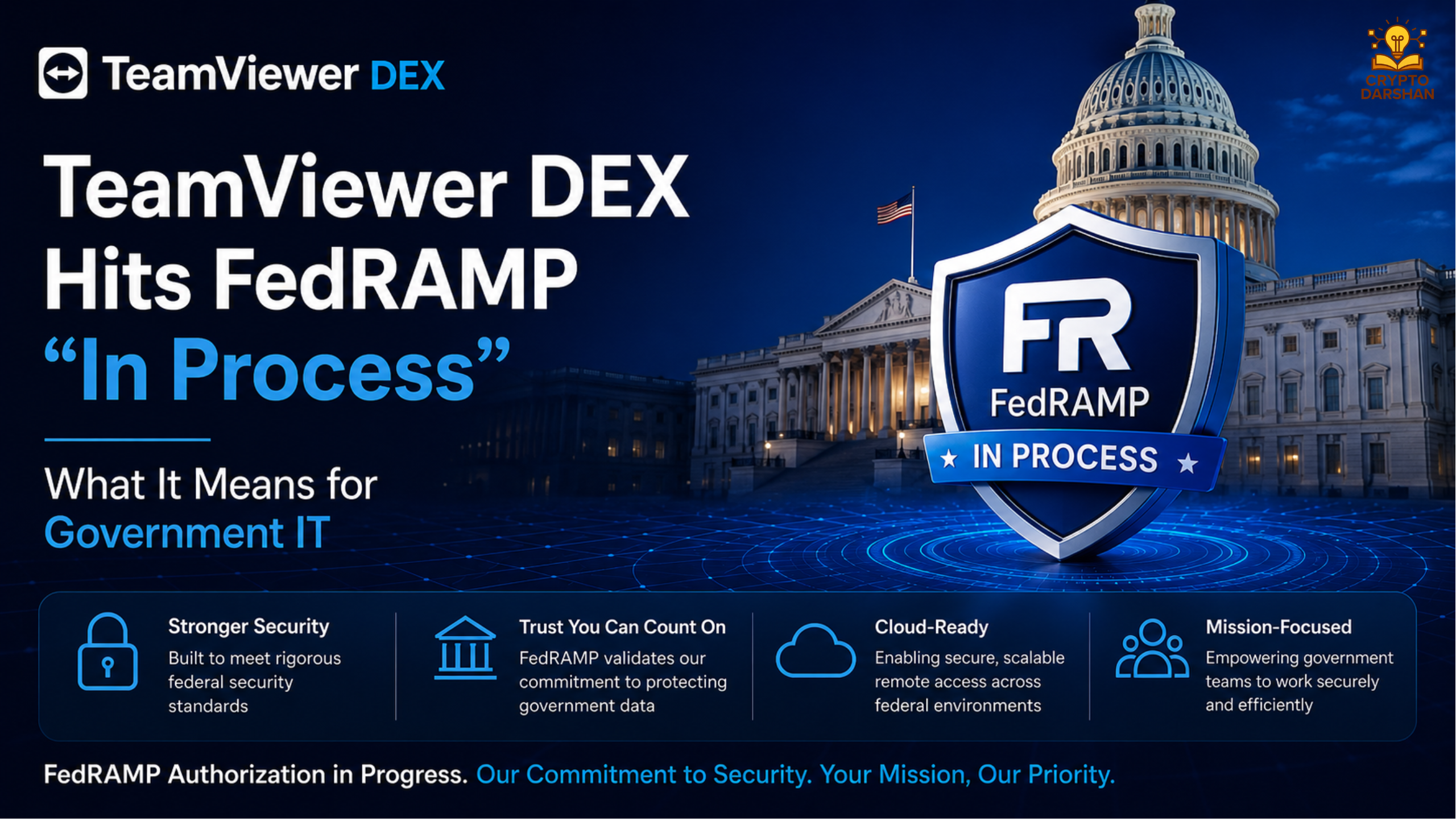
TeamViewer has taken a big step toward serving U.S. government agencies.
Its Digital Employee Experience (DEX) platform has achieved the FedRAMP “In Process” designation, moving closer to full approval for use in federal environments.
This status means the DEX platform is now listed in the official FedRAMP marketplace and is actively working through the final security checks with a sponsoring agency.
For TeamViewer, it is a major signal that its cloud service is meeting strict government-level security and compliance expectations.
Quick Primer: What Is FedRAMP?

FedRAMP, short for Federal Risk and Authorization Management Program, is the U.S. government’s standard framework for checking the security of cloud services.
Any cloud solution that wants to be widely used by federal agencies must go through this program.
FedRAMP uses different stages to show where a product stands: Ready, In Process, Authorized, or Remediation.
The “In Process” stage means a product is under active review with a federal sponsor and a third-party assessment organization, and is on a defined path toward full authorization.
The Role of the Department of Veterans Affairs

For TeamViewer, the sponsoring agency is the U.S. Department of Veterans Affairs (VA).
The VA manages one of the largest and most complex IT environments in the federal space, supporting healthcare, benefits, and services for millions of veterans.
By sponsoring TeamViewer’s DEX platform, the VA is signaling that this technology can help improve how its staff experience IT services day to day.
This sponsorship also boosts TeamViewer’s credibility with other agencies that look at FedRAMP status when they choose new cloud tools.
Government agencies prioritize security and reliability over hype, which mirrors the broader argument in Why ‘Decentralized’ Does Not Always Mean Better.
What TeamViewer DEX Actually Does

TeamViewer’s DEX platform focuses on digital employee experience, which means it helps IT teams understand how users are interacting with devices, applications, and services across the organization.
Instead of reacting only when users complain, IT can see issues forming early and act before they spread.
Key functions of the DEX platform include:
- Real-time performance monitoring: The platform tracks metrics on endpoints, such as response times, app performance, and device health, to give IT a live picture of the environment.
- Automated remediation: It can trigger automatic fixes for known issues—like restarting services, clearing caches, or applying policies—without waiting for a human technician.
- Experience scoring and analytics: It turns raw data into experience scores and dashboards so teams can see where users are struggling and where improvements have the most impact.
For large organizations, this leads to fewer tickets, faster resolutions, and a smoother work experience for employees.
Why Digital Employee Experience Matters for Federal Agencies

Federal agencies depend on stable and secure IT to deliver public services.
When devices are slow, apps crash, or connections drop, it not only frustrates staff but can delay critical work.
A DEX platform gives agencies:
- Proactive issue detection: Problems can be spotted and fixed before they hurt mission-critical operations.
- Better visibility across a hybrid workforce: Many government workers now use a mix of on-prem, remote, and cloud-based tools, and DEX helps IT manage them all in one place.
- Support for security and compliance goals: By having detailed insight into endpoints, agencies can enforce security standards more consistently and show auditors clear evidence of control.
Because FedRAMP focuses on cybersecurity and risk management, a DEX platform that progresses through this program is especially attractive to agencies balancing user experience with strong security. Enterprise software providers must continuously deliver value to retain users, a principle similar to the strategies covered in How Crypto Protocols Build Loyalty Without Paying Users Forever.
Strategic Impact for TeamViewer

Reaching the “In Process” stage is not the final step, but it is a major milestone in TeamViewer’s long-term U.S. public sector strategy.
It follows earlier work to build a FedRAMP-aligned environment, validate controls, and prepare documentation for federal review.
Once fully authorized, TeamViewer’s DEX platform will be easier for agencies across the federal government to adopt, since they can rely on the existing FedRAMP package instead of running their own separate assessments.
This can open a pipeline of new opportunities, from civilian agencies to defense-related organizations that require high levels of trust and reliability.
For TeamViewer, success with the VA could also act as a strong reference case, demonstrating how DEX improves performance, reduces support costs, and enhances user satisfaction in a demanding government setting.
What to Watch Next

The next big step for TeamViewer will be moving from “In Process” to full FedRAMP Authorized status.
That outcome depends on completing technical testing, closing any gaps found in the assessment, and final approval by the sponsoring agency and the FedRAMP Program Management Office.
If authorized, TeamViewer will join a select group of cloud vendors cleared to serve the federal market with a reusable security package, making procurement and deployment far smoother for agencies.
For IT leaders watching the DEX space, this development underlines how user experience tools are becoming just as important as traditional monitoring and security platforms in modern government IT.