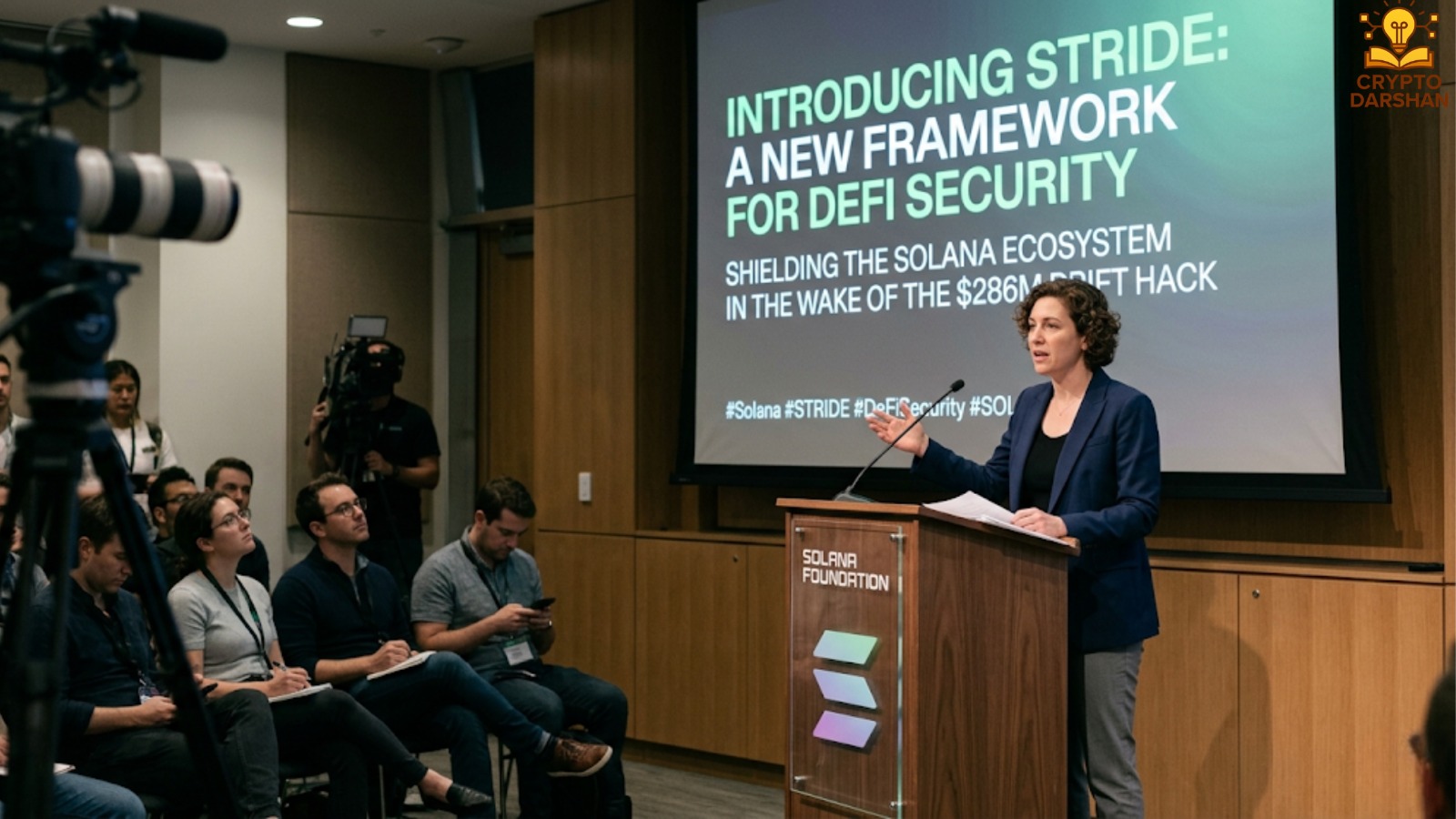
The Solana Foundation has launched a new security program called STRIDE to better protect decentralized finance (DeFi) projects on its network. This move comes right after a massive exploit on Drift Protocol, where attackers stole around 286 million dollars in just 12 minutes.
STRIDE is built to make Solana’s DeFi ecosystem safer for both developers and users by adding ongoing checks, real-time monitoring, and stronger incident response. The program is funded by the Solana Foundation and is available to protocols across the network.
What Is STRIDE and Why It Matters

STRIDE stands for Solana Trust, Resilience and Infrastructure for DeFi Enterprises, and it is designed as a tiered security framework for Solana-based protocols. Instead of relying only on one-time audits, STRIDE focuses on continuous evaluation and protection that grows with each protocol’s size and risk level.
The program was developed in partnership with security firm Asymmetric Research, which will lead hands-on assessments of protocols and publish their findings in a public repository. This gives users, traders, and investors more transparency into how secure each DeFi project really is.
Incidents like this often hit retail users the hardest, as many are unaware of the underlying risks in decentralized platforms. Security breaches and protocol failures are key reasons why many participants struggle to stay profitable. We explore this further in Why Most Retail Traders Lose Money in Crypto (And How Not To).
Key Features of the STRIDE Program

STRIDE introduces several core features to strengthen security across the Solana ecosystem. These elements are designed to make attacks harder, improve response times, and reduce the damage from future exploits.
- Ongoing security evaluations: Every participating protocol receives an independent review that looks at its code, operations, and risk exposures.
- Public security reports: The results of these evaluations are shared in a public repository so the community can see how each protocol scores on security.
- Tiered threat monitoring: Protocols that pass STRIDE and hold more than 10 million dollars in total value locked (TVL) qualify for foundation-funded 24/7 operational security and real-time threat monitoring.
- Formal verification for top protocols: Projects with over 100 million dollars in TVL receive formal verification, a deeper mathematical and code-level review aimed at catching complex vulnerabilities.
- Eight security pillars: STRIDE’s framework spans areas like access control, multisig setups, governance, and operational security, creating a more complete protection model.
This structure means that as a DeFi protocol grows and secures more user funds, it also gains access to more intensive protection under the STRIDE program.
The Role of SIRN: Solana’s New Incident Response Network

Alongside STRIDE, the Solana Foundation is also rolling out the Solana Incident Response Network (SIRN). SIRN is a dedicated network of security firms that work together to respond quickly when issues or attacks are detected.
Founding members include well-known security teams such as Asymmetric, OtterSec, Neodyme, Squads, and ZeroShadow. These teams will coordinate in real time during crises, helping projects contain attacks, communicate with users, and recover more smoothly.
By combining STRIDE’s ongoing protection with SIRN’s crisis response, Solana aims to create a stronger safety net for its DeFi ecosystem. This layered model is meant to reduce the chances of a major attack going unnoticed or unaddressed.
Lessons From the Drift Protocol Hack

The Drift Protocol exploit was a major wake-up call for the Solana ecosystem. In that attack, hackers managed to drain around 286 million dollars from the platform in roughly 12 minutes. The speed and scale of the breach showed how quickly DeFi protocols can be compromised if gaps go unchecked.
STRIDE is a direct response to that incident, aiming to catch similar risks before they are exploited. With continuous monitoring and formal verification for larger protocols, the program is designed to detect unusual behavior early and help teams react faster.
What This Means for Solana Users and DeFi Builders

For everyday users, STRIDE should make DeFi on Solana feel safer over time by adding more visibility into how protocols are managed and secured. Public reports and foundation-backed monitoring can help users distinguish between projects that take security seriously and those that do not.
For developers and teams, the program offers free or foundation-funded security support once they reach certain TVL thresholds, helping them scale without sacrificing safety. All Solana DeFi protocols are eligible to apply, and every participant receives an independent evaluation regardless of size, which lowers the barrier to better security practices across the ecosystem.
As more funds and users flow into Solana DeFi, initiatives like STRIDE and SIRN are likely to become central to the network’s reputation and long-term growth.