


A wave of stress is hitting DeFi products tied to Michael Saylor’s preferred stock, and the problem is spreading fast. What looked like a clever yield trade is now showing signs of fragility, especially as the stock and its crypto wrappers lose their calm.
What Happened To Defi
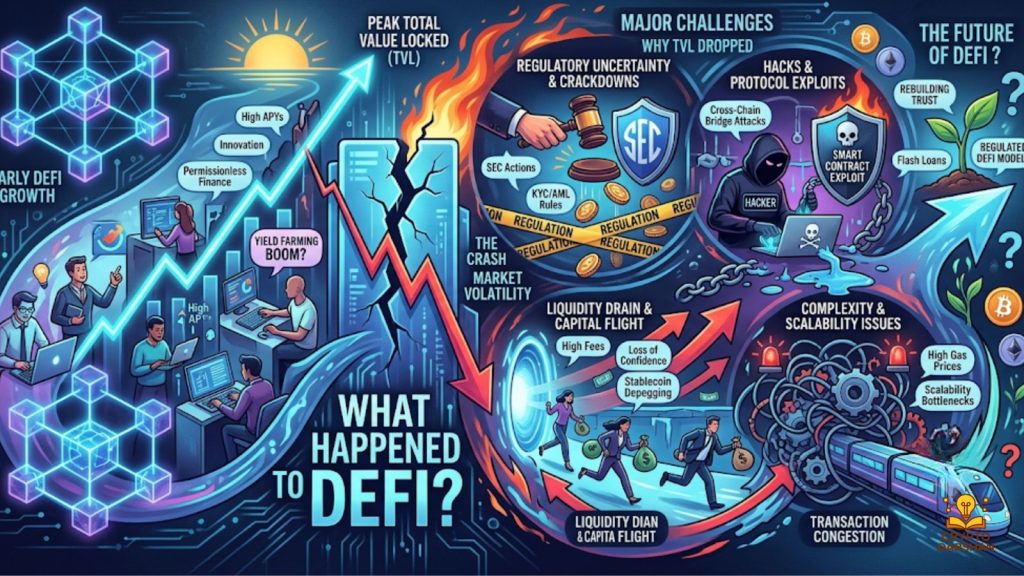
The issue centers on a set of DeFi “stablecoin” and yield products built around Strategy’s preferred stock, often described as STRC. These products were marketed as steady, income-style crypto assets, but recent trading shows they can move sharply when the underlying stock weakens.
According to the reporting, the pressure began when Strategy’s preferred stock slipped below its usual range, triggering losses in DeFi tokens and stablecoin-like wrappers tied to it. That matters because the whole model depends on confidence that the backing asset will stay close to its target level
At first glance, this kind of product sounds simple. Investors put money into an asset that claims to hold value while offering a return, and DeFi protocols use that asset as a base for more lending or yield products. But when the foundation gets shaky, every layer built on top starts to feel the strain.
Why It Matters

This is not just a niche crypto story. It is a warning about how quickly “stable” can become unstable when a product is built on a volatile asset with thin protection. Once the underlying collateral loses value, the promise of smooth yield becomes much harder to defend.
The broader market also matters here. Forbes noted that Bitcoin weakness and stress around Strategy have created a ripple effect across related projects. In simple terms, when the base asset stumbles, the products built on top of it often stumble too.
That ripple effect is what makes the story important for crypto investors, DeFi users, and content creators alike. It shows how tightly linked digital assets can become, even when they are sold under different labels. One product can look separate on the surface but still depend on the same confidence, capital, and market direction underneath.
The Core Risk
The biggest risk is structure. These DeFi products were designed to look safe and income-friendly, but they still depend on market price, investor demand, and trust in the issuer’s ability to hold the line. If that trust cracks, the peg-like behavior can break fast.
That is why the recent losses are so important. Reports show STRC and related DeFi proxies falling below their expected trading bands, with some wrappers dropping several percentage points. For investors, that turns a “stable” product into something much closer to a speculative trade.
There is also a psychological risk. Many crypto investors are drawn to yield because it feels less risky than direct token trading. But when a product uses complex financial engineering, the risk often does not disappear; it just becomes harder to see. In this case, the market may have been pricing in stability that never fully existed.
What Investors Should Watch

Anyone following this story should watch three things. First, whether Strategy can stabilize the preferred stock price and restore confidence. Second, whether DeFi platforms linked to the asset can keep their wrappers from drifting further. Third, whether the market starts treating these products as risky yield plays rather than reliable cash-like assets.
There is also a reputational issue. Once a product marketed as steady begins to wobble, users may assume more hidden risk than they originally understood. That can lead to withdrawals, lower liquidity, and even sharper price swings.
For traders, the lesson is simple: yields that look unusually attractive often come with hidden fragility. For long-term holders, this episode is a reminder that product design matters just as much as branding. A strong name does not guarantee a strong structure.
Market Impact

The wider effect could reach beyond one company or one chain. If these STRC-linked products continue to weaken, other DeFi teams may become more careful about building “stablecoin” designs on top of yield-bearing or equity-linked assets. The episode could also push investors to ask harder questions about what “backed” really means in crypto.
This matters for the whole sector because trust is one of DeFi’s most valuable assets. When users see one supposedly stable product wobble, they often start rechecking every similar product in the market. That can slow adoption, reduce inflows, and force projects to offer clearer disclosures about risk.
For now, the message is clear: yield is never free, and stability is only as strong as the asset underneath it. In this case, the market is testing that idea in real time.