Curious about how to create NFTs and turn your digital art into a valuable asset?
The world of digital art and blockchain technology continues to evolve, and NFTs (Non-Fungible Tokens) remain one of the most exciting innovations in the digital economy. NFTs have transformed how creators, artists, musicians, and even brands share and monetize their work. Whether it’s digital art, music, collectibles, or virtual real estate, NFTs allow creators to prove ownership and authenticity using blockchain technology.
This comprehensive 2026 guide explains everything about NFTs, what they are, how they work, and how to create and sell them step by step. It’s written in simple, easy-to-understand language for beginners who want to enter the NFT space confidently.
What Is an NFT?
An NFT (Non-Fungible Token) are unique cryptographic tokens that exist on a blockchain and cannot be replicated. NTF is a unique digital asset stored on a blockchain that represents ownership of a specific item or piece of content. Unlike cryptocurrencies such as Bitcoin or Ethereum, which are fungible (each coin is identical in value), NFTs are non-fungible, meaning each one is distinct and cannot be replaced by another.
NFTs can represent:
- Digital art and illustrations
- Music and audio files
- Videos and animations
- Virtual real estate in metaverse platforms
- In-game items and collectibles
- Domain names and digital identities
Each NFT contains metadata and a unique identifier that proves its authenticity and ownership on the blockchain.
How Do NFTs Work?
NFTs are built using blockchain technology, primarily on networks like Ethereum, Polygon, Solana, and BNB Chain. When an NFT is created (a process called minting), it is recorded on the blockchain as a unique token linked to a digital file.
Here’s how it works:
- A creator uploads a digital file (art, music, video, etc.) to an NFT marketplace.
- The file is converted into a token on the blockchain.
- The blockchain records ownership details and transaction history.
- Buyers can purchase the NFT using cryptocurrency, and ownership is transferred securely.
This process ensures transparency, authenticity, and proof of ownership, something traditional digital files cannot provide.
Why Create an NFT?
Creating NFTs offers several benefits for artists, creators, and businesses. Beyond just selling digital art, NFTs open new opportunities for ownership, income, and community engagement. Below are the main reasons why creating an NFT can be valuable, with each point explained in detail.
1. Ownership and Authenticity
NFTs provide undeniable proof of ownership and authenticity for digital assets. Each NFT is recorded on a blockchain, making it impossible to duplicate or forge. This ensures that the creator’s work remains original and traceable. For artists and collectors, NFTs eliminate the risk of plagiarism and guarantee that every piece has a verified, transparent history of ownership.
2. Royalties for Creators
One of the most powerful features of NFTs is the ability to earn royalties automatically. Through smart contracts, creators can set a percentage (usually 5–10%) to receive every time their NFT is resold. This means artists continue to earn income long after the initial sale, creating a sustainable revenue stream that rewards creativity and long-term value creation.
3. Global Reach
NFTs allow creators to reach a worldwide audience without relying on galleries, agents, or record labels. Anyone with internet access can buy, sell, or trade NFTs across borders. This global exposure helps artists gain recognition, attract international collectors, and build a fan base beyond their local market, making digital art and creativity accessible to everyone.
4. New Revenue Streams
NFTs open up multiple ways to earn money from digital content. Artists can sell limited editions, musicians can release exclusive tracks, and brands can launch collectible items. Unlike traditional sales, NFTs can include royalties, collaborations, and special editions, allowing creators to diversify their income sources and generate consistent earnings from their digital work.
5. Community Building
NFTs help creators build strong, loyal communities around their work. By offering exclusive access, rewards, or experiences to NFT holders, creators can engage directly with their audience. This sense of belonging encourages long-term support and participation. Many NFT projects thrive because of their active communities, where fans feel personally connected to the creator’s vision and success.
Types of NFTs

NFTs come in many forms, each serving a different purpose in the digital world. Understanding the various types of NFTs helps creators decide what kind of digital asset they want to tokenize and sell. Below are the main types of NFTs explained in simple terms
1. Digital Art NFTs
These are the most common and popular type of NFTs. Digital art NFTs represent unique pieces of artwork created by digital artists, illustrators, or designers. Each NFT acts as proof of ownership and authenticity for the artwork.
Examples include:
- Digital paintings and illustrations
- 3D artwork and animations
- Abstract or generative art created using algorithms
Why they’re popular:
Digital art NFTs have revolutionized the art industry by allowing artists to sell their work directly to collectors without galleries or intermediaries. Artists can also earn royalties every time their NFT is resold.
2. Music NFTs
Music NFTs allow musicians and producers to tokenize their songs, albums, or sound clips. Instead of relying on streaming platforms, artists can sell their music directly to fans as NFTs.
Why they’re valuable:
Music NFTs give artists more control over their earnings and allow fans to own a piece of their favorite artist’s work. Some musicians also include special perks like backstage passes or exclusive content for NFT holders.
3. Video NFTs
Video NFTs are short clips, animations, or full-length videos stored on the blockchain. They can include anything from sports highlights to movie scenes or digital animations.
Why they’re trending:
Video NFTs combine visual and audio creativity, making them highly engaging. They’re especially popular in entertainment, sports, and film industries.
4. Collectible NFTs
Collectible NFTs are digital items that people collect, trade, or display. They often come in limited editions or series, making them rare and valuable.
Why they’re valuable:
Their value comes from rarity and community demand. Collectible NFTs often have strong fan bases and can appreciate in value over time.
5. Gaming NFTs
Gaming NFTs are digital assets used within blockchain-based games. Players can own, trade, or sell these items outside the game, giving them real-world value.
Why they’re important:
They give players true ownership of their in-game assets. Unlike traditional games, where items are controlled by the developer, NFT-based games let players trade or sell their assets freely.
6. Virtual Real Estate NFTs
Virtual real estate NFTs represent ownership of land, buildings, or spaces in virtual worlds (metaverses). Owners can build, rent, or sell these properties just like in real life.
Why they’re growing:
As the metaverse expands, virtual real estate is becoming a valuable digital asset. Brands and creators use it to host events, sell products, or showcase art.
7. Utility NFTs
Utility NFTs go beyond art and collectibles they provide real-world or digital benefits to holders. These NFTs often act as access passes, memberships, or tickets.
Why they’re useful:
Utility NFTs combine ownership with functionality. They’re used by businesses, influencers, and creators to offer special privileges or experiences to their audience.
8. Domain Name NFTs
Domain NFTs represent ownership of blockchain-based domain names. These domains are stored on the blockchain and can be used for websites, wallets, or decentralized apps.
Why they matter:
They simplify crypto transactions by replacing long wallet addresses with easy-to-remember names. For example, instead of sending crypto to a long address, you can send it to “yourname.eth”.
9. Photography NFTs
Photography NFTs allow photographers to sell their digital photos as unique blockchain assets. Each NFT acts as proof of authenticity and ownership for the image.
Why they’re valuable:
They give photographers a new way to monetize their work and reach global audiences without relying on traditional galleries or agencies.
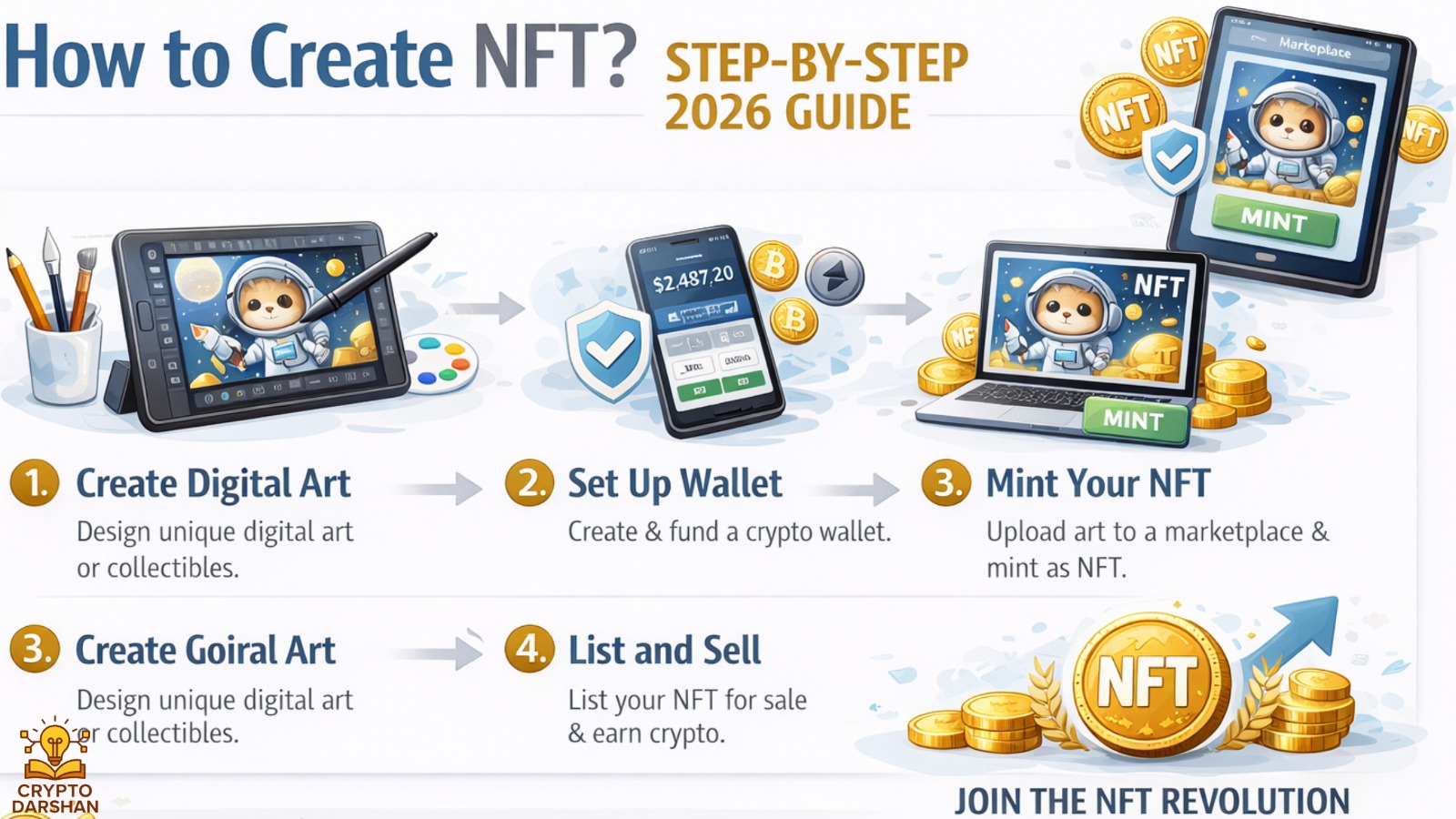
Step-by-Step Guide: How to Create NFT in 2026
Creating an NFT is easier than ever thanks to user-friendly platforms and tools. Follow these steps to create and sell your first NFT.
Step 1: Choose What to Tokenize
Decide what digital asset you want to turn into an NFT. It could be:
- A digital painting or artwork
- A music track or album
- A video clip or animation
- A 3D model or design
- A meme, GIF, or photograph
Ensure that you own the rights to the content. Copyrighted or plagiarized material cannot legally be minted as an NFT.
Step 2: Select a Blockchain
The blockchain you choose determines the cost, speed, and compatibility of your NFT. Some of the most popular blockchains for NFTs include Ethereum, Polygon, Solana, BNB Chain, and Tezos.
Ethereum is the most widely used blockchain for NFTs, offering strong security and a large user base. However, it can have higher gas fees.
Polygon is a great alternative with lower fees and faster transactions, making it ideal for beginners.
Solana is known for its speed and low costs, often used for gaming and collectibles.
BNB Chain offers low fees and is popular for utility-based NFTs.
Tezos is an eco-friendly option, often chosen by artists and photographers.
Choose a blockchain that fits your budget, audience, and project goals.
Step 3: Set Up a Digital Wallet
A crypto wallet is required to store your NFTs and pay for transaction fees (known as gas fees). Popular wallets include:
- MetaMask (browser extension and mobile app)
- Trust Wallet
- Coinbase Wallet
- Phantom Wallet (for Solana)
After installing a wallet, create an account and securely back up your seed phrase,a 12- or 24-word recovery key that gives access to your wallet.
Step 4: Buy Cryptocurrency
You’ll need cryptocurrency to pay for minting fees.
- For Ethereum-based NFTs, buy ETH.
- For Polygon NFTs, buy MATIC.
- For Solana NFTs, buy SOL.
You can purchase crypto from exchanges like Binance, Coinbase, or Kraken, then transfer it to your wallet.
Step 5: Choose an NFT Marketplace
NFT marketplaces are platforms where you can create, list, and sell NFTs. Some of the most popular ones in 2026 include OpenSea, Rarible, Magic Eden, Binance NFT, and Foundation.
OpenSea is the largest and most versatile marketplace, supporting Ethereum, Polygon, and Solana. It’s ideal for beginners and professionals alike.
Rarible is another user-friendly platform that supports multiple blockchains and allows creators to set royalties easily.
Magic Eden is popular for Solana-based NFTs, especially in gaming and collectibles.
Binance NFT is great for utility NFTs and offers low transaction fees.
Foundation focuses on exclusive digital art and is known for its curated collections.
Choose a marketplace that supports your chosen blockchain and aligns with your NFT type and target audience.
Step 6: Connect Your Wallet
Once you’ve chosen a marketplace, connect your crypto wallet to the platform.
- Visit the marketplace website.
- Click Connect Wallet.
- Select your wallet (e.g., MetaMask).
- Approve the connection.
This allows the marketplace to interact with your wallet for minting and transactions.
Step 7: Upload Your Digital File
Now it’s time to upload your digital asset. Most marketplaces support formats like:
- Images: JPG, PNG, GIF
- Audio: MP3, WAV
- Video: MP4, MOV
- 3D Models: GLB, OBJ
Add a title, description, and tags to make your NFT discoverable. You can also include unlockable content (like bonus files or private links) for buyers.
Step 8: Choose Minting Options
There are two main ways to mint NFTs:
- Regular Minting: You pay gas fees upfront to record your NFT on the blockchain immediately.
- Lazy Minting: The NFT is created only when someone buys it, and the buyer pays the gas fee.
Lazy minting is ideal for beginners because it reduces upfront costs.
Step 9: Set Royalties and Pricing
Decide how much you want to earn from your NFT:
- Fixed Price: Set a specific price for buyers.
- Auction: Let buyers bid, and sell to the highest offer.
- Royalties: Choose a percentage (usually 5–10%) to earn from future resales.
Royalties are one of the biggest advantages of NFTs, ensuring creators continue to earn even after the first sale.
Step 10: Mint Your NFT
After setting all details, click Create or Mint NFT.
The marketplace will process the transaction, and your NFT will be recorded on the blockchain. Once minted, it becomes a verified digital asset that you can sell or trade.
Step 11: List Your NFT for Sale
Once your NFT is minted, you can list it for sale on the marketplace.
- Choose between fixed price or auction.
- Set the duration of the sale.
- Confirm the listing through your wallet.
Your NFT is now live and visible to potential buyers worldwide.
Step 12: Promote Your NFT
Creating an NFT is only half the journey; promoting it is equally important.
Here are some effective ways to market your NFT:
- Share it on social media platforms like Twitter, Instagram, and TikTok.
- Join NFT communities on Discord and Reddit.
- Collaborate with other artists or influencers.
- Create a personal website or portfolio showcasing your NFTs.
- Offer limited editions or exclusive perks to attract collectors.
Building a strong online presence helps increase visibility and sales.
How Much Does It Cost to Create an NFT?
The cost of creating an NFT depends on the blockchain and marketplace used.
- Ethereum: $20–$100 (depending on gas fees)
- Polygon: Often free or under $1
- Solana: Around $0.01–$0.10
- Tezos: Very low fees, usually under $1
Using lazy minting can help avoid upfront costs, making it ideal for beginners.
How to Sell and Transfer NFTs

Once your NFT is live, buyers can purchase it directly from the marketplace. When sold:
- The buyer’s wallet receives the NFT.
- You receive payment in cryptocurrency.
- The blockchain records the transaction permanently.
You can also transfer NFTs to other wallets or gift them to someone by using the Transfer option in your wallet or marketplace.
Legal and Copyright Considerations

Before minting an NFT, ensure you have full ownership rights to the content.
- Do not use copyrighted material without permission.
- Clearly state if your NFT includes licensed or collaborative content.
- Understand that selling an NFT doesn’t always transfer copyright it transfers ownership of the token, not necessarily the underlying content.
Common Mistakes to Avoid When Creating NFTs
- Ignoring Copyright Rules: Only mint content you own.
- Choosing the Wrong Blockchain: Research fees and compatibility first.
- Overpricing NFTs: Start with reasonable prices to attract buyers.
- Neglecting Promotion: Marketing is key to visibility and sales.
- Losing Wallet Access: Always back up your seed phrase securely.
Future of NFTs in 2026 and Beyond
The NFT industry continues to expand beyond art and collectibles. In 2026, NFTs are being used in:
- Gaming: Play-to-earn models and in-game assets.
- Music: Direct artist-to-fan sales and royalties.
- Real Estate: Tokenized property ownership.
- Fashion: Digital wearables and brand collaborations.
- Education: Certificates and credentials as NFTs.
As blockchain technology matures, NFTs evolve, and they are becoming a key component of Web3 adoption and decentralized applications.
Conclusion
Creating an NFT in 2026 is easier, faster, and more accessible than ever. With the right tools and strategy, anyone can turn digital creations into valuable blockchain assets.
By following this step-by-step guide from choosing a blockchain and setting up a wallet to minting and promoting your NFT, creators can confidently enter the NFT market and start earning from their digital work.
NFTs are more than just a trend; they represent a new era of digital ownership, creativity, and opportunity. Whether an artist, musician, or entrepreneur, now is the perfect time to explore the world of NFTs and shape the future of digital innovation.