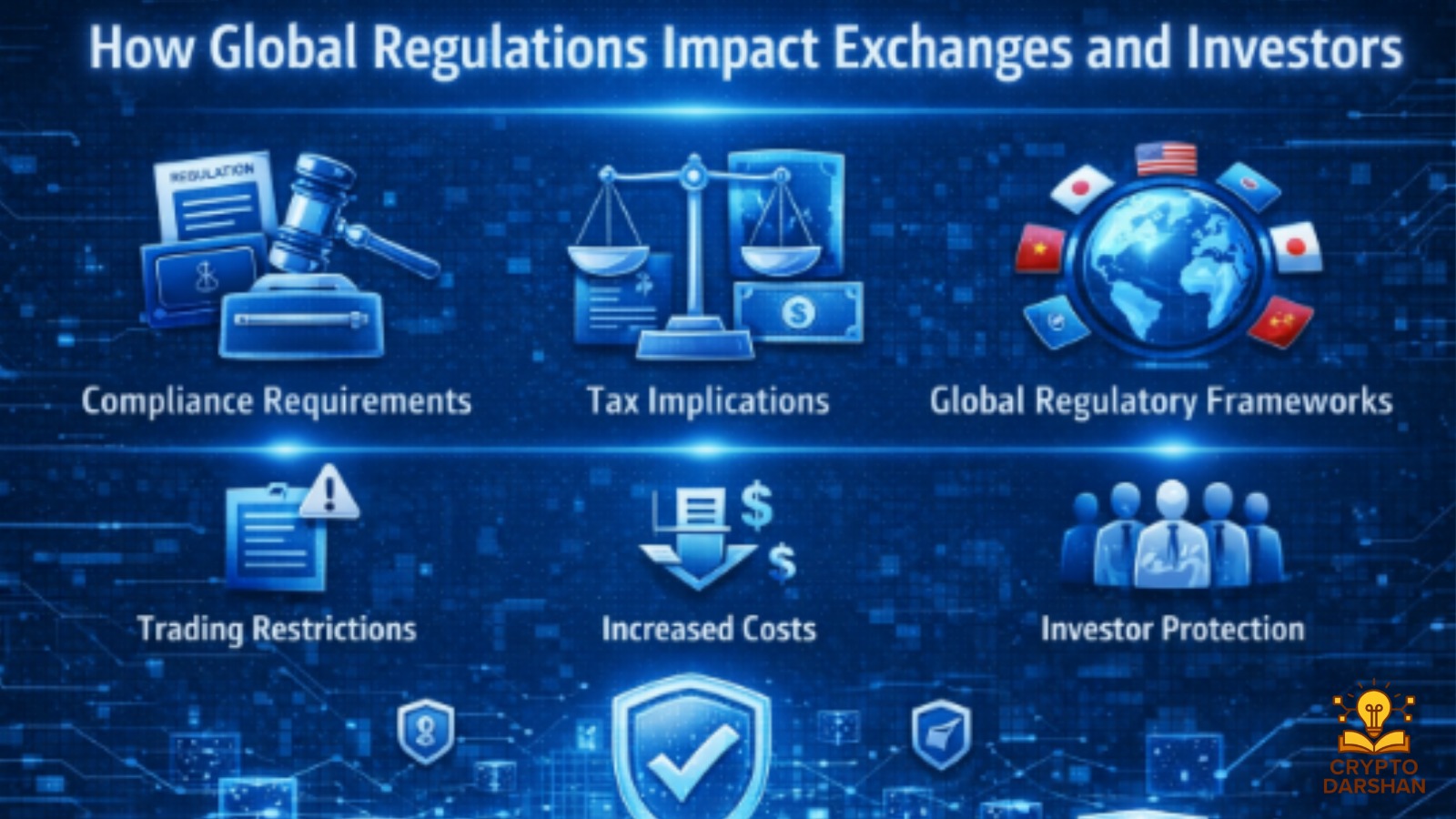
Global crypto regulations shape the cryptocurrency landscape by applying standards like KYC, AML, and stablecoin. The cryptocurrency world has grown from a small tech idea into a global financial system that affects economies, governments, and investors everywhere. As digital assets like Bitcoin and Ethereum become more popular, rules and regulations have become a major focus. Governments and financial authorities around the world are trying to find the right balance between encouraging innovation and protecting investors. They also aim to keep markets fair and stable. These global regulations have a big impact on how cryptocurrencies are traded, stored, and understood by the public.
This article explores how global regulations affect cryptocurrency exchanges and investors, examining the benefits, challenges, and future implications of regulatory developments. It also highlights how different jurisdictions approach crypto regulation and what investors and exchanges can expect in the coming years.
The Importance of Regulation in the Crypto Ecosystem

Cryptocurrencies operate in a decentralized environment, often outside traditional financial systems. While this decentralization offers freedom and innovation, it also introduces risks such as fraud, money laundering, and market manipulation. Regulation plays a crucial role in addressing these issues by:
- Protecting Investors: Regulations ensure that exchanges follow transparent practices, reducing the risk of scams and fraudulent activities.
- Enhancing Market Stability: By enforcing compliance and reporting standards, regulators help maintain market integrity.
- Preventing Financial Crimes: Anti-Money Laundering (AML) and Know Your Customer (KYC) requirements help prevent illicit financial activities.
- Encouraging Institutional Adoption: Clear regulatory frameworks attract institutional investors who require legal certainty before entering the market.
- Promoting Innovation: Well-designed regulations can foster innovation by providing a safe environment for startups and developers.
Without regulation, the crypto market risks becoming a breeding ground for manipulation and illegal activities, which could undermine its credibility and long-term growth.
Global Regulatory Landscape

The global regulatory environment for cryptocurrencies is diverse and constantly evolving. Different countries have adopted varying approaches, ranging from strict bans to supportive frameworks. Countries take dramatically different policies, ranging from outright bans in China, Afghanistan, and Nepal to supporting frameworks in hubs like the UAE, Singapore, and El Salvador. Exchanges and cross-border investors must understand these differences for exchanges and investors operating across borders.
1. United States
The U.S. government introduced a digital asset regulatory framework in 2022 that reaffirmed the role of existing market regulators, including the SEC and the CFTC .The United States has one of the most complex regulatory environments for cryptocurrencies. Multiple agencies oversee different aspects of the market:
- Securities and Exchange Commission (SEC): Regulates tokens considered securities under the Howey Test.
- Commodity Futures Trading Commission (CFTC): Oversees crypto derivatives and commodities like Bitcoin.
- Financial Crimes Enforcement Network (FinCEN): Enforces AML and KYC compliance for exchanges.
- Internal Revenue Service (IRS): Treats cryptocurrencies as property for tax purposes.
The U.S. regulatory approach emphasizes investor protection and market transparency. However, the lack of unified federal legislation creates uncertainty for exchanges and investors.
2. European Union
The European Union has taken significant steps toward harmonizing crypto regulations through the Markets in Crypto-Assets (MiCA) framework. MiCA aims to create a unified regulatory environment across all EU member states by:
- Defining categories of crypto assets.
- Establishing licensing requirements for exchanges and wallet providers.
- Implementing consumer protection and disclosure obligations.
- Enforcing stablecoin regulations to ensure financial stability.
MiCA is expected to make the EU one of the most crypto-friendly yet secure regions for digital asset operations.
3. United Kingdom
Post-Brexit, the UK has developed its own regulatory approach. The Financial Conduct Authority (FCA) oversees crypto businesses, requiring them to register and comply with AML and KYC standards. The UK government aims to position the country as a global hub for digital assets while maintaining strict oversight to prevent misuse.
4. Asia-Pacific Region
The Asia-Pacific region presents a mixed regulatory landscape:
- Japan: One of the first countries to regulate cryptocurrencies, recognizing Bitcoin as legal tender and licensing exchanges under the Financial Services Agency (FSA).
- Singapore: Adopts a progressive approach through the Payment Services Act (PSA), which regulates digital payment token services.
- China: Enforces a strict ban on crypto trading and mining but continues to develop its Central Bank Digital Currency (CBDC), the digital yuan.
- India: Maintains an uncertain stance, with ongoing discussions about taxation and potential regulation rather than outright bans.
5. Regulations in the UAE

The United Arab Emirates (UAE) has become one of the most forward-thinking countries when it comes to cryptocurrency regulation. The government sees blockchain and digital assets as key parts of its plan to build a modern, tech-driven economy. Instead of banning cryptocurrencies, the UAE has created clear rules to support innovation while keeping investors safe.
The UAE’s approach is led by several key authorities:
- Abu Dhabi Global Market (ADGM):
ADGM was one of the first regulators in the region to introduce a complete framework for digital assets. It allows crypto exchanges and businesses to operate legally once they meet strict requirements for security, transparency, and anti-money laundering (AML) compliance. - Dubai Virtual Assets Regulatory Authority (VARA):
Established in 2022, VARA oversees all virtual asset activities in Dubai. It issues licenses to crypto exchanges, wallet providers, and other digital asset companies. VARA’s goal is to make Dubai a global hub for blockchain innovation while ensuring investor protection. - Central Bank of the UAE:
The Central Bank works alongside other regulators to ensure that crypto activities do not harm the country’s financial stability. It also supports the development of a Central Bank Digital Currency (CBDC), which could make digital payments faster and safer.
Impact of Regulations on Cryptocurrency Exchanges

Cryptocurrency exchanges are the backbone of the thriving digital asset ecosystem, facilitating trading, liquidity, and price discovery. Global regulations significantly influence how these platforms operate.
1. Licensing and Registration Requirements
Regulatory authorities require exchanges to obtain licenses before offering services. This ensures that exchanges meet operational, security, and financial standards. For example:
- In the EU, exchanges must comply with MiCA licensing.
- In the U.S., exchanges must register with FinCEN and, in some cases, the SEC or CFTC.
- In Japan, exchanges must be licensed by the FSA.
Licensing enhances credibility but also increases operational costs and compliance burdens.
2. AML and KYC Compliance
Exchanges must implement robust AML and KYC procedures to verify user identities and monitor transactions. These measures help prevent money laundering and terrorist financing but can also affect user privacy and onboarding speed.
3. Security and Custody Standards
Regulations often mandate exchanges to maintain high security standards, including cold storage for digital assets, insurance coverage, and regular audits. These requirements protect investors from hacks and mismanagement.
4. Tax Reporting Obligations
Cryptocurrency exchanges are increasingly necessary to disclose user transaction data to tax authorities. This enhanced transparency enables governments to accurately track taxable crypto events, but it also introduces significant administrative burdens and compliance challenges for both exchanges and users.
5. Market Integrity and Transparency
Regulators demand fair trading practices, prohibiting insider trading, wash trading, and price manipulation. Exchanges must implement surveillance systems and disclose trading volumes accurately.
6. Cross-Border Challenges
Operating across multiple jurisdictions exposes exchanges to varying regulatory requirements. Compliance with different laws can be costly and complex, often leading exchanges to limit services in certain regions.
Impact of Regulations on Investors

Regulations not only shape how exchanges operate but also directly affect investors’ experiences, rights, and responsibilities.
1. Enhanced Investor Protection
Regulated exchanges must adhere to strict operational standards, reducing the risk of fraud and insolvency. Investors benefit from greater transparency, secure custody solutions, and dispute resolution mechanisms.
2. Increased Tax Obligations
As governments classify cryptocurrencies as taxable assets, investors must report capital gains, losses, and income from crypto activities. Non-compliance can lead to penalties, making tax planning essential for crypto investors.
3. Restricted Access to Certain Assets
Regulations may limit access to specific tokens or services. For instance, some jurisdictions restrict trading of privacy coins or unregistered securities, reducing investment options.
4. Improved Market Confidence

Regulatory oversight builds investor trust by making the cryptocurrency market more secure and reliable. Institutional investors, in particular, are more willing to enter markets with clear regulations, as they offer greater stability and legal protection.
5. Privacy Concerns
While KYC and AML measures protect against illicit activities, they also reduce anonymity, which was one of the original appeals of cryptocurrencies. Investors must balance privacy with compliance.
Strict compliance rules such as KYC and licensing improve transparency, but they can also slow innovation. This is one reason Web3 adoption remains slower than expected, especially in heavily regulated regions.
6. Exposure to Regulatory Risks
Sudden regulatory changes can impact asset prices and market access. For example, when China banned crypto trading, global markets experienced significant volatility. Investors must stay informed about regulatory developments to manage risks effectively.
Benefits of Global Crypto Regulation

Despite challenges, global crypto regulation offers several long-term benefits for the industry:
- Legitimization of the Market: Regulation provides legal recognition, encouraging mainstream adoption.
- Investor Confidence: Clear rules protect investors and attract institutional capital.
- Innovation and Growth: Regulatory clarity fosters innovation by reducing uncertainty for startups.
- Financial Stability: Oversight prevents systemic risks and ensures market integrity.
- Global Collaboration: Harmonized regulations facilitate cross-border transactions and cooperation.
Challenges of Global Crypto Regulation

While regulation brings stability, it also introduces challenges for exchanges and investors:
- Regulatory Fragmentation: Different countries have varying rules, creating compliance complexity.
- High Compliance Costs: Licensing, audits, and reporting requirements increase operational expenses.
- Reduced Privacy: KYC and AML measures compromise user anonymity.
- Innovation Barriers: Overregulation can stifle innovation and discourage startups.
- Uncertain Legal Definitions: Ambiguity around what constitutes a security or commodity creates confusion.
The Role of Decentralized Exchanges (DEXs)

Decentralized exchanges operate without intermediaries, allowing peer-to-peer trading through smart contracts. While DEXs offer privacy and autonomy, they pose regulatory challenges:
- Lack of Central Authority: Regulators struggle to enforce compliance on decentralized platforms.
- AML and KYC Issues: DEXs often lack identity verification, raising concerns about illicit activities.
- Regulatory Adaptation: Some jurisdictions are exploring frameworks to regulate DEXs without compromising decentralization.
As regulators adapt, DEXs may need to integrate compliance solutions such as decentralized identity verification or on-chain analytics.
The Future of Global Crypto Regulation

The future of crypto regulation will likely focus on harmonization, innovation, and investor protection. Key trends include:
- Global Coordination: International organizations like the Financial Action Task Force (FATF) are promoting unified standards for AML and KYC compliance.
- Stablecoin Regulation: Governments are developing frameworks to ensure stablecoin reserves and transparency.
- CBDC Integration: Central Bank Digital Currencies may coexist with cryptocurrencies, influencing regulatory approaches.
- Environmental Standards: Regulations may address the environmental impact of crypto mining and transactions.
- Technological Compliance: Blockchain analytics and AI tools will enhance regulatory enforcement and transparency.
How Exchanges Can Adapt to Regulatory Changes
Cryptocurrency exchanges play a key role in the digital asset market. They connect buyers and sellers, provide liquidity, and help set market prices. However, as global regulations evolve, exchanges must constantly adjust to stay compliant and maintain trust. Adapting to regulatory changes is not just about following rules it’s about building a sustainable and transparent business that can thrive in the long term.
Here’s how exchanges can effectively adapt to changing regulations:
1. Build Strong Compliance Programs
Exchanges should create dedicated compliance teams that monitor new laws and ensure the platform meets all legal requirements. This includes following Anti-Money Laundering (AML) and Know Your Customer (KYC) rules. A strong compliance program helps prevent illegal activities and builds credibility with regulators and users.
2. Obtain Proper Licensing
Many countries now require exchanges to be licensed before operating. Getting the right licenses shows that an exchange meets safety, transparency, and financial standards. Licensed exchanges are more likely to attract institutional investors and gain user trust.
3. Enhance Transparency
Transparency is key to building confidence among users and regulators. Exchanges should clearly share information about their operations, trading volumes, fees, and security measures. Regular audits and public reports can also demonstrate accountability.
4. Invest in Security Infrastructure
Regulations often require exchanges to protect user funds through strong security systems. This includes using cold storage for digital assets, multi-signature wallets, and regular security audits. By prioritizing safety, exchanges can reduce the risk of hacks and data breaches.
5. Collaborate with Regulators
Instead of avoiding regulation, exchanges should work closely with government agencies and financial authorities. Open communication helps regulators understand the technology better and allows exchanges to influence fair and practical rules.
6. Adopt Advanced Technology for Compliance
Modern tools like blockchain analytics, artificial intelligence (AI), and automated monitoring systems can help exchanges detect suspicious transactions and ensure compliance. These technologies make it easier to meet regulatory standards efficiently.
7. Educate Users About Regulations
Exchanges can build trust by helping users understand how regulations affect them. Providing educational resources about KYC, taxes, and trading rules encourages responsible investing and reduces confusion.
8. Stay Flexible and Proactive
The crypto industry changes quickly, and so do the laws that govern it. Exchanges must stay flexible, regularly review their policies, and be ready to adjust their operations when new regulations appear. Being proactive rather than reactive helps avoid disruptions.
9. Develop Global Compliance Strategies
For exchanges operating in multiple countries, it’s important to understand and follow each region’s specific laws. Creating a global compliance framework ensures consistency and reduces the risk of legal issues in different jurisdictions.
How Investors Can Navigate Regulatory Environments.
The world of cryptocurrency is exciting but also complex because of changing rules and regulations. Every country has its own laws about how digital assets can be traded, taxed, and stored. For investors, understanding these rules is important to stay safe, avoid legal trouble, and make smart financial decisions.
Here’s how investors can successfully navigate the regulatory environment:
1. Understand Local Laws
Before investing, it’s important to learn about the rules in your country. Some governments welcome cryptocurrencies, while others have strict restrictions or bans. Knowing what is legal helps investors avoid penalties and ensures their investments are protected.
2. Use Regulated Exchanges
Investors should always trade on licensed and regulated exchanges. These platforms follow government rules, use strong security systems, and protect users from fraud. Regulated exchanges also make it easier to recover funds if something goes wrong.
3. Keep Records of Transactions
Every crypto transaction buying, selling, or transferring—should be recorded. Keeping detailed records helps investors calculate profits and losses for tax purposes. It also provides proof of ownership if needed for legal or financial reasons.
4. Stay Updated on Regulatory Changes

Crypto regulations change often as governments adapt to new technologies. Investors should follow reliable news sources and official announcements to stay informed. Being aware of new laws helps investors adjust their strategies quickly.
5. Plan for Taxes
In many countries, cryptocurrencies are taxed like property or investments. This means investors must report their earnings and pay taxes on profits. Understanding how crypto is taxed helps avoid fines and ensures compliance with the law.
6. Diversify Investments
Regulations can affect certain coins or exchanges differently. By spreading investments across different assets and regions, investors can reduce risk. Diversification helps protect portfolios from sudden regulatory changes in one country.
7. Prioritize Security and Compliance
Investors should use secure wallets, enable two-factor authentication, and avoid suspicious platforms. Following compliance rules like KYC (Know Your Customer) and AML (Anti-Money Laundering) also builds trust and ensures safe trading.
8. Seek Professional Advice
For large investments or complex portfolios, consulting a financial advisor or tax expert can be helpful. Professionals can explain local laws, tax obligations, and safe investment strategies.
Conclusion
Global regulations are reshaping the cryptocurrency landscape, influencing how exchanges operate and how investors engage with digital assets. While regulatory frameworks introduce challenges such as compliance costs and reduced privacy, they also bring stability and investor protection. The future of crypto regulation lies in achieving a balance between innovation and ensuring that the industry continues to grow responsibly.
As the world moves toward with greater regulatory certainty and exchange investors must adjust to the changing landscape. Those who prioritize compliance, transparency, and education will be best positioned to succeed in the next stage of the global crypto revolution.