

Essential Cryptocurrency Concepts Every Beginner Must Unlock Now, as Cryptocurrency has rapidly transformed from a niche technological idea into a global financial movement. Millions of people across the world are now investing, trading, and using digital currencies for payments, savings, and decentralized applications. However, for beginners, cryptocurrency can feel overwhelming due to complex terms, fast-changing markets, and technical concepts.
To invest safely and confidently, beginners must first understand the core cryptocurrency concepts. Without this foundation, it is easy to fall into scams, make emotional decisions, or lose money due to lack of knowledge. This article explains the top cryptocurrency concepts every beginner must understand, using simple language and real-world explanations.
Whether you are a student, new investor, or someone curious about crypto, this guide will help you build strong fundamentals and make informed decisions .Cryptocurrency concepts for beginners.
What Is Cryptocurrency?
Cryptocurrency is a digital or virtual form of money that exists only online. Unlike traditional currencies issued by governments, cryptocurrencies are decentralized, meaning they are not controlled by banks or central authorities. Instead, they rely on cryptographic technology and distributed networks.
Bitcoin was the first cryptocurrency, launched in 2009. Since then, thousands of cryptocurrencies have been created, each serving different purposes such as payments, smart contracts, gaming, decentralized finance, and digital ownership.
Blockchain Technology Explained

Blockchain is the foundation of cryptocurrency. It is a decentralized digital ledger that records all transactions across a network of computers. Each transaction is grouped into a “block,” and these blocks are linked together to form a chain.
Blockchain is secure because:
- It is decentralized
- Data is transparent and verifiable
- Transactions cannot be easily altered
This technology removes the need for intermediaries like banks and ensures trust through mathematics and consensus.
Blocks contain transaction data, timestamps, and nonces, averaging 10 minutes for Bitcoin. Forks occur when nodes disagree, leading to new chains like Bitcoin Cash. Beginners should know scalability solutions like Layer 2 rollups address slow speeds and high fees in 2025.
Bitcoin: The Original Cryptocurrency

Bitcoin (BTC), launched in 2009 by Satoshi Nakamoto, pioneered cryptocurrency as a deflationary store of value with a 21 million supply cap.. Bitcoin’s network effects make it the safest entry point, often called “digital gold.”
Bitcoin uses Proof of Work(POWs), where powerful computers secure the network and protect its value. The Lightning Network makes payments faster and cheaper. After the 2024 halving, rewards dropped to 3.125 BTC, reducing supply as big investors and ETFs increase adoption
Satoshi’s whitepaper outlined peer-to-peer electronic cash, solving double-spending via timestamps. For new investors, Bitcoin embodies scarcity and censorship resistance, holding 50%+ market dominance.
Ethereum and Smart Contracts
Ethereum (ETH) is a blockchain that allows people to build and use decentralized apps, often called dApps. These apps run using smart contracts, which are simple programs that automatically work when certain conditions are met, without needing a middleman.
Ethereum was launched in 2015. In 2022, it switched to a new system called Proof of Stake, which reduced energy use by about 99% and made the network more efficient. This change also helped Ethereum handle more activity smoothly..
Users pay small fees, called gas fees, to process transactions. These fees can increase when the network is busy, but newer solutions help reduce costs. Today, Ethereum supports huge amounts of value and allows users to earn rewards by staking ETH, making it popular for long-term investors.
Wallets and Private Keys

Cryptocurrency wallets do not actually store coins; they store special keys that give access to your crypto.
A public key is like an address you share to receive money.
A private key is a secret code used to approve transactions
Some wallets are online (hot wallets), which are easy to use but less secure. Others are offline (cold wallets), which offer stronger protection. Beginners should never share their recovery phrase, as it is the only way to restore access.
Wallets on exchanges are convenient, but they hold your keys for you, which can be risky. When you control your own keys, you fully own your crypto. If recovery details are lost, funds are lost forever, so backups and caution are essential.
Decentralized vs. Centralized Exchanges
Centralized exchanges (CEX) like Binance or Coinbase offer fiat on-ramps and are user-friendly interfaces, but hold your keys and vulnerable to hacks. Centralized exchanges (CEX) are fast and offer customer support, but they can face downtime and regulatory limits.
Decentralized exchanges (DEX) like Uniswap run on blockchain, swapping via liquidity pools without KYC. Beginners start CEX for simplicity, graduate to DEX for privacy.Decentralized exchanges (DEX) use automatic formulas to set prices, which can cause small losses on big trades or for liquidity providers.
By 2025, hybrid exchanges combining both types are growing, while regulated CEXs remain popular for everyday users.
Tokens vs. Coins

| Feature | Coin | Token |
| Definition | A digital currency with its own blockchain | A digital asset built on an existing blockchain |
| Example | Bitcoin (BTC), Ethereum (ETH) | USDC, Chainlink (LINK), CryptoKitties |
| Purpose | Used as money, store of value, or payment | Represents assets, utilities, or rights in a project |
| Blockchain | Has its own blockchain | Depends on another blockchain (like Ethereum) |
| Mining / Creation | Created via mining or staking | Created through smart contracts |
| Usage | Paying, trading, or saving | Accessing apps, services, or tokens in projects |
What Is a Crypto Exchange?
A crypto exchange is a platform where people buy and sell cryptocurrency. It works like an online marketplace.
Some exchanges are easy for beginners, while others are more advanced. Choosing a safe and trusted exchange is important.
Why Crypto Prices Change So Fast?
Cryptocurrency prices go up and down very quickly. This happens because crypto markets react strongly to news, demand, and emotions.
Price changes can bring profit, but they can also cause losses. Beginners should not panic when prices move suddenly.
Mining and Staking

Mining is how cryptocurrencies that use Proof of Work (PoW) stay secure. Powerful computers called ASICs solve complex puzzles to confirm transactions and earn rewards. While mining can be profitable, it uses a lot of electricity, and home mining has become mostly impractical. Be careful cloud mining scams are common.
staking is used for Proof of Stake (PoS) coins. Here, you lock your coins to help validate transactions and earn rewards, usually around 4–10% per year. Some platforms offer liquid staking, where you get a token like stETH representing your staked coins, which can be used elsewhere. Beginners can stake easily through user-friendly wallets like Coinbase.
DeFi: Decentralized Finance
Decentralized means there is no single owner or controller. Instead of one company or bank managing everything, many computers around the world work together. By 2025, the total value locked (TVL) in DeFi exceeds $100 billion, often offering much higher returns than traditional banks—but with the risk of liquidation if prices drop.
This gives users more freedom and control over their money, but it also means users must be careful and responsible.
Yield farming lets users move funds across platforms to maximize rewards, and flash loans allow borrowing without upfront capital for quick trading opportunities. Governance tokens give holders the power to vote on platform decisions. However, risks remain, including smart contract bugs or scams, so beginners should check audits via platforms like DeFiLlama before participating.
NFTs and Web3

NFTs (non-fungible tokens) prove unique ownership via ERC-721, from art (CryptoPunks) to real estate. Royalties embed in sales; marketplaces like OpenSea facilitate. Web3 extends to metaverses, DAOs for community governance.
Utility NFTs unlock access (e.g., BAYC perks). Gas wars peaked 2021; now Ordinals bring Bitcoin NFTs.
Market Volatility and Risk Management

Cryptocurrency prices can swing 10–50% in a week because of low liquidity, news, or big investors (“whales”). Beginners can manage risk with strategies like dollar-cost averaging (DCA), which buys fixed amounts regularly to smooth costs. Stop-loss orders sell automatically to limit losses, and position sizing keeps exposure to 1–2% per trade.
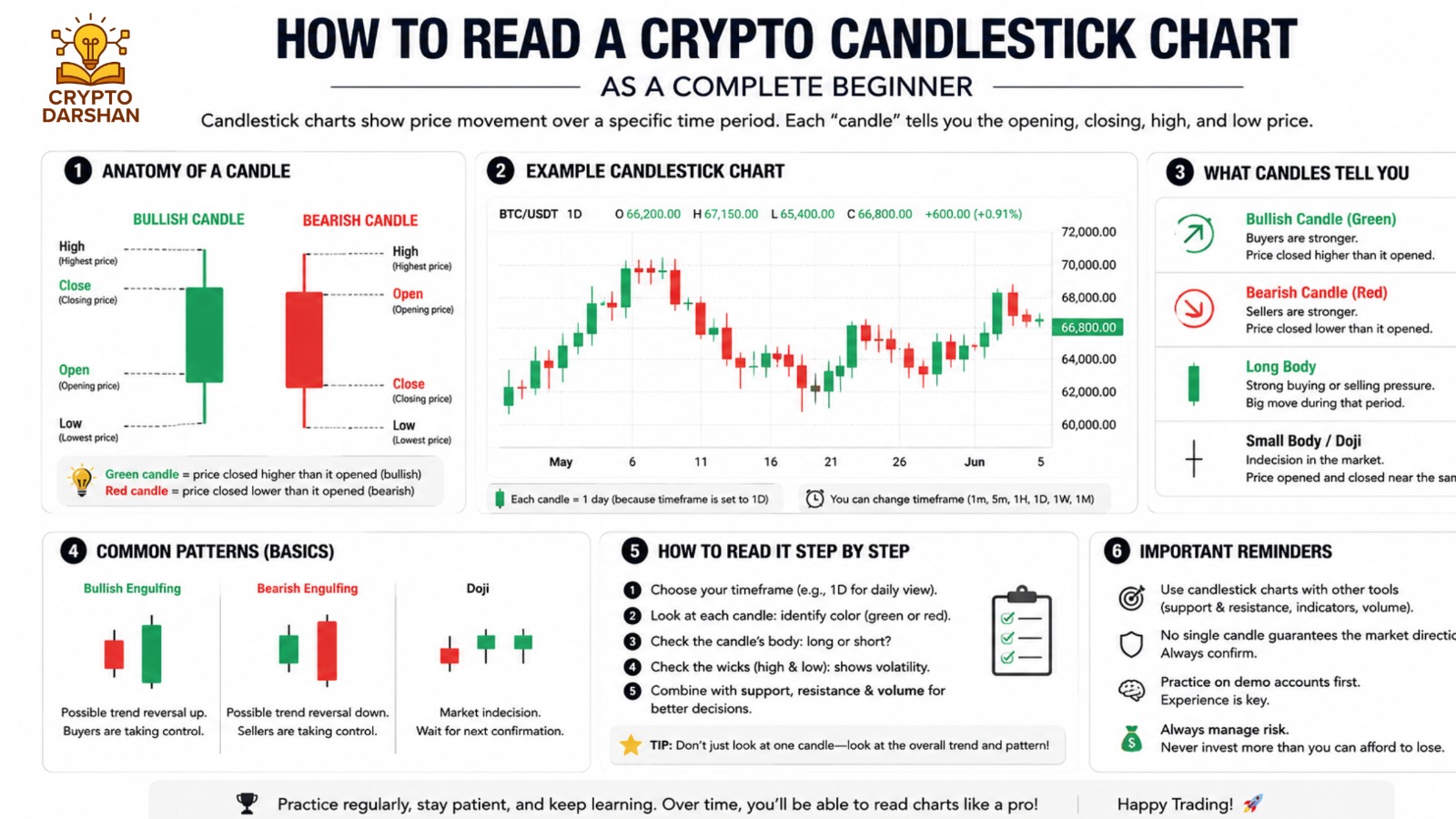
HODL helps resist panic selling, and diversifying across BTC, ETH, and DeFi reduces risk. Track markets using tools like CoinMarketCap and the fear/greed index to make informed decisions.
Security Best Practices
Core crypto security includes two-factor authentication (2FA), hardware wallets, and avoiding phishing scams. Beginners should also use VPNs, keep software updated, and be cautious of SIM swap attacks. Extra layers like multisig wallets and time-locks increase safety.
By 2026, emerging threats include AI deepfakes and quantum computing, prompting post-quantum crypto solutions. Always DYOR (Do Your Research) by checking whitepapers, project teams, and tokenomics. Avoid FOMO, as scams still steal over $4 billion yearly.
Regulations and Taxes
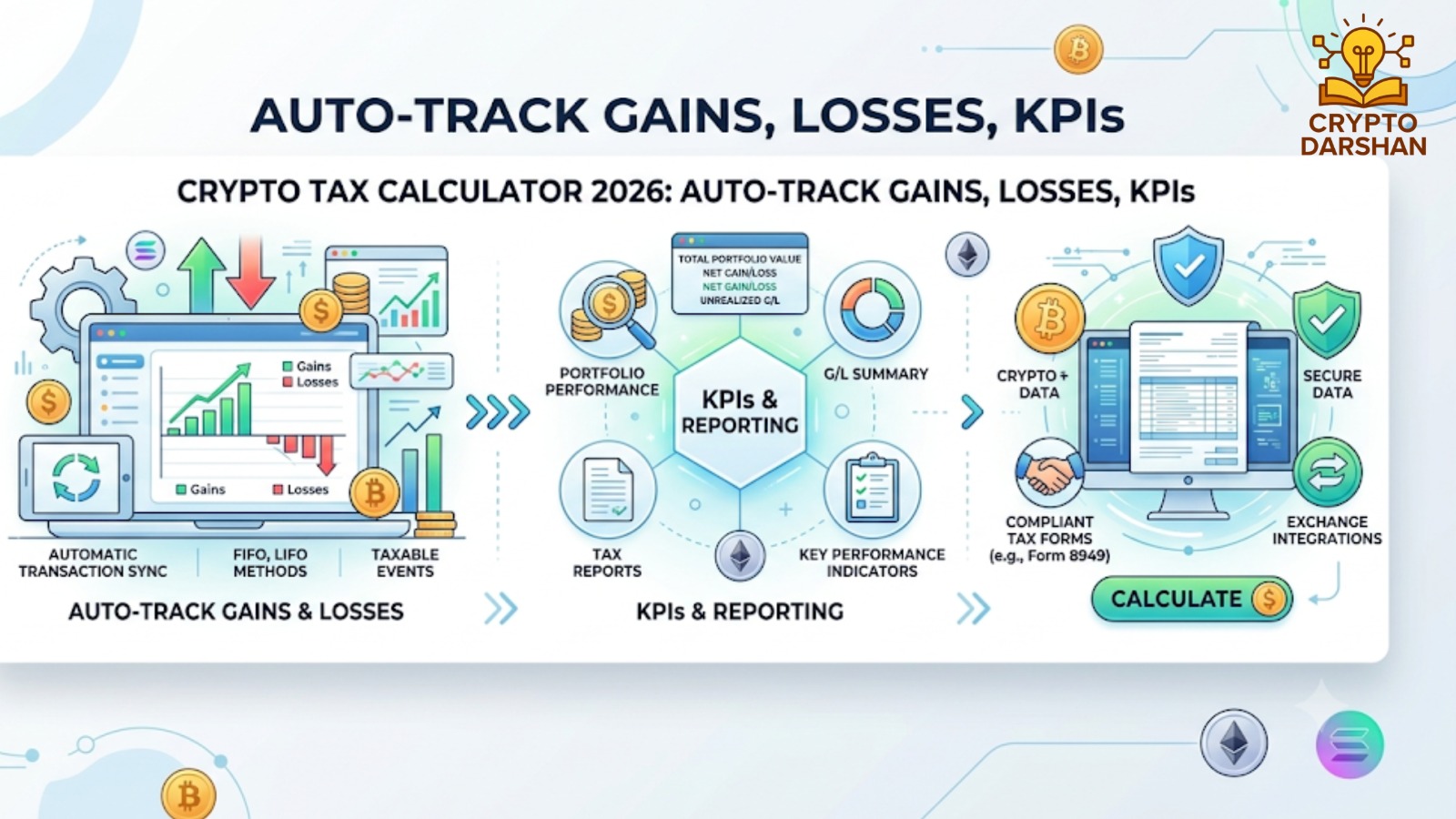
Governments regulate crypto in different ways, like MiCA in the EU or SEC actions in the U.S. Centralized exchanges (CEX) require KYC for user verification. Investors must track transactions for capital gains taxes, and tools like Koinly make this easier. Stable coins are under closer scrutiny, and CBDCs (digital currencies issued by central banks) are emerging as competitors.
By 2026, U.S. regulations are expected to be clearer, supporting both innovation and investor protection.
Why Beginners Should Manage Risk
Cryptocurrency is inherently risky because prices can rise or fall dramatically in a short period. Even small mistakes, like sending funds to the wrong address or falling for a scam, can lead to permanent losses. Beginners need to understand that the crypto market is very different from traditional investments, and volatility is part of the game.
To manage these risks, start by investing only small amounts you can afford to lose. Take your time to learn gradually about blockchain, wallets, exchanges, and market trends before making bigger moves. Avoid emotional decisions fear and greed can easily lead to buying high or selling low. Patience, research, and careful planning are the keys to building confidence and minimizing losses in crypto.
Long-Term Thinking in Crypto
Many successful cryptocurrency users focus on a long-term approach rather than chasing quick profits. Instead of trying to make money from sudden price swings, they take time to learn about the technology, projects, and market trends. Patience is key they understand that real gains come from holding and understanding quality crypto assets over months or years.
By thinking long-term, investors can avoid panic selling during price drops and resist the temptation to follow every hype. Cryptocurrency tends to reward those who study, plan, and stay disciplined, rather than those who rush into trades without understanding the risks. Beginners who adopt this mindset are more likely to build wealth safely and confidently in the crypto market.
Getting Started with Cryptocurrency: Simple 7 Steps for Beginners
- Learn Before You Invest
Start by educating yourself. Watch videos from reliable sources like Coin Bureau, read project whitepapers, and follow beginner-friendly crypto guides. Understanding the basics will help you avoid mistakes and scams. - Buy Popular Cryptos First
For beginners, start with well-known cryptocurrencies like Bitcoin (BTC) and Ethereum (ETH). Use trusted exchanges such as Coinbase to purchase your first coins safely. - Move Crypto to a Secure Wallet
After buying, transfer your crypto to a secure wallet like Ledger (a hardware wallet). This keeps your funds safer than leaving them on an exchange, which can be hacked. - Invest Regularly with DCA
Use Dollar-Cost Averaging (DCA) by buying a fixed amount of crypto every week or month. This strategy reduces the impact of price swings and lowers the risk of buying at the wrong time. - Explore DeFi Slowly
Once comfortable with basic crypto, you can explore DeFi platforms like Aave or Uniswap. Start small, learn how lending, borrowing, and swapping work, and gradually increase exposure. - Manage Your Portfolio Wisely
A beginner-friendly portfolio could be:
50% Bitcoin (BTC)
30% Ethereum (ETH)
20% other altcoins
Only invest what you are willing to risk. A good rule is to risk no more than 5% of your net worth in crypto, especially when starting out.
7.Track and Review Regularly
Use apps or websites like Coin Market Cap to monitor prices and your portfolio. Regularly review your investments and adjust based on your learning and goals.
Future Trends
New trends in crypto include AI-blockchain hybrids, tokenizing real-world assets (RWA) with a potential market of $10 trillion, and Bitcoin Layer 2 solutions for faster payments. Mass adoption is happening as wallets become integrated into everyday apps. Quantum-resistant upgrades are being developed to keep crypto safe long-term.
To succeed, beginners should master key concepts like blockchain, wallets, and DeFi. Start small, keep your assets secure, and stay informed to make the most of opportunities during bull market.