
The financial world is undergoing a massive transformation in 2026, driven by blockchain technology. Traditional banking systems, once dominated by centralized institutions, are being reshaped by decentralized finance (DeFi) platforms that offer transparency, security, and accessibility. Among the most significant areas of disruption are lending and credit scoring. Blockchain is not only changing how loans are issued but also redefining how creditworthiness is measured, verified, and shared.
This article explores how blockchain is reinventing lending and credit scoring in 2026, the benefits and challenges of this transformation, and what the future holds for borrowers, lenders, and financial institutions.
Lending in Blockchain

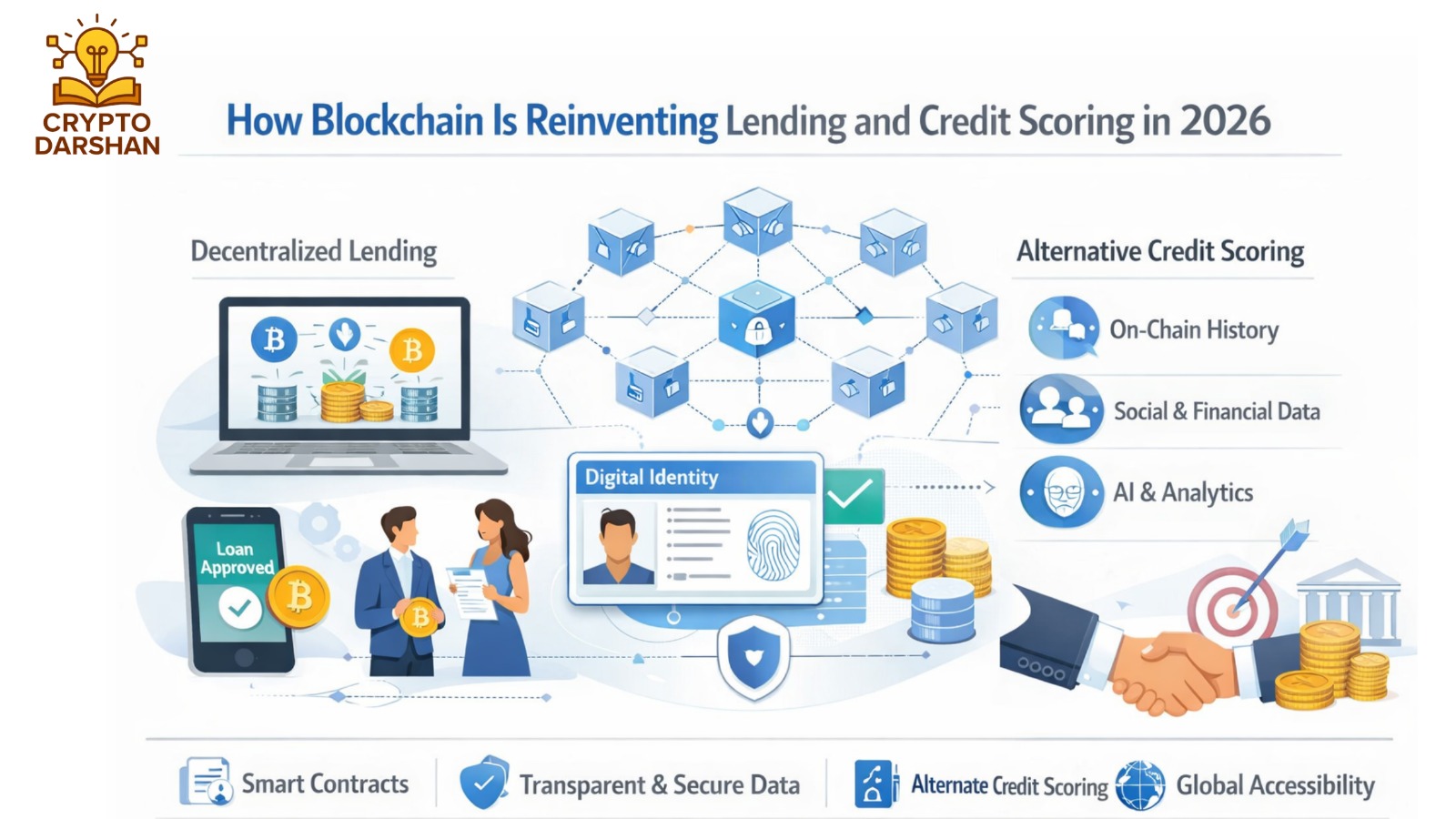
-Lending in blockchain refers to the process of borrowing and lending money through decentralized platforms that use blockchain technology. Instead of relying on banks or financial institutions, blockchain lending uses smart contracts, self-executing digital agreements, to manage loans automatically. Large financial institutions, including banks, have traditionally enabled lending.
By virtue of their size and established reputation, such banks can pool risks and make loans, funded in part by consumer deposits, to borrowers expected to generate a profit. Borrowers can request loans, and lenders can fund them directly, with all transactions recorded on a transparent and secure blockchain ledger.
This system reduces costs, increases speed, and allows global participation. It also enables the use of digital assets or tokenized real-world assets as collateral, making lending more accessible and efficient.
Credit Scoring in Blockchain

Credit scoring in blockchain is a decentralized way of evaluating a person’s creditworthiness using blockchain data. Unlike traditional systems that depend on centralized credit bureaus, blockchain-based credit scoring collects and verifies financial information from multiple sources, such as payment histories, digital transactions, and blockchain activity.
The Evolution of Lending and Credit Scoring

Traditional Lending Systems
For decades, lending has relied on centralized financial institutions such as banks, credit unions, and microfinance organizations. These institutions assess borrowers’ creditworthiness using credit scoring models developed by agencies like FICO, Experian, and Equifax. These models analyze factors such as payment history, outstanding debt, credit utilization, and length of credit history.
However, traditional credit scoring systems have several limitations:
- Lack of transparency: Borrowers often do not understand how their scores are calculated.
- Data inaccuracy: Errors in credit reports can unfairly lower scores.
- Exclusion of the unbanked: Millions of people without formal financial histories are excluded from credit access.
- Centralized control: A few agencies hold immense power over individuals’ financial reputations.
The Rise of Blockchain in Finance
Blockchain technology emerged as a decentralized ledger system that records transactions securely and transparently. Initially popularized by cryptocurrencies, blockchain has evolved into a foundational technology for decentralized finance (DeFi). In 2026, blockchain-based lending platforms are mainstream, offering peer-to-peer (P2P) loans, automated smart contracts, and decentralized credit scoring systems.
Blockchain’s core features, immutability, transparency, and decentralization, make it ideal for transforming how lending and credit scoring operate.
How Blockchain Is Reinventing Lending

1. Decentralized Lending Platforms
Blockchain enables decentralized lending platforms where borrowers and lenders interact directly without intermediaries. Smart contracts automatically execute loan agreements once predefined conditions are met. This eliminates the need for banks, reduces costs, and speeds up loan processing. If you’re new to this space, check out our guide on what DeFi (Decentralized Finance) is and why it’s growing so fast.
For example, a borrower can request a loan on a blockchain-based platform, and lenders from around the world can fund it. The smart contract ensures that funds are released only when both parties meet the agreed terms. This system enhances trust and efficiency.
2. Tokenization of Assets
Blockchain allows real-world assets, such as real estate, vehicles, or invoices, to be tokenized. These tokens can be used as collateral for loans. Tokenization increases liquidity and enables borrowers to access credit without selling their assets.
In 2026, tokenized collateral is a standard feature in blockchain lending. Borrowers can pledge digital tokens representing their assets, and lenders can verify ownership instantly through the blockchain ledger.
3. Global Accessibility
Traditional lending systems are often limited by geography and regulatory barriers. Blockchain-based lending platforms operate globally, allowing anyone with internet access to participate. This inclusivity is particularly beneficial for individuals in developing countries who lack access to traditional banking services.
By removing intermediaries and borders, blockchain democratizes lending and expands financial inclusion.
4. Lower Interest Rates and Fees
Without banks or credit agencies taking commissions, blockchain lending platforms can offer lower interest rates and transaction fees. Smart contracts automate processes that would otherwise require manual verification, reducing administrative costs.
This cost efficiency benefits both borrowers and lenders, creating a more competitive and transparent lending environment.
How Blockchain Is Transforming Credit Scoring
Decentralized Credit Scoring Models
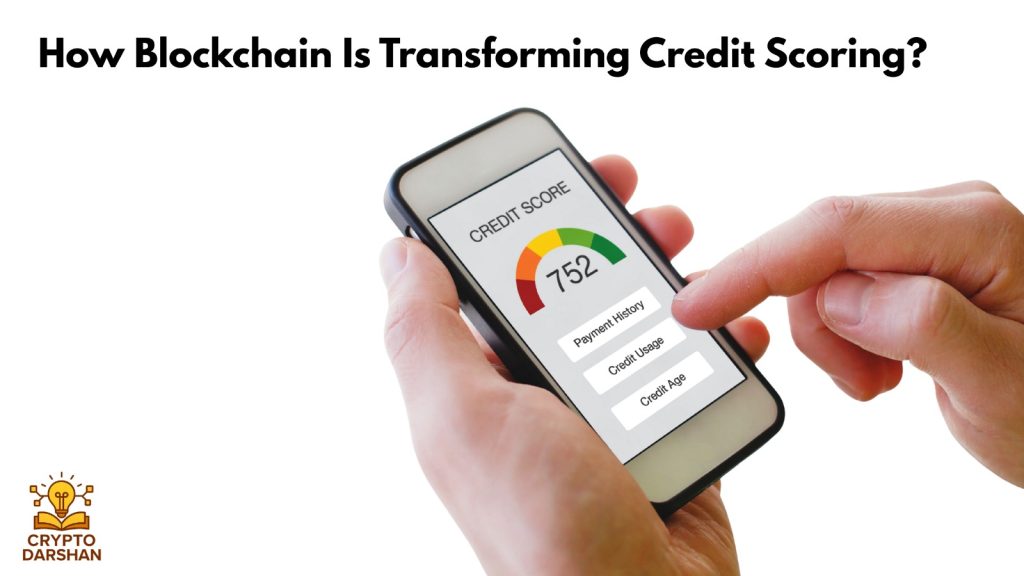
Traditional credit scoring relies on centralized databases controlled by a few agencies. Blockchain introduces decentralized credit scoring models that use distributed ledgers to store and verify financial data. Instead of relying on a single score from one agency, blockchain-based systems aggregate data from multiple sources, including payment histories, digital wallets, and peer reviews.
This decentralized approach ensures that credit scoring is more accurate, transparent, and resistant to manipulation.
Inclusion of Alternative Data
Blockchain-based credit scoring systems incorporate alternative data sources such as utility payments, mobile transactions, social media behavior, and blockchain transaction history. This inclusion allows individuals without traditional credit histories to build a verifiable financial reputation.
For example, a person who regularly pays rent and utility bills on time can have these transactions recorded on the blockchain, contributing positively to their credit scoring profile.
Transparency and Data Ownership
In traditional systems, borrowers have limited control over their credit data. Blockchain changes this dynamic by giving individuals ownership of their financial information. Borrowers can grant or revoke access to their data through cryptographic keys, ensuring privacy and control.
This transparency builds trust between borrowers and lenders, as both parties can verify the authenticity of credit scoring data directly on the blockchain.
Real-Time Credit Scoring
Blockchain enables real-time updates to credit scoring profiles. Every transaction recorded on the blockchain can instantly affect a borrower’s creditworthiness. This dynamic scoring system provides lenders with up-to-date insights, reducing the risk of lending to high-risk borrowers.
Real-time credit scoring also benefits borrowers by allowing them to improve their scores quickly through positive financial behavior.
Fraud Prevention and Security
Blockchain’s immutable ledger ensures that once data is recorded, it cannot be altered or deleted. This feature prevents fraud and identity theft, common issues in traditional credit scoring systems. Each transaction is cryptographically verified, ensuring data integrity and authenticity.
By eliminating data tampering, blockchain enhances the reliability of credit scoring and strengthens the overall lending ecosystem.
Lower Costs and Interest Rates
By removing intermediaries like banks and brokers, blockchain lending platforms reduce administrative costs and fees. This allows lenders to offer lower interest rates while still maintaining profitability, benefiting both borrowers and investors.
Smart Contracts for Automation

Smart contracts are self-executing programs on the blockchain that enforce loan terms automatically. They handle everything from loan approval to repayment, removing the need for manual verification. This automation minimizes human error and speeds up the lending process.
Tokenization of Assets
Blockchain allows real-world assets like real estate, vehicles, or invoices to be converted into digital tokens. These tokens can be used as collateral for loans, making it easier for borrowers to access credit without selling their assets. Tokenization also increases liquidity in the lending market.
Global Accessibility
Traditional lending is often limited by geography and regulations, but blockchain operates globally. Anyone with internet access can borrow or lend funds, promoting financial inclusion for people in regions with limited banking infrastructure.
The Role of Smart Contracts in Lending and Credit Scoring
Smart contracts are self-executing agreements coded on the blockchain. They automatically enforce the terms of a contract when specific conditions are met. In lending and credit scoring, smart contracts play several critical roles:
- Automated Loan Processing: Smart contracts handle loan disbursement, repayment schedules, and interest calculations without human intervention.
- Collateral Management: Tokenized assets can be locked in smart contracts as collateral, automatically released upon loan repayment.
- Dynamic Credit Scoring: Smart contracts can update credit scoring data in real time based on borrower behavior.
- Default Management: In case of default, smart contracts can trigger automatic actions such as collateral liquidation or penalty enforcement.
Smart contracts reduce human error, increase efficiency, and ensure fairness in lending and credit scoring processes.
Benefits of Blockchain-Based Lending and Credit Scoring
1. Transparency
Blockchain’s public ledger allows all participants to verify transactions and credit scoring data. This transparency reduces disputes and builds trust between borrowers and lenders.
2. Security
Data stored on the blockchain is encrypted and immutable, protecting it from hacking and unauthorized access. This security ensures that credit scoring information remains accurate and tamper-proof.
3. Financial Inclusion
Blockchain opens access to credit for individuals without traditional banking histories. By using alternative data and decentralized credit scoring, millions of unbanked people can now qualify for loans.
4. Efficiency
Automated processes powered by smart contracts reduce paperwork, manual verification, and processing time. Loans that once took weeks can now be approved within minutes.
5. Cost Reduction
By eliminating intermediaries, blockchain reduces transaction fees and administrative costs. Both borrowers and lenders benefit from lower expenses and better interest rates.
6. Global Reach
Blockchain-based lending platforms operate across borders, enabling global participation. Borrowers can access funds from international lenders, and investors can diversify their portfolios globally.
Challenges and Limitations

1. Regulatory Uncertainty
Blockchain technology operates in a rapidly evolving regulatory environment. Governments and financial authorities are still developing frameworks to govern decentralized lending and credit scoring systems. Unclear regulations can hinder adoption and create compliance challenges.
2. Data Privacy Concerns
While blockchain offers transparency, it also raises privacy concerns. Balancing transparency with data protection is crucial to ensure that sensitive financial information remains secure.
3. Technological Barriers
Implementing blockchain-based credit scoring requires advanced technical infrastructure and expertise. Developing countries may face challenges in adopting these systems due to limited resources.
4. Market Volatility
Many blockchain lending platforms use cryptocurrencies, which are subject to price volatility. Fluctuations in asset values can affect loan stability and repayment terms.
5. User Education
Widespread adoption of blockchain-based lending and credit scoring depends on user understanding. Educating borrowers and lenders about blockchain technology is essential for building trust and confidence. You should also be aware of AI-driven crypto scams and traps that are becoming more sophisticated in 2026.
Real-World Examples of Blockchain in Lending and Credit Scoring

1. DeFi Lending Platforms
Platforms like Aave, Compound, and MakerDAO have pioneered decentralized lending. These platforms allow users to lend and borrow cryptocurrencies using smart contracts. In 2026, similar platforms are expanding into fiat-backed loans and tokenized assets.
2. Blockchain-Based Credit Scoring Startups
Several startups are developing blockchain-based credit scoring models that use decentralized data sources. These systems analyze blockchain transaction histories, peer reviews, and alternative data to generate accurate credit profiles.
3. Central Bank Digital Currencies (CBDCs)
Many countries are launching CBDCs integrated with blockchain technology. These digital currencies can be linked to decentralized credit scoring systems, enabling real-time credit assessments and transparent lending.
4. Microfinance and Peer-to-Peer Lending
Blockchain is revolutionizing microfinance by enabling peer-to-peer lending in developing regions. Borrowers can access small loans without traditional credit checks, while lenders can verify credit scoring data through blockchain records.
The Future of Blockchain in Lending and Credit Scoring
1. Integration with Artificial Intelligence
In 2026, the combination of blockchain and artificial intelligence (AI) is enhancing credit scoring accuracy. AI algorithms analyze blockchain data to predict borrower behavior, detect fraud, and optimize lending decisions. Additionally, AI-powered DeFi chatbots are improving user experience and helping lenders make smarter decisions
2. Cross-Chain Interoperability
Future blockchain systems will support cross-chain interoperability, allowing data sharing between different blockchains. This will create unified credit scoring profiles that reflect a borrower’s complete financial history across multiple platforms.
3. Self-Sovereign Identity (SSI)
Self-sovereign identity solutions give individuals full control over their digital identities. When integrated with blockchain-based credit scoring, SSI allows borrowers to share verified financial data securely with lenders.
4. Institutional Adoption
Traditional banks and financial institutions are beginning to adopt blockchain technology for lending and credit scoring. Hybrid models combining centralized oversight with decentralized transparency are emerging.
5. Global Financial Inclusion
By 2030, blockchain-based credit scoring could enable billions of people to access credit for the first time. This transformation will drive economic growth, entrepreneurship, and poverty reduction worldwide.
Ethical and Social Implications

Blockchain’s impact on lending and credit scoring extends beyond technology. It raises important ethical and social questions:
Data Ownership and Privacy
Blockchain gives individuals control over their financial data, but it also raises questions about how much information should be publicly visible. While transparency is a strength, sensitive financial details could be exposed if not properly protected. Balancing openness with privacy is essential to maintain trust and ethical use of data.
Algorithmic Bias and Fairness
Blockchain-based credit scoring often uses algorithms and AI to assess creditworthiness. If these systems are not designed carefully, they can unintentionally reflect biases present in the data. Ensuring fairness and preventing discrimination in automated decision-making is a key ethical responsibility.
Accessibility and Digital Divide
Although blockchain promotes financial inclusion, it still requires internet access and digital literacy. People in remote or underdeveloped areas may struggle to use blockchain platforms. Bridging this digital divide is crucial to ensuring equal access and preventing new forms of financial exclusion.
Regulatory and Legal Challenges
The decentralized nature of blockchain makes it difficult for governments to regulate effectively. Without clear legal frameworks, users may face risks related to fraud, misuse, or lack of consumer protection. Ethical implementation requires collaboration between developers, regulators, and policymakers.
Environmental Impact
Some blockchain networks consume large amounts of energy, raising concerns about sustainability. As blockchain adoption grows, addressing its environmental footprint becomes a social and ethical priority. Moving toward energy-efficient consensus mechanisms can help reduce the ecological impact of blockchain-based lending systems.
Addressing these issues is essential to ensure that blockchain-based credit scoring promotes fairness and equality.
Frequently Asked Questions (FAQ)

1. What is blockchain-based lending?
Blockchain-based lending is a system where loans are issued through decentralized platforms using smart contracts instead of traditional banks. It removes intermediaries and allows peer-to-peer lending globally.
2. How does blockchain improve credit scoring?
Blockchain enables transparent, tamper-proof financial records. Instead of relying only on traditional credit bureaus, lenders can assess a borrower’s on-chain activity, transaction history, and wallet behavior.
3. What are smart contracts in lending?
Smart contracts are self-executing programs on the blockchain that automatically enforce loan terms, such as interest rates, repayments, and collateral liquidation, without human intervention.
4. Can people without a credit history get loans through blockchain?
Yes. Blockchain opens lending access to unbanked and underbanked individuals by using alternative data like transaction patterns and DeFi activity instead of traditional credit scores.
5. What is collateralized vs. uncollateralized crypto lending?
- Collateralized lending: Requires users to lock crypto assets as security.
- Uncollateralized lending: Relies on reputation, on-chain identity, or credit scoring models without requiring collateral.
6. What role does DeFi play in lending?
Decentralized Finance (DeFi) platforms enable users to borrow and lend assets without banks, using blockchain protocols that are open, permissionless, and transparent.
7. Is blockchain lending safe?
It can be secure due to transparency and automation, but risks include smart contract bugs, platform hacks, and market volatility. Users should choose audited platforms.
Conclusion
Blockchain is revolutionizing lending and credit scoring in 2026 by introducing transparency, security, and inclusivity into the financial ecosystem. Decentralized platforms, smart contracts, and tokenized assets are reshaping how credit is issued and evaluated. Borrowers gain control over their financial data, lenders access real-time insights, and the unbanked population gains new opportunities for financial inclusion.
While challenges such as regulation, privacy, and education remain, the potential of blockchain to transform credit scoring and lending is undeniable. As technology continues to evolve, blockchain will pave the way for a more equitable, efficient, and transparent global financial system—one where trust is built not on institutions, but on code and consensus.