The cryptocurrency market has grown into a global financial ecosystem, attracting millions of new investors every year. As more people enter the world of digital assets, one of the first questions they face is which crypto exchange to use. Among the most popular and trusted platforms are Coinbase and Binance. Both have built strong reputations for reliability, security, and innovation. However, when it comes to beginners, the debate of Coinbase vs Binance becomes crucial.
This comprehensive guide explores Coinbase vs Binance in detail, comparing their features, fees, security, usability, and overall value for new traders. By the end, readers will have a clear understanding of which platform suits their needs best in 2026.
Understanding the Basics: Coinbase vs Binance

Before diving into the comparison, it’s important to understand what each platform represents. Both Coinbase and Binance are leading crypto exchange platforms, but they cater to slightly different audiences.
What Is Coinbase?
Coinbase is one of the largest and most used cryptocurrency exchanges in the world, allowing users to buy, sell, and manage various digital assets like Bitcoin, Ethereum, and other cryptocurrencies. It is a U.S.-based crypto exchange founded in 2012. It’s known for its simplicity, regulatory compliance, and beginner-friendly interface. Coinbase allows users to buy, sell, and store cryptocurrencies easily using fiat currencies like USD, EUR, and GBP. It’s often the first platform new investors use when entering the crypto market.
What Is Binance?
Binance, launched in 2017, is a global crypto exchange that quickly became the largest in the world by trading volume. It offers a wide range of cryptocurrencies, advanced trading tools, and low fees. Binance caters to both beginners and professional traders, offering everything from spot trading to futures, staking, and DeFi services.
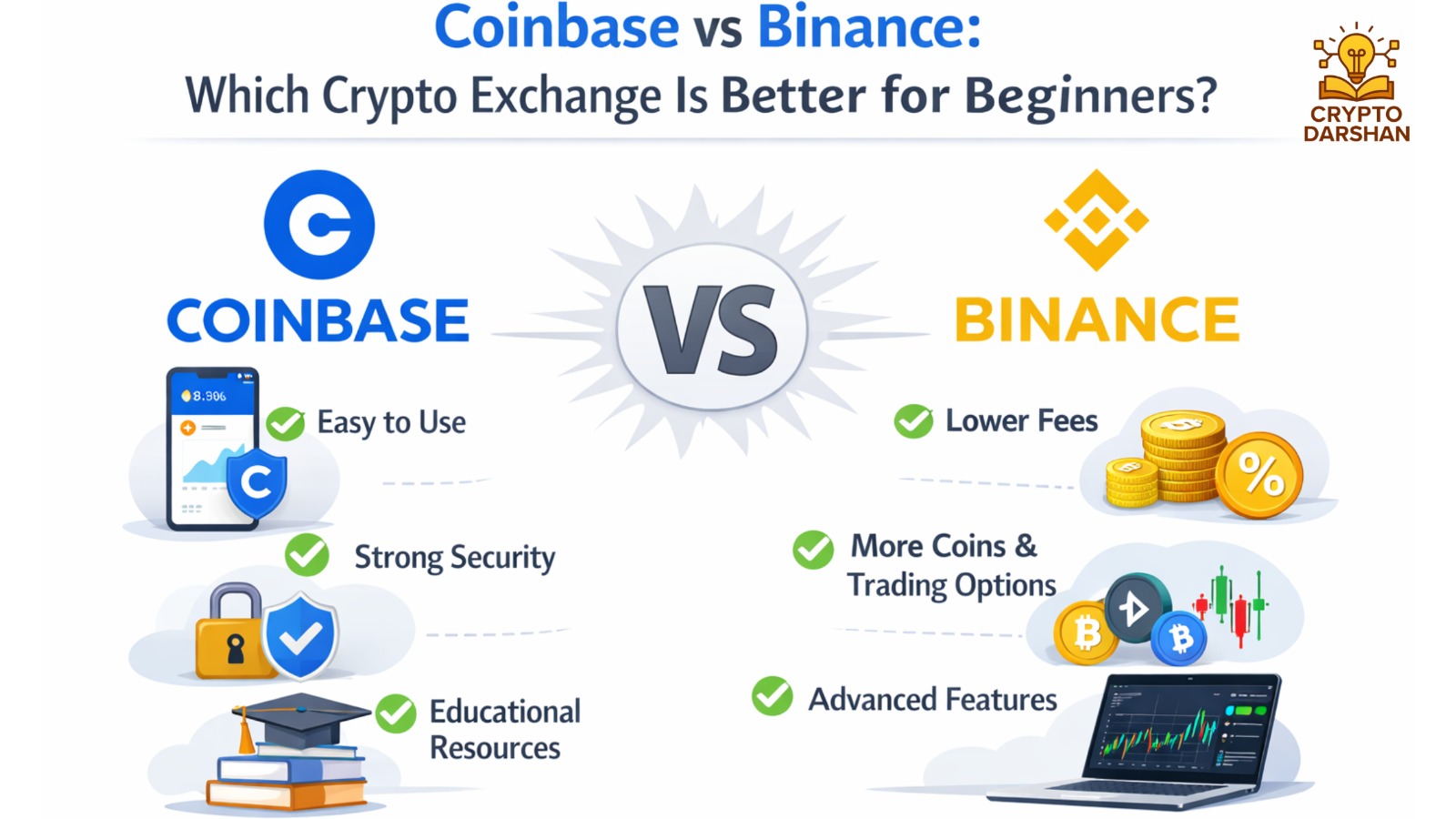
When comparing Coinbase vs Binance, the key difference lies in their target audience. Coinbase focuses on simplicity and regulation, while Binance emphasizes variety, low fees, and advanced features.
Coinbase vs Binance: Key Features Overview

| Feature | Coinbase | Binance |
| Founded | 2012 | 2017 |
| Headquarters | United States | Global (originally China, now Cayman Islands) |
| Supported Cryptocurrencies | 250+ | 400+ |
| Trading Fees | 0.4%–1.5% | 0.1% (discounts with BNB) |
| User Interface | Simple and beginner-friendly | Advanced but customizable |
| Security | FDIC-insured USD balances, 2FA | SAFU fund, 2FA, cold storage |
| Regulation | Fully regulated in the U.S. | Regulated in multiple jurisdictions |
| Mobile App | Yes | Yes |
| Staking Options | Yes | Yes |
| Customer Support | Email and chat | 24/7 live chat |
This table provides a quick snapshot of Coinbase vs Binance, but the real comparison lies in how these features impact beginners.
User Experience: Coinbase vs Binance

Coinbase: Simplicity at Its Core
Coinbase is designed for beginners. Its interface is clean, intuitive, and easy to navigate. Users can buy cryptocurrencies with just a few clicks using debit cards, bank transfers, or PayPal (in supported regions). The dashboard clearly displays portfolio balances, recent transactions, and price charts.
For someone new to crypto, Coinbase feels familiar similar to using an online banking app. The platform also offers Coinbase Learn, an educational section where users can earn small amounts of crypto by completing lessons. This makes Coinbase an excellent starting point for those who want to learn while investing.
Binance: Feature-Rich but Complex
Binance offers a more advanced interface, which can be overwhelming for beginners. However, it provides a Binance Lite mode that simplifies the experience. In Lite mode, users can buy and sell crypto easily without dealing with complex charts or trading tools.
For those who want to grow beyond basic trading, Binance offers a full-featured Pro mode with advanced charting, order types, and analytics. This flexibility makes Binance suitable for both beginners and experienced traders.
Verdict (Coinbase vs Binance):
Coinbase wins for absolute beginners due to its simplicity, while Binance offers more flexibility for users who plan to advance their trading skills.
Fees and Costs

Fees are one of the most important factors when choosing a crypto exchange. The difference in cost between Coinbase vs Binance can significantly affect long-term profitability.
Coinbase Fees
Coinbase is known for its higher fees compared to other exchanges. It charges a spread of about 0.5% per trade, plus additional transaction fees depending on the payment method. For example:
- Bank transfers: 1.49%
- Debit/credit cards: 3.99%
- Instant buys: Up to 2%
While these fees are higher, they pay for convenience and regulatory compliance. Coinbase also offers Coinbase Advanced, a separate platform with lower fees (0.00%–0.40%) for experienced users.
Binance Fees
Binance is famous for its low fees. The standard trading fee is 0.1% for both makers and takers. Users who pay fees using Binance Coin (BNB) receive a 25% discount. High-volume traders can enjoy even lower fees through the VIP tier system.
Deposit fees on Binance are usually free for crypto, while withdrawal fees depend on the blockchain network. Overall, Binance is one of the cheapest crypto exchange platforms globally.
Verdict (Coinbase vs Binance):
Binance clearly wins in the fee category. Beginners who want to minimize costs will find Binance more affordable than Coinbase. If you’re considering moving funds to a DEX to avoid exchange custody, learn how scaling solutions work in our beginner guide on Zero-Knowledge Proofs (ZK Rollups) Explained.
Security: Coinbase vs Binance

Security is a top priority for any crypto exchange, especially for beginners who may not be familiar with best practices.
Coinbase Security
Coinbase is one of the most secure exchanges in the world. It stores 98% of customer funds in cold storage, away from online threats. USD balances are insured up to $250,000 through the FDIC. Coinbase also uses two-factor authentication (2FA), biometric logins, and encryption to protect user data.
Additionally, Coinbase complies with strict U.S. regulations, including KYC (Know Your Customer) and AML (Anti-Money Laundering) policies. This makes it a trusted platform for users who value safety and transparency.
Binance Security
Binance also prioritizes security, using advanced measures like 2FA, withdrawal whitelists, and cold storage. It created the SAFU (Secure Asset Fund for Users), an emergency insurance fund that protects users in case of a security breach.
While Binance has faced regulatory challenges in some countries, it has strengthened its compliance framework in recent years. It now operates under licenses in multiple jurisdictions, ensuring user protection.
Verdict (Coinbase vs Binance):
Both exchanges are secure, but Coinbase’s regulatory compliance gives it a slight edge for beginners who prioritize safety.
Supported Cryptocurrencies: Coinbase vs Binance

Coinbase
Coinbase supports over 250 cryptocurrencies, including major assets like Bitcoin (BTC), Ethereum (ETH), and Solana (SOL). It regularly adds new tokens that meet its compliance standards. However, Coinbase’s selection is smaller compared to Binance.
Binance
Binance supports over 400 cryptocurrencies, making it one of the most diverse crypto exchange platforms. It lists popular coins as well as emerging altcoins, giving traders more opportunities to diversify their portfolios.
Verdict (Coinbase vs Binance):
Binance wins for variety, while Coinbase focuses on quality and compliance.
Payment Methods: Coinbase vs Binance

Coinbase
Coinbase supports multiple payment methods, including:
- Bank transfers (ACH, SEPA)
- Debit and credit cards
- PayPal (in select regions)
- Apple Pay and Google Pay
These options make it easy for beginners to fund their accounts quickly.
Binance
Binance also supports a wide range of payment methods, including:
- Bank transfers
- Credit/debit cards
- Peer-to-peer (P2P) trading
- Third-party payment processors
Binance’s P2P feature allows users to buy crypto directly from others using local payment methods, often with zero fees.
Verdict (Coinbase vs Binance):
Both offer flexible payment options, but Binance’s P2P trading gives it an advantage in regions with limited banking access.
Customer Support: Coinbase vs Binance

Coinbase Support
Coinbase provides customer support through email, live chat, and a help center. It also offers phone support in some regions. While response times can vary, Coinbase’s support is generally reliable and beginner-friendly.
Binance Support
Binance offers 24/7 live chat support, a comprehensive FAQ section, and community forums. Its multilingual support makes it accessible to users worldwide.
Verdict (Coinbase vs Binance):
Binance wins for faster and more accessible customer support, though Coinbase provides a more personalized experience for U.S. users.
Mobile Experience: Coinbase vs Binance

Both Coinbase and Binance offer mobile apps for iOS and Android.
- Coinbase App: Simple, clean, and perfect for beginners. It allows users to buy, sell, and track crypto easily.
- Binance App: More advanced, with both Lite and Pro modes. Lite mode simplifies trading, while Pro mode offers full functionality for experienced users.
Educational Resources: Coinbase vs Binance

Coinbase Learn
Coinbase offers Coinbase Learn, an educational platform that teaches users about blockchain and crypto basics. Users can even earn small amounts of crypto by completing lessons, making learning interactive and rewarding.
Binance Academy
Binance provides Binance Academy, a free educational hub with articles, videos, and tutorials covering everything from beginner topics to advanced trading strategies.
Verdict (Coinbase vs Binance):
Both platforms excel in education, but Binance Academy offers more comprehensive content for users who want to go beyond the basics.
Staking and Earning: Coinbase vs Binance

Coinbase Earn and Staking
Coinbase allows users to earn rewards by staking supported cryptocurrencies like Ethereum, Cardano, and Solana. The process is simple and automated, making it ideal for beginners.
Binance Earn
Binance offers a wider range of earning options, including staking, savings, liquidity farming, and dual investment products. Users can choose between flexible and locked terms to maximize returns.
Verdict (Coinbase vs Binance):
Binance provides more earning opportunities, while Coinbase keeps things simple for new users.
Regulation and Compliance: Coinbase vs Binance

Coinbase
Coinbase is fully regulated in the United States and complies with all major financial laws. It’s a publicly traded company listed on NASDAQ, which adds transparency and trust.
Binance
Binance operates globally and has obtained licenses in several countries. However, it has faced regulatory scrutiny in some regions. The company continues to strengthen its compliance framework to meet international standards.
Verdict (Coinbase vs Binance):
Coinbase wins for strict regulatory compliance, making it a safer choice for beginners who value legal protection.
Advanced Trading Options: Coinbase vs Binance

Coinbase Advanced
Coinbase Advanced offers professional trading tools, including advanced charting, limit orders, and lower fees. It’s suitable for users who want to transition from beginner to intermediate trading.
Binance Pro
Binance Pro provides a full suite of trading options, including spot, margin, and futures trading. It also supports algorithmic trading through APIs.
Verdict (Coinbase vs Binance):
Binance offers more advanced tools, but Coinbase Advanced provides a smoother learning curve for beginners.
Global Accessibility

Coinbase
Coinbase operates in over 100 countries but has limited features in some regions due to regulatory restrictions.
Binance
Binance is available in more than 180 countries, offering localized versions and multiple language options.
Verdict (Coinbase vs Binance):
Binance wins for global accessibility, while Coinbase remains the top choice for U.S. users.
Pros and Cons: Coinbase vs Binance

Coinbase Pros
- Beginner-friendly interface
- Strong regulatory compliance
- FDIC-insured USD balances
- Educational rewards program
Coinbase Cons
- Higher fees
- Limited crypto selection
- Fewer advanced trading tools
Binance Pros
- Low trading fees
- Wide range of cryptocurrencies
- Advanced trading features
- Global accessibility
Binance Cons
- Complex interface for beginners
- Regulatory challenges in some regions
Which Is Better for Beginners: Coinbase vs Binance?

When comparing Coinbase vs Binance, the answer depends on the user’s goals and experience level.
- Choose Coinbase if:
- You’re new to crypto and want a simple, secure platform.
- You prefer a regulated environment.
- You don’t mind paying slightly higher fees for convenience.
- Choose Binance if:
- You want lower fees and more trading options.
- You plan to explore advanced trading in the future.
- You’re comfortable learning a more complex interface.
Final Verdict
For absolute beginners, Coinbase is the better starting point due to its simplicity and regulatory trust. However, as users gain experience, Binance becomes a more cost-effective and versatile choice.
FAQ – Coinbase vs Binance: Which Crypto Exchange Is Better for Beginners?

1. What’s the main difference between Coinbase and Binance?
The core difference lies in user experience and fees.
- Coinbase prioritizes simplicity, making it ideal for beginners with an intuitive interface.
- Binance offers lower fees and advanced tools, which may appeal more to traders as they gain experience.
2. Which exchange has lower trading fees?
Generally, Binance has lower trading fees compared to Coinbase. Binance also offers fee discounts when you use its native token (BNB). Coinbase fees tend to be higher unless you use the Coinbase Pro/Advanced platform.
3. Is Coinbase safe for new crypto users?
Yes — Coinbase is considered one of the safest regulated exchanges with strong security measures, including FDIC insurance on USD balances (for eligible users), two-factor authentication (2FA), and cold storage for most assets.
4. Can beginners use Binance without confusion?
Yes — Binance has a simple mode designed for beginners, but it also provides advanced charts and order types that can be overwhelming at first. Beginners may want to start with the basic dashboard before using advanced features.
5. Which platform supports more cryptocurrencies?
Binance generally lists more cryptocurrencies and trading pairs than Coinbase, giving traders greater variety and access to new tokens.
6. Does Coinbase offer better customer support?
Many new users find Coinbase’s support and user onboarding easier to navigate than Binance, which sometimes relies on a support ticket system that can take longer to resolve complex issues.
7. Can I earn rewards on both exchanges?
Yes, both platforms offer ways to earn:
- Coinbase has staking and earn-to-learn programs.
- Binance offers staking, savings products, and rewards for completing tasks.
Since both Coinbase and Binance are centralized exchanges, you may also want to understand how they compare to decentralized platforms in our full CEX vs DEX comparison guide.
8. Which exchange is better for mobile trading?
Both have strong mobile apps, but Coinbase’s app is simpler and more beginner-friendly, while Binance’s app packs more advanced features and tools for active traders.
9. Are both exchanges regulated?
Coinbase operates under stricter U.S. regulations and is considered more compliant with local laws, which can provide extra peace of mind for beginners in regulated jurisdictions. Binance operates globally but may have different regulatory statuses depending on the region.
10. Which one should I choose as a beginner?
- Choose Coinbase if you want ease of use, straightforward buy/sell functions, and strong regulatory reputation.
- Choose Binance if you want lower fees, more assets to trade, and advanced features you can grow into.
Conclusion
The debate of Coinbase vs Binance highlights two different approaches to cryptocurrency trading. Coinbase focuses on simplicity, regulation, and education, making it ideal for beginners. Binance, on the other hand, offers low fees, advanced tools, and a vast selection of cryptocurrencies, appealing to users who want to grow their trading skills.
Ultimately, the choice between Coinbase vs Binance depends on personal preferences. Beginners may start with Coinbase for its ease of use and later transition to Binance for its advanced features and lower costs. Both platforms are excellent in their own right, and together, they represent the best of what the modern crypto exchange industry has to offer.