
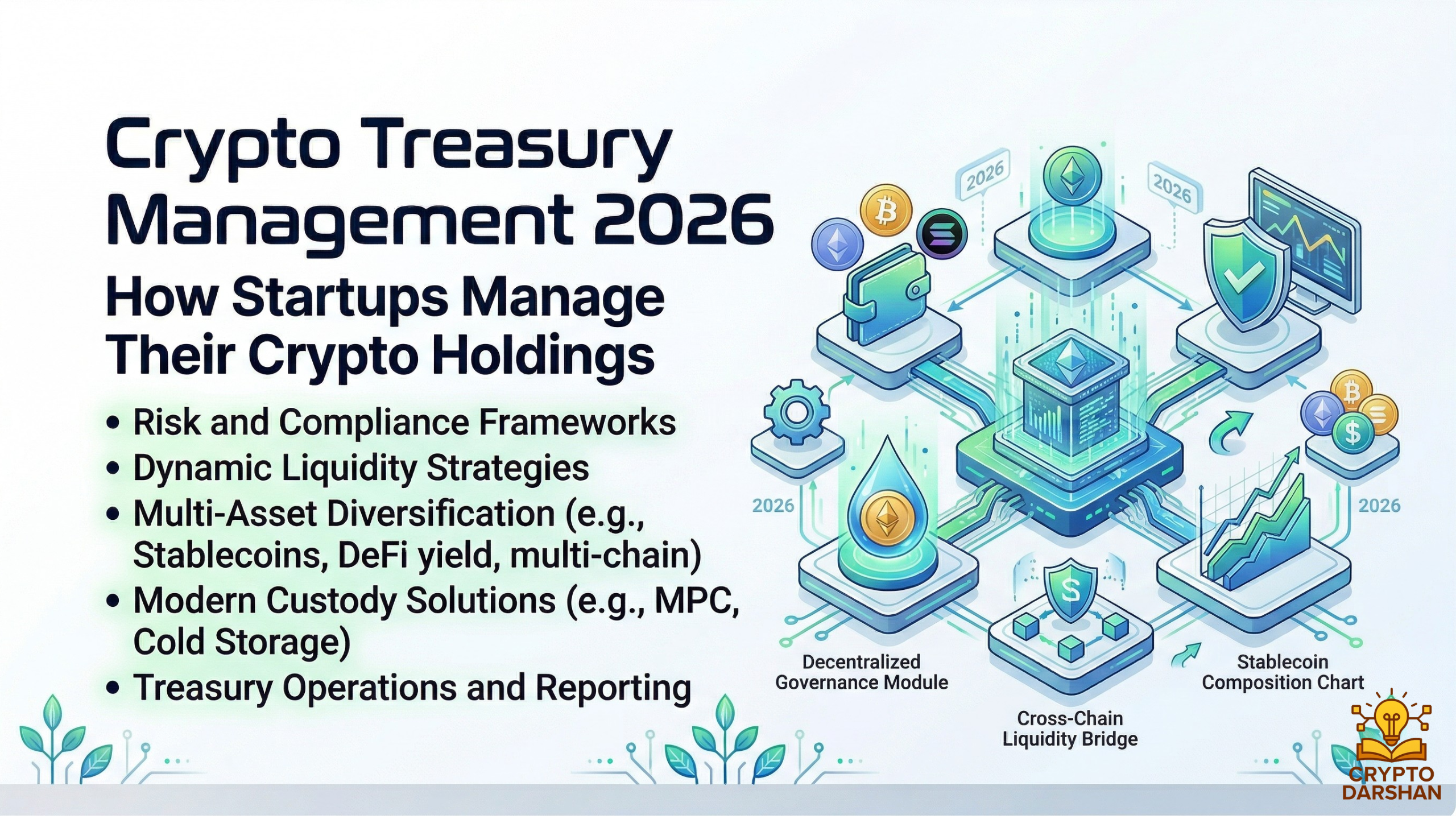
The digital economy has matured rapidly, and by 2026, cryptocurrencies have become a mainstream financial asset class. Startups across industries—from fintech to gaming—are integrating crypto into their operations, investments, and fundraising strategies. Managing these assets effectively is no longer optional; it’s essential for financial stability and growth. Crypto treasury management has evolved into a specialized discipline that combines traditional financial management with blockchain technology, risk control, and regulatory compliance.
This expanded guide explores how startups manage their crypto holdings in 2026, the tools and strategies they use, and the challenges they face. It also provides deeper explanations of key topics such as custody, risk management, and DeFi integration.
Understanding Crypto Treasury Management

What It Means
In general, crypto treasury management refers to the strategic management of cryptocurrencies and digital assets within an organization. It involves decisions about how to store, allocate, and use digital assets while minimizing risks from volatility and cyber threats. For startups, crypto holdings can represent both an opportunity for growth and a potential source of instability if not managed properly.
Why It Matters
Startups often operate with limited cash reserves. Holding crypto can provide flexibility, but it also introduces volatility. Effective treasury management ensures that crypto assets are used strategically—supporting operations, generating yield, and maintaining liquidity without exposing the company to unnecessary risk.
The Evolution of Crypto Treasuries
In the early 2020s, only a few companies held crypto on their balance sheets. By 2026, the situation has changed dramatically. Startups now use crypto for payroll, vendor payments, and cross-border transactions. The rise of stablecoins, decentralized finance (DeFi), and tokenized assets has made crypto treasury management a standard business function.
Why Startups Hold Crypto in 2026

Diversification and Growth
Crypto assets offer diversification beyond traditional fiat currencies. Bitcoin and Ethereum remain popular for long-term appreciation, while stablecoins provide stability for daily operations. Many startups also hold governance tokens or participate in staking to earn passive income.
Operational Efficiency
Crypto payments reduce transaction costs and settlement times. Startups can pay global contractors instantly using stablecoins, avoiding delays and fees associated with traditional banking systems. This efficiency is especially valuable for remote-first companies.
Strategic Alignment with Web3
Startups building in the Web3 ecosystem often hold native tokens to participate in governance or access decentralized services. Holding these tokens aligns their financial strategy with their product ecosystem.
Fundraising and Tokenization
Token-based fundraising allows startups to raise capital without giving up equity. Security Token Offerings (STOs) and Initial DEX Offerings (IDOs) have become common, providing liquidity and community engagement.
Core Components of Crypto Treasury Management
Custody and Security
Custody refers to how crypto assets are stored and protected. Startups must choose between self-custody and third-party custody.
- Self-Custody: The company controls its private keys using hardware wallets or multi-signature setups. This offers full control but requires strong internal security measures.
- Third-Party Custody: Professional custodians like Fireblocks, Anchorage, and BitGo provide secure storage, insurance, and compliance support.
Multi-signature wallets and multi-party computation (MPC) are standard security tools. They ensure that no single person can move funds without approval, reducing the risk of internal fraud or theft.
Many treasury operations rely on automated smart contracts to manage assets and execute transactions on blockchain networks. To better understand how these transactions are processed and validated, you can read Inside a Blockchain Transaction: From Wallet to Block.
Liquidity Management
Liquidity management ensures that startups can access funds when needed. A balanced treasury typically includes:
- Operational Liquidity: Stablecoins for payroll and expenses
- Strategic Holdings: Long-term crypto investments
- Emergency Reserves: Fiat or stable assets for downturns
Automated liquidity tools and decentralized exchanges (DEXs) help startups rebalance portfolios efficiently.
Risk Management
Crypto markets are volatile. Startups use several strategies to manage risk:
- Diversification: Holding multiple assets across blockchains
- Hedging: Using derivatives like futures or options to offset price swings
- Stablecoin Allocation: Keeping a portion of funds in stablecoins to reduce exposure
Risk management also includes monitoring counterparty risk, smart contract vulnerabilities, and regulatory changes.
Accounting and Compliance
Accounting for crypto assets requires accurate valuation and reporting. Specialized software like Cryptio and Lukka integrates blockchain data with accounting systems, automating tax and compliance processes. Startups must follow local regulations for anti-money laundering (AML) and know-your-customer (KYC) requirements.
Yield Generation
DeFi platforms allow startups to earn yield on idle assets through staking, lending, or liquidity provision. However, yield strategies must be carefully managed to avoid exposure to smart contract risks or unstable protocols.
Tools and Platforms for Crypto Treasury Management

Custodial Platforms
- Fireblocks: Used by many companies to move and store crypto safely using MPC (the private key is split so no single person/device holds it). It also supports approval workflows (who can send, who must approve) and helps reduce “one person can drain the wallet” risk.
- Anchorage Digital: A regulated custody provider that focuses on compliance + secure storage. Many teams use it when they want a more “institutional” setup, plus services like staking while keeping assets in custody.
- BitGo: Known for multi-signature custody (multiple approvals needed to move funds). Often chosen when teams want strong controls, clear audit trails, and sometimes insurance coverage depending on the setup.
Treasury Management Software
- Coinshift: Helps teams manage multi-wallet treasuries with roles and approvals. It’s popular for startups/DAOs that need structured spending, vendor payments, and visibility across many wallets.
- Gnosis Safe (Safe): A widely used multisig wallet. It’s not just storage—it’s a control system: you can set signers, approval thresholds, and connect to DeFi apps while keeping approvals in place.
- Zerion + DeBank: Mainly portfolio tracking tools. They show what the treasury holds across wallets and DeFi positions (tokens, lending, LP positions), which helps with monitoring and reporting.
Accounting and Reporting Tools
- Cryptio: Pulls blockchain transactions and turns them into accounting-ready records. Helpful for startups with lots of wallets/transactions because it reduces manual spreadsheet work and supports ERP integrations.
- Lukka: Focuses on valuation, reporting, and audit-grade data. Often used when a company needs stronger controls for financial statements and external reporting.
- Koinly: Common for tax reporting and transaction classification. It’s simpler to set up for smaller teams, but still useful when you have multiple wallets and exchanges.
DeFi Protocols for Yield and Liquidity
- Aave + Compound: Lending markets where you can lend assets to earn interest or borrow against collateral. Startups use them for conservative yield on stablecoins or for short-term liquidity (but borrowing adds liquidation risk).
- Uniswap + Curve: Decentralized exchanges (DEXs). You can swap tokens, or provide liquidity to earn fees. Liquidity providing can earn returns, but it can also cause impermanent loss if prices move a lot.
- Lido + Rocket Pool: Staking solutions for proof-of-stake assets (especially ETH). They let you earn staking rewards without running your own validator. This can improve capital efficiency, but you still have risks like smart-contract risk and staking/slashing rules.
Strategies for Managing Crypto Treasuries

Diversification Strategy
Diversification spreads risk across different assets. A typical allocation might include:
- 40% stablecoins for liquidity
- 30% major cryptocurrencies (BTC, ETH)
- 20% DeFi or governance tokens
- 10% experimental or venture assets
This mix balances stability and growth potential.
Hedging Strategy
Hedging protects against price drops. Startups use futures, options, or algorithmic trading bots to lock in value. For example, a company holding ETH might short ETH futures to offset potential losses.
Yield Optimization
Idle assets can be deployed in low-risk DeFi protocols. Automated yield aggregators rebalance positions across multiple platforms to maximize returns while minimizing risk.
Governance and Policy Framework
A clear governance structure ensures accountability. Policies define:
- Asset allocation limits
- Approval processes for transactions
- Security and access controls
- Reporting and auditing procedures
Multi-signature wallets and DAO-style governance models enhance transparency and reduce single points of failure.
Regulatory and Compliance Landscape in 2026

Global Regulatory Trends
By 2026, rules are clearer in many places, but startups still need a basic compliance setup because crypto touches payments, investing, and fundraising.
- KYC/AML requirements (Know Your Customer / Anti–Money Laundering)
If your startup uses exchanges, payment providers, or on/off-ramps, you’ll usually need to verify identities and monitor transactions. The goal is to prevent fraud, money laundering, and terrorist financing.
Practical impact: you may need customer verification, transaction monitoring, and record keeping—even if you mainly use stablecoins.
- Tax reporting (fair market value)
Many tax systems treat crypto events (selling, swapping, paying vendors, earning staking rewards) as reportable. “Fair market value” means you record the value at the time of the transaction, not what you paid originally.
Practical impact: you need clean transaction history, timestamps, and price sources so finance can calculate gains/losses and income.
- Securities laws (tokenized fundraising)
If you issue a token to raise money, regulators may treat it like a security depending on how it’s marketed and used (for example, if buyers expect profit from your team’s work).
Practical impact: you may need legal review, investor restrictions, disclosures, and careful wording in marketing. Many startups separate utility use from investment promises to reduce risk.
Stablecoin Regulation

Stablecoins are widely used for payroll, vendors, and cross-border payments, so regulators focus on safety and transparency.
Reserve backing and transparency
Regulators often expect stablecoin issuers to hold high-quality reserves (like cash or short-term government instruments) and publish regular reports.
Practical impact: startups should prefer stablecoins with clear reserve reporting and strong redemption mechanisms.
Issuer compliance and licensing
Some stablecoin issuers operate under financial rules similar to payment institutions.
Practical impact: when choosing a stablecoin for business payments, teams often check:
- Where the issuer is regulated
- Whether redemptions are reliable
- Whether the stablecoin is accepted by your on/off-ramp partners
Accounting Standards
International Financial Reporting Standards (IFRS) and U.S. GAAP now include specific guidance for digital assets. Startups must classify crypto holdings as intangible assets or financial instruments, depending on their use.
Risk Factors in Crypto Treasury Management
Market Volatility
Crypto prices can fluctuate dramatically. Startups mitigate this risk through diversification, stablecoin reserves, and hedging instruments.
Security Threats
Cyberattacks, phishing, and smart contract exploits remain major threats. Regular audits, hardware wallets, and multi-signature setups are essential defenses.
Regulatory Uncertainty
Despite progress, regulations can change rapidly. Startups must stay informed and maintain flexible compliance frameworks.
Counterparty Risk
Using third-party custodians or DeFi protocols introduces counterparty risk. Due diligence and insurance coverage help mitigate potential losses.
Liquidity Risk
In times of market stress, liquidity can dry up. Maintaining a portion of assets in stablecoins or fiat ensures operational continuity.
Case Studies: How Startups Manage Crypto Treasuries in 2026

FinTech Startup: Stablecoin-Centric Treasury
A fintech startup uses stablecoins for payroll and vendor payments. By holding 70% of its treasury in USDC and EURC, it minimizes volatility while maintaining liquidity. The remaining 30% is allocated to staking and DeFi yield strategies.
Web3 Gaming Company: Tokenized Ecosystem Treasury
A gaming startup manages its native token alongside ETH and stablecoins. It uses multi-signature wallets for security and allocates part of its treasury to liquidity pools supporting in-game economies.
SaaS Startup: Hybrid Treasury Model
A SaaS company holds both fiat and crypto assets. It uses crypto for international transactions and invests excess funds in low-risk DeFi protocols. Automated accounting tools ensure compliance with tax authorities.
The Role of DeFi in Treasury Management
DeFi as Financial Infrastructure
DeFi has become a core component of treasury management. Startups use decentralized protocols for lending, borrowing, and yield generation without intermediaries.
Benefits of DeFi Integration
- Transparency through on-chain data
- Access to global liquidity
- Programmable financial instruments
- Reduced reliance on traditional banks
Risks of DeFi Integration
- Smart contract vulnerabilities
- Protocol insolvency
- Governance risks
Startups mitigate these risks by using audited protocols and diversifying across multiple platforms. Startups mitigate these risks by using audited protocols and diversifying across multiple platforms. Many projects also deploy treasury assets into decentralized lending protocols to generate passive income. A deeper explanation of how these systems operate can be found in Crypto Lending Platforms Guaranteeing Your Returns in 2026.
Future Trends in Crypto Treasury Management

AI-Driven Treasury Automation
Artificial intelligence is transforming treasury operations. AI tools analyze market data, predict volatility, and automate rebalancing strategies, improving efficiency and reducing human error.
Tokenized Real-World Assets (RWAs)
Startups increasingly hold tokenized assets such as real estate, bonds, and commodities. These assets provide stable yields and diversify crypto-heavy portfolios.
Cross-Chain Treasury Solutions
Interoperability protocols allow startups to manage assets across multiple blockchains seamlessly. Cross-chain bridges and Layer-2 solutions enhance liquidity and reduce transaction costs.
ESG and Sustainable Crypto Treasuries
Environmental, Social, and Governance (ESG) considerations are influencing treasury decisions. Startups prefer eco-friendly blockchains and carbon-neutral assets to align with sustainability goals.
Institutional Integration
Traditional financial institutions now offer crypto treasury services, bridging the gap between fiat and digital finance. This integration enhances credibility and provides startups with more sophisticated financial tools.
Best Practices for Startups Managing Crypto Treasuries

- Establish Clear Policies: Define objectives, risk tolerance, and governance structures.
- Prioritize Security: Use multi-signature wallets, cold storage, and regular audits.
- Diversify Holdings: Spread assets across stablecoins, major cryptocurrencies, and yield strategies.
- Ensure Compliance: Stay updated with local and international regulations.
- Automate Reporting: Use blockchain-integrated accounting tools for transparency.
- Monitor Market Conditions: Regularly review asset performance and adjust strategies.
- Engage Experts: Collaborate with financial advisors and blockchain specialists.
Crypto Treasury Management 2026: How Startups Manage Their Crypto Holdings (FAQ)

1. What Is Crypto Treasury Management?
Crypto treasury management refers to how startups and Web3 organizations store, allocate, monitor, and use their digital assets such as Bitcoin, Ethereum, stablecoins, and project tokens.
Unlike traditional corporate treasuries that deal mainly with fiat currency, crypto treasuries must manage volatile assets, on-chain transparency, smart-contract risks, and decentralized governance.
For blockchain startups, treasury management ensures funds are used efficiently for development, operations, and ecosystem growth.
2. Why Is Treasury Management Important for Crypto Startups?
Treasury management plays a critical role in a startup’s survival, especially during market downturns.
Effective treasury strategies help startups:
- Maintain operating runway during crypto bear markets
- Reduce exposure to extreme price volatility
- Ensure liquidity for salaries and operational expenses
- Protect funds from hacks or internal mismanagement
Without proper treasury planning, even promising Web3 projects can run out of capital quickly.
3. What Assets Do Crypto Startups Hold in Their Treasuries?
Most Web3 companies diversify their treasury holdings across different types of digital assets.
Common treasury assets include:
- Native Tokens – Used for ecosystem incentives, governance, and community rewards.
- Major Cryptocurrencies – Assets like Bitcoin and Ethereum are often used as long-term reserves.
- Stablecoins – Stable assets such as USDC or USDT are used for operational expenses and liquidity management.
- Tokenized Real-World Assets (RWAs) – Some treasuries allocate funds to tokenized bonds or treasury bills to generate stable yields.
Diversification helps startups reduce risk and maintain financial stability.
4. How Do Startups Secure Their Crypto Treasuries?
Security is one of the most important aspects of managing digital assets.
Startups typically use several security layers:
- Multi-Signature Wallets – Require multiple approvals before funds can be moved.
- Cold Storage – Storing large reserves offline to reduce hacking risks.
- Multi-Party Computation (MPC) – Advanced key management systems that protect private keys.
- Security Audits – Regular audits of treasury systems and smart contracts.
These safeguards help prevent theft, fraud, and operational mistakes.
5. How Do Crypto Startups Manage Liquidity?
Liquidity management ensures that startups can pay expenses even when crypto prices fluctuate.
Common strategies include:
- Converting part of the treasury into stablecoins
- Maintaining 18–24 months of operational runway
- Using exchanges or OTC desks for quick asset conversions
- Tracking treasury exposure using blockchain analytics tools
This approach allows startups to stay financially stable during volatile market conditions.
6. Do Crypto Startups Generate Yield From Their Treasury?
Yes, many Web3 organizations actively use treasury funds to generate additional revenue.
Popular yield strategies include:
- Staking – Locking tokens to secure blockchain networks and earn rewards.
- DeFi Lending – Depositing assets into decentralized lending protocols.
- Liquidity Provision – Supplying assets to decentralized exchanges to earn trading fees.
- Tokenized Yield Products – Investing in tokenized real-world financial instruments.
However, startups must carefully balance risk and returns when deploying treasury assets.
7. What Tools Do Startups Use for Crypto Treasury Management?
Several specialized platforms help startups track and manage their digital assets.
Common tools include:
- Blockchain analytics platforms
- Crypto accounting software
- Institutional custody services
- On-chain treasury dashboards
These tools provide real-time visibility, risk management insights, and financial reporting.
8. What Is the Future of Crypto Treasury Management?
Crypto treasury management is evolving rapidly as the Web3 ecosystem matures.
Key trends expected by 2026 include:
- AI-powered treasury automation
- Integration with traditional financial systems
- Greater use of tokenized real-world assets
- Cross-chain treasury management tools
As blockchain startups grow, treasury strategies will become more sophisticated, transparent, and data-driven.
Conclusion
Crypto treasury management in 2026 is a sophisticated blend of finance, technology, and strategy. Startups that effectively manage their crypto holdings gain a competitive edge through liquidity, diversification, and innovation. As digital assets continue to evolve, treasury management will remain a cornerstone of financial resilience and growth.
The future of startup finance lies in mastering the balance between decentralization and control, risk and reward, innovation and compliance. With the right tools, governance, and foresight, startups can turn their crypto treasuries into engines of sustainable growth in the digital economy.