
The world of blockchain can seem complex, filled with technical terms and layered systems that power decentralized networks. To make sense of it all, it helps to think of blockchain technology as a digital structure built in layers, each Blockchain Layer serving a specific purpose. These layers work together to create secure, scalable, and efficient systems that support cryptocurrencies, decentralized applications (dApps), and digital ecosystems.
Understanding each Blockchain Layer, from L0 to L3 helps explain how blockchain networks operate, interact, and evolve. This article breaks down these layers in plain language, showing how they connect and why they matter for the future of decentralized technology.
Understanding the Concept of a Blockchain Layer

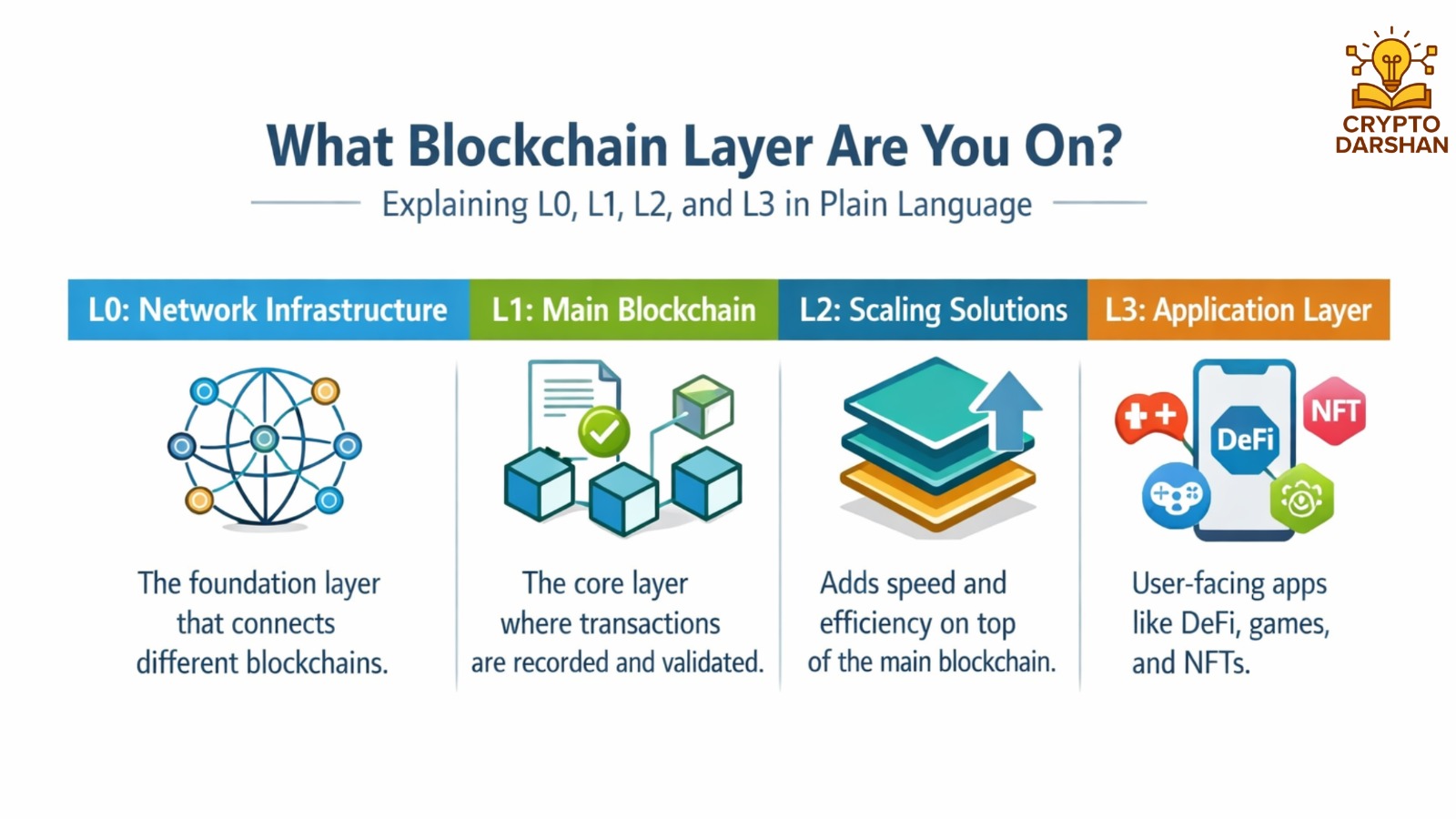
A Blockchain Layer is like a level in a digital architecture. Each layer adds new capabilities or solves specific problems that earlier layers cannot handle alone. Together, these layers form the foundation of blockchain ecosystems.
- Layer 0 (L0): The base infrastructure that connects multiple blockchains.
- Layer 1 (L1): The main blockchain network where transactions occur.
- Layer 2 (L2): The scaling layer that improves speed and reduces costs.
- Layer 3 (L3): The application layer where users interact with decentralized apps.
Each Blockchain Layer plays a unique role, but they all depend on one another to create a complete and functional system.
Why Blockchain Layers Matter
The concept of the Blockchain Layer model helps developers and users understand how blockchain systems are built and how they can be improved. Without layers, blockchains would struggle to scale, communicate, or support complex applications.
Key reasons why Blockchain Layers are important:
- Scalability: Layers help blockchains handle more transactions efficiently.
- Interoperability: Different blockchains can communicate through shared infrastructure.
- Security: Each layer adds protection against attacks and data manipulation.
- Innovation: Developers can build new tools and apps without changing the core blockchain.
- User Experience: Layers make blockchain technology faster, cheaper, and easier to use.
By dividing responsibilities across multiple Blockchain Layers, the ecosystem becomes more flexible and sustainable.
The Evolution of Blockchain Layers
The evolution of Blockchain Layers shows how blockchain technology has grown from a simple digital ledger into a complex, multi-layered ecosystem that supports decentralized finance, gaming, governance, and more. Each stage of this evolution introduced new capabilities, solved existing problems, and expanded the capabilities of blockchains.
To understand this evolution, it helps to look at how each Blockchain Layer—from L1 to L3, and even L0—developed over time and why these layers became necessary.
The concept of Blockchain Layers has evolved as technology has matured.
- First Generation (L1): Focused on digital currency and security (Bitcoin).
- Second Generation (L1 + Smart Contracts): Introduced programmable logic (Ethereum).
- Third Generation (L2): Solved scalability and cost issues (Polygon, Lightning Network).
- Fourth Generation (L0 + L3): Focuses on interoperability and user experience (Polkadot, Cosmos, dApps).
This evolution shows how each Blockchain Layer builds upon the previous one, creating a more advanced and interconnected ecosystem.
Layer 0 (L0): The Foundation of Blockchain Networks

What Is Layer 0?
Layer 0 is the base Blockchain Layer that supports the creation and connection of multiple blockchains. It prLayer-0 protocols form the foundation upon which Layer-1 blockchains are constructed. They serve as the infrastructure for blockchain networks and applications, aiming to address industry issues such as scalability and enabling interoperability between blockchains Think of it as the “internet” of blockchains—a network of networks.
Key Functions of Layer 0
- Interoperability: L0 connects different blockchains, allowing them to exchange information and assets.
- Security Framework: It provides shared security for all connected blockchains.
- Consensus Mechanisms: L0 defines how nodes agree on transactions across multiple chains.
- Network Communication: It ensures smooth data transfer between blockchains.
Examples of Layer 0 Blockchains
- Polkadot: Connects multiple blockchains (parachains) through a central relay chain.
- Cosmos: Uses the Inter-Blockchain Communication (IBC) protocol to link independent blockchains.
- Avalanche Subnets: Allow developers to create custom blockchains that share a common infrastructure.
Why Layer 0 Matters
Without Layer 0, blockchains would remain isolated systems. The Blockchain Layer at this level enables collaboration, scalability, and innovation across the entire ecosystem. It’s the foundation that makes multi-chain environments possible.
Layer 1 (L1): The Core Blockchain
What Is Layer 1?
Layer 1 is the main Blockchain Layer where transactions are recorded and validated. It’s the base blockchain protocol that defines how the network operates. Bitcoin, Ethereum, and Solana are examples of Layer 1 blockchains.
Key Functions of Layer 1
- Transaction Processing: Handles the creation, validation, and recording of transactions.
- Consensus Mechanisms: Uses Proof of Work (PoW), Proof of Stake (PoS), or other systems to secure the network.
- Smart Contracts: Enables programmable logic for decentralized applications.
- Native Tokens: Issues the main cryptocurrency used for payments and governance.
Examples of Layer 1 Blockchains
- Bitcoin (BTC): The first and most secure Layer 1 blockchain focused on digital currency.
- Ethereum (ETH): A programmable blockchain that supports smart contracts and dApps.
- Solana (SOL): A high-speed blockchain designed for scalability and low fees.
- Cardano (ADA): A research-driven blockchain emphasizing sustainability and security.
Challenges of Layer 1
While Layer 1 blockchains are powerful, they face limitations:
- Scalability Issues: High transaction volumes can slow down the network.
- High Fees: Congestion leads to expensive transaction costs.
- Energy Consumption: Some consensus mechanisms require significant energy.
These challenges led to the creation of the next Blockchain Layer—Layer 2.
Layer 2 (L2): The Scaling Solution

What Is Layer 2?
Layer 2 is a secondary Blockchain Layer built on top of Layer 1 to improve performance. It processes transactions off-chain or in parallel, reducing the load on the main blockchain. Layer 2 solutions are designed to solve scalability issues, which also directly impact the cost and performance of decentralized applications being built on top of these networks.
Key Functions of Layer 2
- Scalability: Increases transaction speed and capacity.
- Cost Reduction: Lowers transaction fees by handling operations off-chain.
- Security Integration: Maintains the security of Layer 1 while improving efficiency.
- User Experience: Enables faster and cheaper interactions for users.
Examples of Layer 2 Solutions
- Lightning Network (Bitcoin): Enables instant, low-cost Bitcoin transactions.
- Polygon (Ethereum): A sidechain that scales Ethereum’s ecosystem.
- Arbitrum and Optimism: Rollup solutions that bundle transactions before sending them to Layer 1.
- zkSync: Uses zero-knowledge proofs for secure and efficient scaling.
How Layer 2 Works
Layer 2 solutions process transactions off the main chain and then send summaries or proofs back to Layer 1. This reduces congestion and improves performance without compromising security.
Why Layer 2 Matters
Layer 2 is essential for mass adoption. It allows Blockchain Layers to handle millions of users and applications efficiently. Without it, blockchain networks would remain slow and expensive.
Layer 3 (L3): The Application Layer

What Is Layer 3?
Layer 3 is the top Blockchain Layer where users interact with decentralized applications (dApps). It’s the interface between blockchain technology and real-world use cases.
Key Functions of Layer 3
- User Interaction: Provides the front-end experience for blockchain applications.
- Application Logic: Hosts dApps, games, marketplaces, and DeFi platforms.
- Integration: Connects blockchain data with external systems through APIs and oracles.
- Customization: Allows developers to build unique user experiences on top of blockchain infrastructure.
Examples of Layer 3 Applications
- Uniswap: A decentralized exchange built on Ethereum.
- Axie Infinity: A blockchain-based game using NFTs.
- Aave: A decentralized lending platform.
- OpenSea: A marketplace for digital collectibles and NFTs.
Why Layer 3 Matters
Layer 3 brings blockchain technology to life. It’s where innovation meets usability, allowing people to interact with decentralized systems without needing technical knowledge. This Blockchain Layer transforms blockchain from a technical tool into a user-friendly ecosystem.
How the Blockchain Layers Work Together

The Blockchain Layer model is designed like a digital ecosystem where each layer performs a specific role but depends on the others to function effectively. Each Blockchain Layer contributes to the overall performance, security, and usability of the network.
1. Layer 0: The Foundation and Connectivity Layer
Layer 0 is the base Blockchain Layer that connects and supports multiple blockchains. It provides the infrastructure that allows different networks to communicate and share data.
- Role in the System:
Layer 0 acts as the foundation for all other layers. It ensures that blockchains built on top of it can interact, exchange assets, and share security.
- How It Interacts with Other Layers:
- It connects multiple Layer 1 blockchains, allowing them to operate within a shared ecosystem.
- It provides the communication channels that Layer 1 and Layer 2 use to exchange information.
- It ensures interoperability, meaning assets and data can move freely between different blockchains.
Without Layer 0, each blockchain would exist in isolation, unable to share data or collaborate with others.
2. Layer 1: The Core Blockchain Layer
Layer 1 is the main Blockchain Layer where transactions are recorded, validated, and secured. It’s the foundation of decentralized trust and the base upon which other layers build.
- Role in the System:
Layer 1 provides the core functionality of blockchain—security, consensus, and transaction validation. It ensures that all data stored on the blockchain is accurate and tamper-proof.
- How It Interacts with Other Layers:
- It relies on Layer 0 for connectivity and interoperability with other blockchains.
- It provides the security framework that Layer 2 solutions depend on.
- It stores the final transaction records that originate from Layer 2 or Layer 3 activities.
Layer 1 is like the “main road” of the blockchain city—everything eventually connects back to it for verification and security.
3. Layer 2: The Scaling and Efficiency Layer
Layer 2 is built on top of Layer 1 to improve performance. It processes transactions off-chain or in parallel, reducing congestion and costs on the main blockchain.
- Role in the System:
Layer 2 enhances scalability and speed without compromising the security of Layer 1. It allows more users and applications to operate efficiently.
- How It Interacts with Other Layers:
- It uses Layer 1 for final settlement and security verification.
- It communicates with Layer 3 applications to provide faster and cheaper transactions.
- It depends on Layer 0 for cross-chain communication when interacting with other networks.
Layer 2 acts like a high-speed expressway built above the main road (Layer 1), allowing traffic to move faster while still connecting to the main network.
4. Layer 3: The Application and User Interaction Layer
Layer 3 is the top Blockchain Layer where users interact with decentralized applications (dApps), games, and financial platforms. It’s the layer that brings blockchain technology to life for everyday users.
- Role in the System:
Layer 3 provides the interface and functionality that make blockchain accessible. It’s where developers build applications that use the underlying blockchain infrastructure.
- How It Interacts with Other Layers:
- It relies on Layer 2 for fast and affordable transactions.
- It depends on Layer 1 for security and data integrity.
- It may use Layer 0 to connect with applications or assets on other blockchains.
Layer 3 is like the “city life” of the blockchain ecosystem, where people live, work, and interact using the infrastructure built by the lower layers. As blockchain layers become more advanced, the ecosystem is evolving into a multi-chain environment where different networks and layers interact seamlessly.
Comparing the Blockchain Layers

| Layer | Purpose | Examples | Key Benefit |
| L0 | Infrastructure and interoperability | Polkadot, Cosmos | Connects multiple blockchains |
| L1 | Core blockchain network | Bitcoin, Ethereum | Security and decentralization |
| L2 | Scaling and efficiency | Polygon, Arbitrum | Faster and cheaper transactions |
| L3 | Applications and user interface | Uniswap, OpenSea | Real-world usability |
This table shows how each Blockchain Layer contributes to the overall system, ensuring that blockchain technology remains adaptable and efficient.
Benefits of the Layered Blockchain Model

- Efficiency: Each Blockchain Layer handles specific tasks, improving overall performance.
- Flexibility: Developers can innovate without disrupting the core blockchain.
- Security: Layered architecture enhances protection against attacks.
- Scalability: Layers like L2 allow networks to handle more users and transactions.
- Interoperability: L0 connects different blockchains, enabling cross-chain communication.
The layered model ensures that blockchain technology can grow and adapt to new challenges.
Challenges Across Blockchain Layers

While the Blockchain Layer model offers many advantages, it also faces challenges:
- Complexity: Multiple layers can make systems harder to understand and maintain.
- Interoperability Risks: Cross-chain communication can introduce vulnerabilities.
- Centralization Concerns: Some L2 or L3 solutions rely on centralized components.
- User Confusion: Non-technical users may struggle to understand how layers interact.
Addressing these challenges is key to building a more accessible and secure blockchain ecosystem.
The Future of Blockchain Layers

The future of the Blockchain Layer model lies in greater integration, automation, and user accessibility. Emerging trends include:
- Cross-Chain Ecosystems: Seamless communication between multiple blockchains.
- Modular Blockchains: Customizable layers that developers can mix and match.
- Zero-Knowledge Technology: Enhancing privacy and scalability across layers.
- AI Integration: Automating governance and optimization within blockchain systems.
- User-Friendly Interfaces: Simplifying interaction with complex blockchain layers.
As these innovations develop, the Blockchain Layer structure will continue to evolve, making blockchain technology more powerful and accessible.
Real-World Applications of Blockchain Layers
Finance and DeFi
Layer 1 and Layer 2 blockchains power decentralized finance platforms that allow users to lend, borrow, and trade without intermediaries.
Gaming and NFTs
Layer 3 applications use blockchain to create digital ownership and in-game economies.
Supply Chain Management
Layer 1 and Layer 2 solutions track goods and verify authenticity across global supply chains.
Governance and DAOs
Layer 3 applications enable decentralized governance, allowing citizens to vote and manage resources transparently. Each Blockchain Layer contributes to these real-world applications, ensuring that blockchain technology continues to expand beyond cryptocurrency.
FAQ: Blockchain Layers Explained (L0, L1, L2, L3)

1. What are blockchain layers in simple terms?
Blockchain layers explained simply refer to the different levels of infrastructure that make blockchain systems work. Each layer—L0, L1, L2, and L3—has a specific role, from core infrastructure to user-facing applications.
2. What is Layer 0 (L0) in blockchain?
Layer 0 is the foundational infrastructure that supports multiple blockchains. It enables interoperability and communication between different networks, forming the base of the blockchain ecosystem.
3. What is Layer 1 (L1) in blockchain?
Layer 1 is the main blockchain itself where transactions are processed and recorded. Popular examples include Bitcoin and Ethereum. This is where consensus mechanisms like Proof of Work or Proof of Stake operate.
4. What is Layer 2 (L2) and why is it important?
Layer 2 solutions are built on top of Layer 1 to improve scalability and reduce transaction costs. They handle transactions off the main chain and then settle them back on L1, making the network faster and more efficient.
5. What is Layer 3 (L3) in blockchain?
Layer 3 is the application layer where users interact with blockchain through decentralized applications (dApps). This includes wallets, games, DeFi platforms, and other user-facing services.
6. Why is understanding blockchain layers important?
Understanding blockchain layers explained helps users and developers see how different technologies work together to improve performance, scalability, and usability across the ecosystem.
7. How do L0, L1, L2, and L3 work together?
Each layer builds on the one below it: L0 provides infrastructure, L1 ensures security and consensus, L2 improves scalability, and L3 delivers user-friendly applications. Together, they create a complete blockchain ecosystem.
8. Are Layer 2 solutions better than Layer 1?
Layer 2 solutions are not replacements but enhancements. They rely on Layer 1 for security while offering faster and cheaper transactions, making both layers essential.
Conclusion
The concept of the Blockchain Layer model L0, L1, L2, and L3 explains how blockchain technology functions as a multi-level system. Each layer has a distinct role: L0 connects networks, L1 secures transactions, L2 scales performance, and L3 delivers user applications.
Together, these Blockchain Layers create a powerful digital ecosystem that is secure, scalable, and user-friendly. Understanding how each Blockchain Layer works helps developers, investors, and users navigate the blockchain world with confidence.
As blockchain technology continues to evolve, the layered model will remain essential for building the decentralized systems of the future. The Blockchain Layer approach ensures that innovation, security, and accessibility grow hand in hand, paving the way for a more connected and efficient digital world.