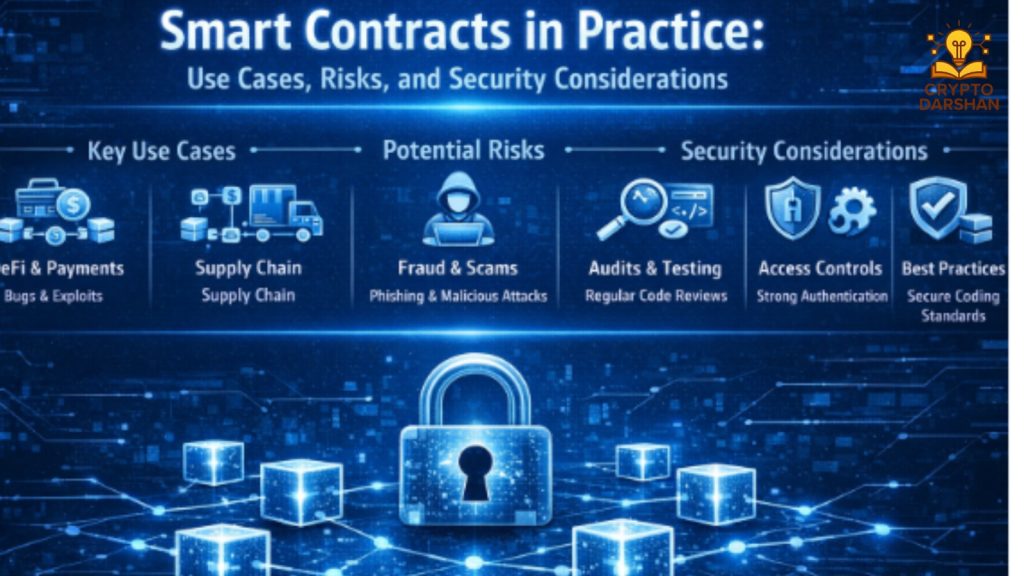
Smart contracts use cases are revolutionizing industries by enabling automated, trustable agreements on blockchains. The rise of blockchain technology has transformed how digital transactions and agreements are executed. Among its most revolutionary innovations are smart contracts, self-executing programs that automatically enforce the terms of an agreement without intermediaries. These digital contracts have become a cornerstone of decentralized applications (dApps), decentralized finance (DeFi), and various blockchain-based ecosystems.
Smart contracts promise transparency, efficiency, and trustless automation. However, they also introduce new challenges, including coding vulnerabilities, legal ambiguities, and security risks. Understanding how smart contracts work, their real-world applications, and the associated risks is essential for businesses, developers, and investors navigating the blockchain landscape.
This article explores the practical use cases of smart contracts, their benefits, potential risks, and key security considerations to ensure safe and effective implementation.
What Are Smart Contracts?

A smart contract is a self-executing digital agreement written in code and stored on a blockchain. The contract automatically executes predefined actions when specific conditions are met. Unlike traditional contracts that rely on intermediaries such as lawyers or banks, smart contracts operate autonomously, ensuring trust and transparency through blockchain’s immutable ledger.
Key Characteristics of Smart Contracts
- Automation: Once deployed, smart contracts execute automatically without human intervention.
- Transparency: All participants can view the contract’s code and transaction history.
- Immutability: Once recorded on the blockchain, the contract cannot be altered.
- Trustless Execution: Parties do not need to trust each other; they trust the code.
- Cost Efficiency: Eliminates intermediaries, reducing transaction and administrative costs.
How Smart Contracts Work?

Smart contracts follow an if/when–then logic that is written into code on a blockchain. A network of computers executes the actions when predetermined conditions are met and verified. For example:
- If a buyer sends cryptocurrency to a seller’s address,
- Then the smart contract automatically transfers ownership of a digital asset to the buyer.
These contracts are deployed on blockchain platforms such as Ethereum, Binance Smart Chain, Solana, and Polygon, which support programmable logic through languages like Solidity, Vyper, or Rust.
Real-World Use Cases of Smart Contracts

Smart contracts have moved beyond theoretical concepts to practical applications across multiple industries. Below are some of the most impactful use cases.
- Decentralized Finance (DeFi)
DeFi is one of the most prominent sectors leveraging smart contracts. It replaces traditional financial intermediaries with decentralized protocols.
Examples:
- Lending and Borrowing: Platforms like Aave and Compound use smart contracts to automate loans. Borrowers deposit collateral, and lenders earn interest all managed by code.
- Decentralized Exchanges (DEXs): Uniswap and SushiSwap use smart contracts to facilitate peer-to-peer token swaps without centralized control.
- Yield Farming and Staking: Smart contracts distribute rewards automatically based on user participation.
Benefits:
- Reduced costs and faster transactions
- Transparent and auditable financial operations
- Global accessibility without banking restrictions
2.Supply Chain Management
Smart contracts enhance transparency and traceability in supply chains by recording every transaction and movement of goods on a blockchain.
Applications:
- Product Tracking: Each stage of a product’s journey from manufacturing to delivery is recorded on-chain.
- Automated Payments: Payments are released automatically when goods reach specific checkpoints.
- Authenticity Verification: Prevents counterfeiting by verifying product origins.
Example:
IBM’s Food Trust platform uses blockchain and smart contracts to track food products, ensuring safety and authenticity from farm to table.
3. Real Estate Transactions

Smart contracts simplify property transactions by automating processes such as title transfers, escrow management, and rental agreements.
Use Cases:
- Tokenized Real Estate: Properties can be divided into digital tokens, allowing fractional ownership.
- Automated Escrow: Funds are released only when both parties meet contractual conditions.
- Rental Agreements: Rent payments and lease renewals can be automated through smart contracts.
Benefits:
- Reduced paperwork and administrative costs
- Faster property transfers
- Enhanced transparency and fraud prevention
4.Insurance Automation
Insurance companies use smart contracts to automate claim processing and payouts, reducing delays and disputes.
Example:
Parametric insurance models use smart contracts to trigger payouts automatically based on external data (e.g., weather conditions, flight delays).
Benefits:
- Faster claim settlements.
- Reduced fraud through transparent execution.
- Lower administrative overhead.
5. Healthcare and Medical Records
Smart contracts can securely manage patient data, ensuring privacy and interoperability between healthcare providers.
Applications:
- Data Sharing: Patients can grant or revoke access to their medical records via smart contracts.
- Billing Automation: Insurance claims and payments can be processed automatically.
- Clinical Trials: Ensures transparency and integrity of research data.
Benefits:
- Enhanced data security.
- Improved patient control over personal information.
- Streamlined healthcare operations.
6. Gaming and NFTs
The gaming industry has embraced smart contracts to manage in-game assets, rewards, and non-fungible tokens (NFTs).
Use Cases:
- Ownership Verification: NFTs represent unique digital assets like skins, weapons, or collectibles.
- Play-to-Earn Models: Smart contracts distribute rewards automatically based on player achievements.
Example:
Games like Axie Infinity and Decentral use smart contracts to manage in-game economies and digital ownership.
7. Voting and Governance
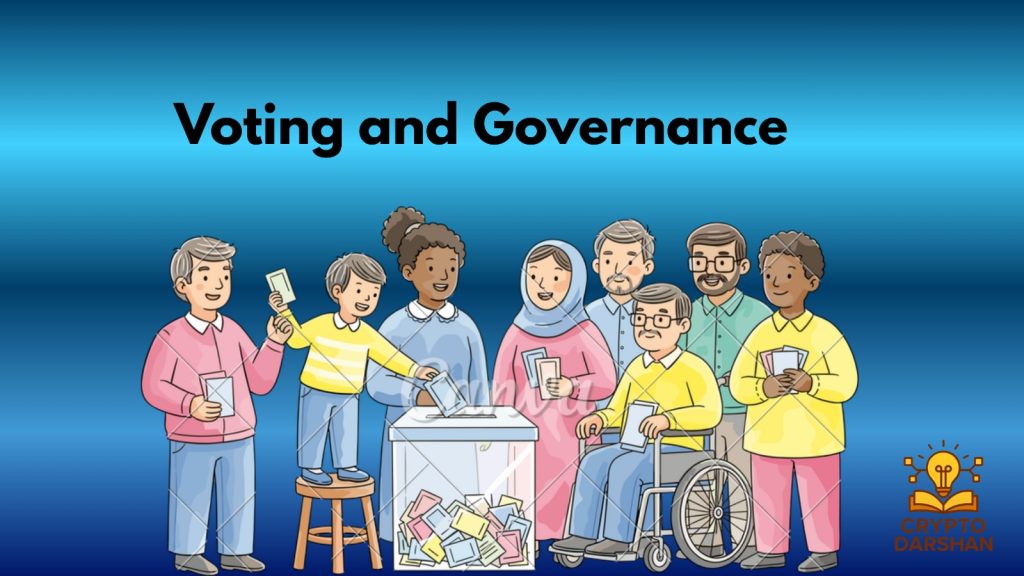
Smart contracts enable transparent and tamper-proof voting systems, both for political elections and decentralized governance.
Applications:
- DAO Governance: Decentralized Autonomous Organizations (DAOs) use smart contracts for community-driven decision-making.
- Secure Elections: Votes are recorded immutably on the blockchain, preventing manipulation.
Benefits:
- Increased transparency and trust
- Reduced risk of fraud
- Efficient and verifiable voting processes
8. Intellectual Property and Royalties
Smart contracts can automate royalty payments and protect intellectual property rights.
Use Cases:
- Music and Art Royalties: Artists receive automatic payments when their work is sold or streamed.
- Digital Rights Management: Ownership and usage rights are recorded on-chain.
Example:
Platforms like Audius and Royal use smart contracts to distribute music royalties directly to creators.
9. Cross-Border Payments
Smart contracts simplify international transactions by automating currency conversions and settlements.
Benefits:
- Reduced transaction fees
- Faster settlements compared to traditional banking systems
- Transparent and traceable transactions
10. Government and Public Sector

Governments can use smart contracts to improve transparency and efficiency in public services.
Applications:
- Land Registry: Automating property ownership records.
- Welfare Distribution: Ensuring funds reach intended recipients without intermediaries.
- Procurement: Transparent bidding and contract execution.
Benefits of Smart Contracts
- Efficiency: Automates repetitive tasks, reducing time and human error.
- Transparency: All transactions are visible and verifiable on the blockchain.
- Security: Cryptographic encryption ensures data integrity.
- Cost Reduction: Eliminates intermediaries and associated fees.
- Accuracy: Executes exactly as programmed, minimizing disputes.
- Global Accessibility: Enables borderless transactions and agreements.
Risks and Challenges of Smart Contracts
Despite their advantages, smart contracts are not without risks. Understanding these challenges is crucial for safe deployment.
1. Coding Vulnerabilities
Smart contracts are only as secure as their code. Bugs or logic errors can lead to significant financial losses.
Example:
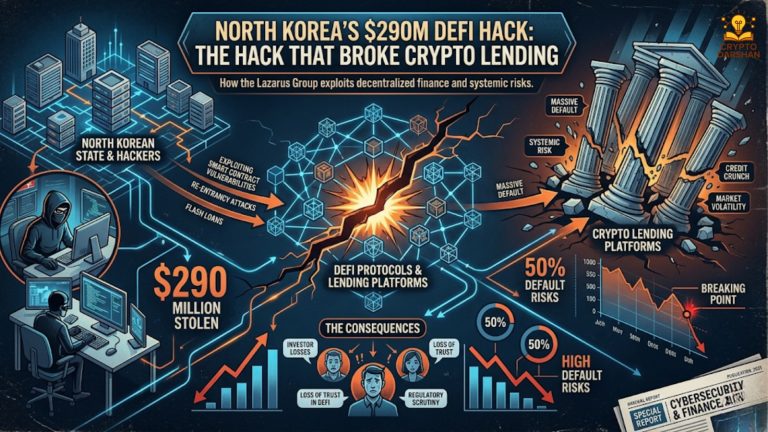
The 2016 DAO hack on Ethereum exploited a vulnerability in a smart contract, resulting in the loss of millions of dollars.
Mitigation:
- Conduct thorough code audits.
- Use formal verification tools.
- Implement multi-signature authorization.
2. Irreversibility of Transactions

Once executed, smart contract transactions cannot be reversed. This immutability, while beneficial for transparency, can be problematic if errors occur.
Mitigation:
- Include fail-safe mechanisms.
- Use upgradeable contract frameworks.
- Test extensively before deployment
3. Legal and Regulatory Uncertainty
Smart contracts operate in a decentralized environment, often outside traditional legal frameworks.
Challenges:
- Jurisdictional ambiguity
- Lack of legal recognition in some countries
- Difficulty in dispute resolution
Mitigation:
- Combine smart contracts with traditional legal agreements.
- Stay updated with evolving regulations.
4. Oracle Problems
Smart contracts rely on external data sources (oracles) to execute certain conditions. If the oracle provides incorrect data, the contract may behave unexpectedly.
Mitigation:
- Use decentralized oracle networks like Chainlink.
- Implement multiple data sources for verification.
5. Scalability Issues
High transaction volumes can lead to network congestion and increased gas fees, especially on platforms like Ethereum.
Mitigation:
- Use Layer 2 scaling solutions (e.g., Optimism, Arbitrum)
- Explore alternative blockchains with higher throughput.
6. Privacy Concerns
While blockchain ensures transparency, it can also expose sensitive information.
Mitigation:
- Use privacy-focused blockchains (e.g., Zcash, Secret Network)
- Implement zero-knowledge proofs for confidential transactions.
7. Human Error in Deployment
Even minor mistakes during contract deployment can lead to irreversible consequences.
Mitigation:
- Conduct multiple tests runs on testnets
- Use standardized templates and libraries.
Poorly written or unaudited smart contracts can be exploited, leading to massive financial losses. Many real-world exploits stem from tactics similar to those discussed in Common Crypto Scams Explained and How to Protect Your Assets, where attackers take advantage of user trust and weak security practices.
Security Considerations for Smart Contracts
Security is paramount in smart contract development. A single vulnerability can compromise entire systems and result in substantial losses.
1. Code Auditing
Independent audits by experienced security firms help identify vulnerabilities before deployment. Regular audits are essential, especially for contracts handling large funds.
2. Formal Verification
Formal verification mathematically proves that a contract’s logic aligns with its intended behavior, reducing the risk of unexpected outcomes.
3. Use of Established Frameworks
Using well-tested frameworks like OpenZeppelin ensures bond to best practices and reduces the likelihood of introducing vulnerabilities.
4. Multi-Signature Wallets
Requiring multiple approvals for critical transactions adds an extra layer of security, preventing unauthorized actions.
5. Time Locks
Time locks delay contract execution, allowing time to detect and prevent malicious activities.
6. Bug Bounty Programs
Encouraging ethical hackers to identify vulnerabilities through bounty programs enhances overall security.
7. Upgradeable Contracts
Using proxy patterns allows developers to update contract logic without altering the original address, enabling bug fixes and feature enhancements.
8. Secure Oracle Integration
Integrating decentralized oracles ensures reliable external data feeds, minimizing manipulation risks.
The Future of Smart Contracts

The future of smart contracts looks promising as blockchain technology continues to evolve and gain mainstream adoption. These digital agreements are expected to become more powerful, flexible, and integrated into everyday systems.
1. Wider Adoption Across Industries
Smart contracts will move beyond finance and crypto into sectors like healthcare, real estate, logistics, and government services. For example, hospitals could use them to manage patient data securely, while governments could automate welfare distribution or land registration.
2. Cross-Chain Interoperability
Currently, most smart contracts operate within a single blockchain (like Ethereum). In the future, cross-chain smart contracts will allow seamless interaction between different blockchains. This means assets and data can move freely across networks, improving efficiency and collaboration between platforms.
3. Integration with Artificial Intelligence (AI)

AI-powered smart contracts could make autonomous decisions based on real-time data. For instance, an AI-integrated contract could adjust insurance premiums automatically based on user behavior or environmental conditions. This combination of AI and blockchain will create smarter, more adaptive systems.
4. Legal Recognition and Hybrid Contracts
Governments and legal institutions are beginning to recognize smart contracts as valid agreements. Future contracts may combine legal language with code, creating hybrid models that are both legally enforceable and automatically executable. This will bridge the gap between traditional law and digital automation.
5. Enhanced Security and Privacy
Future smart contracts will use advanced cryptographic techniques like zero-knowledge proofs to protect sensitive data while maintaining transparency. This will make them suitable for industries that require confidentiality, such as healthcare and finance.
6. Scalability and Lower Costs
With the development of Layer 2 solutions and more efficient blockchains, smart contracts will become faster and cheaper to execute. This will make them accessible to small businesses and individuals, not just large organizations.
7. Decentralized Governance and DAOs
Smart contracts will continue to power Decentralized Autonomous Organizations (DAOs), enabling communities to make collective decisions without central authorities. This could reshape how companies, charities, and even governments operate.
8. Mainstream Business Integration
Enterprises will increasingly integrate smart contracts into their workflows for supply chain management, compliance, and payments. As user interfaces become simpler, businesses will adopt blockchain technology without needing deep technical knowledge.
9. Sustainability and Green Blockchain Initiatives
Future smart contracts will likely run on energy-efficient blockchains, aligning with global sustainability goals. This will make blockchain technology more environmentally friendly and scalable.
10. Global Standardization
As adoption grows, international standards for smart contract development, auditing, and legal compliance will emerge. This will ensure interoperability, security, and trust across global systems.
Best Practices for Implementing Smart Contracts

Implementing smart contracts requires careful planning and attention to ensure security, efficiency, and reliability. Here are the key best practices explained simply:
1. Define Clear Objectives
Know exactly what problem your smart contract will solve. A clear purpose helps you design accurate logic and avoid unnecessary complexity.
2. Choose the Right Blockchain
Select a platform that fits your needs Ethereum for flexibility, Polygon for low fees, or Solana for speed. The right choice affects cost, performance, and scalability.
3. Write Clean and Simple Code
Keep your code easy to read and understand. Complex logic increases the risk of bugs and vulnerabilities. Use standard libraries and frameworks like OpenZeppelin for reliability.
4. Test Thoroughly
Always test your contract on a testnet before deploying it on the main blockchain. Simulate different scenarios to ensure it behaves as expected.
5. Conduct Security Audits
Have independent experts review your code for vulnerabilities. Regular audits are essential, especially for contracts handling large amounts of money.
6. Plan for Upgrades
Once deployed, smart contracts are hard to change. Use upgradeable contract patterns or proxy designs to allow future improvements or bug fixes.
7. Use Multi-Signature and Time Locks
Add extra security layers by requiring multiple approvals for critical actions and using time delays to prevent rushed or malicious transactions.
8. Integrate Reliable Oracles
If your contract depends on external data (like prices or weather), use decentralized oracles such as Chain link to ensure accurate and tamper-proof information.
9. Ensure Legal Compliance
Understand the legal implications of your contract. Align it with local laws and regulations, especially if it involves financial or personal data.
10. Maintain Transparency and Documentation
Document your contract’s purpose, logic, and functions clearly. Transparency builds trust among users and helps auditors or developers understand your system.
Conclusion
Smart contracts represent a paradigm shift in how agreements are executed and enforced. By combining automation, transparency, and security, they eliminate the need for intermediaries and foster trust in digital ecosystems. From finance and real estate to healthcare and governance, their applications are vast and transformative.
However, with great potential comes significant responsibility. Developers and organizations must prioritize security, conduct thorough audits, and remain vigilant about evolving risks and regulations. As technology advances, smart contracts will continue to redefine industries, paving the way for a more efficient, transparent, and decentralized future.