
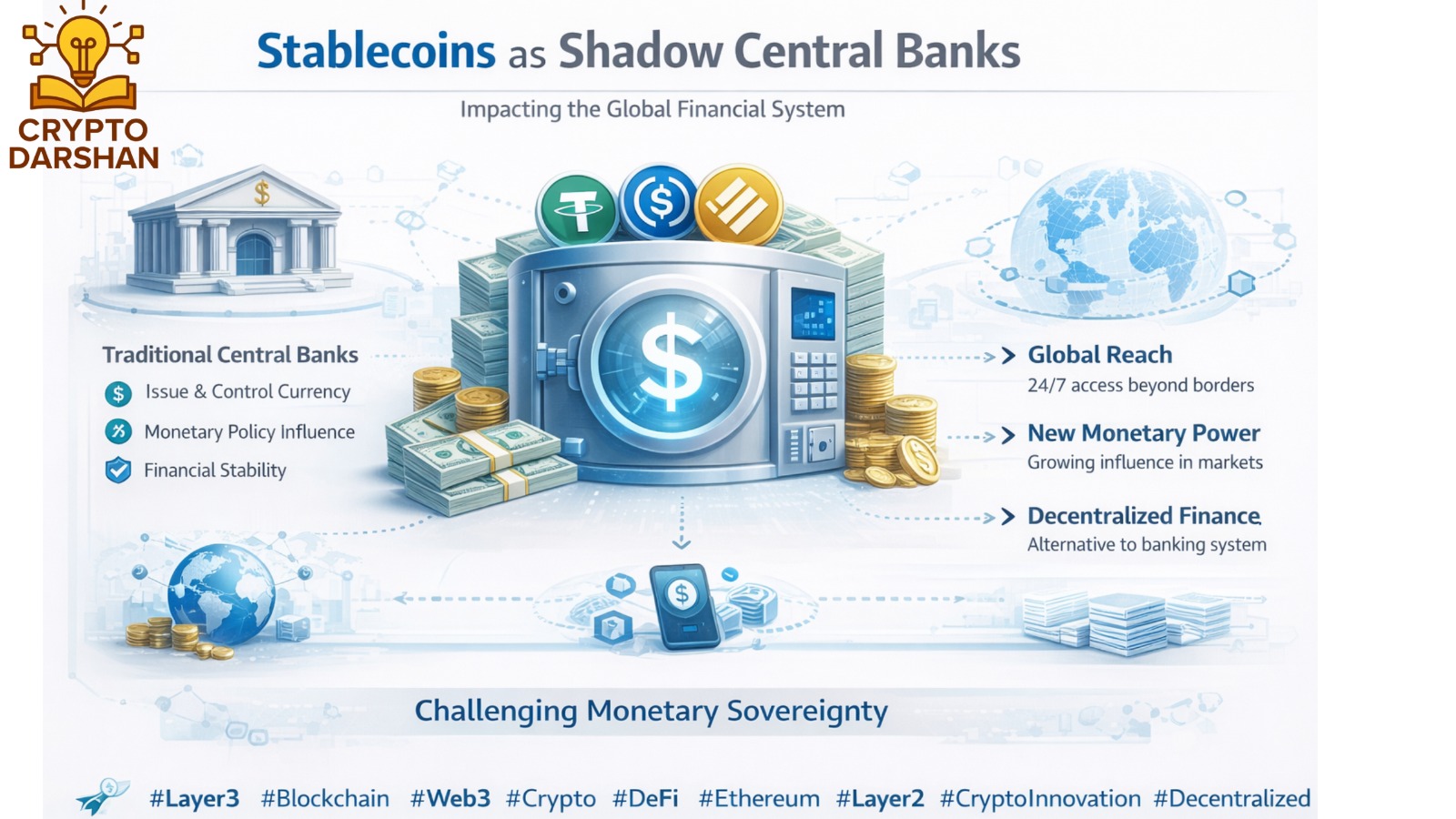
Stablecoins as shadow central banks provide crypto assets pegged to fiat currencies, offering stability and liquidity akin to central bank money but without state backing or full regulation. The rise of stablecoins has transformed the global financial landscape. Originally designed to bridge the gap between traditional finance and the volatile world of cryptocurrencies, stablecoins have evolved into powerful instruments that influence liquidity, monetary policy, and cross-border transactions. Their growing role has sparked debates among economists, regulators, and policymakers, who now view them as potential “shadow central banks.”
This article explores how stablecoins function, their economic implications, and why they are increasingly being compared to central banks. It also examines the risks, opportunities, and regulatory challenges that come with their rapid adoption.
Understanding Stablecoins
What Are Stablecoins?

Stablecoins, which can be found through top crypto exchanges, are designed to bridge the gap between the unpredictability of popular cryptocurrencies like Bitcoin (BTC) and the stability required for everyday financial transactionsUnlike volatile cryptocurrencies such as Bitcoin or Ethereum, stablecoins aim to provide price stability, making them suitable for everyday transactions, remittances, and decentralized finance (DeFi) applications.
Types of Stablecoins
- Fiat-Collateralized Stablecoins
These are backed by reserves of fiat currency held in banks or custodial accounts. Each token is typically pegged 1:1 to a fiat currency. Examples include:- USDT (Tether)
- USDC (USD Coin)
- BUSD (Binance USD)
- Crypto-Collateralized Stablecoins
These are backed by other cryptocurrencies. To manage volatility, they are often over-collateralized. For instance:- DAI, issued by MakerDAO, is backed by Ethereum and other crypto assets.
- Algorithmic Stablecoins
These rely on algorithms and smart contracts to control supply and demand, maintaining price stability without direct collateral. Examples include:- UST (TerraUSD) before its collapse.
- FRAX, which uses a hybrid model combining collateral and algorithmic mechanisms.
- Commodity-Backed Stablecoins
These are pegged to tangible assets like gold or oil. Examples include:- PAX Gold (PAXG), backed by physical gold reserves.
The Economic Role of Stablecoins

Stablecoins have become essential in the digital economy. They serve as a bridge between traditional finance and decentralized systems, enabling seamless movement of value across borders and platforms.
1. Facilitating Liquidity in Crypto Markets
Stablecoins provide a stable medium of exchange within crypto markets. Traders use them to hedge against volatility, move funds quickly between exchanges, and participate in DeFi protocols without converting back to fiat.
Stablecoins are no longer limited to crypto trading—they are increasingly used for everyday transfers and savings across borders. This growing reliance is explored in detail in How Stablecoins Are Powering Global Crypto Adoption, where real-world use cases show how stablecoins are filling gaps left by traditional financial systems.
2. Enabling Cross-Border Payments
Traditional cross-border payments are slow and expensive. Stablecoins allow instant, low-cost transfers across borders, bypassing intermediaries like banks and remittance services. This has made them particularly popular in emerging markets where access to banking is limited.
3. Supporting Decentralized Finance (DeFi)
Stablecoins are the backbone of DeFi ecosystems. They are used for lending, borrowing, yield farming, and liquidity provision. Their stability allows users to interact with decentralized protocols without exposure to extreme price swings.
4. Acting as a Store of Value
In countries with unstable currencies or high inflation, stablecoins offer a digital alternative to holding foreign currencies. For example, in regions like Latin America and Africa, stablecoins pegged to the US dollar are increasingly used as a hedge against local currency depreciation.
Stablecoins as “Shadow Central Banks”
The phrase “Stablecoins as Shadow Central Banks” describes how stablecoin issuers, private companies, or decentralized protocols that create digital currencies pegged to stable assets are beginning to perform roles similar to those of traditional central banks, but without the same oversight, accountability, or policy mandates.
To understand this concept clearly, it’s important to first look at what central banks do, what stablecoins are, and how the two have started to overlap.
What Central Banks Do?
A central bank is the main monetary authority of a country. Its key functions include:
- Issuing currency – Central banks create and control the supply of national money (like the US dollar or the euro).
- Managing reserves – They hold and manage reserves of foreign currencies, gold, and government securities.
- Controlling monetary policy – They influence interest rates, inflation, and liquidity in the economy.
- Ensuring financial stability – Central banks act as lenders of last resort to prevent financial crises.
- Regulating payment systems – They oversee how money moves through the economy, ensuring trust and efficiency.
In short, central banks maintain the stability of a nation’s financial system.
What Stablecoins Are?

Stablecoins are digital currencies designed to maintain a stable value by being pegged to a reserve assetusually a fiat currency like the US dollar. For example, 1 USDT (Tether) or 1 USDC (USD Coin) is meant to always equal 1 USD.
There are different types of stablecoins:
- Fiat-backed stablecoins (like USDT, USDC): backed by cash or short-term government securities.
- Crypto-backed stablecoins (like DAI): backed by other cryptocurrencies, often over-collateralized.
- Algorithmic stablecoins: use algorithms to control supply and demand, maintaining the peg without direct collateral.
Stablecoins are widely used in cryptocurrency trading, decentralized finance (DeFi), and cross-border payments because they combine the stability of fiat money with the efficiency of blockchain technology.
How Stablecoins Resemble Central Banks?
Although stablecoin issuers are private entities, their operations increasingly mirror the functions of central banks. This is why they are often described as “shadow central banks.”
1. Issuing Digital Money
Just as central banks issue national currencies, stablecoin issuers create digital tokens that circulate globally. When users deposit fiat money, issuers mint new stablecoins; when users redeem them, issuers burn (destroy) tokens. This process directly affects the supply of digital money in circulation—similar to how central banks manage money supply.
For example, when demand for USDT increases, Tether mints more tokens, effectively expanding the digital money supply in crypto markets.
2. Managing Reserves
Stablecoin issuers hold reserves to maintain their peg. These reserves often include cash, bank deposits, and short-term government securities like US Treasury bills. Managing these reserves is similar to how central banks manage their foreign exchange and gold reserves.
The scale of these reserves is significant. For instance, Tether holds tens of billions of dollars in US Treasuries comparable to the holdings of some small national central banks. This means stablecoin issuers can influence short-term interest rates and liquidity in traditional financial markets.
3. Influencing Liquidity and Credit
Stablecoins play a major role in providing liquidity to crypto markets. Traders and investors use them as a stable medium of exchange, collateral for loans, and a store of value. When stablecoin supply increases, liquidity in the crypto ecosystem expands similar to how central banks inject liquidity into the economy through monetary policy.
In decentralized finance (DeFi), stablecoins are used for lending, borrowing, and yield farming. This creates a parallel credit system outside traditional banking, another hallmark of shadow banking.
4. Operating Without Direct Regulation
Unlike central banks, stablecoin issuers are not bound by strict monetary policy frameworks or government oversight. They operate across borders, often taking advantage of regulatory gaps. This lack of centralized control allows them to act independently, but it also introduces risks such as lack of transparency, potential insolvency, or misuse of reserves.
This unregulated influence over money creation and liquidity is what makes them “shadow” institutions, powerful but outside the formal financial system.
5. Global Monetary Impact
Stablecoins are used worldwide, not limited by national borders. In countries with unstable currencies or high inflation, people often prefer holding stablecoins pegged to the US dollar. This gives stablecoin issuers indirect influence over global money flows and even local monetary conditions.
For example, if citizens in a developing country start using USDT instead of their national currency, the local central bank loses some control over its monetary policy. This phenomenon is known as “digital dollarization.”
Why the Term “Shadow Central Bank” Fits

The term “shadow central bank” draws from the concept of shadow banking, which refers to financial activities that perform bank-like functions (such as lending and borrowing) but occur outside traditional banking regulations.
Similarly, stablecoin issuers perform central bank-like functions, creating money, managing reserves, and influencing liquidity without being official monetary authorities. They operate in the “shadows” of the regulated financial system, yet their actions can have real economic consequences.
The Scale of Stablecoin Influence

Market Capitalization and Growth
The total market capitalization of stablecoins has grown from under $5 billion in 2018 to over $130 billion by 2026. This exponential growth highlights their increasing importance in global finance. The largest stablecoins USDT, USDC, and DAI dominate the market, collectively accounting for more than 90% of total supply.
Integration with Traditional Finance
Stablecoins are no longer confined to crypto exchanges. Financial institutions, fintech companies, and payment processors are integrating stablecoins into their systems. Visa and Mastercard have explored stablecoin settlements, while banks are experimenting with tokenized deposits.
Influence on Treasury Markets
Stablecoin issuers hold significant amounts of short-term US government debt. This demand can affect Treasury yields and liquidity. In essence, stablecoin issuers act as large institutional investors, similar to money market funds.
Risks and Challenges

While stablecoins offer efficiency and innovation, they also pose systemic risks that resemble those associated with shadow banking.
1. Lack of Transparency
Many stablecoin issuers have faced criticism for opaque reserve disclosures. Without clear audits, users cannot verify whether tokens are fully backed. This lack of transparency can lead to loss of confidence and potential runs on stablecoins.
2. Regulatory Arbitrage
Stablecoins operate across jurisdictions, often exploiting regulatory gaps. This creates challenges for authorities trying to enforce consistent standards for reserve management, consumer protection, and anti-money laundering (AML) compliance.
3. Financial Stability Risks
If a major stablecoin were to lose its peg or collapse, the ripple effects could destabilize crypto markets and even spill over into traditional finance. The collapse of TerraUSD in 2022 demonstrated how algorithmic stablecoins can trigger massive losses and contagion.
4. Concentration of Power
A few large issuers dominate the stablecoin market. This concentration gives them significant influence over liquidity and capital flows, raising concerns about monopolistic behavior and systemic importance.
5. Cybersecurity and Operational Risks
Stablecoins rely on blockchain infrastructure and smart contracts, which are vulnerable to hacks, bugs, and technical failures. A breach could compromise billions of dollars in assets.
Regulatory Responses
Governments and regulators worldwide are grappling with how to oversee stablecoins without stifling innovation.
1. United States
The US has proposed several frameworks for stablecoin regulation. The Stablecoin TRUST Act and Clarity for Payment Stablecoins Act aim to establish clear rules for reserve management, licensing, and consumer protection. The Federal Reserve has also expressed interest in monitoring stablecoin reserves due to their potential impact on monetary policy.
2. European Union
The Markets in Crypto-Assets (MiCA) regulation, set to take effect in 2024, introduces comprehensive rules for stablecoin issuers. It requires full reserve backing, transparency, and authorization from regulatory bodies.
3. Asia-Pacific
Countries like Singapore and Japan have adopted proactive approaches. Singapore’s Payment Services Act regulates stablecoin issuance and custody, while Japan’s Stablecoin Law mandates that only licensed banks and trust companies can issue stablecoins.
4. Emerging Markets
In developing economies, regulators face a dilemma. Stablecoins offer financial inclusion but also threaten monetary sovereignty. Some countries, like Nigeria, have restricted stablecoin use, while others, like Brazil, are exploring integration with central bank digital currencies (CBDCs).
Stablecoins vs. Central Bank Digital Currencies (CBDCs)
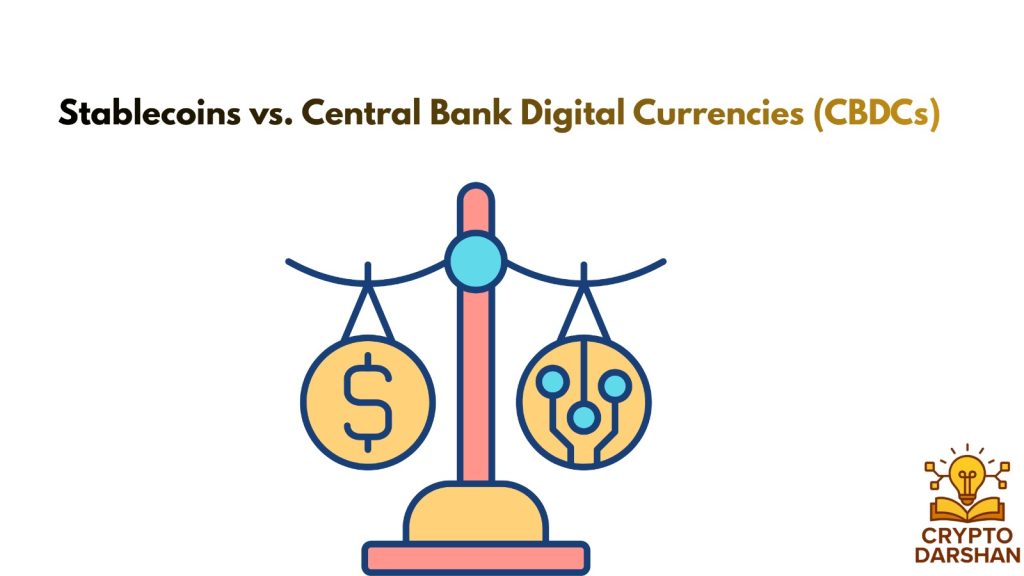
CBDCs are digital versions of national currencies issued by central banks. While both stablecoins and CBDCs aim to modernize payments, their structures and implications differ.
| Aspect | Stablecoins | CBDCs |
| Issuer | Private entities | Central banks |
| Backing | Fiat, crypto, or commodities | Sovereign currency |
| Regulation | Varies by jurisdiction | Fully regulated |
| Objective | Efficiency, innovation, profit | Monetary stability, inclusion |
| Risk | Counterparty and reserve risk | Minimal (state-backed) |
CBDCs could reduce reliance on private stablecoins by offering a government-backed digital alternative. However, stablecoins may continue to thrive in DeFi and cross-border applications where CBDCs face interoperability challenges.
Ethical and Societal Implications

1. Financial Inclusion
Stablecoins can democratize access to financial services, especially in regions with limited banking infrastructure. They enable participation in global markets using only a smartphone and internet connection.
2. Privacy vs. Surveillance
While stablecoins offer pseudonymity, regulators push for traceability to combat illicit finance. Balancing privacy and compliance remain a key challenge.
3. Monetary Sovereignty
Widespread stablecoin adoption could undermine national currencies, especially in smaller economies. Governments may lose control over monetary policy if citizens prefer stablecoins pegged to foreign currencies.
4. Ethical Reserve Management
Stablecoin issuers must ensure ethical investment of reserves. Using reserves to fund environmentally harmful or politically sensitive activities could raise moral concerns.
Case Studies

1. Tether (USDT)
Tether is the largest stablecoin by market capitalization. Despite controversies over reserve transparency, it remains the most widely used stablecoin in trading and remittances. Its influence on crypto liquidity is comparable to that of a central bank injecting liquidity into markets.
2. USD Coin (USDC)
Issued by Circle, USDC is known for regulatory compliance and transparency. It has gained institutional trust and is integrated into major payment systems. Circle’s reserve management practices mirror those of traditional financial institutions.
3. DAI
DAI represents a decentralized approach to stablecoins. Governed by MakerDAO, it is backed by crypto assets and maintained through smart contracts. DAI demonstrates how algorithmic governance can replicate central bank-like stability mechanisms without centralized control.
The Future of Stablecoins as Shadow Central Banks

1. Institutional Adoption
As financial institutions embrace blockchain technology, stablecoins could become integral to settlement systems, trade finance, and tokenized assets. Their role as digital cash equivalents will expand.
2. Integration with CBDCs
Hybrid models may emerge where stablecoins operate alongside CBDCs, providing flexibility and innovation while maintaining regulatory oversight.
As stablecoins continue to absorb payment and settlement activity, they increasingly compete with banks in both speed and accessibility. This shift is examined further in Stablecoins vs the Traditional Banking System, which explains how blockchain-based money is changing the role of financial intermediaries.
3. Enhanced Transparency and Regulation
Future regulations will likely mandate real-time reserve audits, standardized disclosures, and capital requirements. This could increase trust and stability in the ecosystem.
4. Programmable Money and Smart Contracts
Stablecoins will evolve into programmable money, enabling automated payments, conditional transfers, and integration with Internet of Things (IoT) systems. This will further blur the line between private and public money.
5. Global Monetary Influence
If stablecoins continue to grow, they could influence global liquidity and interest rates, effectively functioning as transnational monetary instruments. This would make them de facto shadow central banks with real economic power.
FAQ: Stablecoins as Shadow Central Banks

1. What does “stablecoins as shadow central banks” mean?
It refers to the growing role of stablecoin issuers in managing liquidity, issuing digital money, and influencing global payments functions traditionally handled by central banks. Unlike governments, stablecoin issuers operate privately but still impact monetary flows worldwide.
2. How are stablecoins similar to central banks?
Stablecoins resemble central banks by issuing currency, maintaining price stability, and providing liquidity during market demand. Large issuers like USDT and USDC indirectly influence global dollar circulation through their supply and redemption mechanisms.
3. Why are stablecoins called “shadow” central banks?
They are called “shadow” central banks because they perform monetary functions without formal government authority or public accountability. Despite this, they operate at scale and affect financial systems globally, often outside traditional regulatory frameworks.
4. Do stablecoin issuers control monetary supply?
Yes, stablecoin issuers can expand or contract supply based on demand, similar to how central banks manage money supply. However, this control is driven by market activity rather than macroeconomic policy decisions.
5. Are stablecoins backed like traditional fiat money?
Most major stablecoins are backed by reserves such as cash, treasury bills, or equivalents. Unlike fiat currencies backed by state authority, stablecoins rely on issuer transparency and reserve management to maintain trust.
6. Can stablecoins replace central banks?
Stablecoins are unlikely to fully replace central banks but may coexist alongside them. They serve as parallel financial systems, especially for cross-border payments and regions with weak banking infrastructure.
7. How do stablecoins affect global dollar dominance?
Stablecoins strengthen dollar dominance by extending access to USD-denominated value worldwide. In many countries, stablecoins function as digital dollars, increasing the global reach of the US financial system without direct government involvement.
8. Are stablecoins safe to use as digital money?
Stablecoin safety depends on factors such as reserve quality, regulatory oversight, and issuer governance. While they offer stability compared to volatile cryptocurrencies, they still carry risks not present in central bank-issued money.
9. How do regulators view stablecoins acting as shadow central banks?
Regulators increasingly recognize stablecoins as systemically important financial instruments. Many governments are introducing frameworks to supervise issuers, limit risks, and integrate stablecoins into existing financial systems.
Conclusion
Stablecoins have evolved far beyond their initial purpose as simple digital payment tools. They now perform functions that closely resemble those of central banks issuing money, managing reserves, and influencing liquidity. Their growing scale and influence make them critical players in the global financial system.
However, with great power comes great responsibility. The challenge lies in ensuring that stablecoins operate transparently, securely, and in harmony with existing monetary systems. As regulators, innovators, and policymakers navigate this new frontier, the line between private digital money and public monetary authority will continue to blur.
Stablecoins may not replace central banks, but they have already become their digital shadows, reshaping the future of money in ways the world is only beginning to understand.