

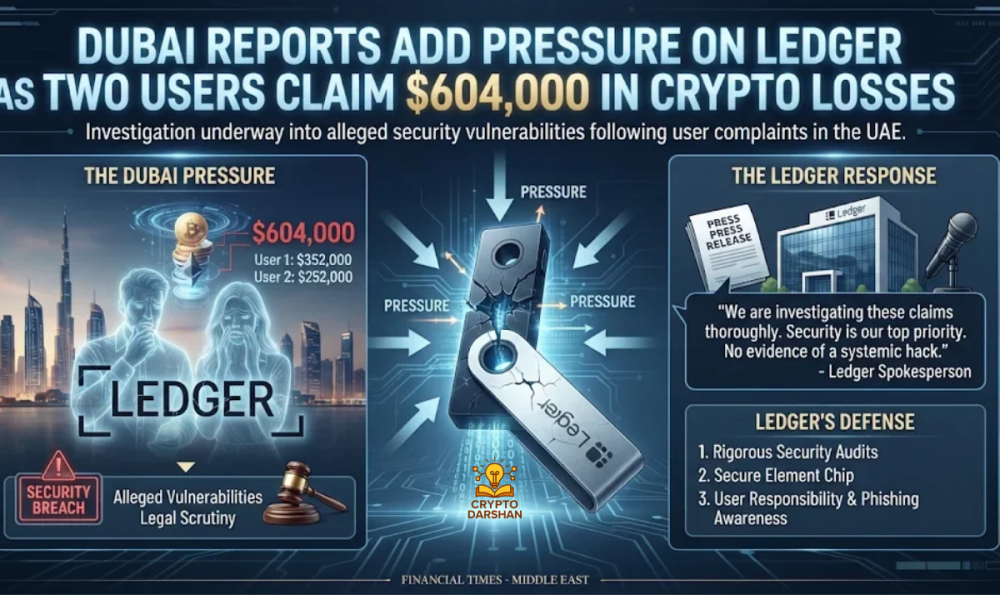
Two Ledger hardware wallet owners in Dubai have reported combined cryptocurrency losses of about $604,000, raising new concerns about tampered devices sold through authorized retail channels. One case involves a Ledger Flex with a suspected hardware implant, while the other involves a Ledger Stax linked to the theft of 507,000 USDT.
The reports come after similar incidents in Southeast Asia and Europe, where criminals allegedly bought genuine Ledger devices, added unauthorized components, and returned them to distribution channels. Ledger has described the issue as a localized distribution attack rather than a flaw in its original devices.
What the Dubai users reported
On November 15, an X user known as Rewinsky reported losing roughly 1,300 Solana tokens. The user later opened the Ledger Flex and shared photographs showing what appeared to be an additional circuit board and antenna inside the device’s back cover.
Security researcher and former Mt. Gox CEO Mark Karpelès documented the images in his Ledger Implant OSINT registry. He identified the added component as a V1.3 implant, the first version of that type recorded in a Ledger device by the registry.
Rewinsky later identified Virgin Megastore in Dubai as the retailer where the device was purchased. A second user, posting as New Babylon Order Worldwide, reported that 507,000 USDT was stolen from a Ledger Stax on November 14.
The second owner said the device was bought new at Virgin Megastore Dubai on October 11. The user also said the recovery phrase was generated on the device and had never been entered anywhere else.
Why the second case is unconfirmed
Unlike the Ledger Flex case, the Stax owner has not published photographs of the device’s internal components. That means the suspected tampering has not been independently confirmed.
The owner reported filing a police complaint and asked Tether to freeze the stolen stablecoins. As of the report, Dubai Police and the Virtual Assets Regulatory Authority had not publicly confirmed whether they were investigating either case.
Crypto.news contacted Ledger and Virgin Megastore for comment on the reported thefts, distribution arrangements, and possible compensation. Neither had responded by press time.
How a hardware implant works
A hardware implant is a hidden component added to a wallet after it leaves the manufacturer. In the earlier XRP cases, unauthorized parts could allegedly capture recovery words shown during device setup and transmit them over a cellular connection.
This is dangerous because the recovery phrase is the master key to a crypto wallet. Anyone who obtains it can restore the wallet on another device and move the funds without needing the original hardware wallet.
Ledger’s Genuine Check can confirm that a device is authentic, but it cannot verify the physical history of a device after it leaves the factory. That means a genuine Ledger with a later-added implant may pass the check.
Ledger’s response to earlier incidents
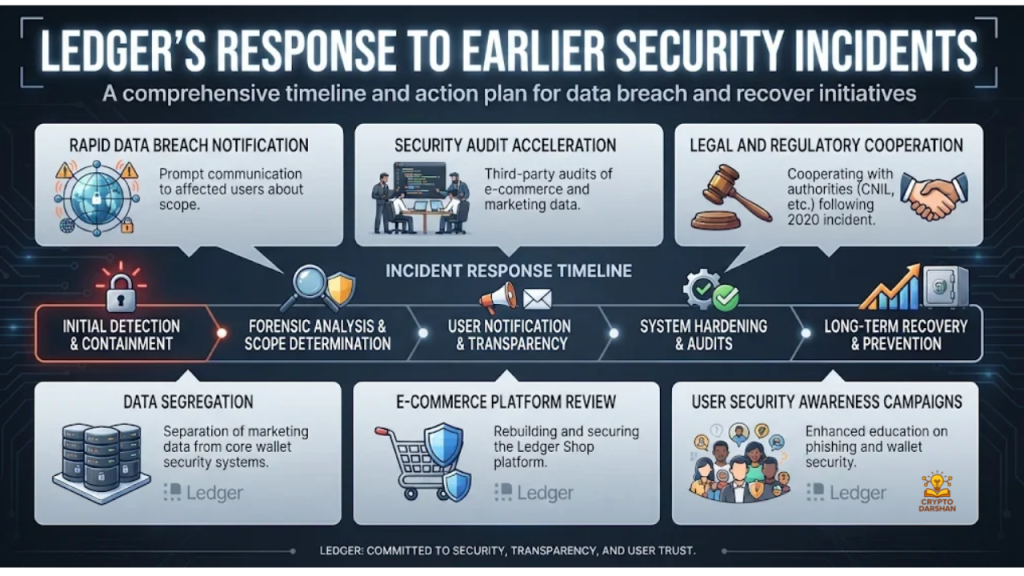
Ledger suspended sales in several markets in October after thefts involving modified Ledger devices bought from Southeast Asian resellers. The company said criminals had acquired genuine devices, installed unauthorized components, and returned them to distribution channels.
The company then tightened requirements for authorized distributors. Retailers were told to keep devices in secure storage until purchase rather than displaying them on open shelves.
Ledger also said returned products should not be resold, even if the packaging appears unopened. These steps aim to reduce the chance that a tampered device reaches a new customer.
What customers should do now
Anyone who bought a Ledger from a third-party retailer should treat the device cautiously until they can verify its source and condition. The safest approach is to buy directly from the manufacturer or an authorized retailer with strong supply-chain controls.
If a user suspects that a recovery phrase has been exposed, they should move remaining funds to a new wallet with a newly generated recovery phrase. Do not simply reset the old device, because that does not remove the risk if the phrase was captured.
Ledger advises customers who have lost funds to contact official support and local law enforcement before opening or sending away a potentially compromised device. Opening the device could affect evidence needed for an investigation.
The wider hardware wallet problem
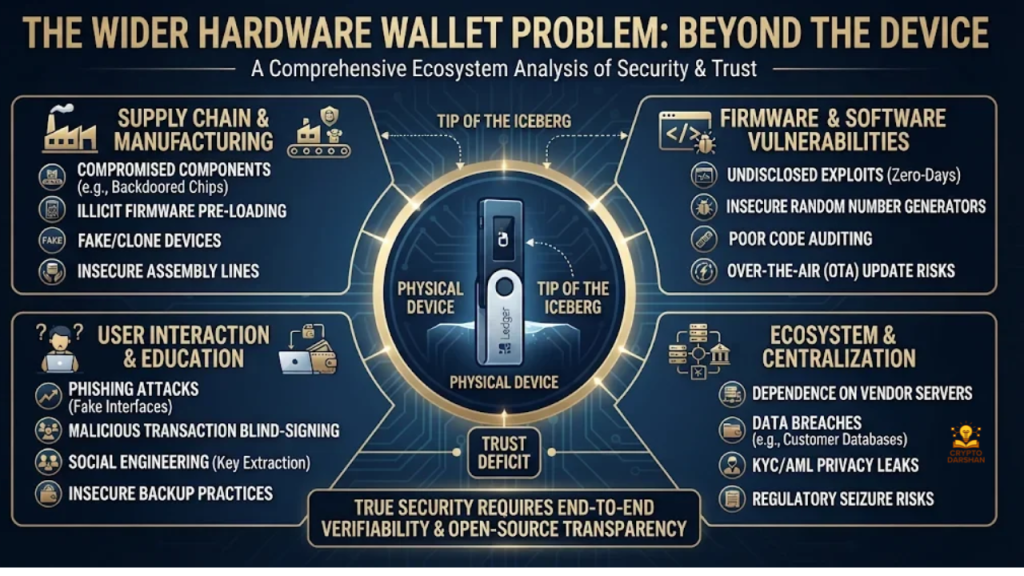
The issue is not limited to Ledger. Singapore police confirmed that at least two customers lost a combined S$3.5 million after buying modified Ledger wallets from local retailers.
European electronics retailer MediaMarkt Saturn also suspended Ledger sales after a reported hardware implant involving a customer in Germany. No financial loss was reported in that case.
Rival wallet maker Trezor found unauthorized components inside three Safe 5 devices purchased through CryptoBilis between August and September. After its investigation, Trezor reduced its reseller network by about 80% and tightened distribution requirements.
The bigger lesson for crypto users

A hardware wallet is only as secure as the device and the recovery phrase behind it. Even a genuine product can become dangerous if someone tampers with it after manufacturing.
Users should never buy hardware wallets from unverified marketplaces, accept devices that arrive already opened, or enter a recovery phrase into a website or app. They should also verify that a device is genuinely new, sealed, and purchased through a trusted channel.
The Dubai reports are still under investigation, and the exact point of tampering has not been established. But they show why crypto users need to focus not only on the wallet brand, but also on the entire supply chain that delivers the device to their hands.