
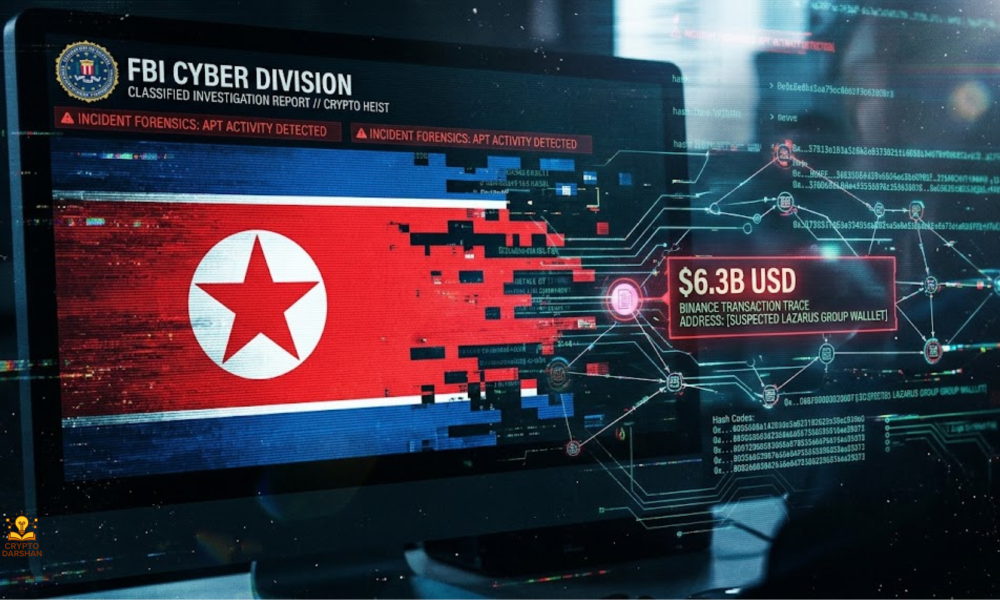
North Korea has rejected talks with the United States under current conditions, pointing to the FBI’s accusation that North Korean hackers carried out the $6.3 billion Binance breach. Kim Yo Jong, sister of North Korean leader Kim Jong Un, said Washington must first abandon what Pyongyang views as hostile policies before meaningful negotiations can resume.
The statement, carried by North Korea’s state-run Korean Central News Agency, escalated a dispute that began after U.S. investigators linked the October 29 Binance attack to the North Korean hacking group TraderTraitor.
Why North Korea rejected dialogue
Kim Yo Jong said the FBI’s attribution of the Binance hack showed what North Korea considers a continuing pattern of U.S. hostility. She described the accusation as part of Washington’s confrontation with Pyongyang and repeated North Korea’s denial of involvement.
On November 3, she had already rejected the FBI’s findings, calling the allegation a “grave political provocation.” In her November 4 statement, she said North Korea had no reason to negotiate with what she called unreliable and hostile counterparts.
She also cited joint U.S.-South Korean military drills, Washington’s push for North Korean denuclearization, and a recent diplomatic meeting involving Japan as further reasons for Pyongyang’s distrust.
Talks are not fully off the table
Although North Korea rejected discussions under the present circumstances, Kim left the door open for future diplomacy. She said dialogue remains part of the path to peace, but only if Washington changes policies that Pyongyang sees as threatening.
Her comments came amid speculation that U.S. President Donald Trump may seek another meeting with Kim Jong Un. Trump expressed interest in renewed talks in August, though North Korea had not publicly accepted the proposal at that time.
Trump and Kim met three times during Trump’s first presidential term, including a June 2019 meeting at the inter-Korean border. Those talks did not produce an agreement on North Korea’s nuclear weapons program.
FBI links Binance hack to TraderTraitor
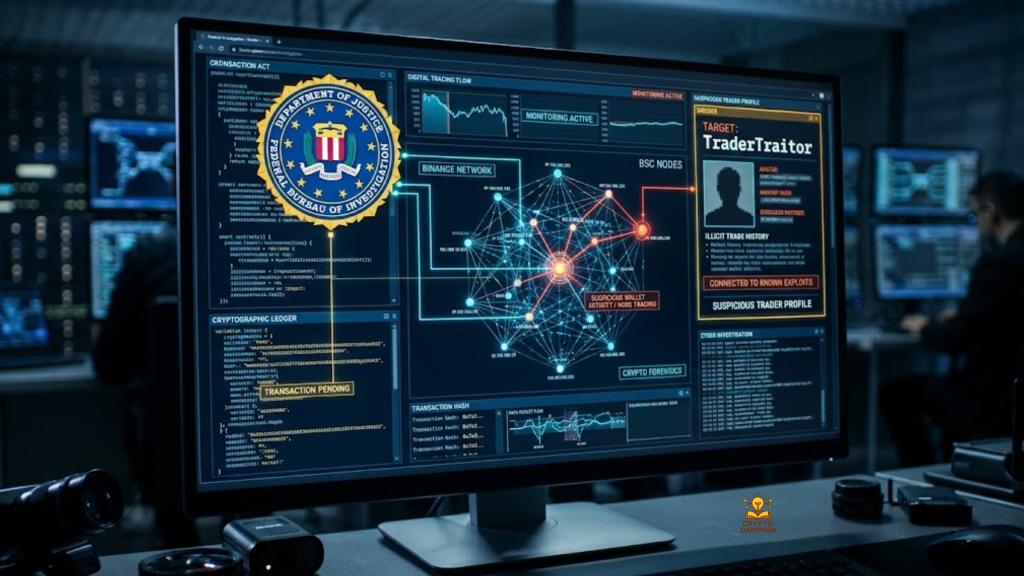
The FBI announced on October 31 that it attributed the October 29 Binance breach to TraderTraitor, a North Korean-linked cyber operation. Investigators said attackers stole more than $6 billion in cryptocurrency, making it the largest reported digital asset theft to date.
The investigation included the U.S. Secret Service and the Internal Revenue Service’s Criminal Investigation division. Authorities said the suspected attackers converted stolen cryptocurrencies mainly into Ethereum before moving the funds further.
The FBI warned that decentralized finance platforms and instant crypto exchanges could be used to launder the stolen assets. It urged exchanges, blockchain operators, and analytics companies to block transactions involving addresses tied to the suspected group.
Independent analysts supported the FBI’s assessment. TRM Labs attributed the attack to TraderTraitor with high confidence, while Chainalysis found links between the stolen Binance funds and assets connected to another North Korea-attributed breach.
Binance recovery reaches key milestone
Binance has worked with blockchain security firms and token issuers to limit the movement of stolen funds. The exchange estimated that about $6.3 billion was affected in the October 29 attack.
Through cooperation with industry partners and financial institutions, roughly $3 billion in assets had been frozen. Blockchain analytics firm Elliptic estimated that about $3.24 billion remained in addresses linked to the incident, mainly in Bitcoin and Ethereum.
Frozen assets may not be returned immediately. Investigators must continue tracing transactions across multiple blockchains, while recovery depends on cooperation from exchanges, issuers, and law enforcement.
Binance has also used company resources and emergency reserves to replace customer assets affected by the breach. By November 3, it had restored withdrawals across supported networks after saying that about 95% of affected assets had been replenished.
The Binance incident highlights how cybercriminals can exploit vulnerabilities and human error to gain access to digital assets. Understanding Common crypto scams can help users identify potential threats and take steps to protect their cryptocurrency holdings.
What this means for crypto security

The case highlights how a major exchange breach can quickly become a geopolitical issue. When stolen funds are linked to state-backed hacking groups, recovery efforts depend not only on blockchain tracing but also on international cooperation and sanctions enforcement.
For crypto users, the incident is another reminder that exchange security and rapid incident response matter. Binance’s ability to freeze a large share of the stolen assets shows why coordinated action between exchanges, analytics firms, and regulators is essential.
For now, the dispute has added a new obstacle to U.S.-North Korea diplomacy. Pyongyang says talks are possible only after Washington changes its approach, while U.S. investigators continue tracking billions of dollars in stolen crypto across the blockchain
Large-scale exchange breaches raise important questions about the security of cryptocurrency platforms and the protection of user funds. Read our guide on whether crypto is safe to understand the risks associated with digital asset investments and storage.