
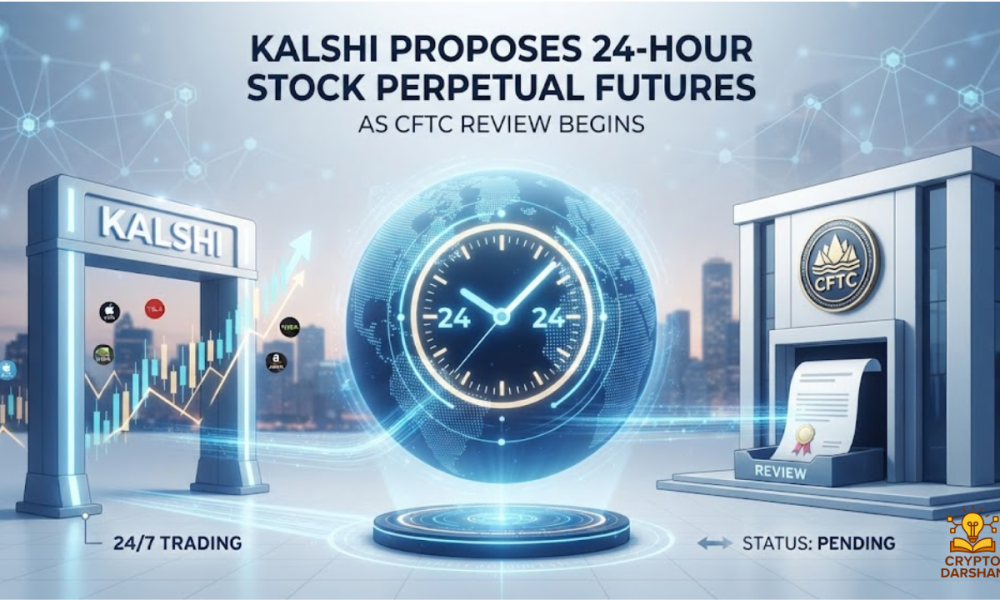
Kalshi has submitted plans to list perpetual futures linked to U.S. stocks and exchange-traded funds, opening a new regulatory chapter for prediction and derivatives markets. The proposal covers assets such as Apple, Tesla, Microsoft, Nvidia, Amazon, the SPDR S&P 500 ETF and the Invesco QQQ ETF.
The filings were submitted to the U.S. Securities and Exchange Commission (SEC) and the Commodity Futures Trading Commission (CFTC) on September 18. However, the products have not yet received CFTC approval. Regulatory records still showed the applications as “Approval Pending (45)” on September 20.
Kalshi Targets Major Stocks and ETFs
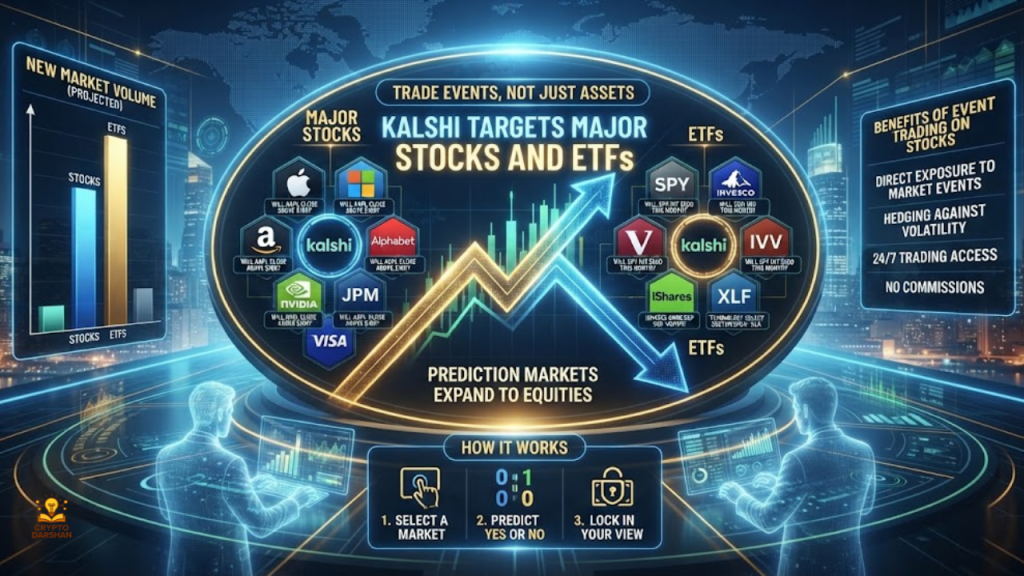
Kalshi’s proposed products would allow traders to take positions on the future price performance of individual stocks and ETFs without a fixed expiration date. Unlike traditional futures contracts, which usually expire on a set date, perpetual futures are designed to remain open as long as the market supports them.
The initial filings include perpetual contracts tied to several of the most actively traded U.S. securities. The CFTC database lists applications for:
- Apple (AAPL).
- Tesla (TSLA).
- Microsoft (MSFT).
- Nvidia (NVDA).
- Amazon (AMZN).
- SPDR S&P 500 ETF (SPY).
- Invesco QQQ ETF (QQQ).
The contracts would be cash-settled. This means traders would receive or pay the financial difference between the opening and closing value of a position rather than taking delivery of shares.
Each standard contract would represent 100 shares of the underlying security. Kalshi’s rules may also permit smaller trading units, depending on the specifications of a particular contract.
Proposed Trading Schedule
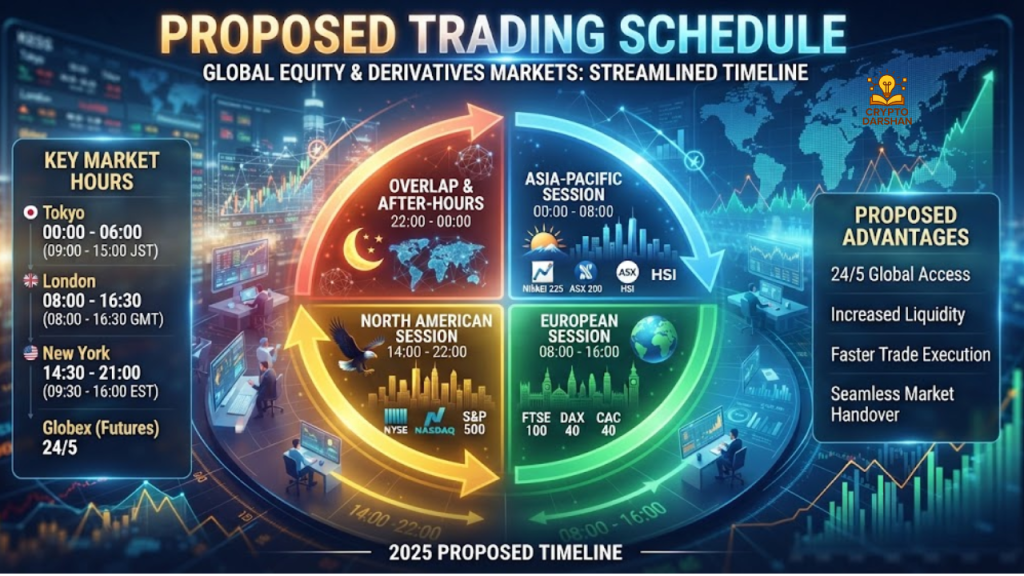
Kalshi wants the stock perpetuals to trade for most of the week. Under the proposed schedule, trading would begin at 6 p.m. Eastern Time on Sunday and continue until 5 p.m. Eastern Time on Friday.
A one-hour maintenance window would occur each day from 5 p.m. to 6 p.m. Eastern Time. During that period, the exchange could carry out system maintenance, update prices and complete other operational tasks.
Trading would also stop if the primary market halted trading in the underlying stock or ETF. For example, if a major exchange suspended trading in Nvidia shares, the related Kalshi perpetual contract would also be subject to a halt under the proposed rules.
The exchange could set different trading hours for specific contracts when permitted under its rules and regulatory requirements.
Margin and Funding Rules
The proposed products would use funding payments to help keep perpetual contract prices close to the value of the underlying asset. These payments would generally be exchanged at the daily settlement time, normally around 4 p.m. Eastern Time when the regular U.S. stock market closes.
Kalshi’s filing includes a 0.002% pricing deadband. Small differences between the contract price and the underlying market price may not trigger a funding adjustment under this mechanism.
The proposed maximum funding rate would be 2% in either direction. Traders could also face a minimum customer margin requirement equal to 15.50% of the current market value of each position.
Margin is collateral that traders must provide to open and maintain leveraged positions. A higher margin requirement can reduce the risk of large losses for the exchange and clearinghouse, although it also means traders need more capital to enter a position.
Kalshi Klear, the company’s registered clearinghouse, would clear all perpetual security-futures transactions under the proposal. The clearinghouse would handle key processes such as margin management, settlement and counterparty risk.
CFTC Approval Remains Pending
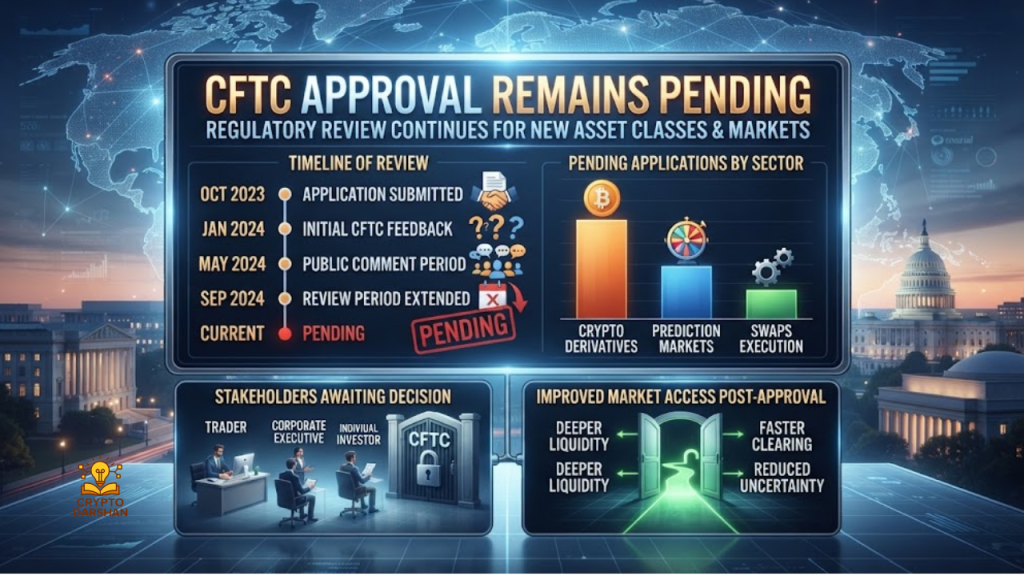
Although Kalshi has submitted the required filings, the stock perpetuals cannot be treated as fully approved products yet. The SEC filing states that the CFTC must still approve the contracts.
The SEC’s records also show that the proposed rule change is scheduled to become effective on November 2, 2026, or on a later date allowed by CFTC regulations. That date does not necessarily mean traders will be able to access every proposed contract immediately. The products still need to pass the relevant regulatory and operational steps.
The SEC has acknowledged Kalshi’s Form 1-N registration, which allows the CFTC-designated contract market to register as a national securities exchange for the limited purpose of offering security futures. The September 18 filing sets out the rules Kalshi wants to use for its perpetual futures.
The SEC may also take further action after the filing becomes effective. Under the proposal, the agency could consult with the CFTC and summarily abrogate the rule change within 60 days. If that happened, Kalshi could be required to submit the proposal again through another process under the Securities Exchange Act.
Strict Listing Standards Proposed
Kalshi’s proposal includes eligibility requirements for the stocks and ETFs used as underlying assets. These standards are designed to focus trading on securities with strong liquidity, broad market interest and sufficient public availability.
The proposed requirements include:
- At least 20 million shares in estimated deliverable supply.
- A minimum market capitalization of $100 billion.
- Average daily transaction value of at least $450 million during the previous six months.
- At least 7 million shares in public float.
For securities listed for fewer than six months, the proposal includes a higher average daily transaction value requirement of at least $1 billion during the previous month.
These conditions would limit the products to some of the largest and most actively traded companies and funds. They could also reduce the risk of sharp price distortions caused by thin trading or limited share availability.
Competition Is Growing

Kalshi is not the only company seeking approval for U.S. stock perpetual futures. Coinbase Derivatives submitted a separate security-futures proposal on September 18. Its application also remains pending with the CFTC.
Bitnomial Exchange filed another proposal covering stock perpetuals and related security-futures rules. Bitnomial’s plan includes contracts linked to several major companies, including Apple, Microsoft, Nvidia, Tesla, Amazon, Broadcom, Micron Technology, Alphabet and Palantir.
Bitnomial proposed a 24-hour, five-day trading schedule from Sunday evening through Friday. Its filing includes a 15.25% minimum initial and maintenance margin requirement, slightly below Kalshi’s proposed 15.50% floor.
The Bitnomial proposal also states that funding would be calculated three times per day. Like Kalshi’s contracts, its stock perpetuals would represent 100 shares under a standard contract and would be halted if the primary exchange stopped trading the underlying security.
The competing filings show that regulated exchanges are preparing for stronger demand for perpetual products tied to traditional financial assets. These products have become popular in crypto markets, but offering them on U.S. stocks requires compliance with both securities and derivatives regulations.
What Comes Next

Kalshi’s proposal now faces further review from U.S. regulators. The CFTC must decide whether the contracts satisfy the applicable requirements for security futures, including rules related to market integrity, customer protection, margin and clearing.
If approved, the products could give U.S. traders a regulated way to gain leveraged exposure to major stocks outside normal market hours. They could also increase competition among exchanges seeking to bring crypto-style perpetual contracts into traditional finance.
Still, approval is not guaranteed. The applications remain pending, and regulators may request changes before allowing the contracts to launch. Until the CFTC grants approval and Kalshi completes its operational preparations, the proposed Apple, Tesla, Nvidia, SPY and QQQ perpetuals should be viewed as planned products rather than available markets.