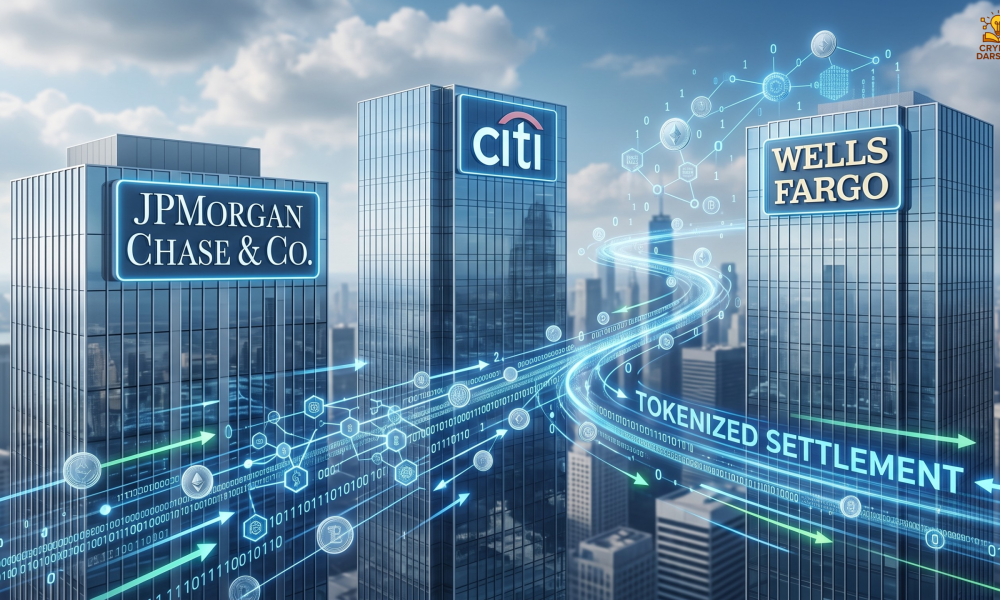
Wall Street is entering a new phase of digital finance as JPMorgan, Citi, Wells Fargo, and other major U.S. banks build a tokenized settlement network for real-time institutional payments. The shared tokenized deposit infrastructure could reshape how money settles between banks and corporate clients, enabling faster, 24/7 transactions.
The shift is more than a technology upgrade. It is a direct effort to make bank payments faster, more programmable, and available around the clock.
What Tokenized Deposits Mean
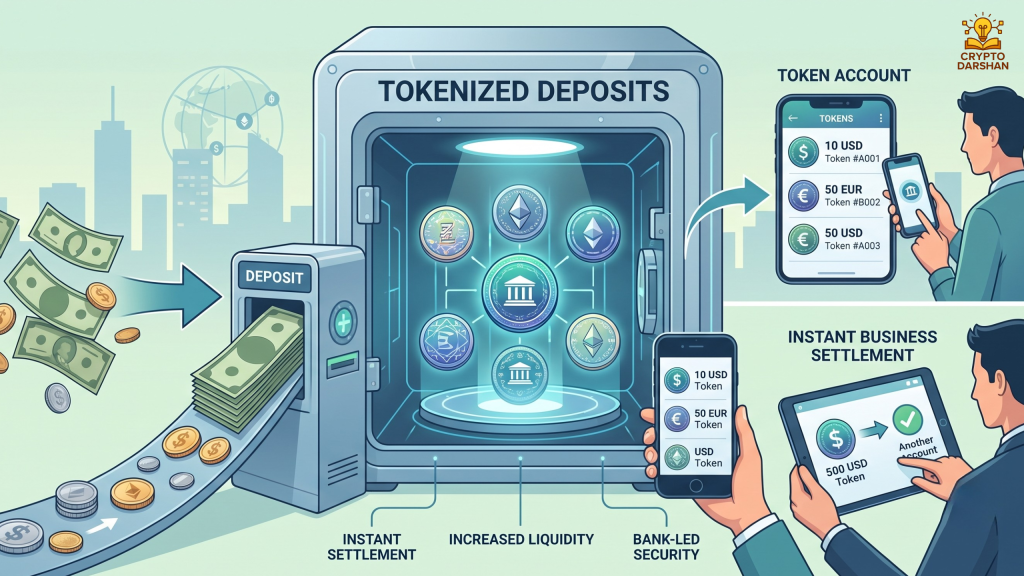
A tokenized deposit is a digital version of bank money that moves on blockchain-based rails. It still sits inside the regulated banking system, but it can settle faster than older payment infrastructure.
That matters because traditional settlement systems often rely on business-hour cutoffs and slower reconciliation steps. The permissioned blockchain-based system would enable 24/7 instant settlement of tokenized commercial bank deposits, keeping funds within the regulated banking perimeter.
Why Big Banks Are Moving Now

The push is being driven by both speed and competition. Corporate clients want instant transfers, better liquidity control, and payment systems that do not pause for weekends or holidays.
Banks are also responding to the rise of stablecoins and other digital payment tools. This shift mirrors the growing institutional interest in stablecoins, as highlighted in our Interactive Brokers Stablecoin coverage, where traditional financial firms are exploring blockchain-based payment rails to improve settlement efficiency. By building their own tokenized deposit networks, they can offer similar speed while keeping activity inside the banking perimeter.
Wells Fargo Joins the Race

Wells Fargo has now joined the effort in a visible way, with plans to launch tokenized deposits for corporate and commercial clients. The first rollout will begin this fall with USD-to-GBP transactions for select clients, then expand through 2027.
The bank says the system will let clients move, program, and settle funds 24/7/365 without leaving the regulated banking system. That makes it one of the clearest signs yet that tokenized finance is moving from concept to real-world use.
The Shared Network Behind the Plan

A larger development is the shared tokenized deposit network being built through The Clearing House. JPMorgan, Citi, Bank of America, Wells Fargo, and other large banks are backing the project, which is targeting a first-half 2027 launch.
This network is important because it could let participating banks move tokenized deposits across institutions instead of keeping them in isolated systems. If it works at scale, it may become a key settlement layer for corporate money movement. Together with rising institutional investment through spot Bitcoin ETFs, these settlement initiatives show that major financial firms are integrating blockchain technology into both investment products and core banking infrastructure.
Why It Matters for Business

For companies, the benefits could be practical and immediate. Faster settlement can improve cash flow, reduce idle balances, and make treasury operations more efficient.
It could also support programmable payments, where transfers happen automatically based on preset rules. That would be especially useful for multinational firms that need faster cross-border movement and tighter control over liquidity.
The Bigger Wall Street Shift

This trend shows that banks are not just experimenting with blockchain on the side. They are rebuilding the payment layer itself.
If these systems gain traction, the impact could reach beyond payments into fund settlement, treasury automation, and broader capital markets infrastructure. Wall Street’s old rails are being replaced, one token at a time.
Final Take

The race to tokenize Wall Street is really a race to modernize the plumbing of finance. JPMorgan, Citi, and Wells Fargo are betting that faster settlement and always-on banking will become the new standard.
If the 2027 network launches as planned, it could mark a turning point for how large banks move money in the digital age.