
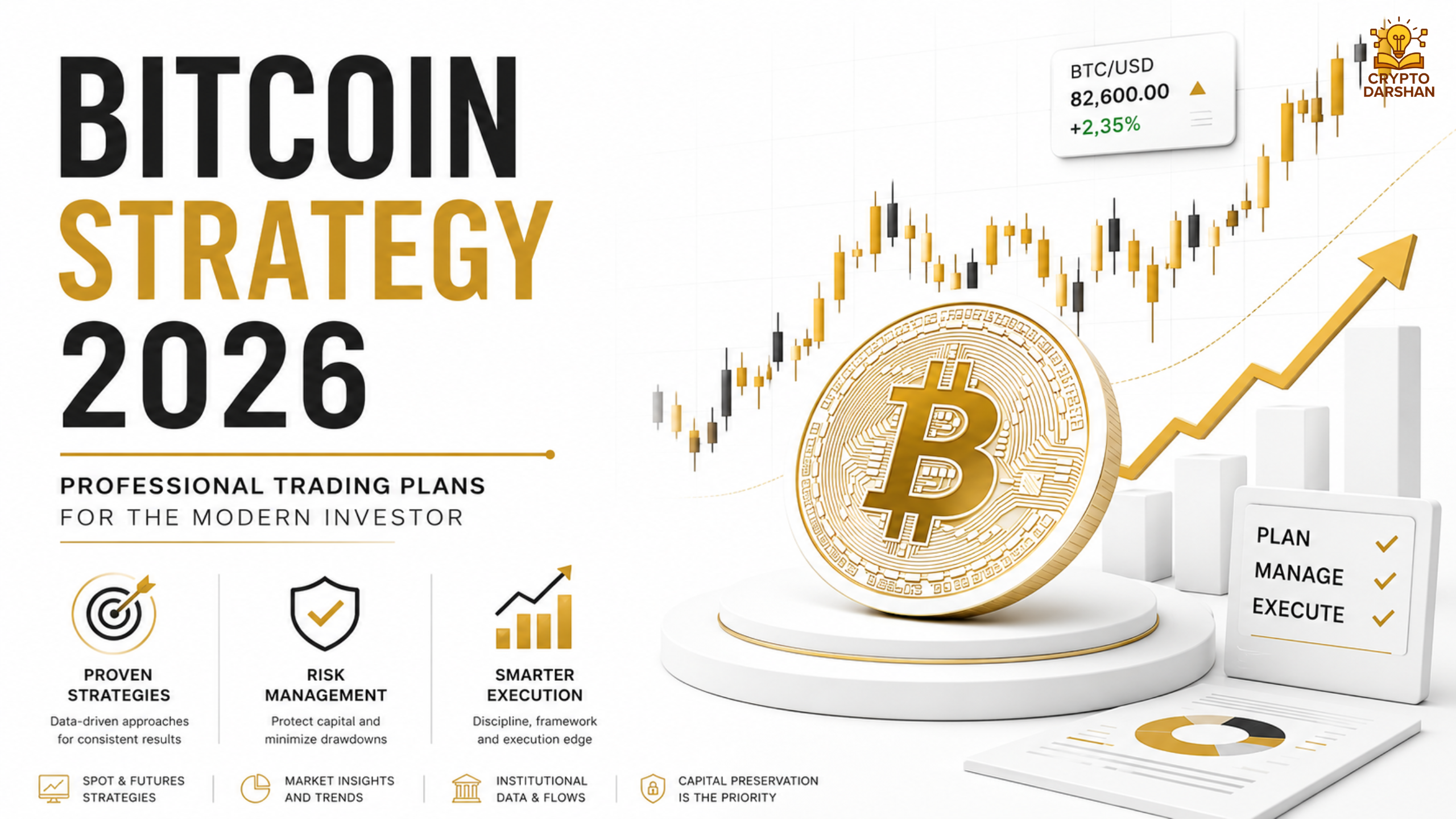
Bitcoin Strategy is the core framework professional investors use in 2026 to plan entries, manage risk, and execute spot, futures, and options trades with discipline. The year 2026 marks a new era for Bitcoin and the broader cryptocurrency market. With global adoption accelerating, institutional participation deepening, and blockchain technology evolving rapidly, traders and investors are seeking refined strategies to navigate this dynamic landscape. Bitcoin, as the flagship digital asset, continues to dominate market capitalization and investor attention. However, success in Bitcoin trading now requires more than enthusiasm it demands a professional, data-driven approach grounded in technical analysis, macroeconomic awareness, and disciplined risk management.
This comprehensive guide explores professional Bitcoin trading strategies for 2026, offering insights into market trends, trading psychology, portfolio diversification, and advanced analytical tools. Designed for both intermediate and advanced traders, this article provides a roadmap for building sustainable trading plans that align with the evolving crypto ecosystem.
The Evolution of Bitcoin in 2026

Bitcoin’s Market Position
By 2026, Bitcoin has matured into a globally recognized asset class. Institutional investors, hedge funds, and sovereign wealth funds now hold significant Bitcoin allocations. The asset’s volatility remains, but its correlation with traditional markets has shifted due to macroeconomic factors such as inflation, interest rate adjustments, and geopolitical uncertainty.
Bitcoin’s role has evolved from a speculative digital currency to a hybrid asset part store of value, part risk asset. This dual identity influences trading strategies, as traders must now consider both macroeconomic indicators and blockchain-specific metrics.
Technological Advancements
The Bitcoin network has undergone several upgrades since 2024, including improvements in scalability, transaction efficiency, and privacy. As of March 9, 2026, the Layer 2 ecosystem has matured into a multi layered infrastructure where users can choose between different trade offs of trust and speed. These developments have increased Bitcoin’s utility, influencing both short-term trading and long-term investment strategies.
Regulatory Landscape
Regulation has become more structured by 2026. Governments across North America, Europe, and Asia have implemented frameworks for crypto taxation, anti-money laundering (AML) compliance, and investor protection. While regulation introduces constraints, it also legitimizes Bitcoin as a mainstream financial instrument. Traders must now integrate compliance considerations into their strategies, particularly when operating across jurisdictions.
Global Adoption and Institutional Integration
Bitcoin’s adoption has expanded beyond investment portfolios. Major corporations now use Bitcoin for treasury diversification, and cross-border settlements increasingly rely on blockchain rails. Central banks exploring digital currencies (CBDCs) have indirectly boosted Bitcoin’s legitimacy as a decentralized counterpart. This global integration has created new liquidity hubs, making Bitcoin trading more efficient and accessible.
Understanding Bitcoin Market Dynamics

Supply and Demand Mechanics
Bitcoin’s fixed supply of 21 million coins remains its defining feature. The halving event of 2024 reduced block rewards, tightening supply and influencing price dynamics. Historically, halvings have triggered bullish cycles, but in 2026, the market’s maturity has tempered extreme volatility. Traders must analyze on-chain data, such as miner activity and wallet distribution, to anticipate supply shifts.
Institutional Influence
Institutional trading desks now account for a significant portion of Bitcoin’s daily volume. Their strategies, often algorithmic and data-driven impact liquidity and price stability. Understanding institutional behavior, including accumulation patterns and derivatives positioning, provides valuable insights for retail traders seeking to align with market momentum. This growing institutional presence aligns with the trends highlighted in our Crypto Prediction 2026 analysis, where ETF adoption and professional capital flows are expected to remain major market drivers.
Macroeconomic Correlations
Bitcoin’s price movements increasingly correlate with global economic indicators. Inflation rates, central bank policies, and geopolitical tensions all influence investor sentiment. In 2026, Bitcoin often reacts to macroeconomic news similarly to gold or equities, depending on market conditions. Professional traders monitor these correlations to anticipate volatility and adjust positions accordingly.
Market Cycles and Behavioral Patterns
Bitcoin markets operate in cyclical phases, accumulation, expansion, distribution, and decline. Recognizing these cycles helps traders identify optimal entry and exit points. Behavioral finance plays a role as well; herd mentality and media narratives often amplify price swings. Professionals use sentiment data and historical analogs to anticipate cycle transitions.
Core Principles of Professional Bitcoin Trading

Risk Management
Effective risk management remains the cornerstone of professional trading. Traders must define position sizes, set stop-loss levels, and determine acceptable drawdowns. A common rule is to risk no more than 1–2% of total capital per trade. This approach preserves capital during market downturns and allows for consistent growth over time.
Technical Analysis
Technical analysis remains a vital tool for Bitcoin traders. Key indicators include:
- Moving Averages (MA): The 50-day and 200-day moving averages help identify trend direction and potential reversals.
- Relative Strength Index (RSI): Measures momentum and identifies overbought or oversold conditions.
- Fibonacci Retracement: Assists in identifying potential support and resistance levels.
- Volume Analysis: Confirms the strength of price movements and trend sustainability.
- Bollinger Bands: Measure volatility and help identify breakout opportunities.
Combining multiple indicators enhances accuracy and reduces false signals.
Fundamental Analysis
While Bitcoin lacks traditional financial statements, fundamental analysis involves evaluating network health, adoption rates, and macroeconomic conditions. Metrics such as hash rate, active addresses, and transaction volume provide insights into network strength. Additionally, monitoring institutional inflows and ETF activity helps gauge market sentiment.
Trading Psychology
Emotional discipline separates professional traders from amateurs. Fear and greed often drive impulsive decisions, leading to losses. Maintaining a structured trading plan, journaling trades, and adhering to pre-defined rules fosters consistency. Successful traders treat Bitcoin trading as a business, not a gamble.
The Role of Patience and Timing
Patience is a critical yet underrated skill in Bitcoin trading. Markets often move in unpredictable bursts, and waiting for confirmation signals can prevent premature entries. Timing trades around liquidity events, such as halving cycles, ETF approvals, or macroeconomic announcements can significantly improve profitability.
Building a Professional Bitcoin Trading Plan

Defining Objectives
A trading plan begins with clear objectives. Traders must determine whether their goal is short-term profit, long-term accumulation, or portfolio diversification. Objectives influence strategy selection, risk tolerance, and time commitment.
Choosing a Trading Style
Common Bitcoin trading styles include:
- Scalping: Involves executing multiple trades within minutes to capture small price movements.
- Day Trading: Focuses on intraday price fluctuations, closing all positions before the day ends.
- Swing Trading: Targets medium-term trends lasting days or weeks.
- Position Trading: Involves holding positions for months, aligning with macro trends.
- Algorithmic Trading: Uses automated systems to execute trades based on pre-set conditions.
Each style requires different tools, timeframes, and psychological endurance. Selecting the right trading style also requires understanding broader market trends, as discussed in Crypto Prediction 2026: Advanced Market Scenarios and Future Growth Outlook, which highlights institutional adoption, liquidity shifts, and future market scenarios.
Developing Entry and Exit Rules
Professional traders establish precise entry and exit criteria. For example, a trader might enter a long position when Bitcoin breaks above a key resistance level with high volume confirmation. Exit rules may include profit targets or trailing stops to lock in gains while allowing for trend continuation.
Backtesting and Optimization
Before deploying a strategy, traders backtest it using historical data. Backtesting evaluates performance metrics such as win rate, average return, and maximum drawdown. Optimization involves refining parameters to enhance profitability without overfitting. Modern trading platforms offer automated backtesting tools that simulate real-market conditions.
Record Keeping and Performance Tracking
Maintaining detailed records of trades, including entry points, exit points, and rationale, allows traders to identify patterns and improve decision-making. Performance tracking tools can analyze metrics like profit factor, expectancy, and risk-to-reward ratio, helping refine strategies over time.
Advanced Bitcoin Trading Strategies for 2026

Algorithmic Trading
Algorithmic trading leverages automated systems to execute trades based on predefined rules. In 2026, AI-driven algorithms analyze vast datasets, including on-chain metrics, sentiment analysis, and macroeconomic indicators. Traders can develop custom bots to execute strategies with precision and speed, minimizing emotional interference.
Arbitrage Opportunities
Arbitrage involves exploiting price discrepancies across exchanges. With Bitcoin trading globally, minor price differences often arise due to liquidity variations. Professional traders use automated systems to identify and execute arbitrage trades instantly. While profit margins are small, high-frequency execution can yield consistent returns.
Options and Futures Trading
Derivatives markets have expanded significantly by 2026. Bitcoin futures and options allow traders to hedge positions or speculate on price movements. Strategies such as covered calls, protective puts, and straddles enable risk management and profit optimization. Understanding implied volatility and open interest is crucial for effective derivatives trading.
On-Chain Analysis
On-chain analysis examines blockchain data to assess market sentiment and investor behavior. Key metrics include:
- Whale Activity: Large wallet movements often signal institutional actions.
- Exchange Inflows/Outflows: High inflows may indicate selling pressure, while outflows suggest accumulation.
- Dormant Supply: Measures long-term holder behavior, influencing supply dynamics.
- Realized Cap and MVRV Ratio: Help identify overvaluation or undervaluation zones.
Integrating on-chain data with technical analysis enhances decision-making accuracy.
Sentiment Analysis
Social media and news sentiment significantly impact Bitcoin’s short-term price movements. AI tools now analyze millions of data points from platforms like X (formerly Twitter), Reddit, and financial news outlets to gauge market mood. Traders use sentiment indicators to anticipate volatility spikes and adjust positions accordingly.
Cross-Market Correlation Strategies
Bitcoin’s correlation with other assets such as gold, the S&P 500, and the U.S. dollar index creates opportunities for cross-market strategies. Traders can hedge Bitcoin exposure by taking offsetting positions in correlated assets or use correlation breakdowns as signals for trend reversals.
Portfolio Diversification and Risk Mitigation

Diversifying Within Crypto
While Bitcoin remains the core asset, diversification across other cryptocurrencies reduces risk. Allocating a portion of capital to Ethereum, Solana, or stablecoins can balance volatility. However, diversification should align with individual risk tolerance and market outlook.
Hedging Strategies
Hedging protects against adverse price movements. Traders can use futures contracts to offset potential losses or allocate funds to stable assets during uncertain periods. Dynamic hedging adjusting hedge ratios based on volatility enhances portfolio resilience.
Stablecoin Utilization
Stablecoins like USDT and USDC provide liquidity and stability during market turbulence. Professional traders use stablecoins to park profits, manage margin requirements, and execute quick trades without converting to fiat.
Risk-Adjusted Returns
Evaluating performance through risk-adjusted metrics ensures sustainable profitability. The Sharpe ratio, Sortino ratio, and maximum drawdown help assess whether returns justify the risks taken. Consistent improvement in these metrics indicates a robust trading strategy.
Diversification Beyond Crypto
Professional traders often diversify into traditional assets such as equities, commodities, and bonds. This cross-asset diversification reduces exposure to crypto-specific risks and stabilizes portfolio performance during Bitcoin downturns.
Tools and Platforms for Professional Bitcoin Trading

Trading Platforms
Leading platforms in 2026 offer advanced charting, API integration, and institutional-grade security. Examples include Binance Pro, Coinbase Advanced, and Kraken Institutional. Selecting a platform with deep liquidity and low latency execution is essential for professional trading. s professional trading platforms evolve, understanding institutional market behavior becomes increasingly important, especially as explained in Why Crypto Bull Run Timing Models Are Breaking Down Under Institutional ETF Flow Dominance, where ETF flows and institutional participation reshape Bitcoin liquidity.
Analytical Tools
Professional traders rely on analytical tools such as:
- TradingView: For charting and technical analysis.
- Glassnode: For on-chain analytics.
- Santiment: For sentiment and behavioral data.
- Coin Metrics: For network and market data aggregation.
- TensorCharts: For order book visualization and heatmaps.
Integrating multiple tools provides a comprehensive market perspective.
Security Measures
Cybersecurity remains paramount. Traders must use hardware wallets, two-factor authentication, and cold storage for long-term holdings. Regular audits and secure network practices protect against hacking and phishing attempts.
Automation and API Integration
APIs allow traders to connect bots, data feeds, and custom dashboards. Automation reduces manual errors and enables 24/7 market participation. In 2026, cloud-based trading systems with AI-driven optimization are standard among professionals.
The Psychology of Successful Bitcoin Traders

Emotional Control
Emotional control determines long-term success. Fear of missing out (FOMO) and panic selling are common pitfalls. Professional traders cultivate patience, discipline, and detachment from short-term fluctuations.
Continuous Learning
The crypto market evolves rapidly. Staying updated through research, webinars, and professional communities ensures adaptability. Continuous learning fosters innovation and strategic refinement.
Journaling and Performance Review
Maintaining a trading journal helps identify strengths and weaknesses. Recording trade rationale, outcomes, and emotional states enables data-driven improvement. Regular performance reviews align trading behavior with strategic goals.
Building Mental Resilience
Market volatility can test emotional endurance. Techniques such as mindfulness, meditation, and structured routines help maintain focus. Professional traders often treat trading as a marathon, not a sprint, emphasizing consistency over intensity.
Future Outlook for Bitcoin Trading Beyond 2026

Institutional Integration
By 2026, Bitcoin ETFs and custodial services have become mainstream. Institutional adoption continues to grow, enhancing liquidity and reducing volatility. This trend supports long-term price stability and broader acceptance.
Technological Innovations
Emerging technologies such as quantum-resistant cryptography and decentralized finance (DeFi) integration will reshape Bitcoin’s ecosystem. Traders must adapt to these innovations to maintain a competitive edge.
Global Economic Shifts
As global economies transition toward digital currencies and blockchain-based systems, Bitcoin’s role as a decentralized alternative strengthens. Traders who understand macroeconomic shifts will capitalize on new opportunities.
The Role of Artificial Intelligence
AI will continue to revolutionize Bitcoin trading. Predictive analytics, machine learning models, and natural language processing will enhance market forecasting. Traders who integrate AI tools into their strategies will gain a significant advantage in speed and accuracy.
Crafting a Sustainable Bitcoin Strategy for 2026

Integrating All Elements
A sustainable Bitcoin strategy combines technical, fundamental, and psychological components. Traders must balance risk and reward, adapt to market conditions, and maintain discipline.
Long-Term Vision
While short-term profits are appealing, long-term wealth accumulation requires patience and consistency. Viewing Bitcoin as part of a diversified portfolio ensures resilience against market cycles. Diversified crypto portfolios may also consider other major assets, with Ethereum’s future outlook and adoption trends analyzed in Ethereum Forecast 2026: Advanced Signals Behind the Next Move.
Ethical and Responsible Trading
Professional traders uphold ethical standards, avoiding market manipulation and promoting transparency. Responsible trading fosters trust and contributes to the maturity of the crypto ecosystem.
Continuous Strategy Evolution
Markets evolve, and so must trading strategies. Regularly reviewing performance, incorporating new data sources, and adapting to regulatory or technological changes ensures long-term relevance and profitability.
FAQ: Bitcoin Strategy 2026: Professional Trading Plans for the Modern Investor

1. What is a Bitcoin Strategy in 2026?
A Bitcoin Strategy in 2026 is a structured investment or trading approach that combines market analysis, risk management, portfolio allocation, and macroeconomic trends to maximize returns while minimizing downside risk. Modern strategies often incorporate institutional flows, ETF data, on-chain metrics, and technical indicators.
2. Why are traditional Bitcoin trading strategies becoming less effective?
Traditional strategies relied heavily on halving cycles and retail-driven momentum. In 2026, institutional investors, spot Bitcoin ETFs, and algorithmic trading have significantly changed market behavior, making professional, data-driven strategies more effective than simple cycle-based approaches.
3. How important are Bitcoin ETFs to a 2026 trading strategy?
Bitcoin ETFs play a major role because they provide insight into institutional demand. Monitoring ETF inflows and outflows can help investors identify market trends, potential support levels, and shifts in sentiment that may influence Bitcoin’s price direction.
4. What is the best risk management approach for Bitcoin investors?
Professional traders typically use:
- Position sizing rules
- Stop-loss orders
- Portfolio diversification
- Risk-to-reward ratios
- Capital preservation strategies
These methods help reduce losses during periods of high market volatility.
5. Should investors use dollar-cost averaging (DCA) in 2026?
Yes. Dollar-cost averaging remains one of the most effective long-term Bitcoin strategies. By investing fixed amounts at regular intervals, investors can reduce the impact of short-term price fluctuations and build positions gradually.
6. Which indicators are most useful for a Bitcoin Strategy in 2026?
Commonly used indicators include:
- Relative Strength Index (RSI)
- Moving Averages (50-day and 200-day)
- Volume Profile
- Open Interest
- ETF Flow Data
- On-Chain Metrics
- Market Sentiment Indicators
Using multiple indicators together provides a more complete market view.
7. How can institutional adoption affect Bitcoin trading plans?
Growing institutional adoption can increase market liquidity, improve price stability, and create sustained demand. Professional investors often track corporate treasury purchases, ETF inflows, and regulatory developments when adjusting their Bitcoin strategies.
8. Is active trading better than long-term holding?
It depends on an investor’s goals and experience. Active trading may generate higher returns but requires significant time, expertise, and risk management. Long-term holding is generally simpler and has historically rewarded investors who can tolerate volatility.
Conclusion
Bitcoin trading in 2026 demands professionalism, adaptability, and strategic precision. The market’s evolution driven by institutional adoption, technological innovation, and regulatory clarity offers unprecedented opportunities for disciplined traders. By mastering risk management, leveraging advanced analytics, and maintaining emotional control, traders can thrive in this dynamic environment.
A professional Bitcoin trading plan is not static; it evolves with the market. Continuous learning, data-driven decision-making, and adherence to structured strategies form the foundation of long-term success. As Bitcoin continues to shape the future of finance, those equipped with knowledge, discipline, and foresight will lead the next generation of digital asset traders.