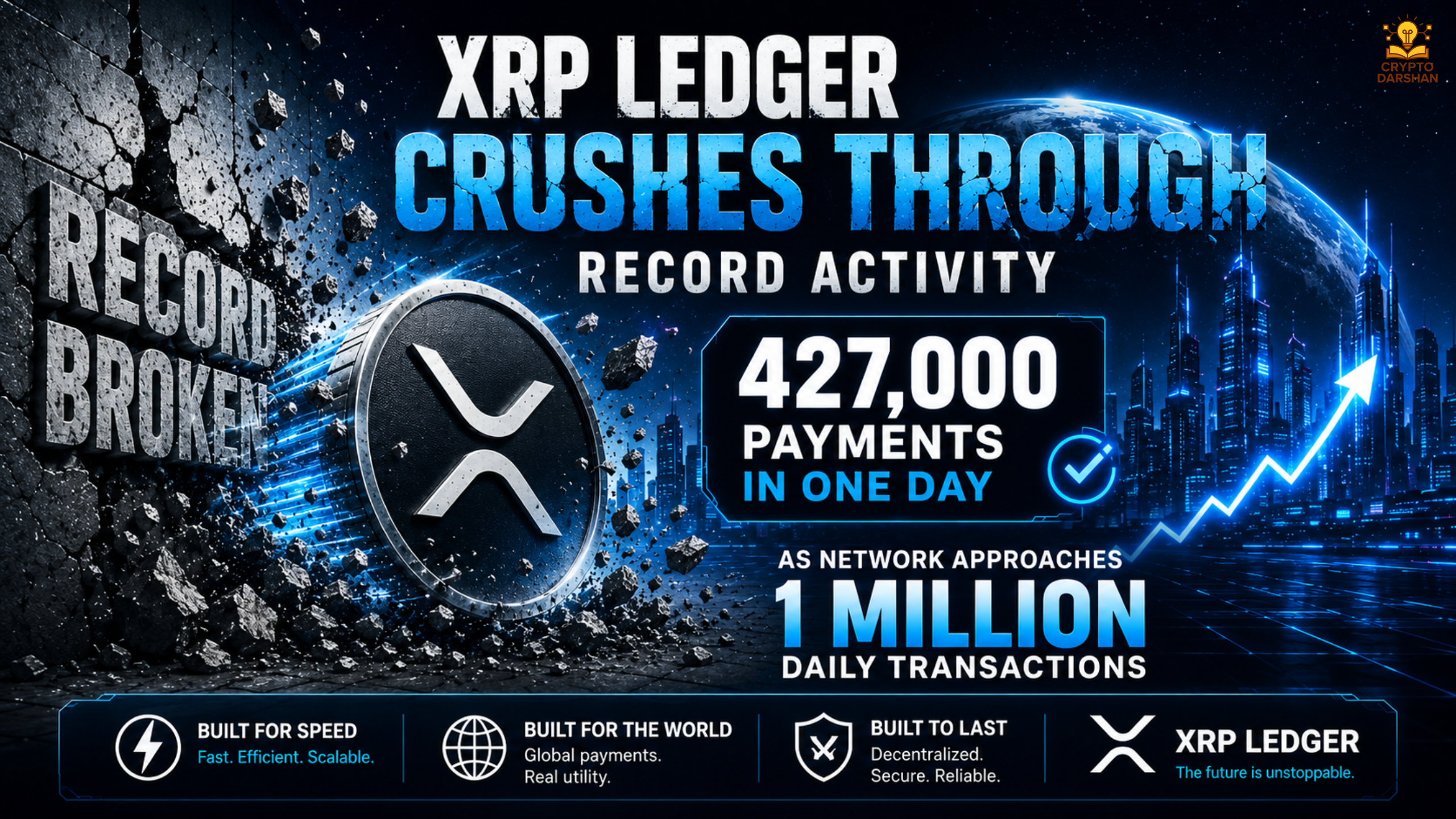
The XRP Ledger (XRPL) is heating up with massive transaction growth. On a single recent day, the network processed 427,000 payment transactions, bringing total daily transactions close to the 1 million milestone. This surge highlights how XRP Ledger continues to outperform many other blockchains in real-world payment usage.
For anyone watching cryptocurrency networks, this is a major signal. XRP Ledger isn’t just a theoretical blockchain—it’s actively being used to move money at high speed, with low costs, and without the congestion problems that plague older networks.
What Exactly Happened on XRP Ledger?

On the standout day, XRP Ledger handled 427,000 successful payments. When you add in other types of transactions—like token transfers, smart contract interactions, and denom-inated notes—the total climbed near 1 million transactions in 24 hours.
This isn’t a one-time spike. Recent data shows XRP Ledger has been consistently hitting high transaction volumes:
- Daily payments now average 2.5 million, up from 1.5 million just last quarter
- In early 2026, payment volume surged 140%, reaching over 1.37 billion XRP in 24 hours
- The network briefly hit 5.17 million transactions in a single day—a two-year high in April 2026
- Since late 2020, XRP has routinely exceeded 1 million daily transactions
The recent 427,000-payment day is part of a longer trend of accelerating adoption.
Why Does Transaction Volume Matter?

Transaction volume shows how much a blockchain is actually being used. High numbers mean:
| Benefit | What It Means for Users |
|---|---|
| Real Adoption | People and businesses are actively sending XRP, not just holding it |
| Network Strength | More transactions = more validators securing the network |
| Liquidity Flow | Money moves freely, making XRP useful for payments and trading |
| Scalability Proof | The network handles heavy load without crashing or slowing down |
XRP Ledger’s ability to process near-1 million transactions daily while keeping fees under $0.01 and settlement under 3–5 seconds proves it’s built for real payments.
How XRP Ledger Handles So Many Transactions
XRP Ledger isn’t trying to be everything to everyone. It focuses on what it does best: fast, cheap payments. Here’s how it works:
1. Consensus Mechanism (Not Mining)
XRP uses a unique consensus protocol where trusted validators agree on transactions. No energy-intensive mining, no waiting for block confirmations.
2. Parallel Processing
Unlike Bitcoin or Ethereum, which process transactions one after another, XRPL can handle many at the same time.
3. Low Fees Prevent Spam
Tiny transaction costs (fractions of a cent) discourage spam attacks while still making micro-payments affordable.
4. Built for Payments
The ledger supports native currency transfers, multi-signing, and even token issuance without smart contract bloat.
These features let XRP Ledger scale to millions of daily transactions without the congestion Ethereum faces during high-traffic periods.
XRP Ledger vs. Bitcoin and Ethereum
When you compare transaction numbers, XRP Ledger stands out:
| Network | Daily Transactions | Key Limitation |
|---|---|---|
| XRP Ledger | ~1M–3M (recent average) | Focused on payments, not smart contracts |
| Bitcoin | ~300,000–500,000 | Slow (10-min blocks), high fees |
| Ethereum | ~1M–1.5M | Congestion during high demand, fees spike to $10+ |
XRP Ledger has consistently processed more daily transactions than Bitcoin and often matches or exceeds Ethereum, despite having a smaller developer ecosystem. While XRP Ledger processed hundreds of thousands of payments efficiently, understanding what mempools are and how transactions wait for confirmation helps explain why network performance matters
What’s Driving the Growth?

Several factors are pushing XRP Ledger toward higher transaction volumes:
1. Ripple’s Institutional Partnerships
Ripple continues to expand partnerships with banks and payment providers using XRP for cross-border transfers.
2. On-Chain USD Stablecoins
Recent launches of USD-backed stablecoins on XRPL have increased payment activity.
3. DeFi and Tokenization
New DeFi protocols and tokenized assets are bringing more users to the network.
4. Regulatory Clarity
As XRP gains regulatory clarity in the U.S., institutions feel safer using it for payments.
What This Means for XRP Holders

High transaction volume generally supports XRP’s value:
- More Utility = More Demand: When people use XRP for payments, they need to buy and hold it
- Network Confidence: Sustained activity shows the blockchain isn’t dying—it’s growing
- Institutional Interest: Banks and payment companies notice networks that actually work at scale
However, transaction volume doesn’t guarantee price increases. Market sentiment, regulation, and broader crypto trends still play huge roles.
The Bottom Line

XRP Ledger processing 427,000 payments in a single day and approaching 1 million total transactions is a massive achievement. It proves the network can handle real-world payment volume at scale—something Bitcoin and Ethereum struggle with during peak times.
For crypto enthusiasts, this is a strong sign that XRP Ledger is evolving from a “maybe” payment network into an actively used financial infrastructure. As more stablecoins, DeFi apps, and institutional users join, daily transactions could climb even higher.
The question isn’t whether XRP Ledger can handle millions of transactions—it’s already doing that. The question is how fast adoption will continue to grow in 2026 and beyond.