
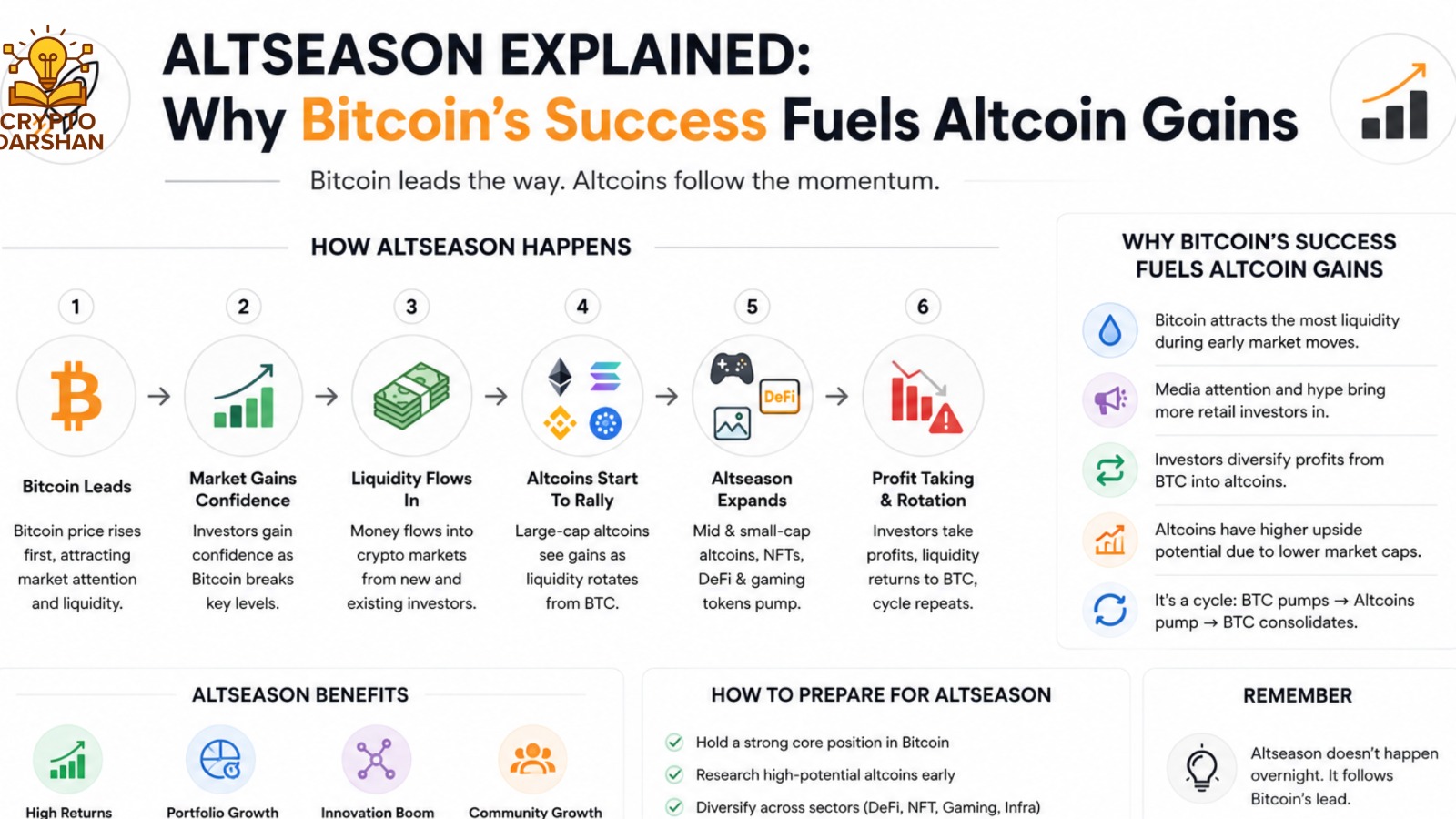
In the world of cryptocurrency, few phenomena capture investor excitement like Altseason—a period when alternative cryptocurrencies (altcoins) experience explosive growth, often outperforming Bitcoin. While Bitcoin remains the dominant force in the crypto market, its success often sets the stage for altcoins to shine. Understanding why this happens requires exploring the intricate relationship between Bitcoin’s market movements, investor psychology, and the broader crypto ecosystem.
This comprehensive guide explains what Altseason is, why it occurs, how Bitcoin’s performance influences it, and what indicators signal its arrival. It also explores strategies for navigating Altseason, the risks involved, and how to identify promising altcoins during these market cycles.
What Is Altseason?

Altseason refers to a period in the cryptocurrency market when altcoins—cryptocurrencies other than Bitcoin—experience significant price increases relative to Bitcoin. During this time, investors shift their focus and capital from Bitcoin into altcoins, driving up their prices and market dominance.
Altseason is not a random event; it follows a recognizable pattern tied to Bitcoin’s performance and overall market sentiment. Typically, Altseason occurs after Bitcoin has experienced a strong rally and begins to consolidate. As Bitcoin stabilizes, investors look for higher returns in smaller-cap cryptocurrencies, sparking a wave of altcoin growth.
Key Characteristics of Altseason
- Altcoin Market Outperformance: Altcoins outperform Bitcoin in terms of percentage gains.
- Increased Trading Volume: Trading activity in altcoins surges across exchanges.
- Rising Market Capitalization: The total market cap of altcoins grows faster than Bitcoin’s.
- Shift in Investor Sentiment: Traders become more optimistic about smaller projects.
- Media Hype and FOMO: News outlets and social media amplify the excitement, attracting new investors.
The Relationship Between Bitcoin and Altcoins

Bitcoin is the first and most established cryptocurrency, often referred to as digital gold. It serves as the gateway for most investors entering the crypto market. Because of its dominance, Bitcoin’s price movements heavily influence the entire crypto ecosystem.
Bitcoin as the Market Leader
Bitcoin’s dominance—its share of the total cryptocurrency market capitalization—acts as a barometer for the health of the crypto market. When Bitcoin’s dominance is high, it means most of the market’s value is concentrated in Bitcoin. When dominance falls, it indicates that altcoins are gaining traction.
Historically, Bitcoin’s dominance tends to rise during bear markets or periods of uncertainty, as investors seek safety in the most established asset. Conversely, during bull markets, Bitcoin’s dominance often declines as investors diversify into altcoins seeking higher returns.
The Flow of Capital
The flow of capital in the crypto market typically follows a predictable pattern:
- Bitcoin Rally: Bitcoin experiences a strong price increase, attracting new investors.
- Profit-Taking: Early investors take profits from Bitcoin’s gains.
- Capital Rotation: Profits are reinvested into altcoins with higher growth potential.
- Altcoin Rally: Altcoins surge as demand increases.
- Market Correction: After excessive speculation, both Bitcoin and altcoins correct.
This cyclical flow of capital explains why Bitcoin’s success often precedes Altseason.
Why Bitcoin’s Success Fuels Altcoin Gains

Bitcoin’s performance sets the tone for the entire crypto market. When Bitcoin rises, it signals confidence in the market, attracting new capital. Once Bitcoin stabilizes, investors begin to look for the next opportunity—often in altcoins.
1. Market Confidence Builder
When Bitcoin rises, it validates the entire cryptocurrency industry. This increased confidence attracts new investors who then explore beyond Bitcoin, creating a ripple effect that benefits altcoins.
2. Profit Rotation Pattern
Early Bitcoin investors take profits after significant rallies. Rather than cashing out to fiat currency, they reinvest these gains into altcoins, seeking higher percentage returns and diversification opportunities.
3. Gateway Effect
Bitcoin serves as the entry point for most crypto investors. Once they’re comfortable with Bitcoin and see its success, they naturally become curious about other cryptocurrencies and begin exploring altcoin opportunities.
4. Psychological Pricing Appeal
As Bitcoin’s price climbs into tens of thousands of dollars, smaller investors perceive altcoins as more affordable. Even though percentage gains matter more, the lower price per coin creates psychological attraction.
5. Capital Flow Cycle
The crypto market follows a predictable pattern: Bitcoin rallies first, then stabilizes. During this consolidation phase, traders seek the next opportunity, directing fresh capital into altcoins with higher growth potential.
6. Innovation and Utility Seeking

Bitcoin’s success highlights blockchain’s potential, prompting investors to discover altcoins offering unique features like smart contracts, faster transactions, DeFi applications, or specialized use cases that Bitcoin doesn’t provide.
7. Declining Bitcoin Dominance
When Bitcoin’s market share decreases while its price remains stable or grows, it signals capital is flowing into altcoins. This shift in dominance indicates the beginning of altcoin outperformance periods.
8. Media and Social Amplification
Bitcoin’s success generates massive media coverage,
bringing attention to the entire crypto space. This exposure leads newcomers to discover altcoins through social media, influencers, and news outlets, accelerating demand.
Historical Altseasons and Their Patterns
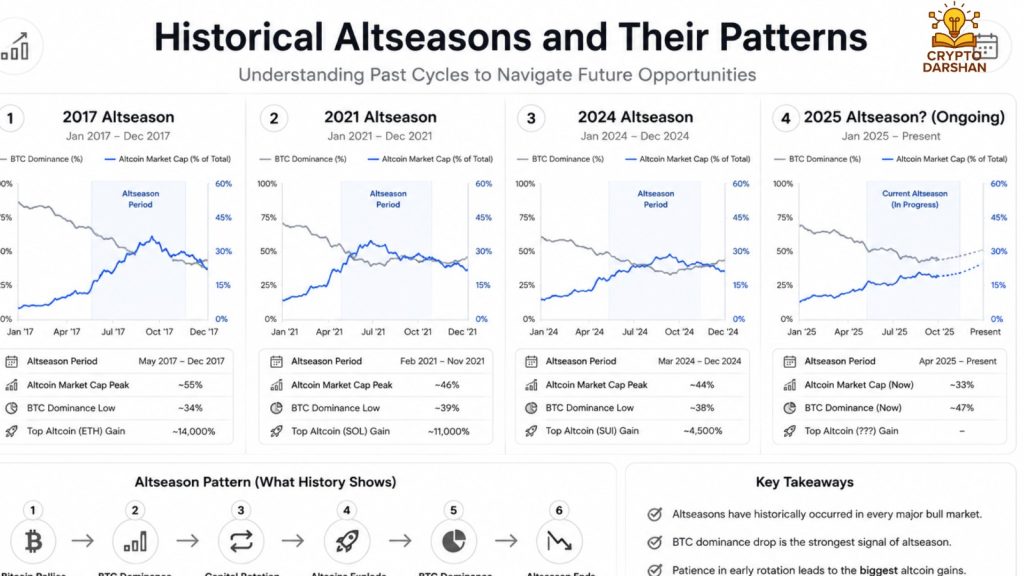
Understanding past Altseasons helps identify patterns that may repeat in future cycles. Several notable Altseasons have occurred since Bitcoin’s inception.
2017 Altseason
The 2017 bull run remains one of the most famous Altseasons. Bitcoin’s price surged from under $1,000 to nearly $20,000, and altcoins followed with even greater gains. Ethereum, Ripple (XRP), and Litecoin saw exponential growth, while hundreds of new tokens launched through Initial Coin Offerings (ICOs).
Key Drivers:
- Massive retail investor influx
- ICO boom and speculative mania
- Bitcoin consolidation after major rallies
2021 Altseason
The 2021 Altseason followed Bitcoin’s rise to over $60,000. This period saw explosive growth in DeFi, NFTs, and layer-1 blockchain projects like Solana, Avalanche, and Cardano.
Key Drivers:
- Institutional adoption of Bitcoin
- Growth of decentralized finance (DeFi)
- NFT market explosion
- Increased retail participation via social media
Lessons from Past Altseasons
- Altseasons often follow Bitcoin’s consolidation phase.
- Hype cycles drive short-term gains but can lead to sharp corrections.
- Projects with real utility tend to survive post-Altseason downturns.
Indicators That Signal the Start of Altseason

Identifying the beginning of Altseason can help investors position themselves strategically. While no indicator is foolproof, several metrics and patterns often precede Altseason.
1. Bitcoin Dominance Decline
A consistent drop in Bitcoin dominance suggests that capital is flowing into altcoins. When Bitcoin dominance falls below key thresholds (such as 50%), it often signals the start of Altseason.
2. Bitcoin Price Stabilization
After a strong rally, Bitcoin typically enters a consolidation phase. When Bitcoin’s price stabilizes within a range, traders gain confidence to explore altcoins without fearing a major Bitcoin correction.
3. Rising Altcoin Market Cap
An increase in the total market capitalization of altcoins relative to Bitcoin indicates growing investor interest in alternative assets.
4. Surge in Trading Volume
A spike in altcoin trading volume across exchanges often marks the early stages of Altseason. Increased liquidity allows for larger price movements.
5. Social Media and Search Trends
Rising mentions of specific altcoins on platforms like Twitter, Reddit, and Google Trends often precede price surges. Social sentiment plays a major role in driving speculative demand.
The Psychology Behind Altseason

Investor psychology is a powerful force in the crypto market. Understanding the emotional cycles that drive Altseason can help explain why it happens and how it unfolds.
1. Greed and FOMO
As Bitcoin’s price rises, investors experience FOMO—fear of missing out. When Bitcoin becomes “too expensive,” they turn to altcoins, hoping to replicate Bitcoin’s gains. This collective greed fuels rapid price increases.
2. Herd Mentality
Crypto markets are heavily influenced by social behavior. When investors see others profiting from altcoins, they rush to join in, amplifying the rally.
3. Overconfidence and Speculation
During Altseason, many investors believe “this time is different.” They underestimate risks and overestimate potential returns, leading to speculative bubbles.
4. Panic and Capitulation
Eventually, when prices correct, fear replaces greed. Investors panic-sell, leading to sharp declines. Understanding this emotional cycle helps investors avoid buying at the top or selling at the bottom.
How to Identify Promising Altcoins During Altseason

Not all altcoins perform equally during Altseason. Some deliver massive returns, while others fade quickly. Identifying promising projects requires research and analysis.
1. Strong Fundamentals
Look for projects with clear use cases, active development teams, and real-world adoption. Examples include Ethereum (smart contracts), Chainlink (oracles), and Polygon (scalability).
2. Market Position and Liquidity
Established altcoins with high liquidity and exchange listings are generally safer than obscure tokens. Liquidity ensures smoother trading and less price manipulation.
3. Community and Ecosystem
A strong, engaged community often supports long-term growth. Projects with active social media presence, developer activity, and partnerships tend to perform better.
4. Tokenomics
Analyze the token’s supply, distribution, and utility. Tokens with limited supply and strong demand mechanisms often appreciate faster.
5. Technical Analysis
Chart patterns, volume trends, and momentum indicators can help identify entry and exit points. Combining technical and fundamental analysis improves decision-making.
Strategies for Navigating Altseason

Altseason offers opportunities for significant profits but also carries high risks. Strategic planning and disciplined execution are essential.
1. Diversify Your Portfolio
Avoid concentrating all your capital in a single altcoin. Spread investments across different sectors like DeFi, layer-1 blockchains, gaming tokens, and infrastructure projects. This diversification reduces risk and increases chances of capturing multiple winners during the rally.
2. Set Profit Targets and Take Gains Regularly
Establish clear profit-taking levels before entering positions. As altcoins reach your targets, sell portions of your holdings to lock in gains. This disciplined approach prevents the common mistake of holding through entire cycles and watching profits evaporate during corrections.
3. Use Stop-Loss Orders for Protection
Implement stop-loss orders to automatically sell if prices drop below predetermined levels. Altcoins are extremely volatile, and sudden crashes can erase gains quickly. Stop-losses act as insurance, limiting potential losses while letting winners run.
4. Research Fundamentals, Not Just Hype
Focus on projects with strong fundamentals: active development teams, real-world use cases, solid tokenomics, and growing adoption. Avoid chasing coins based solely on social media buzz or influencer recommendations, as hype-driven pumps often lead to devastating dumps.
5. Maintain Emotional Discipline
Create a trading plan and stick to it regardless of market emotions. Avoid FOMO (fear of missing out) when coins are pumping and panic-selling during dips. Emotional decisions typically result in buying tops and selling bottoms—the opposite of profitable trading.
6. Keep Reserve Capital in Stablecoins
Don’t deploy all your funds at once. Maintain a portion in stablecoins like USDT or USDC for flexibility. This reserve allows you to capitalize on sudden opportunities, average down during dips, or preserve profits without exiting the crypto ecosystem entirely.
Risks and Challenges of Altseason

While Altseason can be highly profitable, it also carries significant risks. Understanding these challenges helps investors manage expectations and avoid costly mistakes.
1. Market Volatility
Altcoins are more volatile than Bitcoin. Prices can swing dramatically within hours, leading to potential losses.
2. Lack of Liquidity
Smaller altcoins may have low trading volumes, making it difficult to buy or sell without affecting prices.
3. Scams and Rug Pulls
The crypto market is rife with fraudulent projects. Always research thoroughly before investing in new tokens.
4. Regulatory Uncertainty
Government regulations can impact altcoin markets. Sudden policy changes may cause price drops or delistings.
5. Overexposure
Investing too heavily in altcoins can lead to large losses if the market reverses. Maintaining a balanced portfolio is crucial.
The Role of Stablecoins During Altseason

Stablecoins like USDT, USDC, and DAI play a vital role during Altseason. They provide a safe haven for traders to park profits without exiting the crypto ecosystem.
Benefits of Using Stablecoins
- Reduced Volatility: Stablecoins maintain a 1:1 peg to fiat currencies, offering stability.
- Liquidity Management: Traders can quickly move between altcoins and stablecoins.
- Profit Preservation: Converting gains into stablecoins locks in profits during volatile periods.
The Future of Altseason

As the crypto market matures, Altseason dynamics may evolve. Institutional participation, regulatory clarity, and technological innovation will shape future cycles.
1. Institutional Involvement
Institutional investors are increasingly exploring altcoins beyond Bitcoin and Ethereum. This trend could lead to more sustainable Altseasons driven by fundamentals rather than speculation.
2. Technological Advancements
Emerging technologies such as layer-2 scaling, interoperability, and decentralized finance will continue to fuel altcoin innovation.
3. Regulatory Developments
Clearer regulations may reduce scams and increase investor confidence, leading to healthier market cycles.
4. Broader Adoption
As blockchain technology integrates into mainstream industries, altcoins with real-world utility will gain long-term value.
How to Prepare for the Next Altseason

Preparation is key to maximizing opportunities during Altseason. Investors can take several steps to position themselves effectively.
1. Build a Watchlist
Identify promising projects early and monitor their progress. Focus on altcoins with strong fundamentals and active development.
2. Accumulate During Bear Markets
Bear markets offer opportunities to accumulate quality altcoins at discounted prices. Patience often pays off when the next Altseason arrives.
3. Set Clear Goals
Define profit targets, risk tolerance, and investment timeframes. Having a plan prevents emotional decision-making.
4. Stay Educated
Continuously learn about market trends, blockchain technology, and emerging sectors. Knowledge is a competitive advantage.
FAQ: Altseason Explained: Why Bitcoin’s Success Fuels Altcoin Gains

1. What is Altseason in cryptocurrency?
Altseason is a period when alternative cryptocurrencies (altcoins) outperform Bitcoin in terms of price growth. During this phase, many altcoins experience significant gains as investors move capital from Bitcoin into other crypto assets.
2. Why does Altseason usually happen after a Bitcoin rally?
Bitcoin often leads the crypto market. After Bitcoin posts strong gains, investors may take profits and reinvest them into altcoins, seeking higher returns. This shift in capital can trigger Altseason.
3. How can you tell if Altseason is starting?
Common signs include:
- Altcoins outperforming Bitcoin.
- Bitcoin dominance declining.
- Increased trading volume in altcoins.
- Strong market sentiment and growing interest in emerging crypto projects.
4. What is Bitcoin dominance, and why does it matter?
Bitcoin dominance measures Bitcoin’s share of the total cryptocurrency market capitalization. A falling Bitcoin dominance often indicates that investors are moving funds into altcoins, which can signal the start of Altseason.
5. Do all altcoins benefit during Altseason?
No. While many altcoins may rise, the strongest gains typically come from projects with solid fundamentals, active communities, and real-world use cases. Some altcoins may underperform or even decline.
6. Which types of altcoins tend to perform best during Altseason?
Historically, sectors such as DeFi, AI-related crypto projects, gaming tokens, Layer 1 blockchains, and metaverse coins have attracted significant investor interest during Altseason.
7. Can Altseason occur without a Bitcoin bull run?
It is rare. Most Altseasons begin after Bitcoin has already gained momentum and attracted new capital into the crypto market. Bitcoin’s performance often sets the stage for broader market growth.
8. How long does Altseason typically last?
Altseason can last anywhere from a few weeks to several months, depending on market conditions, investor sentiment, and the overall strength of the crypto bull market.
Conclusion
Altseason is one of the most exciting and profitable phases in the cryptocurrency market. It represents a period when altcoins outperform Bitcoin, driven by capital rotation, investor psychology, and market dynamics. Bitcoin’s success acts as the catalyst, creating confidence and liquidity that flow into alternative assets.
Understanding the relationship between Bitcoin and altcoins, recognizing the indicators of Altseason, and applying disciplined strategies can help investors navigate this volatile yet rewarding period. While the profit potential is immense, so are the risks. A balanced approach—combining research, risk management, and patience—remains the key to success in every Altseason cycle.
As the crypto market continues to evolve, Altseason will likely remain a recurring phenomenon, reflecting the ongoing innovation and diversity within the digital asset ecosystem.