
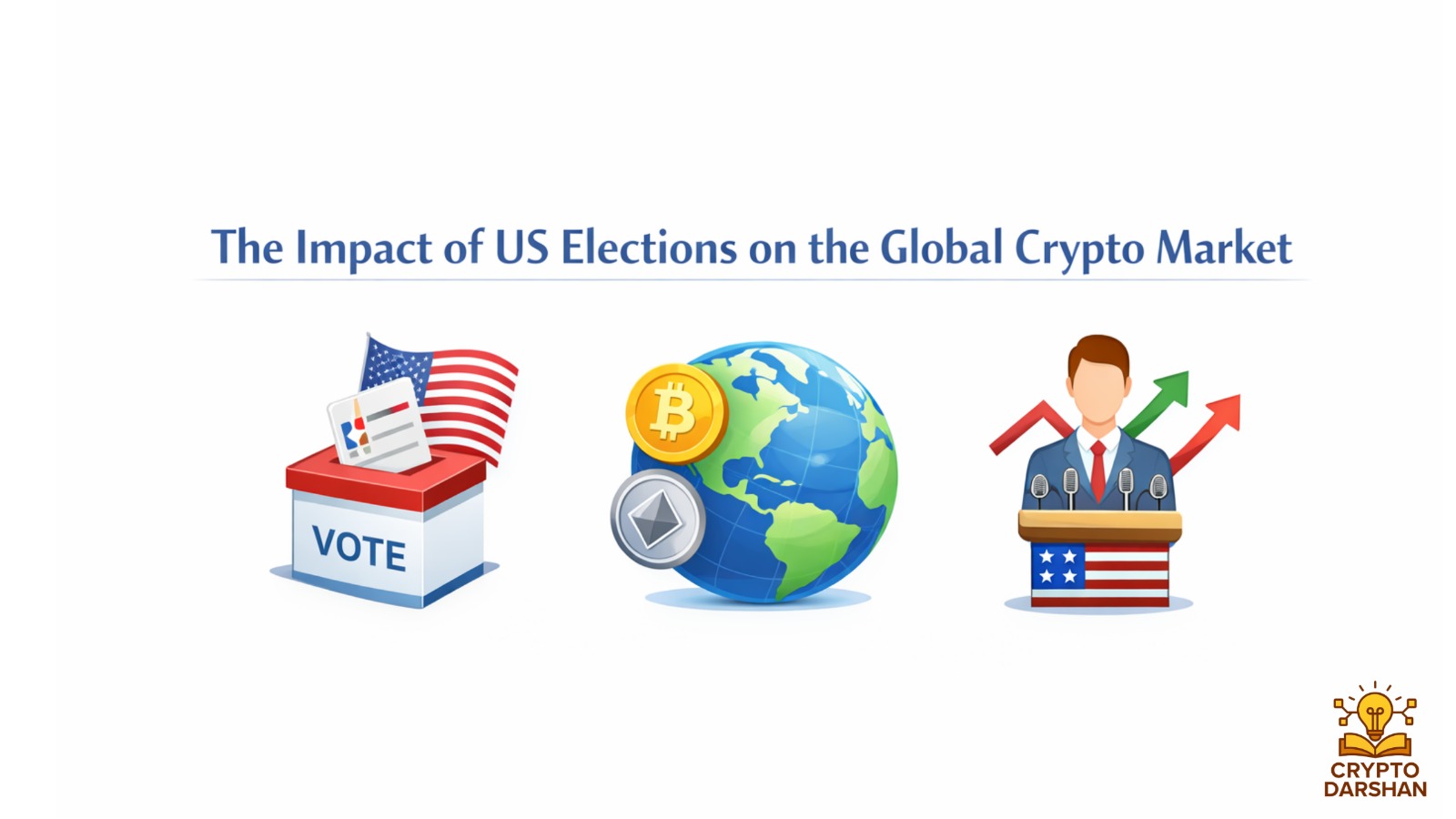
US Elections Crypto Impact transformed markets after Trump’s re-election, driving BTC highs amid pro-crypto policies and worldwide shifts. The United States remains a cornerstone of the global financial system, and its political decisions often shape economic trends worldwide. Among the sectors most sensitive to these shifts is the cryptocurrency market. As digital assets continue to evolve from speculative instruments into mainstream financial tools, the outcomes of US elections increasingly influence their trajectory. Investors, policymakers, and institutions closely monitor how political transitions affect regulation, innovation, and market sentiment. This article explores the deep and multifaceted impact of US elections on the global crypto market, examining historical patterns, investor psychology, regulatory expectations, and future possibilities.
Understanding the Relationship Between Politics and Crypto Markets

Crypto markets are an elemental component within the blockchain ecosystem. A differentiation can be made between primary markets, where cryptocurrencies are issued initially, and secondary markets, where tokens can be exchanged for other currencies.
Cryptocurrencies were designed to operate independently of centralized authorities, yet political events—especially in major economies like the United States—have a profound influence on their performance. The US government’s stance on digital assets affects global liquidity, innovation, and investor confidence.
Key Political Factors Affecting Crypto
- Regulatory Policy: The incoming administration’s approach to crypto regulation determines how exchanges, investors, and developers operate. A pro-innovation stance can boost market confidence, while restrictive policies can trigger sell-offs.
- Monetary Policy: Fiscal decisions, interest rates, and inflation control measures influence the attractiveness of cryptocurrencies as alternative assets.
- Taxation: Adjustments in capital gains tax or crypto reporting requirements can alter investor behavior.
- International Relations: US foreign policy impacts global trade and the dollar’s strength, indirectly affecting Bitcoin and other digital assets often viewed as hedges against fiat volatility.
- Technological Policy: Government support for blockchain research and digital infrastructure can accelerate crypto adoption and innovation.
Historical Overview: US Elections and Crypto Market Movements

The 2016 Election: Bitcoin’s Early Political Test
The 2016 US presidential election marked one of the first times crypto markets reacted noticeably to political developments. Bitcoin, still in its early growth phase, traded below $1,000. The uncertainty surrounding the election outcome, coupled with global economic instability, led to increased interest in Bitcoin as a hedge against traditional financial systems. Following Donald Trump’s victory, Bitcoin’s price began a steady climb, reaching nearly $20,000 by the end of 2017.
Key Takeaways:
- Political uncertainty increased demand for decentralized assets.
- The lack of clear regulation allowed speculative growth.
- Institutional interest began to form as investors sought alternatives to traditional markets.
The 2020 Election: Crypto Enters the Mainstream
By the 2020 election, the crypto market had matured significantly. Bitcoin, Ethereum, and other major cryptocurrencies had become recognized investment vehicles. The COVID-19 pandemic, combined with unprecedented fiscal stimulus, created fertile ground for digital assets to thrive. When Joe Biden won the presidency, markets anticipated stricter regulation but also greater institutional adoption.
Market Reactions:
- Bitcoin surged from around $10,000 in September 2020 to over $60,000 by April 2021.
- Institutional investors like Tesla and MicroStrategy entered the market.
- The Biden administration’s focus on regulation introduced both caution and legitimacy.
The 2024 Election: Anticipation and Volatility
The 2024 election cycle saw crypto become a mainstream political topic. Candidates debated digital currency regulation, central bank digital currencies (CBDCs), and blockchain innovation. Market volatility increased as investors speculated on potential policy outcomes. The anticipation of clearer regulatory frameworks led to short-term fluctuations but long-term optimism.
How US Elections Influence Global Crypto Sentiment

Investor Confidence and Market Psychology
Elections create uncertainty, and uncertainty drives volatility. In the crypto market, where sentiment plays a dominant role, political events can trigger sharp price movements. Traders often interpret election outcomes as indicators of future economic stability or disruption.
- Bullish Sentiment: A government perceived as pro-innovation or supportive of blockchain technology can boost investor confidence.
- Bearish Sentiment: Concerns about stricter regulation or taxation can lead to sell-offs.
Institutional Participation
Institutional investors, including hedge funds, banks, and corporations, often adjust their crypto exposure based on political developments. A favorable regulatory environment encourages institutional entry, while restrictive policies can deter participation.
For example:
- The 2020 election led to increased institutional adoption due to expectations of economic stimulus and inflation.
- The 2024 election discussions around CBDCs and stablecoin regulation influenced institutional strategies toward compliance and diversification.
Global Market Correlation
The US dollar remains the world’s reserve currency, and its strength or weakness directly affects crypto valuations. During election cycles, fluctuations in the dollar index often correlate with Bitcoin’s performance. A weaker dollar typically drives investors toward alternative assets like crypto, while a stronger dollar can suppress demand.
Regulatory Expectations and Their Global Impact

The Role of the SEC and CFTC
The Securities and Exchange Commission (SEC) and the Commodity Futures Trading Commission (CFTC) play pivotal roles in shaping the US crypto landscape. Their leadership and policy direction often shift with new administrations.
- Pro-Regulation Administrations: Focus on consumer protection, anti-money laundering (AML) compliance, and stablecoin oversight.
- Pro-Innovation Administrations: Encourage blockchain development, decentralized finance (DeFi) growth, and crypto-friendly taxation.
Global Ripple Effects
US regulatory decisions often set precedents for other nations. When the US tightens crypto regulations, other countries may follow suit to maintain financial alignment. Conversely, a more open US policy can inspire global adoption.
Examples:
- The US Infrastructure Bill of 2021 introduced new crypto tax reporting rules, prompting similar discussions in the EU and Asia.
- The Biden administration’s executive order on digital assets in 2022 encouraged international cooperation on crypto regulation.
Economic Policies and Their Influence on Crypto

Inflation and Monetary Stimulus
Elections often bring shifts in fiscal policy. Expansionary policies, such as stimulus packages or low interest rates, can weaken the dollar and drive investors toward Bitcoin as a hedge against inflation. Conversely, tighter monetary policies can reduce speculative investment in crypto.
Employment and Economic Growth
Economic stability influences risk appetite. When employment rates are high and growth is steady, investors may favor traditional assets. During economic downturns or political uncertainty, crypto often becomes a refuge for those seeking alternative stores of value.
Trade and Foreign Policy
US trade relations affect global liquidity and capital flows. Sanctions, tariffs, or geopolitical tensions can push investors toward decentralized assets that operate outside traditional financial systems. For instance, during periods of heightened US-China tensions, Bitcoin trading volumes in Asia often spike.
The Role of Media and Public Perception

Media coverage during election cycles amplifies market reactions. Political statements about crypto regulation, taxation, or innovation can trigger immediate price movements. Social media platforms, particularly X (formerly Twitter), play a crucial role in shaping investor sentiment.
- Positive Coverage: When candidates endorse blockchain innovation, crypto prices often rise.
- Negative Coverage: Discussions about bans, restrictions, or environmental concerns can lead to market corrections.
Public perception also evolves with political discourse. As more politicians discuss crypto policy, public awareness and adoption increase, contributing to long-term market growth.
The Rise of Crypto Lobbying and Political Donations

As the crypto industry matures, it has become an active participant in US politics. Major exchanges, blockchain companies, and advocacy groups now contribute to political campaigns and lobby for favorable regulation.
Key Developments:
- Formation of political action committees (PACs) focused on crypto policy.
- Increased campaign donations from crypto executives and investors.
- Legislative proposals influenced by blockchain industry stakeholders.
This growing political influence ensures that future elections will continue to shape the trajectory of crypto regulation and innovation.
Global Reactions to the US Elections Crypto Impact

Europe
The European Union often aligns its regulatory approach with the US. The Markets in Crypto-Assets (MiCA) framework, for example, was influenced by US discussions on stablecoin oversight and investor protection.
Asia
Asian markets, particularly in Japan, South Korea, and Singapore, monitor US policy closely. A favorable US stance can encourage regional adoption, while restrictive measures may push innovation toward more crypto-friendly jurisdictions.
Emerging Economies
In developing nations, US election outcomes can affect access to capital and technology. A pro-crypto US administration may support global blockchain initiatives, while a restrictive one could limit international partnerships.
The Influence of Federal Appointments on Crypto Regulation

Beyond the presidency, the individuals appointed to key financial and regulatory positions—such as the heads of the SEC, CFTC, and Treasury Department—play a major role in shaping crypto policy. Their interpretations of existing laws determine how exchanges, stablecoins, and decentralized finance (DeFi) platforms operate.
For example, a crypto-friendly SEC chair might push for clearer guidelines and approve more crypto-based ETFs, boosting investor confidence. Conversely, a stricter regulator could impose tighter compliance requirements, slowing innovation. These appointments often reflect the broader political ideology of the administration, making them a critical factor for global crypto markets to watch after every election.
The Role of Global Institutions and Alliances

The influence of US elections extends beyond national borders through global institutions such as the International Monetary Fund (IMF), World Bank, and Financial Stability Board (FSB). These organizations often align their digital asset policies with US leadership. When the US adopts a progressive stance on crypto, it encourages these institutions to explore blockchain-based financial systems. Conversely, a conservative approach can slow global regulatory harmonization. As US leadership changes, emerging alliances are exploring alternatives to dollar dominance, raising questions similar to those discussed in BRICS and Bitcoin: A New Financial Order?
International Cooperation
Post-election administrations often engage in diplomatic discussions about digital asset regulation. Collaborative frameworks between the US, EU, and Asian economies can lead to standardized rules for crypto taxation, anti-money laundering, and cross-border payments. Such cooperation enhances global trust in digital assets and reduces regulatory fragmentation.
Impact on Developing Economies
Developing nations often rely on US-led financial guidance. When the US supports blockchain innovation, it opens opportunities for these countries to adopt decentralized finance (DeFi) solutions for remittances, microloans, and digital identity systems. This influence extends the reach of crypto beyond investment markets into real-world financial inclusion.
The Role of Geopolitical Stability and Global Investor Behavior

US elections don’t just influence domestic markets—they also shape global investor confidence. When political uncertainty rises in the United States, international investors often seek alternative assets to hedge against volatility. Cryptocurrencies, being decentralized and borderless, become a preferred choice during such times. This trend is especially visible in emerging markets, where investors use Bitcoin and stablecoins to protect their wealth from currency fluctuations tied to US policy changes. US elections often reshape regulatory frameworks, which is why understanding why crypto regulation is actually bullish long term is essential for long-term investors.
Moreover, global hedge funds and institutional investors closely monitor US election outcomes to adjust their crypto portfolios. A pro-innovation administration can trigger a surge in global crypto investments, while a restrictive one may lead to short-term sell-offs. This dynamic shows how deeply interconnected the US political climate is with global digital asset flows.
The Future of Crypto Policy in US Elections

As crypto becomes a mainstream financial topic, future elections will likely feature more detailed policy proposals. Candidates may outline plans for digital asset taxation, stablecoin regulation, and blockchain innovation funding. The growing number of crypto investors—estimated at over 50 million in the US—means that digital asset policy could become a decisive electoral issue.
Voter Demographics and Crypto Awareness
Younger voters, particularly those aged 18–35, are more likely to own or support cryptocurrencies. Political candidates who advocate for innovation-friendly policies may attract this demographic. As crypto adoption grows, political platforms will increasingly reflect the priorities of a digital-first generation.
The Intersection of Artificial Intelligence, Blockchain, and Politics

The convergence of artificial intelligence (AI) and blockchain technology is emerging as a new frontier in political and economic discourse. As AI-driven analytics become central to financial forecasting, blockchain provides transparency and security for data management. Future US administrations may leverage both technologies to modernize governance, improve financial oversight, and enhance cybersecurity.
AI-Driven Market Predictions
AI tools are increasingly used to predict crypto market reactions to political events. During election cycles, algorithms analyze candidate statements, policy proposals, and social sentiment to forecast price movements. This integration of AI and blockchain could redefine how investors respond to political uncertainty.
Blockchain for Government Transparency
Blockchain’s immutable ledger can enhance transparency in campaign financing, voting systems, and public spending. A government that embraces blockchain for governance may also foster a more favorable environment for crypto innovation, signaling long-term stability to global investors.
Long-Term Implications for the Global Crypto Market

- Regulatory Clarity: Elections often accelerate the development of clearer crypto regulations, which can attract institutional investors and reduce market manipulation.
- Mainstream Adoption: Political recognition of crypto as a legitimate asset class enhances public trust and adoption.
- Technological Innovation: Government support for blockchain research can lead to breakthroughs in scalability, security, and interoperability.
- Global Competition: As the US refines its crypto policies, other nations may adjust their strategies to remain competitive in the digital economy.
- Financial Inclusion: Pro-crypto policies can promote financial inclusion by enabling access to decentralized financial services for unbanked populations worldwide.
- Environmental Policy Influence: As sustainability becomes a political priority, crypto mining regulations may evolve to favor renewable energy use, influencing global mining practices.
- Cross-Border Collaboration: Future administrations may work with international regulators to create unified frameworks for crypto taxation, anti-fraud measures, and digital asset classification.
- Digital Dollar Integration: The introduction of a US CBDC could reshape global payment systems, influencing how private cryptocurrencies coexist with state-backed digital currencies.
The Impact of US Elections on the Global Crypto Market – FAQs

1. Why do US elections affect the global crypto market?
US elections influence financial regulations, taxation policies, and economic direction. Since the United States plays a major role in global finance, changes in leadership can directly impact investor sentiment and cryptocurrency regulations, which often move global crypto prices.
2. How do election results impact Bitcoin and major cryptocurrencies?
Election outcomes can create short-term volatility in assets like Bitcoin and Ethereum. If investors expect crypto-friendly policies, prices may rise. If stricter regulations are anticipated, markets may react cautiously or decline temporarily.
3. Does crypto usually go up or down during US elections?
There is no fixed pattern. Crypto markets often experience volatility before and after elections due to uncertainty. Once policy direction becomes clearer, markets typically stabilize.
4. How do political parties differ in their approach to cryptocurrency?
Some policymakers support clearer regulations and innovation in blockchain technology, while others focus more on consumer protection and tighter oversight. The regulatory stance of the winning party can shape market confidence.
5. Can US election policies affect global crypto regulations?
Yes. Because the US is a financial leader, its regulatory framework often influences other countries. Stricter US policies may encourage global compliance standards, while supportive policies can accelerate worldwide crypto adoption.
6. How does election uncertainty impact crypto investors?
Uncertainty often increases market volatility. Traders may move funds into stable assets, while long-term investors may view dips as buying opportunities. Market reactions usually depend on expectations about future regulation and economic policy.
7. Do institutional investors react to US elections in the crypto market?
Yes. Institutional investors closely monitor political outcomes, especially regarding taxation, SEC policies, and ETF approvals. Clearer regulations can increase institutional participation in crypto markets.
8. How could US election results impact crypto taxation?
Changes in leadership may lead to updates in capital gains tax policies, reporting requirements, and compliance rules for crypto exchanges. These adjustments can influence trading behavior and long-term investment strategies.
Conclusion
US elections have a profound and lasting impact on the global cryptocurrency market. Political decisions influence regulation, investor sentiment, and institutional participation, shaping the trajectory of digital assets worldwide. While short-term volatility is inevitable during election cycles, the long-term trend points toward greater integration of crypto into the global financial system. As policymakers, investors, and innovators navigate this evolving landscape, the interplay between politics and technology will continue to define the future of finance.
The next US election will not only determine the direction of domestic policy but also set the tone for global crypto adoption, regulation, and innovation. Whether through supportive legislation or cautious oversight, the choices made in Washington will echo across blockchain networks, exchanges, and wallets around the world—cementing the United States’ role as a key architect of the digital financial era.