
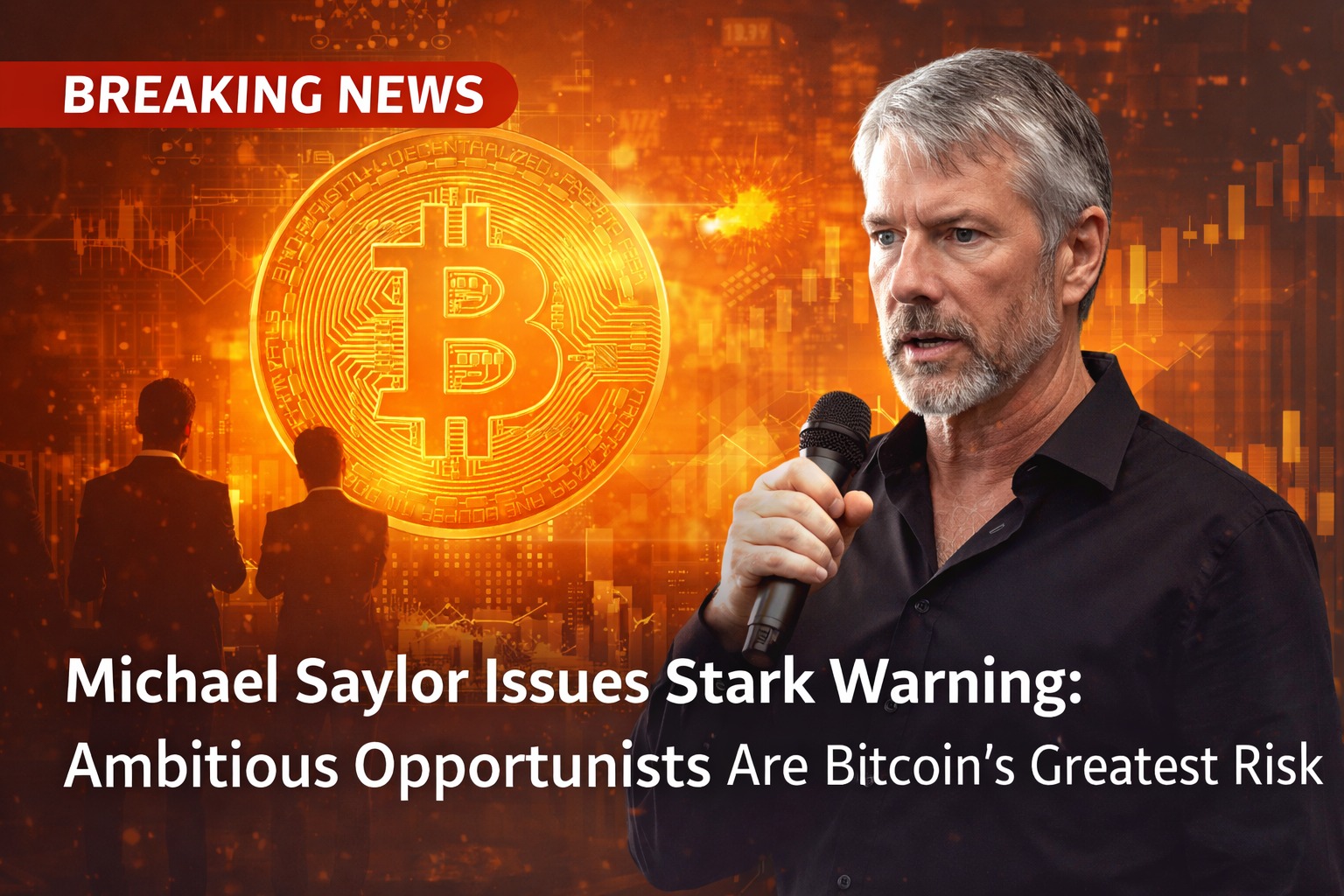
The Michael Saylor, MicroStrategy Executive Chairman, has ignited fresh debate in the Bitcoin community with a pointed alert on social media. He declared the “greatest risk to Bitcoin is ambitious opportunists advocating protocol changes.”
The Core Warning

Saylor’s statement targets developers and influencers pushing alterations to Bitcoin’s foundational rules, such as proposals limiting block data storage (e.g., BIP110) or addressing spam from Inscriptions and Ordinals. In a recent post, he emphasized that “Bitcoin’s biggest threat” stems from protocol mutability, where changes could introduce vulnerabilities, regulatory risks, or undermine the network’s immutability. This aligns with Saylor’s long-held “ossification” philosophy: Bitcoin thrives by resisting tweaks, preserving its role as pristine digital money.
Community Backdrop
The warning comes at a time when the Bitcoin community is divided over ongoing “spam wars.” New features like Ordinals, which allow non-financial data such as images or text to be added to Bitcoin blocks, have significantly increased transaction volume and fees.
Michael Saylor supports these paid inscriptions, saying that if users are willing to pay, the network should allow them. However, he also warns against making major changes to Bitcoin that could weaken its core security or distract miners from protecting the network through SHA-256 mining.
Bitcoin developer Luke Dashjr shares similar concerns. He argues that Bitcoin nodes should apply stricter policies to limit non-monetary uses, ensuring the network remains focused on secure and reliable financial transactions rather than data storage.
Broader Implications
As Bitcoin hits new highs with institutional inflows, Saylor views protocol stability as key to trillions in value. Changes risk alienating HODLers and inviting attacks, contrasting Bitcoin’s proven track record since 2009. Quantum threats or hacks pale against internal “innovation” pushes, per Saylor.
Bitcoin maximalists praise the stance, while critics argue measured evolution, like past SegWit and Taproot upgrades enhances scalability without harm. Saylor’s firm, holding over 400,000 BTC, continues aggressive accumulation, betting on unchanging purity