
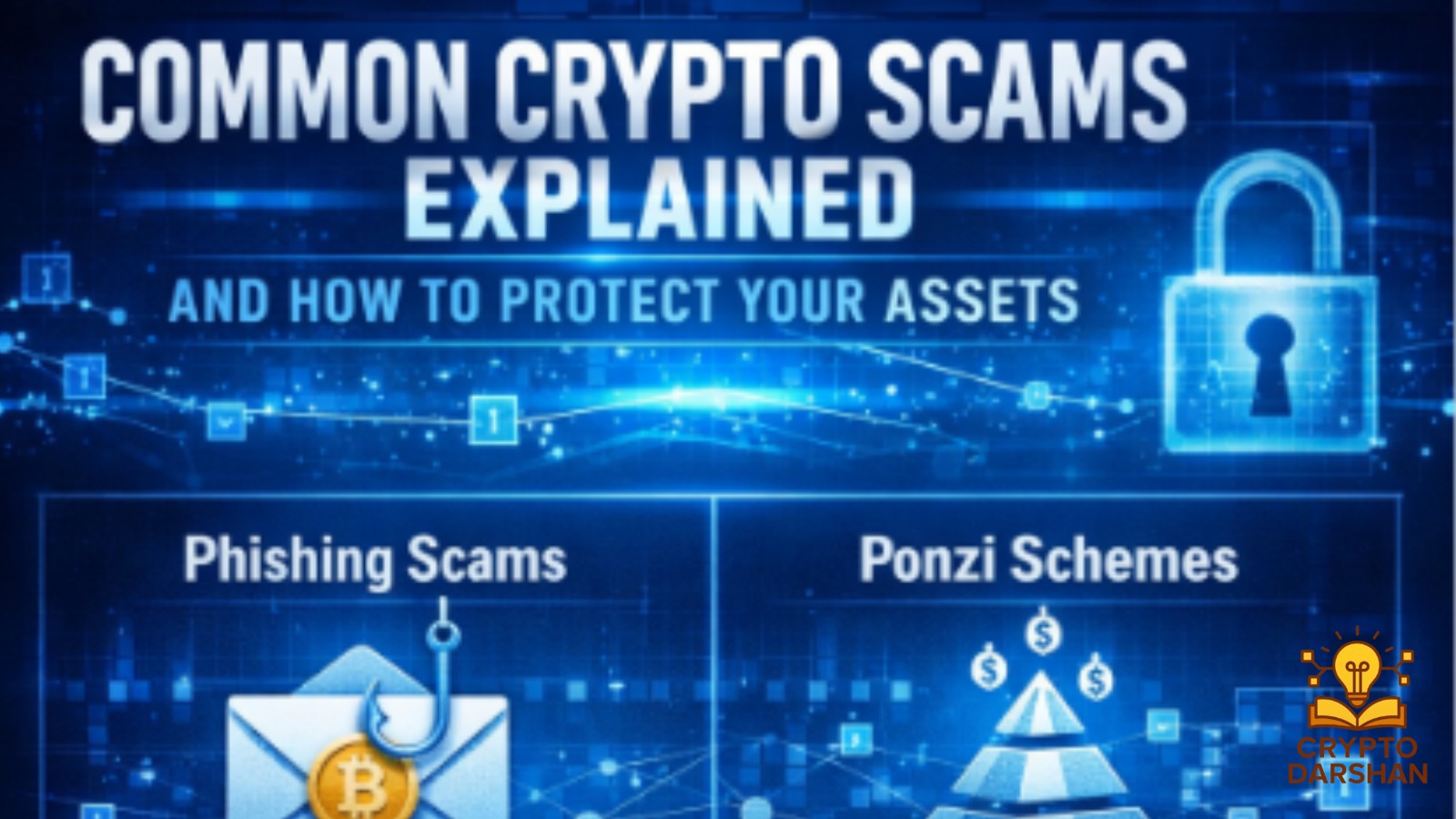
Common crypto scams as the rapid rise of cryptocurrencies has transformed the global financial system. Unlike traditional banking, cryptocurrencies allow people to send and receive money directly without relying on banks or governments. These systems are decentralized, borderless, and transparent, making transactions faster and more accessible worldwide. Because of these advantages, millions of individuals and businesses are now using digital currencies for investing, payments, and savings.
However, the growing popularity of cryptocurrencies has also created opportunities for cybercriminals. Scammers take advantage of the complex technology and the relative anonymity of blockchain networks to trick users into losing their digital assets. Crypto scams are no longer simple or obvious; they have become highly sophisticated and well-organized. Many scams appear professional, use fake websites, impersonate trusted companies, or promise guaranteed profits to attract victims. Both beginners and experienced crypto users can fall victim if they are not careful.
Understanding how crypto scams work is extremely important for anyone involved in the crypto world. Without proper knowledge, users may unknowingly share private keys, send funds to fraudulent addresses, or invest in fake projects. Once cryptocurrency is stolen, it is usually very difficult or impossible to recover. This makes prevention the most effective form of protection.
This comprehensive guide explains the most common types of cryptocurrency scams in simple terms. it offers practical and easy-to-follow strategies to protect digital assets, such as using secure wallets, enabling two-factor authentication, and verifying sources before making transactions. Finally, it explores emerging trends in scam prevention, including improved blockchain.
What Is Cryptocurrency and How Does It Work? Beginner’s Guide, which helps readers who are new to crypto understand the fundamentals before learning about scams.
Understanding Crypto Scams
1.1 What Are Crypto Scams?
Crypto scams are fraud schemes designed to steal cryptocurrencies or personal information from investors. These scams exploit the decentralized nature of blockchain, the lack of regulation, and limited recourse for victims. Scammers often use social engineering, fake websites, and misleading investment opportunities to lure victims into transferring funds or revealing private keys.
before
1.2 Why Crypto Scams Are Increasing
Several factors contribute to the rise of crypto scams:
- Anonymity: Transactions on blockchain networks are written under a false name, making it difficult to trace criminals.
- Lack of Regulation: Many jurisdictions lack comprehensive crypto regulations, creating loopholes for scammers.
- High Returns Hype: The promise of quick profits attracts inexperienced investors.
- Technological Complexity: Many users do not fully understand how blockchain works, making them vulnerable to deception.
- Global Accessibility: Cryptocurrencies can be traded globally, allowing scammers to target victims across borders.
2. Common Types of Crypto Scams
2.1 Phishing Scams
A phishing attack is one of the scams that involves tricking users into revealing sensitive information such as private keys, seed phrases, or login credentials. Scammers often impersonate legitimate crypto exchanges, wallet providers, or influencers.
How It Works:
- Victims receive fake emails or messages directing them to a fraudulent website.
- The website mimics a legitimate platform and prompts users to log in.
- Once credentials are entered, scammers gain access to the victim’s wallet.
Protection Tips:
- Always verify URLs before entering login details.
- Enable two-factor authentication (2FA).
- Never share private keys or seed phrases.
2.2 Ponzi and Pyramid Schemes
Ponzi schemes promise high returns with little or no risk, paying early investors with funds from new participants. Pyramid schemes rely on recruiting new members to sustain payouts.
Example: BitConnect, one of the most infamous crypto Ponzi schemes, collapsed in 2018 after defrauding investors of billions.
Protection Tips:
- Be skeptical of guaranteed returns.
- Research the project’s business model and team.
- Avoid platforms that rely heavily on recruitment.
2.3 Fake ICOs (Initial Coin Offerings)
Fake ICOs are fraudulent crypto projects that raise funds by selling new tokens with false promises. These projects often lack real development, clear goals, or usable products, causing investors to lose their money completely.
How It Works:
- Scammers create a fake website and whitepaper.
- They promote the ICO through social media and influencers.
- Once funds are collected, the team disappears.
Protection Tips:
- Verify the project’s team and technical documentation.
- Check for regulatory compliance.
- Avoid investing in projects without transparent roadmaps.
2.4 Rug Pulls

Rug pulls occur when developers abandon a project after collecting investors’ funds, often in decentralized finance (DeFi) or NFT projects.
How It Works:
- Developers create a token or liquidity pool.
- They attract investors through hype and marketing.
- Once liquidity increases, they withdraw all funds, leaving investors with worthless tokens.
Protection Tips:
- Check if liquidity is locked.
- Review the project’s smart contract code.
- Avoid projects with anonymous teams.
2.5 Pump and Dump Schemes
These schemes involve artificially inflating a token’s price through coordinated buying and promotion, followed by mass selling.
How It Works:
- Scammers promote a low-value token on social media.
- Investors rush to buy, driving up the price.
- Organizers sell their holdings at the peak, causing a crash.
Protection Tips:
- Avoid trading based on social media hype.
- Research token fundamentals before investing.
- Monitor unusual trading volumes.
2.6 Giveaway Scams
Scammers impersonate celebrities or crypto companies, promising to multiply any crypto sent to their address.
How It Works:
- Victims see fake posts or videos claiming to offer free crypto.
- They send funds expecting a return.
- The scammer disappears with the funds.
Protection Tips:
- Legitimate giveaways never require sending crypto first.
- Verify official social media accounts.
- Report suspicious posts.
2.7 Malware and Fake Wallets
Malware and fake cryptocurrency wallets are designed to steal users’ private keys or sensitive information. They can also redirect funds to scam addresses without permission, causing victims to lose their digital assets permanently.
How It Works:
- Victims download fake wallet apps or browser extensions.
- The malware records keystrokes or modifies wallet addresses.
- Funds are transferred to the scammer’s wallet.
Protection Tips:
- Download wallets only from official sources.
- Use antivirus software and keep systems updated.
- Double-check wallet addresses before transactions.
2.8 Impersonation Scams
Scammers pose as customer support agents, influencers, or project representatives to gain trust.
How It Works:
- Victims receive messages offering help or investment opportunities.
- Scammers request private information or funds.
- Once received, they vanish.
Protection Tips:
- Verify identities through official channels.
- Never share sensitive information via direct messages.
- Be cautious of unsolicited offers.
2.9 Romance Scams
Crypto romance scams combine emotional manipulation with financial fraud. Romance scams exploit emotions, where fraudsters manipulate victims into sending cryptocurrency through emotional attachment.
How It Works:
- Scammers build relationships on dating platforms.
- They introduce crypto investments as a shared opportunity.
- Victims invest in fake platforms controlled by scammers.
Protection Tips:
- Be cautious of online relationships involving money.
- Verify investment platforms independently.
- Avoid sharing financial details with strangers.
2.10 Cloud Mining Scams
Fake cloud mining platforms promise profits from shared mining operations but never actually mine crypto.
How It Works:
- Users pay for mining contracts.
- The platform shows fake earnings.
- Withdrawals are blocked or delayed indefinitely.
Protection Tips:
- Research the company’s mining facilities.
- Avoid platforms with unrealistic profit claims.
- Check for verifiable proof of mining operations.
3. Real-World Examples of Crypto Scams
3.1 OneCoin
OneCoin was a major Ponzi scheme that pretended to be a real cryptocurrency. It had no actual blockchain. The project collected over $4 billion from investors worldwide. When investigations began, the scheme collapsed, and the founder, Ruja Ignatova, disappeared and is still a fugitive.
3.2 BitConnect
BitConnect promised guaranteed daily profits using a “trading bot.” In reality, it was a Ponzi scheme that paid old users with new investors’ money. When regulators stepped in, the platform shut down, and investors lost billions of dollars.
3.3 PlusToken
PlusToken claimed to be a crypto wallet offering high returns. It turned out to be a Ponzi scheme that stole over $2 billion from users. Several operators were later arrested in China, but most funds were never recovered.
3.4 Squid Game Token
The Squid Game token used the popularity of the TV show to attract investors. After the price rose sharply, the developers carried out a rug pull and vanished with millions, leaving investors unable to sell their tokens.
4. How to Identify Common Crypto Scams
4.1 Unrealistic Promises
Any project promising guaranteed profits or extremely high returns with no risk should be avoided. In real financial markets, prices change constantly, and losses are always possible. Honest investments never promise fixed or risk-free returns.
4.2 Lack of Transparency
Crypto projects that hide team identities, provide unclear whitepapers, or claim partnerships without proof are risky. Transparency builds trust. When basic project details cannot be verified, it often indicates poor planning or possible fraudulent intentions.
4.3 Pressure Tactics
Scammers often use fear and urgency to rush decisions, such as limited-time offers or countdown timers. These tactics reduce logical thinking and push investors to act quickly without researching the project or understanding potential risks.
4.4 Poor Website or Communication
Many fake projects have poorly designed websites filled with grammar mistakes, copied content, and unclear explanations. Weak communication shows a lack of professionalism and effort, which can be a strong sign that the project is not legitimate.
4.5 No Verifiable Product
Projects that do not offer a working product, testnet, or open-source code should be approached carefully. A legitimate crypto project usually demonstrates real development progress and allows users to verify how the technology actually works.
5. How to Protect Crypto Assets
Protecting your cryptocurrency requires vigilance, secure tools, and smart habits. Even experienced investors can fall victim to scams if precautions are not taken. Here’s how to safeguard your digital assets effectively.
5.1 Use Reputable Exchanges and Wallets
Choose exchanges with strong security, regulatory compliance, and transparent operations. For long-term storage, use hardware wallets like Ledger or Trezor, which keep private keys offline and safe from hackers.
Tip: Check reviews and community feedback before trusting new platforms.
5.2 Enable Multi-Factor Authentication (2FA)
2FA adds an extra layer of security. Even if someone steals your password, they cannot access your account without the second verification step. App-based 2FA like Google Authenticator is safer than SMS.
5.3 Keep Private Keys Secure
Never share private keys or store them online. Use cold storage solutions like hardware wallets, encrypted USB drives, or paper wallets. Always back up keys in a separate secure location.
5.4 Verify URLs and Apps
Only access official websites and apps. Bookmark trusted platforms and avoid clicking on links from unknown emails or social media messages.
5.5 Stay Informed
Follow credible crypto news sources and verified community forums. Avoid information from unverified social media accounts promising guaranteed profits.
5.6 Use Blockchain Explorers

Blockchain explorers like Etherscan or Blockchain.com help verify transactions, wallet addresses, and token contracts before sending funds.
5.7 Avoid Public Wi-Fi for Transactions
Public Wi-Fi is insecure and can expose sensitive information. Use private networks, and if necessary, a VPN.
5.8 Regularly Update Software
Keep wallet apps, browsers, antivirus, and firmware updated to prevent hackers from exploiting vulnerabilities.
Following these steps consistently reduces the risk of losing cryptocurrency to scams, hacks, or human error. Security in crypto is ongoing it requires vigilance and informed decisions.
6. Legal and Regulatory Measures

6.1 Global Efforts Against Crypto Scams
Governments and regulatory bodies are implementing frameworks to combat crypto fraud. Agencies like the U.S. SEC, FCA, and Interpol actively investigate and prosecute scammers.
6.2 KYC and AML Regulations
Know Your Customer (KYC) and Anti-Money Laundering (AML) policies help identify users and prevent illicit activities.
6.3 Reporting Scams
Victims should report scams to local authorities, crypto exchanges, and blockchain analytics firms to help track stolen funds.
7. Emerging Trends in Crypto Fraud Prevention

7.1 AI and Machine Learning
Artificial intelligence and machine learning tools study blockchain transactions to identify unusual behavior and fraud patterns. These systems work in real time, helping exchanges and platforms stop suspicious activities before users lose their digital assets.
7.2 Decentralized Identity Solutions
Decentralized identity systems use blockchain technology to verify user identities without sharing personal data. This approach improves security, reduces identity theft, and allows users to control their own information while still meeting verification requirements.
7.3 Smart Contract Audits
Smart contract audits are conducted by independent security experts who examine code for bugs and weaknesses. These audits help prevent hacks, protect user funds, and ensure decentralized finance platforms operate safely and as intended.
7.4 Education and Awareness
Education and awareness programs teach users how crypto scams work and how to spot warning signs. Better crypto literacy helps people make informed decisions, avoid risky projects, and protect their investments from fraud.
8. What to Do If Scammed
1. Stop All Transactions
Immediately stop sending any additional cryptocurrency or personal information. Acting quickly can help limit further losses and prevent scammers from gaining more control over your accounts, wallets, or connected platforms.
2. Document Evidence
Carefully save all relevant evidence, including transaction IDs, wallet addresses, screenshots, emails, and chat messages. This information is essential when reporting the scam and may help authorities or exchanges track fraudulent activity.
3. Report to Authorities
Contact your local law enforcement agency and financial regulators as soon as possible. Reporting the incident helps protect others from similar scams and may support wider investigations into organized crypto fraud networks.
4. Notify Exchanges
Inform cryptocurrency exchanges involved in the transaction immediately. Exchanges may flag scam-related wallet addresses, freeze funds if possible, and assist with internal investigations or compliance procedures.
5. Seek Legal Advice
Consult legal professionals experienced in cryptocurrency fraud and digital asset recovery. They can guide you on available legal options, potential recovery steps, and how to protect yourself from further financial harm.

9. The Future of Crypto Security
As blockchain technology evolves, so do the methods of cybercriminals. However, advancements in AI-driven analytics, decentralized identity verification, and global regulatory cooperation promise a safer crypto environment. The key lies in continuous education, vigilance, and responsible investment practices.
10. Conclusion
Cryptocurrencies offer immense potential for financial innovation, but they also present new risks. Understanding common crypto scams and adopting robust security measures are essential for protecting digital assets. By staying informed, verifying sources, and practicing caution, investors can navigate the crypto landscape safely and confidently.
The future of crypto depends not only on technological progress but also on collective awareness and proactive defense against fraud. In a decentralized world, security begins with individual responsibility.