The blockchain industry has matured into a trillion-dollar ecosystem, reshaping how value moves across the internet. Yet, beneath the surface of decentralized finance (DeFi), non-fungible tokens (NFTs), and smart contracts lies a hidden economy that few users fully understand Maximal Extractable Value (MEV).
In 2026, MEV has become one of the most debated and researched topics in blockchain economics. It influences transaction costs, network fairness, validator incentives, and even the decentralization of entire ecosystems. While MEV was once a niche concern among Ethereum developers, it now affects nearly every major blockchain network.
This article explores MEV in depth what it is, how it evolved, who profits from it, and how it shapes the blockchain landscape in 2026. It also examines the ethical, technical, and economic implications of MEV, offering a comprehensive look at the hidden forces driving blockchain transactions.
Understanding MEV: The Basics

What Is MEV?
MEV (maximal extractable value) is a collective name for the many ways inefficient crypto transactions can be turned into profit, most commonly by influencing the order the transactions are executed in. It represents the additional value that block producers miners in proof-of-work (PoW) systems or validators in proof-of-stake (PoS) systems can capture beyond standard block rewards and gas fees.
In simpler terms, MEV is the hidden profit opportunity that arises from controlling transaction order. For example, if a user submits a transaction to buy a token on a decentralized exchange (DEX), a validator could insert their own transaction before it to buy the token first, then sell it immediately after at a higher price. This is known as front-running, one of the most common forms of MEV.
Why MEV Exists?
MEV exists because blockchain transactions are not processed instantly. When users submit transactions, they enter a waiting area called the mempool, where they remain until a validator includes them in a block. Validators can see all pending transactions and decide which to include and in what order. This control creates opportunities for profit.
The Scale of MEV
By 2026, MEV extraction has become a multi-billion-dollar industry. On Ethereum alone, cumulative MEV profits have surpassed $10 billion, with similar dynamics emerging on Solana, Avalanche, and Binance Smart Chain. The rise of cross-chain interoperability has further expanded MEV opportunities, creating a global market for transaction ordering.
The Evolution of MEV: 2020–2026
The Early Days (2020–2021)
The term “MEV” was first popularized in 2020 by researchers studying Ethereum’s transaction ordering. They discovered that miners were earning millions in hidden profits by manipulating transaction sequences. This revelation led to the creation of Flashbots, a research and development organization dedicated to making MEV extraction more transparent.
The DeFi Explosion (2021–2023)
As decentralized finance gained momentum, MEV opportunities multiplied. Arbitrage between DEXs, liquidations in lending protocols, and NFT minting events became fertile ground for MEV bots. During this period, MEV extraction became industrialized, with specialized searchers and algorithms competing for profits.
The Merge and Proposer-Builder Separation (2022–2024)
Ethereum’s transition from proof-of-work to proof-of-stake in 2022, known as The Merge, changed the MEV landscape. Validators replaced miners, but the incentives remained. The introduction of Proposer-Builder Separation (PBS) aimed to reduce centralization risks by separating block construction from block proposal. However, MEV extraction continued, now facilitated by new infrastructure like MEV-Boost.
The MEV Economy (2025–2026)
By 2026, MEV has evolved into a structured economy. Entire marketplaces exist for MEV opportunities, and protocols have integrated MEV redistribution mechanisms to share profits with users. MEV is no longer a hidden phenomenon it is a recognized component of blockchain economics, complete with its own infrastructure, governance, and ethical debates.
How MEV Works

Transaction Ordering and Control
Every blockchain block contains a list of transactions. The order of these transactions can significantly affect their outcomes. Validators have the power to:
- Reorder transactions to maximize profit.
- Insert their own transactions before or after others.
- Exclude transactions entirely.
This control allows validators and searchers to exploit opportunities that arise from predictable transaction behavior.
Common Types of MEV
- Front-Running: Inserting a transaction before another to profit from price changes.
- Back-Running: Placing a transaction immediately after another to capture residual value.
- Sandwich Attacks: Surrounding a user’s transaction with two of the validator’s own to manipulate prices.
- Arbitrage: Exploiting price differences between decentralized exchanges.
- Liquidation MEV: Profiting from liquidating undercollateralized loans in lending protocols.
- NFT Minting MEV: Gaining priority access to valuable NFT drops.
- Cross-Chain MEV: Exploiting arbitrage opportunities across multiple blockchains.
The MEV Supply Chain
The modern MEV ecosystem involves several key participants:
- Searchers: Algorithmic traders who identify MEV opportunities and submit transaction bundles.
- Builders: Entities that aggregate bundles from multiple searchers and construct the most profitable block.
- Validators: The final decision-makers who propose blocks and earn MEV rewards.
- Users: The end participants whose transactions often generate MEV opportunities.
This layered structure has created a competitive marketplace for block space, where efficiency and speed determine profitability.
Who Profits From MEV?

Validators and Miners
Validators are the primary beneficiaries of MEV since they ultimately decide which transactions are included in a block. However, in the modern MEV ecosystem, validators often share profits with builders and searchers through auctions.
Searchers
Searchers are algorithmic traders who identify MEV opportunities and submit transaction bundles. They profit by capturing arbitrage or liquidation opportunities before others can. In 2026, many searchers operate as professional firms with advanced AI-driven systems.
Builders
Builders aggregate transaction bundles from multiple searchers and construct the most profitable block possible. They then sell this block to validators, taking a share of the MEV revenue. Builders have become essential intermediaries in the MEV economy.
Protocol Developers
Some blockchain protocols have introduced mechanisms to redistribute MEV profits to users or the community treasury. For example, certain DeFi platforms now include MEV capture modules that redirect profits to liquidity providers.
Ordinary Users
In most cases, regular users lose out due to MEV. They may experience higher gas fees, worse trade execution, or slippage caused by front-running and sandwich attacks. However, new MEV redistribution models aim to return some of this value to users through rebates or shared revenue pools.
The Ethical Debate Around MEV

MEV as a Market Inefficiency
Critics argue that MEV represents a form of value extraction that undermines fairness and transparency. It allows insiders to profit at the expense of ordinary users, creating a two-tiered system within decentralized networks.
MEV as a Necessary Incentive
Proponents counter that MEV is an inevitable byproduct of open, permissionless systems. They argue that MEV provides economic incentives for validators and contributes to network security. The challenge, therefore, is not to eliminate MEV but to manage it responsibly.
The Centralization Risk
MEV can lead to centralization if a small number of validators or builders dominate the market. This concentration of power contradicts the decentralized ethos of blockchain technology and poses systemic risks.
The Transparency Paradox
Efforts to make MEV more transparent, such as MEV-Boost, have improved visibility but also made MEV extraction more efficient. This paradox highlights the difficulty of balancing openness with fairness.
MEV Infrastructure in 2026

Flashbots and MEV-Boost
Flashbots remains a leading player in the MEV ecosystem. Its MEV-Boost protocol enables validators to outsource block building to specialized builders, promoting transparency and competition. In 2026, MEV-Boost has expanded beyond Ethereum to other proof-of-stake networks like Polygon, Avalanche, and Solana.
SUAVE (Single Unifying Auction for Value Expression)
Introduced in 2024, SUAVE is a decentralized MEV marketplace that allows users to express transaction preferences and participate in MEV redistribution. By 2026, SUAVE has become a key component of the MEV economy, enabling fairer value sharing between users and validators.
Cross-Chain MEV
With the rise of multi-chain ecosystems, cross-chain MEV has emerged as a new frontier. Validators and searchers now exploit arbitrage opportunities across different blockchains, facilitated by interoperability protocols and cross-chain bridges.
Privacy and Encryption
To combat predatory MEV, new privacy-preserving technologies like encrypted mempools and zero-knowledge proofs have been introduced. These tools prevent searchers from seeing pending transactions until they are confirmed, reducing front-running risks.
AI and Automation
Artificial intelligence plays a growing role in MEV extraction. AI-driven bots can analyze transaction patterns, predict profitable scenarios, and execute strategies faster than human developers. This has increased efficiency but also raised concerns about algorithmic dominance.
The Impact of MEV on Users

Transaction Costs
MEV increases transaction costs indirectly. When searchers compete for profitable opportunities, they bid higher gas fees to get their transactions included first. This drives up network congestion and costs for all users.
Trade Execution
Users trading on decentralized exchanges may experience slippage or unfavorable prices due to sandwich attacks. This undermines trust in DeFi platforms and discourages participation.
Network Fairness
MEV challenges the principle of fairness in blockchain systems. While blockchains are designed to be transparent and neutral, MEV introduces asymmetries in information and power.
User Protection Tools
In response, wallets and DeFi platforms have introduced MEV protection features. These include private transaction relays, encrypted mempools, and fair ordering protocols that prevent front-running. To understand how MEV in 2026 affects traders’ profits, it’s crucial to explore how Intent-Based Trading: The Future of DeFi UX? optimizes transaction execution for users.
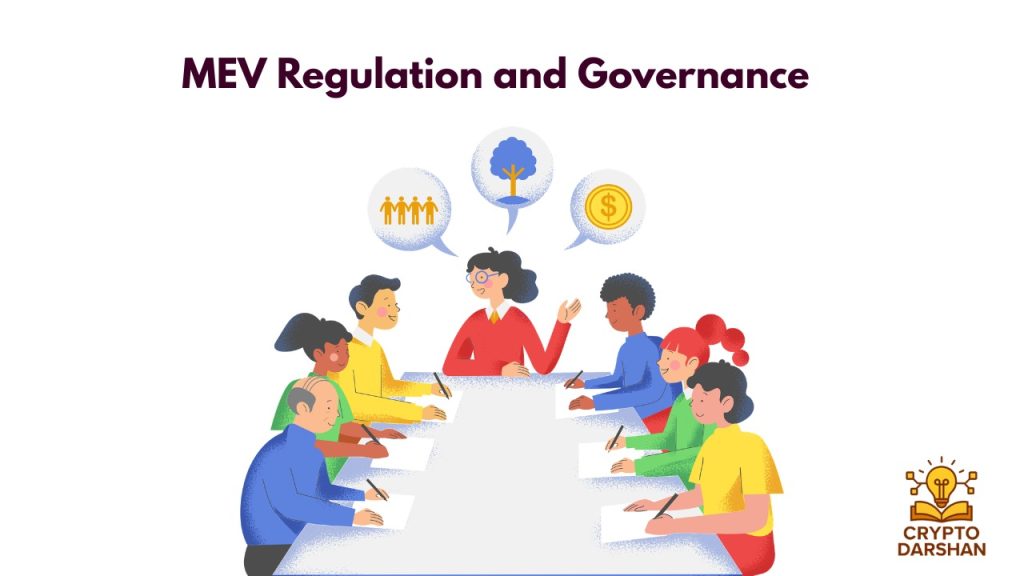
MEV Regulation and Governance
On-Chain Governance
Some blockchain communities have proposed on-chain governance mechanisms to regulate MEV. These include:
- MEV redistribution pools that share profits with users.
- Transaction ordering rules enforced by smart contracts.
- Validator penalties for malicious MEV behavior.
Off-Chain Coordination
Organizations like Flashbots and research collectives continue to coordinate off-chain efforts to study and mitigate harmful MEV. These collaborations aim to balance economic incentives with ethical considerations.
Legal and Regulatory Perspectives
As MEV profits grow, regulators have begun to take notice. Some jurisdictions are exploring whether certain MEV practices, such as front-running, could fall under existing financial regulations. However, enforcing such rules in decentralized systems remains a challenge.
The Future of MEV: Trends for 2026 and Beyond
Democratization of MEV
Emerging protocols are working to democratize MEV by allowing users to participate in MEV auctions or receive rebates from validators. This could transform MEV from a hidden tax into a shared revenue stream.
AI-Driven MEV Searchers
Artificial intelligence and machine learning are increasingly used to identify MEV opportunities. AI-driven bots can analyze transaction patterns and predict profitable scenarios faster than human developers.
Layer 2 and MEV
As Layer 2 scaling solutions like Optimism, Arbitrum, and zkSync gain traction, MEV dynamics are shifting. Each Layer 2 network introduces its own transaction ordering mechanisms, creating new MEV markets.
Sustainable MEV
The concept of Sustainable MEV emphasizes ethical extraction and redistribution. Projects are exploring ways to align MEV incentives with network health, ensuring that value extraction does not harm users or decentralization.
Cross-Chain Coordination
As blockchains become more interconnected, cross-chain MEV management will require coordination between ecosystems. Shared standards and interoperability protocols will be essential to prevent systemic risks. MEV opportunities often exploit timing and transaction ordering, which is why topics like How Crypto Bridges Work And Why They Keep Getting Hacked are essential to grasp the security risks across chains.
Case Studies

Ethereum’s MEV-Boost Adoption
By 2026, over 90% of Ethereum validators use MEV-Boost. This has increased transparency but also concentrated power among a few large builders. Efforts are underway to decentralize the builder ecosystem through open-source initiatives.
Solana’s Parallel MEV Markets
Solana’s high-speed architecture has given rise to parallel MEV markets, where multiple validators compete in real time. This has reduced latency-based MEV but introduced new forms of arbitrage.
Cross-Chain Arbitrage Between Ethereum and Polygon
Cross-chain MEV has become a major source of profit. Searchers exploit price discrepancies between Ethereum and Polygon DEXs, facilitated by fast bridge protocols. This has led to the creation of specialized cross-chain MEV bots.
MEV Redistribution on Cosmos
The Cosmos ecosystem has implemented MEV redistribution pools that share profits among validators and delegators. This model has inspired other networks to adopt similar approaches.
MEV and the User Experience

Wallet-Level Protection
Modern crypto wallets now include MEV protection features. These tools route transactions through private relays or encrypted mempools to prevent front-running.
Fair Ordering Protocols
Protocols like Fair Ordering Service (FOS) aim to ensure that transactions are ordered based on objective criteria, such as timestamp or randomization, rather than validator discretion.
User Education
As MEV becomes more visible, user education has become essential. Many DeFi platforms now include MEV awareness modules to help users understand risks and mitigation strategies.
The Economics of MEV Redistribution
Shared Revenue Models
Some networks have implemented shared revenue models where MEV profits are distributed among validators, delegators, and users. This approach aligns incentives and promotes fairness.
MEV Auctions
MEV auctions allow searchers to bid for block space transparently. The highest bidder wins, and a portion of the proceeds is returned to the network treasury or users.
Community Funds
Certain protocols allocate a percentage of MEV profits to community development funds, supporting ecosystem growth and innovation.
Tokenomics Integration
In 2026, some projects have integrated MEV redistribution directly into their tokenomics. Token holders receive a share of MEV revenue, creating new forms of passive income and governance participation.
Challenges Ahead

Balancing Profit and Fairness
The biggest challenge in 2026 remains balancing the economic incentives of MEV with the principles of fairness and decentralization. Overregulation could stifle innovation, while unchecked MEV could erode trust.
Preventing Centralization
As MEV infrastructure becomes more complex, there is a risk that a few large players will dominate the market. Ensuring open access and competition is critical to maintaining decentralization.
Cross-Chain Complexity
Managing MEV across multiple blockchains introduces new technical and governance challenges. Coordinating MEV policies across ecosystems will be essential for long-term stability.
Environmental and Energy Concerns
Although proof-of-stake has reduced energy consumption, MEV-related competition still drives high computational demand. Sustainable MEV practices must consider environmental impacts.
MEV FAQ — Maximal Extractable Value (2026)

1) What is MEV?
MEV (Maximal Extractable Value) is the extra profit that blockchain actors can earn by ordering, including, or excluding transactions in a block beyond the normal block reward and transaction fees.
- Originally called Miner Extractable Value, the term referred to miners on proof-of-work chains.
- After Ethereum and others moved to proof-of-stake, the term broadened to include validators and others who influence transaction execution.
In simple terms: When you send a transaction, it sits in a mempool (pending queue). Block producers or bots can see it before it’s finalized and exploit that visibility to profit.
2) Who can profit from MEV?
a) Block producers (validators/miners)
They decide which transactions go into a block and in what order giving them the first opportunity to capture extra value.
b) MEV “searchers” and bots
These are specialized participants that scan pending transactions for profitable opportunities (like arbitrage or liquidation), and then submit high-fee “priority” transactions or bundles to capture that value.
c) In some networks (with sequencers or special architectures)
Sequencers on certain layer-2 chains also control ordering and can internalize MEV differently than validators.
3) How do searchers profit?
Searchers use automated bots to:
- Detect arbitrage opportunities between different decentralized exchanges.
- Spot liquidations on lending platforms.
- Front-run (get ahead of) profitable transactions.
- Sandwich user trades to capture price movement.
The profit from these strategies can be significant, but much of it is often paid back to block producers as higher fees.
4) How do validators/miners’ profit?
Validators (or miners, on PoW chains) can profit by:
- Prioritizing transactions with higher fees (often from searchers).
- Including high-fee MEV bundles in their blocks.
- Sometimes capturing opportunities, themselves if they directly execute profitable transactions.
In some cases, block producers can receive the vast majority of the MEV revenue, with searchers keeping a small portion after bidding via fees.
5) Do ordinary users benefit from MEV?
Mostly no. MEV typically:
- Raises transaction costs (users pay higher gas fees due to bidding wars).
- Hurts execution prices (e.g., sandwich attacks worsen slippage).
- Creates a hidden “tax” on users’ transactions meaning users often lose value while others profit.
In short: MEV redistributes value away from users toward bots, validators, and block producers.
6) What efforts exist to mitigate harmful MEV?
There are ongoing technical solutions aimed at reducing user harm:
Private/Priority Channels (MEV-Protection):
Mechanisms like private mempools or sealed bid auctions to hide transactions from bots.
Protocol upgrades (Proposer-Builder Separation, PBS / ePBS):
Designs that separate who builds blocks from who proposes them, aiming to reduce unfair ordering profits. Note, some research shows these can unintentionally centralize profit capture, benefiting a small group of builders.
7) What’s new about MEV in 2026?
In 2025–2026:
- MEV extraction remains a major economic force on major chains like Ethereum and rollups.
- MEV revenue can be tens of millions USD per month, mostly captured by extractors.
- Networks are experimenting with MEV-resistant designs and auctions in response to growing user and developer concerns.
Conclusion
In 2026, MEV stands at the intersection of technology, economics, and ethics. It is both a source of innovation and a potential threat to fairness in decentralized systems. While validators, searchers, and builders continue to profit from MEV, new models of redistribution and transparency are emerging to ensure that value is shared more equitably.
The future of MEV will depend on collaboration between developers, researchers, and communities. By embracing transparency, decentralization, and ethical design, the blockchain ecosystem can transform MEV from a hidden tax into a sustainable economic mechanism that benefits all participants.